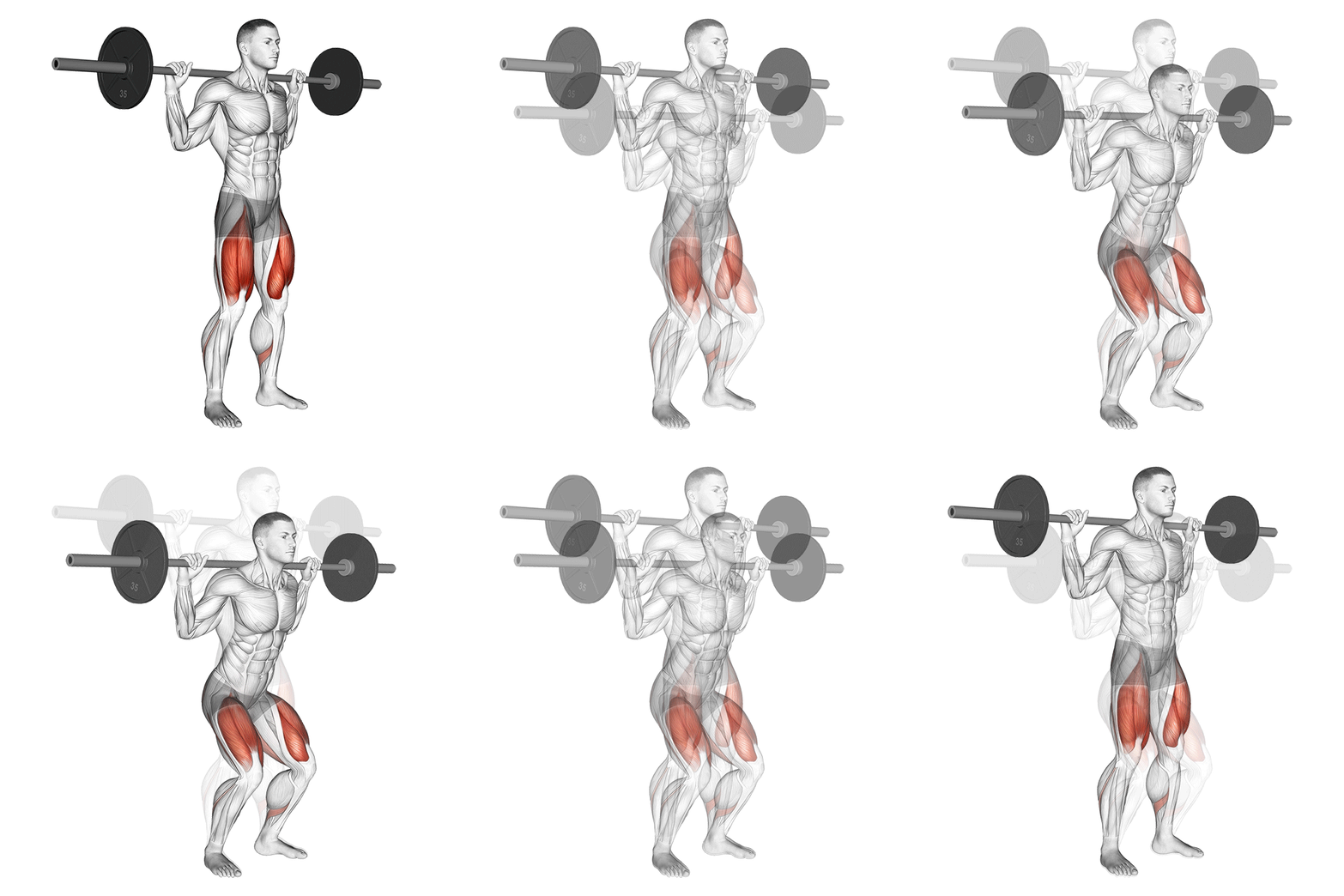
What is the half squat?
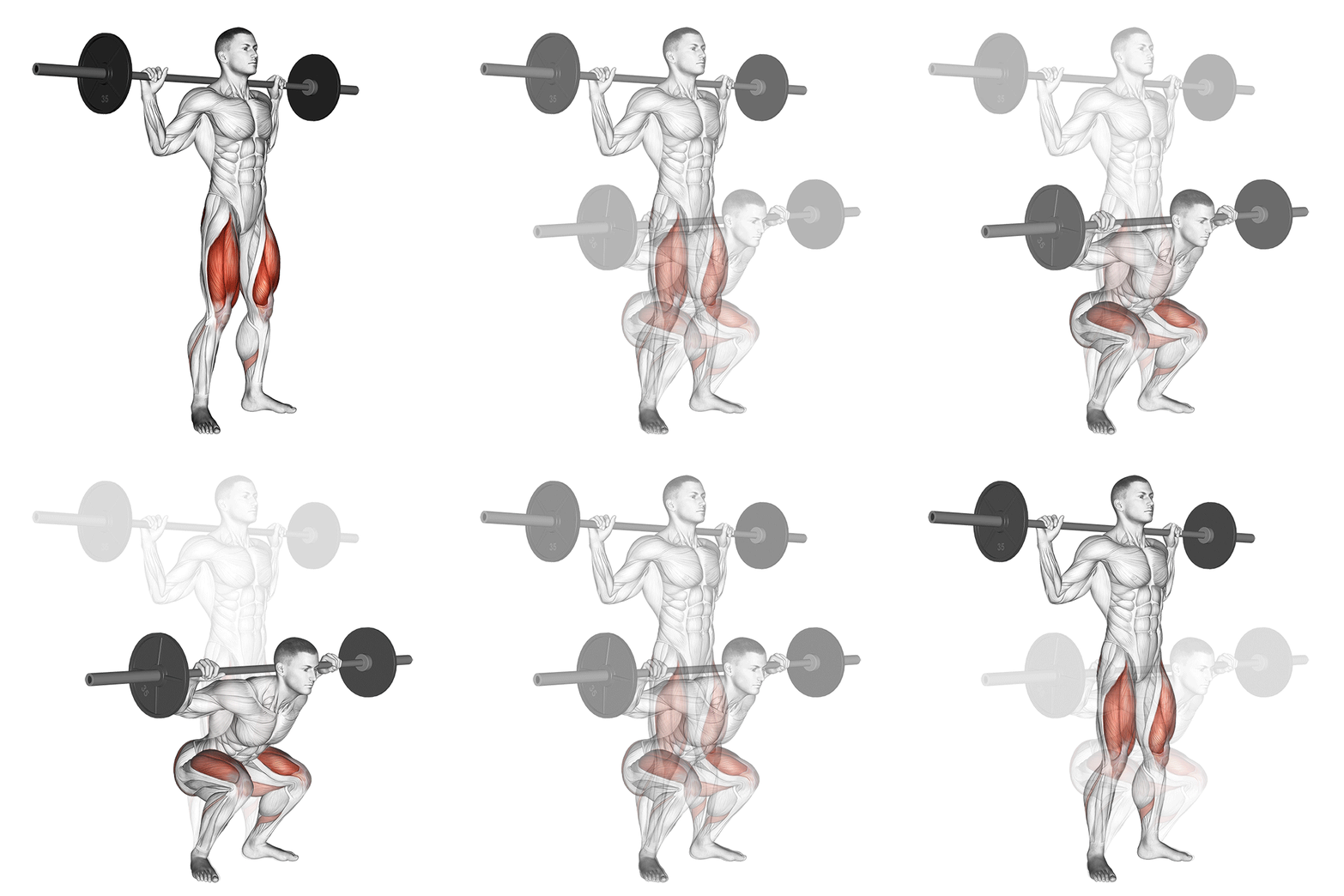
The half squat is a back squat stopped roughly at the point where the thighs are 45 degrees above parallel. Because the lever is shorter, you can handle 110 to 130 percent of your full-squat max. It's used to train the quad lockout, reinforce bracing under heavy bars, and build tendon resilience for sprinters and jumpers. It is an accessory, never a replacement for full-range work.
How to do the half squat
- 1
Set the bar and brace
Unrack a high-bar or low-bar squat as usual. Take a big belly breath, brace the trunk hard, and walk out tight. Heavy half squats demand a rock-solid setup.
- 2
Descend half-depth only
Break at the hips and knees, lower under control until your thighs are still well above parallel, roughly a quarter to a third of a full squat.
- 3
Reverse without bouncing
Pause briefly, then drive the floor away. Do not use a stretch reflex bounce; that turns a strength tool into a back-jarring ego lift.
- 4
Finish tall and reset
Lock out with hips fully extended, exhale, re-brace, repeat. Half-squat reps should be deliberate, never sloppy.
Pro tip
Cap half squats at 110 to 130 percent of your full-squat 1RM. Beyond that you train your ego and your spine, not your legs.
Common mistakes
Loading 200 percent of your full squat.
The shorter lever tempts ego loading. Spinal compression scales linearly with load, your tolerance does not.
Bouncing out of the bottom.
A stretch-reflex bounce skips the working range. Pause one count to keep it a strength exercise.
Using it as your only squat.
Partial range builds partial strength. Always pair half squats with full-range work in the same block.
Sloppy depth
Each rep drifting deeper or shallower changes the stimulus. Use pins or a box to lock the depth.
Variations and progressions
Easier
Box half squat
Place a tall box behind you and tap it lightly to standardise depth and teach control.
Harder
Anderson half squat
Start from pins at half depth, dead-stop reps with no eccentric assist. Brutally honest.
No rack?
Belt squat partial
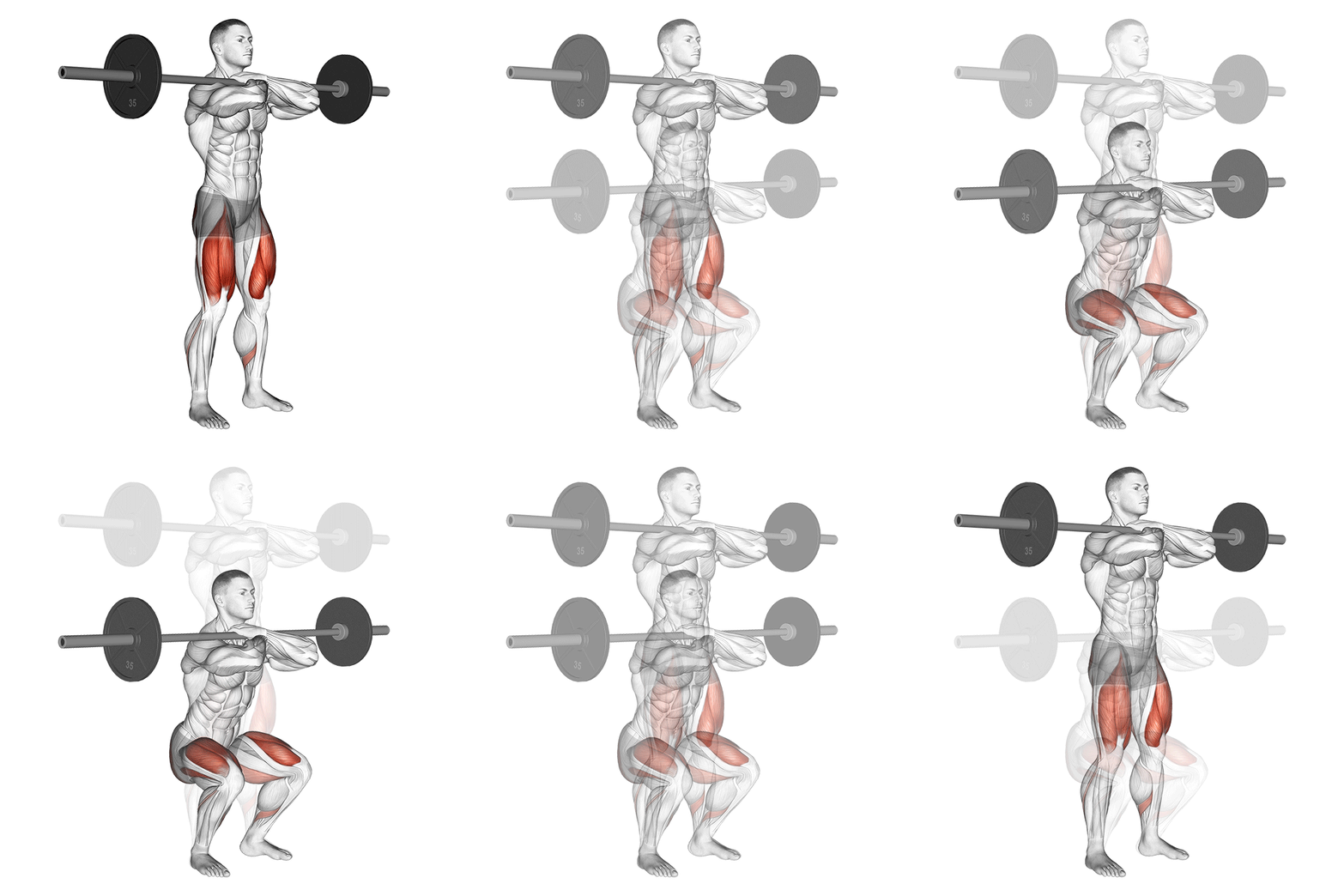
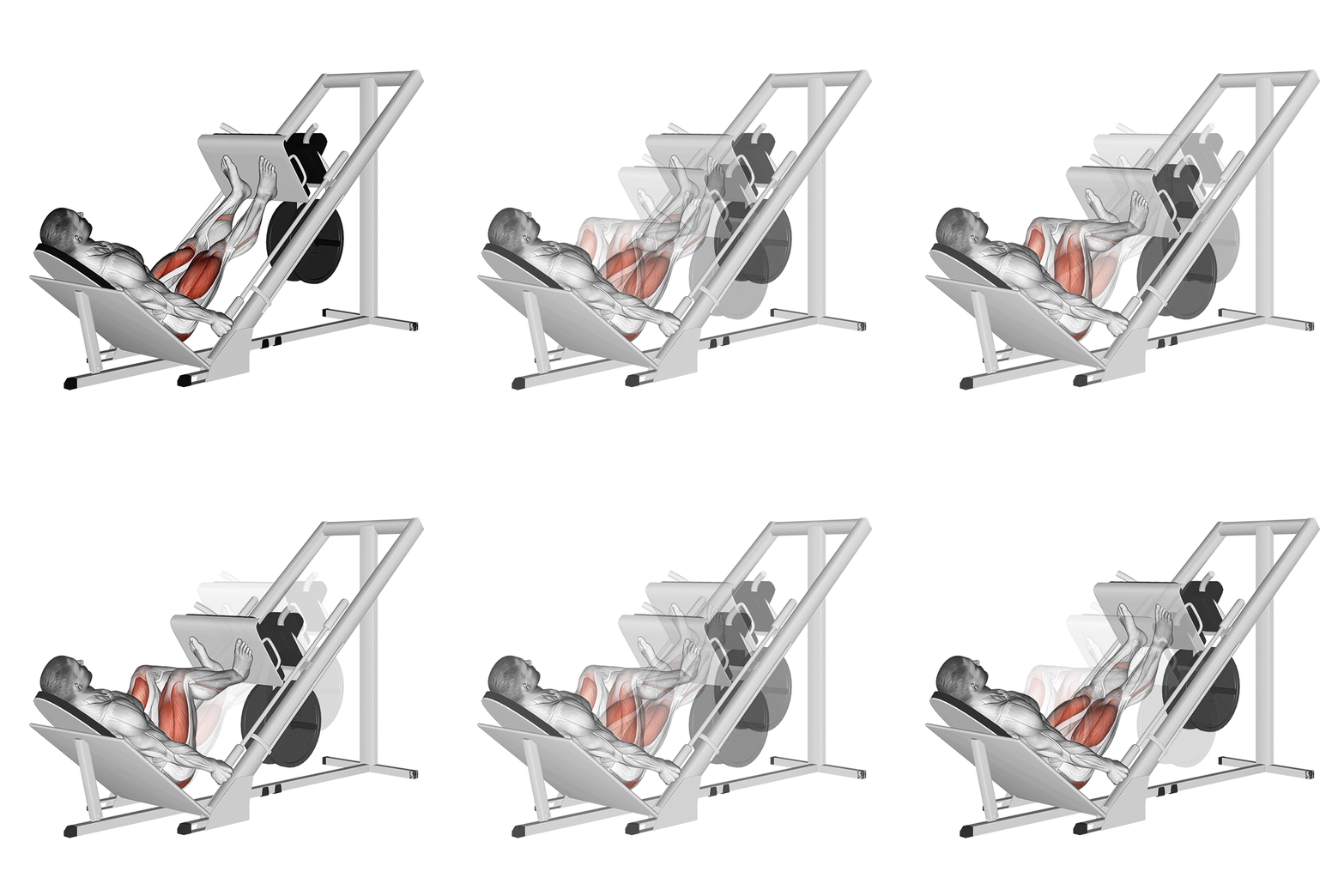
Use a belt squat or trap bar to overload the top half without spinal compression.
How to program it
Three protocols by goal. Pick one per cycle and aim for progression on load or distance.
| Goal | Sets × distance | Load | Rest |
|---|---|---|---|
| Lockout strength | 5 × 3 | 110-120% of full-squat 1RM | 3 min |
| Overload tolerance | 3 × 2 | 125-130% of full-squat 1RM | 4 min |
| Hypertrophy at the top | 4 × 8 | 90% of full-squat 1RM | 2 min |
Half Squat FAQ
Will half squats build my full squat?
They build the top portion and your ability to brace under heavy loads, but they will not directly improve depth or hole strength. Treat them as a supplement, programmed alongside competition-depth squats, never replacing them.
Are half squats safe for my back?
They are safe when loaded sensibly (110-130 percent of full-squat max). They become risky when athletes pile on plates because the range is short. Compression on your spine still scales with load; your bracing and warm-up must match.
When should I use half squats?
In late strength blocks before a meet, in off-season hypertrophy phases for quad-dominant volume, or as a tendon-priming tool for sprinters. Avoid them in early technique phases or with novice lifters who still need full-range patterning.