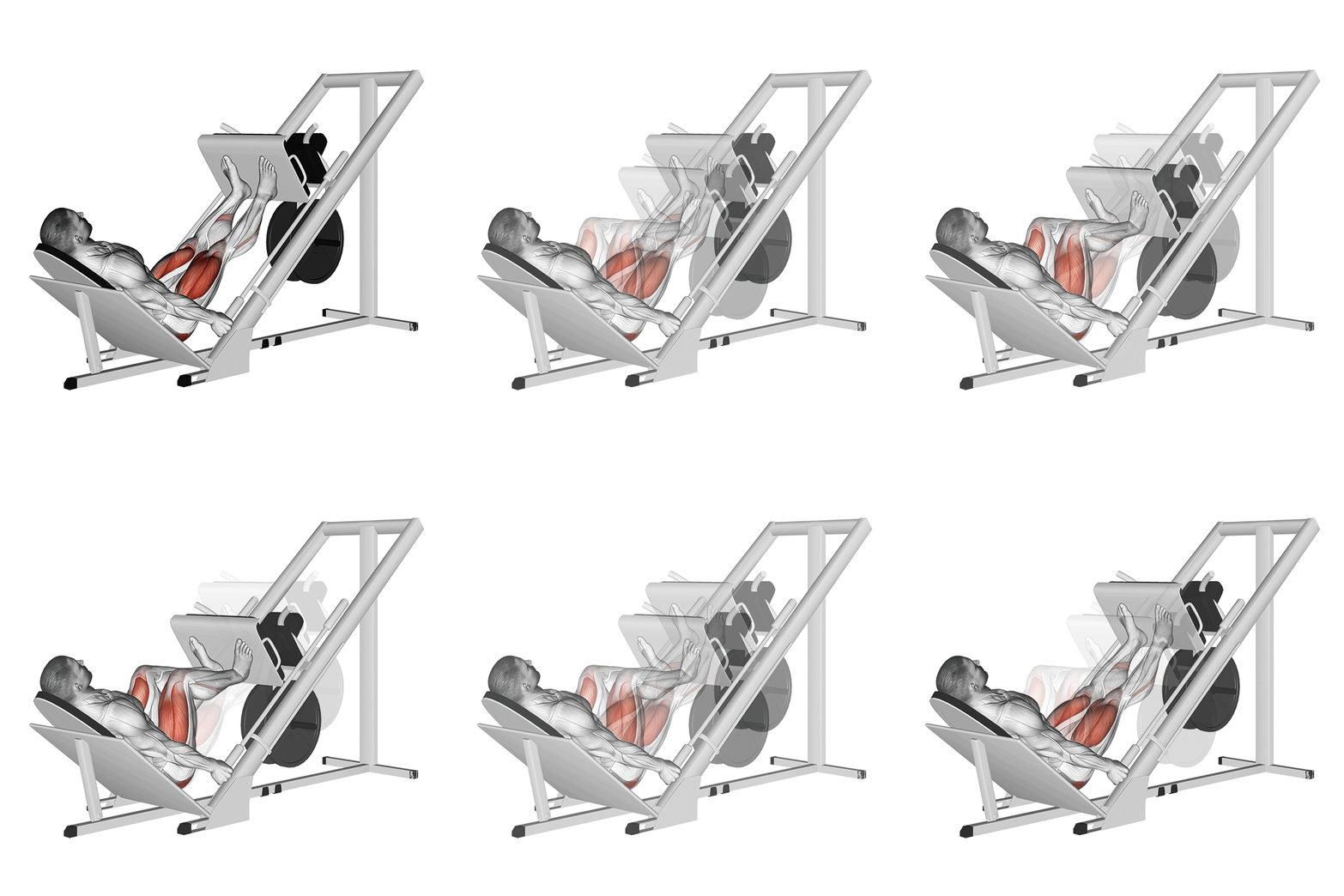
What is the leg press?
The leg press is a machine-based loaded squat where you sit at an angle (usually 45°) and press a weighted sled away with your legs. Because the back is supported, the lower back gets no axial compression, which lets you push heavy loads with much lower spinal cost than a barbell squat. Foot placement adjusts the bias: feet high on the platform hammer the glutes and hamstrings; feet low and narrow torch the quads. It's the gold-standard accessory after squats for hybrid athletes who need leg volume but don't want extra back work.
How to do the leg press
- 1
Set the seat and feet
Sit fully back, hips against the pad. Place feet shoulder-width on the platform: high and wide for posterior chain, low and narrow for quads.
- 2
Unrack and brace
Press the sled up, release the safety handles. Take a big breath, brace the abs, hands on the side rails or grips.
- 3
Lower under control
Take 2-3 s down until the knees track over the toes at roughly 90°. Don't let the lower back round off the pad.
- 4
Drive through full feet
Press hard through the whole foot (mid-foot to heel emphasis). Stop just short of locking the knees out to keep tension on the legs.
Pro tip
Don't chase ego depth at the cost of lumbar rounding. If your lower back lifts off the pad at the bottom, you've gone too far. Stop just before that point, every rep.
Common mistakes
Lower back rounding off the pad.
When the lumbar lifts, the spine flexes under load. Reduce range to keep the back glued to the pad.
Locking out the knees.
Full lockout dumps the load on the joints and the spotter pins. Stop just short of straight every rep.
Heels lifting off.
If the heels rise, the load shifts to the front of the knee. Move the feet higher on the platform until you can press flat-footed.
Stacking 12 plates per side because the machine lets you.
The leg press flatters egos. Quality range and tempo beat plate count for muscle growth and joint health.
Variations and progressions
Easier
Single-leg press
Press one leg at a time. Way less load, exposes side-to-side imbalances, gentler on the lower back.
Harder
Paused leg press
Pause 2 s at the bottom of every rep. Kills momentum and builds raw quad strength out of the hole.
No leg press?
Hack squat or goblet squat
Hack squat machine hits the same pattern. No machines at all? High-rep goblet squats fill the role.
How to program it
Three protocols by goal. Pick one per cycle and aim for progression on load or distance.
| Goal | Sets × distance | Load | Rest |
|---|---|---|---|
| Hypertrophy | 4 × 10-12 | Moderate-heavy | 90-120 s |
| Strength accessory | 5 × 6 | Heavy | 2-3 min |
| Volume / leg endurance | 3 × 20 | Moderate | 60-90 s |
Leg Press FAQ
Leg press or squat, which one?
Both, in that order. The barbell squat is the main lift: trains coordination, core, balance and leg strength as one. The leg press is the accessory: lets you add leg volume without re-taxing the lower back. Squat first, leg press second. Never the reverse, never one without the other.
How deep should I go on leg press?
Until just before your lower back rounds off the pad. For most lifters that means knees at 90° or slightly past. Going deeper looks impressive but flexes the lumbar under hundreds of kilos, and that's how leg press videos end up on injury compilations.
Foot placement: high or low?
High and wide on the platform shifts load to the glutes and hamstrings, low and narrow biases the quads. For most hybrid athletes, run a mid-position as default and vary it across the week: low/narrow for a quad-focused session, high/wide for a posterior-chain pump.