Here's the bind almost every hybrid athlete ends up in: your phone has a lifting app that logs sets and reps perfectly but knows nothing about your runs, and a running app that tracks your GPS mileage but has no idea you squatted heavy yesterday. You switch between them mid-session, reconcile the numbers by hand in a note, and nobody (not you, not the app) ever has a complete picture of your week. The best hybrid training app isn't the one with the most exercises. It's the one that treats strength and endurance as a single system, not two apps bolted together.
This guide isn't another affiliate roundup that lists ten apps and pushes a link. It's a buyer's guide: what a real hybrid training app must do, where the popular alternatives break, and why we built ZON the way we did. We build ZON, so treat this as an argued point of view rather than a neutral scorecard. We've done our best to be honest about what the other tools do well, because bad advice here costs you a 12-week block of fragmented data.
- The real deal-breaker in hybrid training is integration: do strength and endurance live in one timeline with unified load management, or in two apps that ignore each other?
- The Hevy + Strava combo is the most-recommended DIY stack, and it works, until manual reconciliation gives out around week six. That's a behavioral problem, not a feature one.
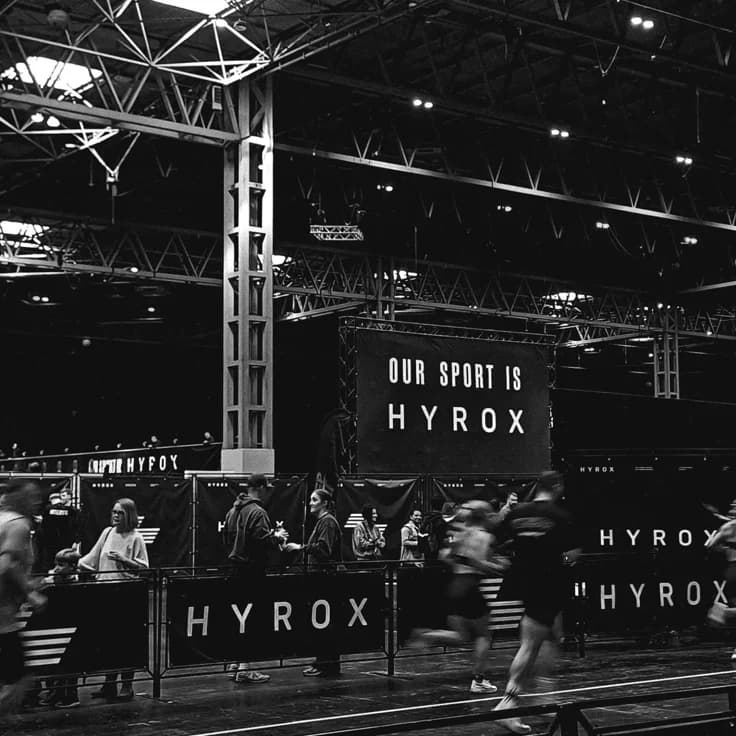
- Hyrox is the stress-test for hybrid training: if an app handles a GPS run and a strength station in the same continuous session, it handles just about any hybrid week.
- ACWR (acute-to-chronic workload ratio) is the most important risk-management tool in hybrid training, and it only exists if your strength and run data live in the same place.
The hybrid athlete's problem: strength app OR running app, never both
The fitness-app market was built around single disciplines. Lifting apps (Hevy, Strong, Fitbod) are excellent at set-by-set logging, progression charts, and managing routines. Running apps (Strava, Nike Run Club, your watch's native app) are excellent at GPS tracking, splits, and the social layer. Each is good in its own lane. None was designed for the athlete who lives in both lanes the same week.
This matters because hybrid training isn't "lifting plus running" stacked. It's concurrent training, where the two modalities interact. A heavy squat block blunts your legs for the tempo run two days later. High run volume eats into the recovery your lifts need. The only way to manage that is to see both loads together. Two apps that ignore each other can't, by construction: the problem isn't that they lack features, it's that they share no data.
The failure mode is behavioral, not technical. Copying your run splits into your lifting app works for two weeks. By week six, you stop. By week ten, you have no usable picture of your block, and you make load decisions on instinct instead of data. If you want the coaching context on why this interaction matters, the sibling guide how to combine strength and running lays out the interference effect and session ordering.
What a hybrid training app must do
Five requirements separate a real hybrid app from a lifting app with run tracking bolted on. Use this list to evaluate any app (ours included) before you commit to a block.
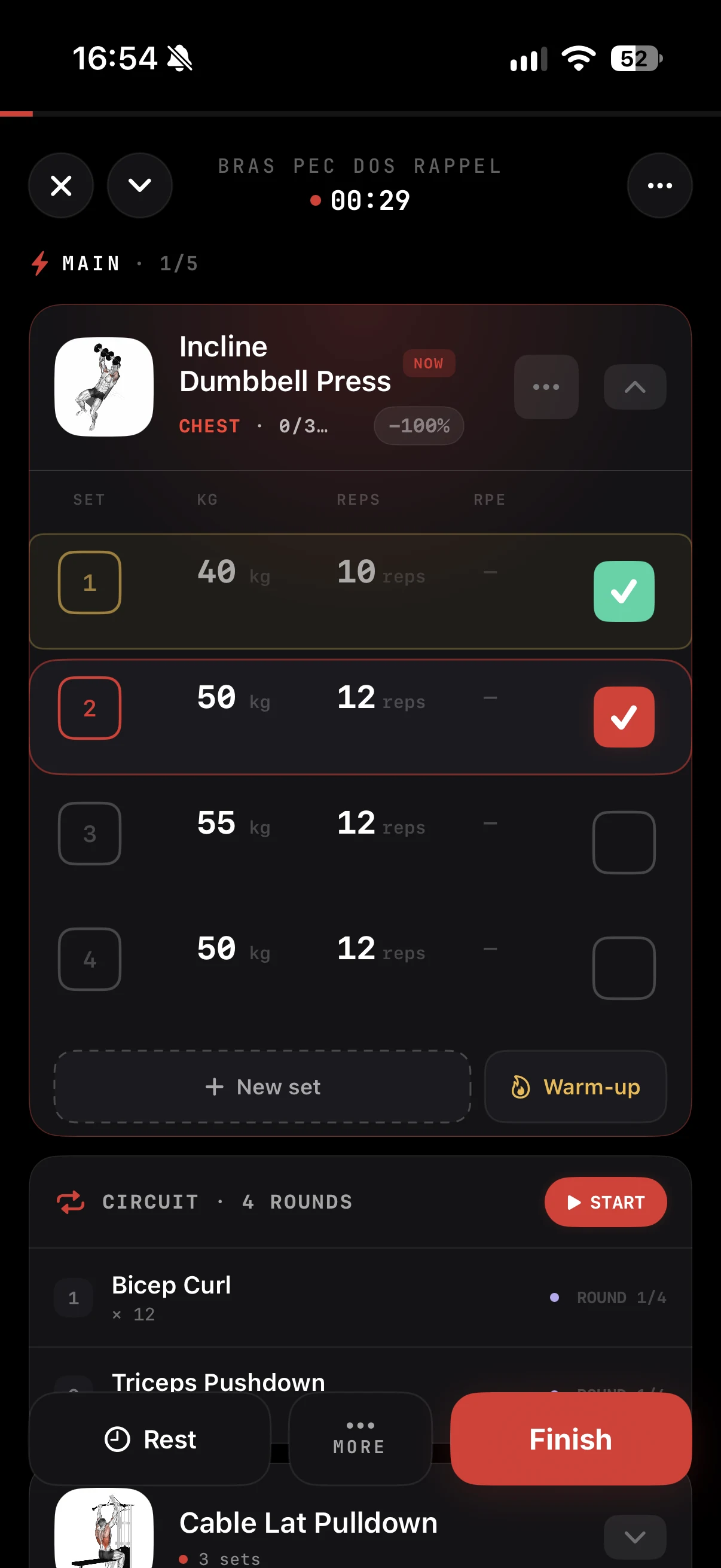
- Log lifting and a GPS run in one session. The decisive test: can the app record a set of deadlifts and a 5km GPS run in the same continuous timeline, without you closing one app to open another? If the run lives in one tool and the lift in another, it's not a hybrid app, it's two apps.
- Hyrox station support. Even if you don't race Hyrox, station support is a good proxy for hybrid seriousness. Does the app know the sled push, farmer's carry, wall ball, sandbag lunge as objects, not just as untagged "custom exercises"? A race-simulation mode that segments a runs-plus-stations session is the clearest sign an app understands hybrid.
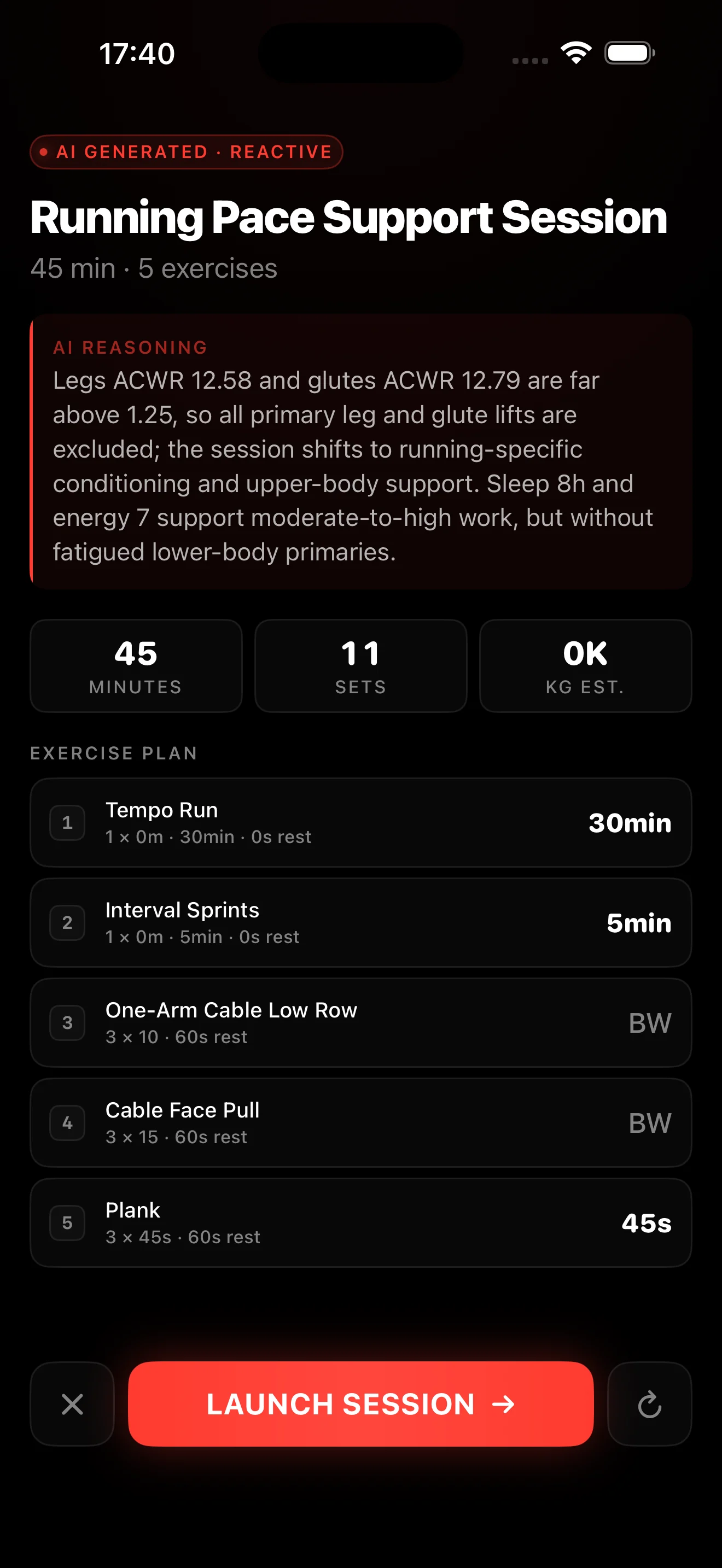
- Load management and ACWR. The acute-to-chronic workload ratio (ACWR) is the most useful risk-management tool in concurrent training, because it captures the combined strength-plus-run load spikes that precede injury. It only exists if both modalities feed the same analytics engine. An app that shows ACWR on your lifting but not your running gives you half the picture.
- AI session debrief. Hybrid data is richer and therefore heavier to read manually: paces, HR by zone, tonnage, RPE, all in one session. An AI post-session debrief that summarizes the session in plain language within seconds removes that cognitive load and surfaces trends you'd otherwise miss. It's the difference between logging data and using it.
- Hybrid programming, not two templates glued together. Does the app offer programming that respects concurrent-training rules (session ordering, polarized run distribution, enforced deload weeks), or is it a strength template library and a running template library sitting side by side? Real hybrid programming knows placement matters as much as content.
If you only test one thing, test requirement #1. An app that logs a lift and a run in the same continuous timeline almost always passes the other four. An app that fails there fails everywhere else.
An honest look at the alternatives
Three families of tools come up when you search for a hybrid training app. Each is good at something. None ticks all five requirements above on its own, and that's precisely the gap native hybrid training fills.
The strength apps: Hevy, Strong, Fitbod
Hevy is the best pure-strength tracker on the market, and Strong isn't far behind. Set-by-set logging is the gold standard, the exercise libraries are huge, and Hevy's social layer genuinely helps accountability. Fitbod adds an AI-suggestion layer around recovery and muscle balance. The common thread: these are strength apps. They don't log runs natively. You pause the workout to launch Strava, or accept that your run data lives elsewhere. For an athlete whose primary identity is "I lift" and who runs on the side, that's a workable trade. For a true hybrid athlete, it drops you back into the problem you started with.
The cardio apps: Strava and friends
Strava is the de facto social network for running, and its GPS tracking is excellent. Nike Run Club and native watch apps cover the basics well. But on the strength side they're empty: no set-by-set logging, no load management, no tonnage tracking. Strava can receive a completed strength session via HealthKit, but it doesn't store the structured data you need to drive a block. It's the cardio half of the puzzle, never the strength half.
The DIY stack: Hevy + Strava
This is the recommendation you'll see most on forums: Hevy for strength, Strava for cardio. It combines the two best single-discipline apps, and for casual use it's enough. The flaw is structural: Hevy and Strava don't talk. Your strength app has no view of your run volume, your run app has no view of your lifting fatigue, and neither can compute a combined ACWR. You are the middleware: you copy data between them by hand. As noted above, that human middleware gives out around week six. It's not a bad stack. It's a stack that puts the integration burden on you instead of the app. If Hevy is your starting point and you're aiming at a Hyrox, our ZON vs Hevy comparison spells out what the migration actually changes.
The dedicated hybrid apps
A newer wave of apps (HYBRD, Hypla, coach-led apps like Nick Bare, and specialized Hyrox trackers) attacks this gap directly, and that's good for the category. They vary on two axes: programming-first vs tracking-first, and coach-led vs self-coached. Coach-led models are excellent if you buy into one coach's style, but you're renting opinions, and switching coaches resets your data context. Pure Hyrox trackers are strong on race day but often thin on the strength side day to day. The real decision axis isn't feature-list length: it's how integrated strength and endurance actually are, and how much manual work the app removes.
Lifting, GPS runs and conditioning in one session
ZON logs strength and endurance in one session player, with combined ACWR, an AI post-session debrief, and Apple Watch sync. The athlete app is free.
Why ZON fits the hybrid profile
ZON was built around a single idea: hybrid training natively, not bolted on. Strength, GPS runs, conditioning, and recovery are programmed in one builder and logged in one session player that adapts to the modality. In practice, that means your heavy Monday lift and your easy Tuesday Z2 run live in the same timeline, with the same load analytics on top. Here are the features that make that real, presented honestly, with what they do and don't do.
Native hybrid sessions + Apple Watch
The ZON session player adapts to strength, GPS runs, and conditioning blocks inside one continuous session: GPS run tracking in the same log as your lifts, so you don't switch apps between a set of deadlifts and a GPS-tracked run. Apple Watch and Garmin sync runs through HealthKit, so your HR and runs flow in with no manual entry. That's requirement #1 from the guide, shipped: one timeline across strength and endurance.
Magic Import: your existing program in seconds
If you arrive with an existing program in an Excel sheet or PDF, the classic case when you migrate from another app or a coach, the AI import (Magic Import) converts it into a structured ZON program. You don't start from scratch, which is the #1 friction that stops people from switching tools. That's the programming side; your run history comes in separately via Apple Health or Garmin.
SITREP: AI post-session debrief + weekly report
At the end of a session, ZON produces an AI debrief in plain language within seconds of your last set. Each week, an AI report (the SITREP) consolidates your load, ACWR, PRs, and trends across strength and running, not just one of them. This is where the integration pays off: combined ACWR is only possible because both modalities live in the same engine.
Workout Copilot + Form Check
The Workout Copilot (ZON Copilot) is an in-app chat for programming questions, exercise alternatives, and form cues. Form Check runs an AI analysis on a video of a set you film and sends back technique corrections, no coach required. It's part of ZON Pro.
What ZON doesn't do (yet)
To stay honest: ZON's exercise library is narrower than Hevy's by raw count, because we've focused on what hybrid athletes actually use. If you powerlift on the side and need twelve bench variations, the library is tighter. The app is on iOS, Android is in beta, and there is no web version of the athlete experience. Localization ships EN and FR. And if you want a coach-led plan signed by a known name, a model like Hybrid Coach will suit you better. ZON is the OS, not a branded plan.
The price
ZON is free to download, and the free version already lets you log your sessions. ZON Pro, an App Store subscription, adds AI-generated programs, predictive analytics, AI form analysis, automatic post-workout analysis and your full history. It's the lowest-risk way to test the native hybrid workflow: you can log a full week (a heavy lift, a GPS run, a race simulation) and see whether the unified picture changes how you train, without spending anything.
How to choose the right hybrid app for you
Three profiles. Most athletes fit cleanly into one.
You're strength-first, running is a side goal
Stay on Hevy or Strong for the strength side and use your watch's native run mode. Accept that your hybrid picture will be coarser. If you shift toward a real hybrid goal (a Hyrox, a half marathon while keeping strength), move to a native hybrid app so load management starts to matter.
You're genuinely hybrid and self-coached
This is the profile ZON is built for. Grab the free athlete app, import your program with Magic Import, log a full week, and read the SITREP at the end. The real test isn't the home screen: it's whether the combined ACWR and AI debrief make you adjust a session you'd otherwise have forced blind.
You want a signed, coach-led plan
A coach-led model (Hybrid Coach, Nick Bare and others) suits you better if you want to follow a named coach's plan hands-off. Commit to a full block before evaluating, because switching coaches resets your data context. If you already have your own coach, ask whether they're on ZON Pro. You'd then share the same timeline.
Closing
The best hybrid training app for you comes down to one choice: do you want to carry the integration burden yourself, or do you want the app to carry it? Single-discipline combos are excellent in their lane and leave you reconciling data by hand. A native hybrid app puts strength and endurance in one timeline, computes combined ACWR, and hands you a debrief you actually use. Map the five requirements to your situation, test the most promising app across a full week, and let the data decide. If you're genuinely hybrid, the ZON athlete app is free: the lowest-risk place to see the difference.
- ZON athlete app product page, features and modalities, justzon.com/app-athlete.
- Sibling ZON guide, how to combine strength and running (interference effect, session ordering).
- ZON Hyrox app comparison, best Hyrox workout app (head-to-head on runs and stations).
- App Store listings for Hevy, Strong, Fitbod, Strava, HYBRD and Hypla (feature claims cross-checked July 2026).
- Hyrox official site, 8-station specifications and division weights, hyrox.com.