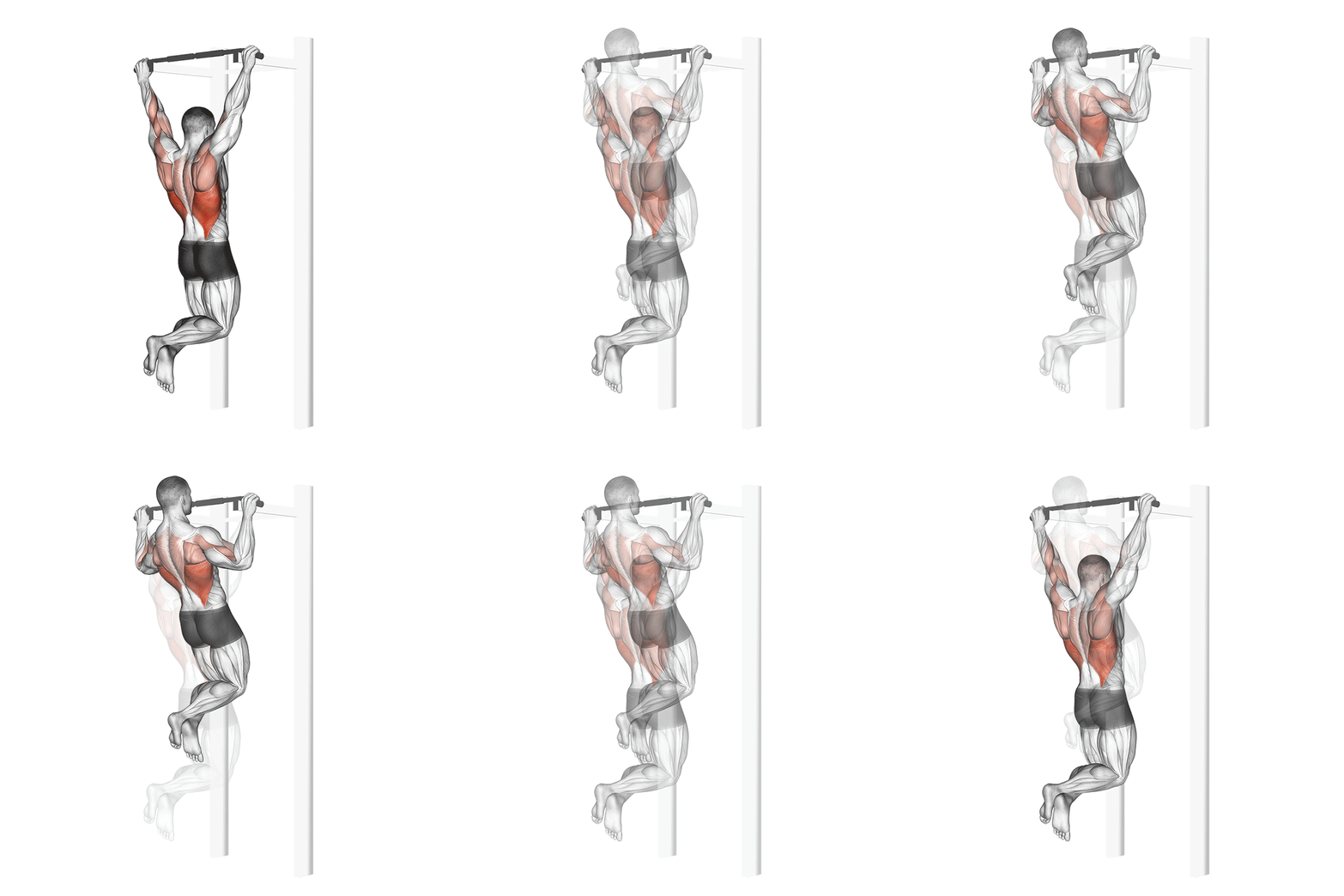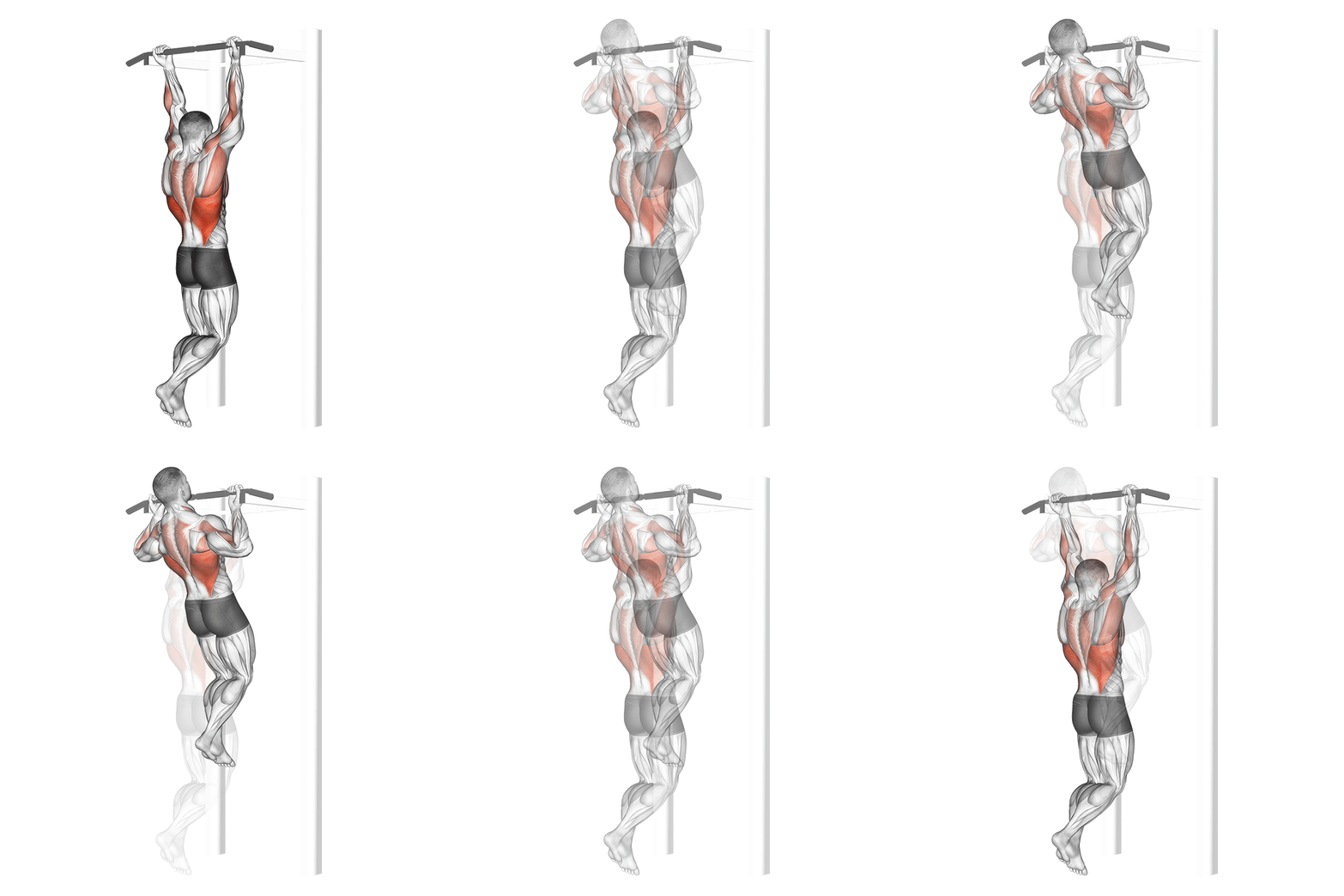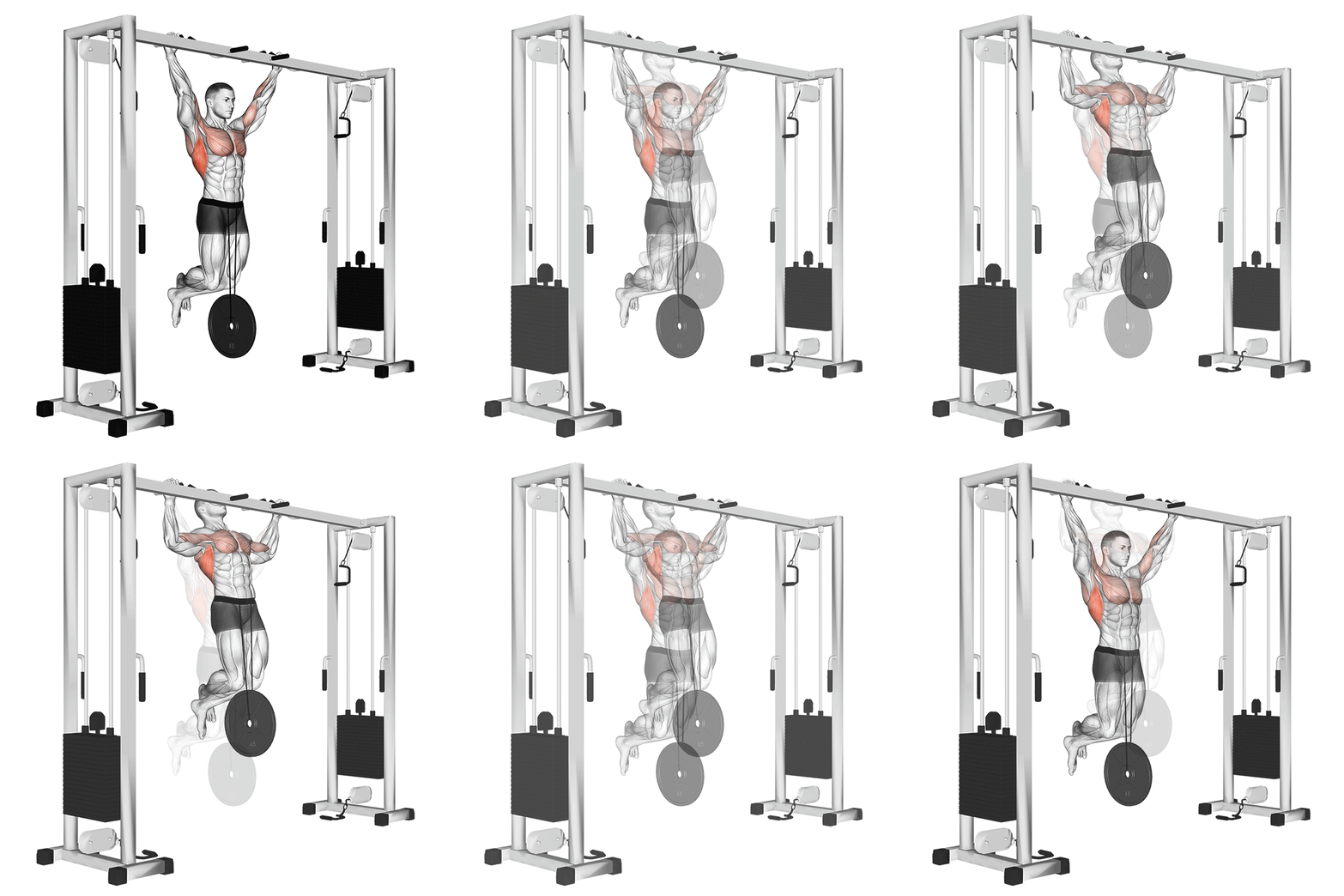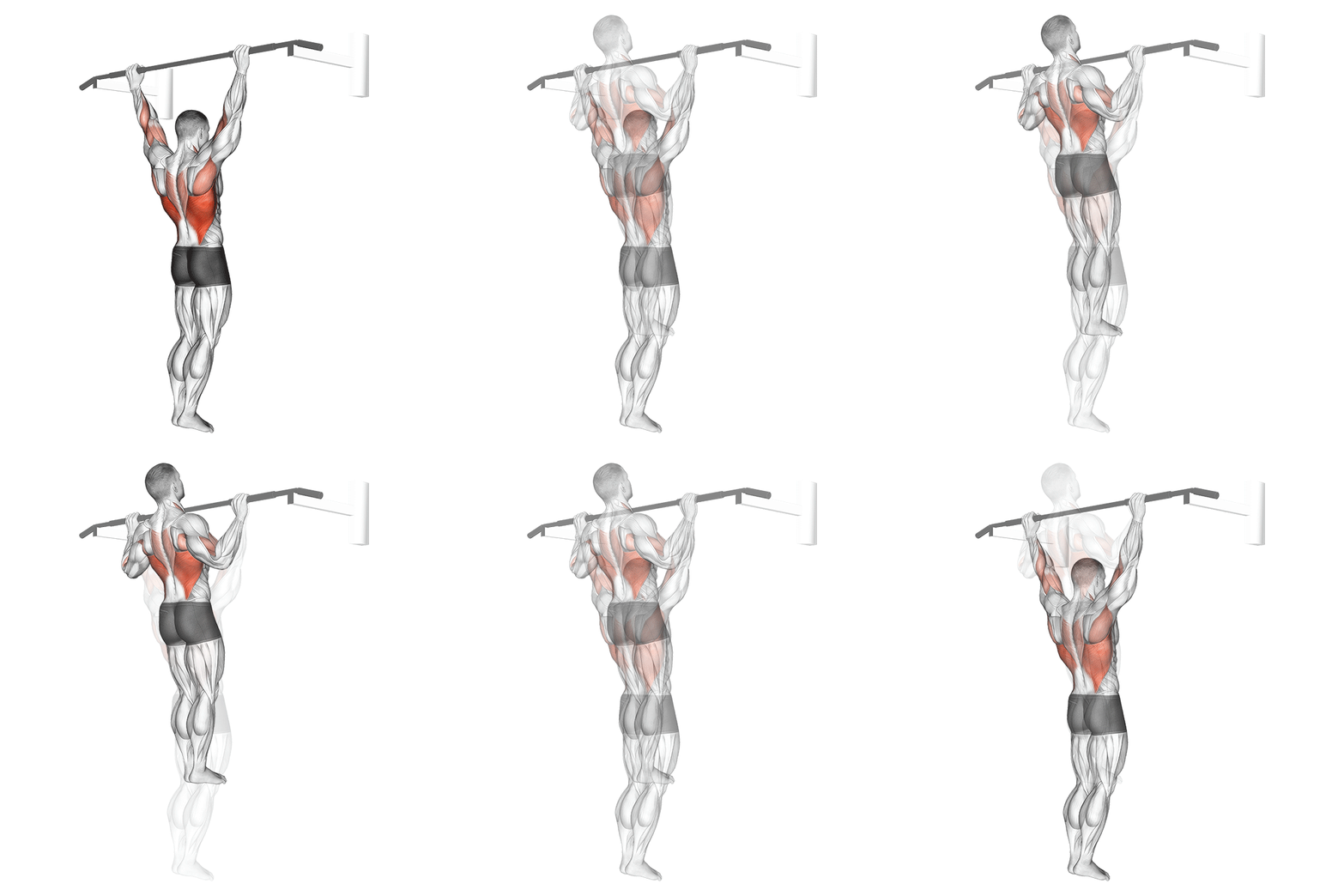
What is the wide-grip pull-up?
The wide-grip pull-up is a strict pull-up with the hands set roughly one and a half shoulder widths apart, palms facing away. The wider hands put the shoulders into more abduction, which shifts work toward the lats and teres major and takes some away from the biceps, while also shortening the range of motion and cutting your rep count. Compared with a standard pull-up it is a worse all-round strength builder and a better back-width specialist. It belongs to athletes who already own 8-10 clean standard reps and want a lat-biased variation, not to beginners still hunting their first pull-up.
How to do the wide-grip pull-up
- 1
Measure your width
Grip the bar with each hand about one hand-width outside your shoulders, palms away, thumbs wrapped. Wider than that is cosmetic; the bar's bends are not a target.
- 2
Build the hang
From a full hang, pull the ribs down, squeeze the glutes and draw the shoulder blades slightly down so the shoulders stop riding into your ears. Legs together, just in front of you.
- 3
Pull the bar to your collarbones
Drive the elbows down toward your back pockets and bring your chest up to the bar. Think of pulling the bar to your collarbones, not of sneaking your chin over it.
- 4
Lower to a full hang
Take two counts down to straight elbows while keeping the shoulder blades engaged. The bottom stretch is where the lats earn the most; do not cut it short.
Pro tip
Set your width from the top of the rep, not the bottom: pull up once and look at your forearms. Vertical forearms mean the width is right; forearms angled inward mean you went too wide and amputated the range. Most lifters are strongest, and safest, just one hand-width outside the shoulders.
Common mistakes
Snow-angel width.
Grabbing the bar as wide as it allows shrinks the range to almost nothing and grinds the shoulders at the bottom. Cap the width where your forearms stay vertical at the top; you lose nothing but bragging rights.
Chin-poking reps.
Craning the neck to get the chin over the bar fakes the top while the chest stays low. Keep the head neutral and finish the rep with the chest rising toward the bar; if it cannot, the set is over.
Hanging dead between reps.
Letting the shoulders unpack completely at the bottom dumps the load onto passive structures and makes the next pull start from zero. Reach a full hang, but keep the shoulder blades lightly set the whole set.
Kipping through the sticking point.
Swinging the legs to clear the hardest few centimetres means the weight is simply too heavy for strict work. Drop to fewer reps per set or use a thin band, and save the kip for conditioning days.
Variations and progressions
Easier
Band-assisted wide-grip pull-up
Loop a band over the bar and under one foot, keeping the same wide hand position. You rehearse the exact groove while the band shaves off just enough bodyweight to finish clean sets.
Harder
Weighted wide-grip pull-up
A dip belt and a small plate once you own 10 strict bodyweight reps. Add 2.5 kg at a time; the wide position forgives heavy jumps far less than a standard grip does.
Alternative
Wide-grip lat pulldown
The same pattern with an adjustable load, useful for taking sets close to failure without a spotter or a band. Program it after your pull-ups rather than instead of them.
How to program it
Three protocols by goal. Pick one per cycle and aim for progression on load or distance.
| Goal | Sets × distance | Load | Rest |
|---|---|---|---|
| Back width (hypertrophy) | 4 × 6-10 | Bodyweight, 2 reps in reserve | 2-3 min |
| Strength | 5 × 3-5 | Add load once you own 10 strict reps | 3 min |
| Volume (EMOM) | EMOM 10 min: 3-4 reps | Bodyweight, keep 2 reps of margin | Remainder of each minute |
Wide-Grip Pull-Up FAQ
Are wide-grip pull-ups better for the lats than regular pull-ups?
They bias the lats and teres major a little more and the biceps a little less, but the difference is a nudge, not a different exercise. A standard grip taken through a full range with more total reps grows the back just as well. The honest answer: pick the grip you can progress on for months, and rotate the other in as an accessory.
How wide should a wide-grip pull-up actually be?
About one hand-width outside each shoulder, which lands near one and a half shoulder widths total. The functional test is at the top: forearms vertical means correct, forearms angled inward means too wide. Beyond that point you lose range of motion, rep count and shoulder comfort while gaining nothing measurable in lat work.
Why can I do fewer wide-grip pull-ups than normal ones?
Two reasons stack up. The wide position shortens the biceps' lever, so a strong helper muscle contributes less, and the abducted shoulder is simply a weaker pulling angle. Losing a couple of reps versus your standard grip is normal and expected; if you lose half your reps, your standard grip volume is probably carried by momentum.
Will wide-grip pull-ups give me a V-taper?
They train the muscles that create the look, the lats and teres major that flare out from the armpit, so they belong in the plan. But a visible V-taper comes from total back growth over time plus a lean enough waist, not from one grip choice. Treat the wide grip as one tool in a rotation with rows, pulldowns and standard pull-ups.