What is the suspension row?
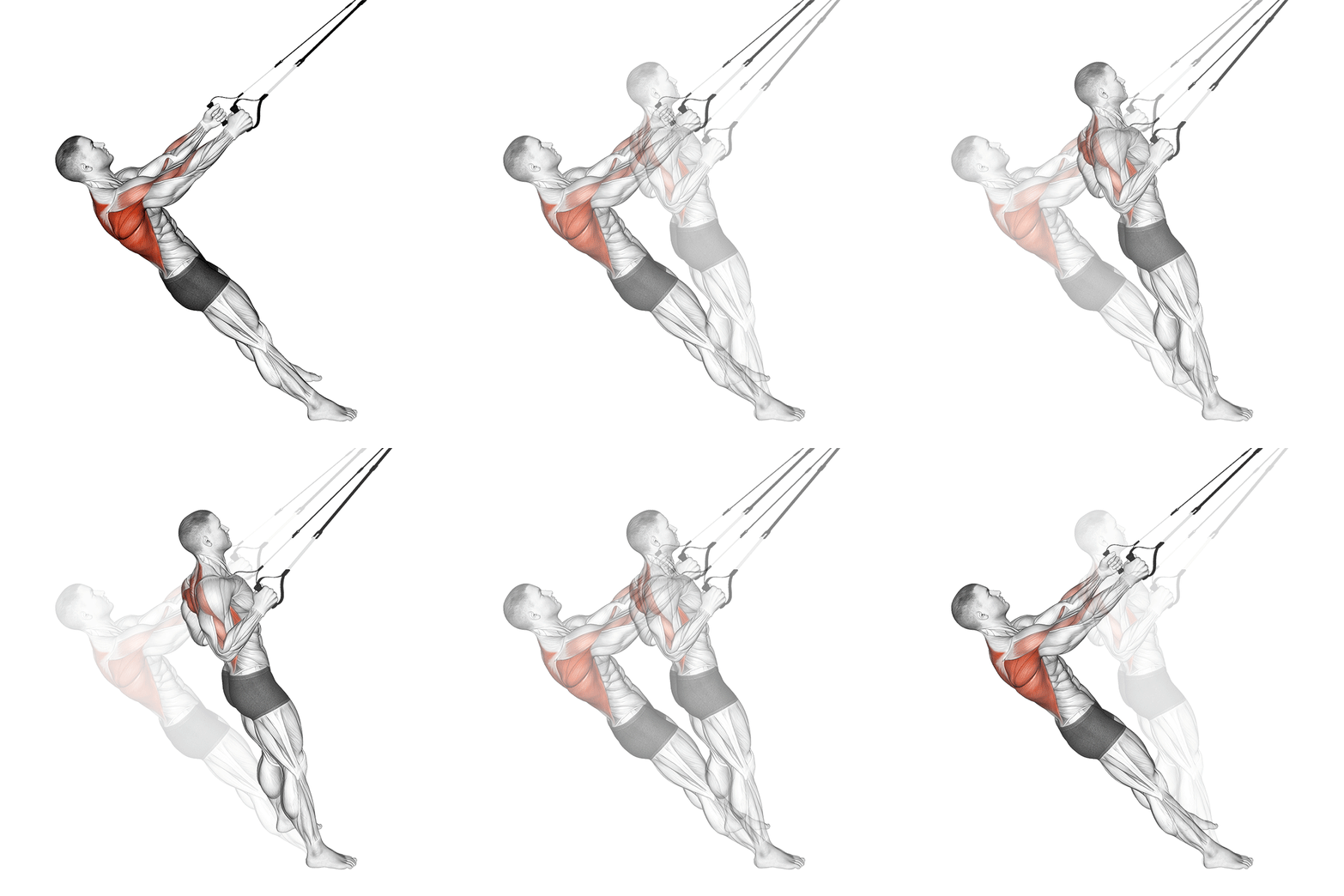
The suspension row is a bodyweight row performed hanging from straps (TRX) or gymnastic rings: heels on the floor, body in one rigid line, you pull your chest to your hands. Compared with the inverted row on a fixed bar, the handles move freely, so your wrists rotate naturally from palms-down to neutral during the pull, which most people find kinder on elbows and shoulders. The free handles also wobble, forcing the scapular stabilizers and grip to work overtime, and the load changes instantly with foot position. It's the most adjustable horizontal pull there is: beginners building toward pull-ups and advanced athletes chasing strict volume both get served.
How to do the suspension row
- 1
Set the straps and your angle
Shorten the straps so the handles hang around hip height. Grab them, lean back with straight arms, and walk your feet forward until the first rep feels like a 7 out of 10.
- 2
Lock the plank
Squeeze the glutes, brace the core, tuck the ribs. From ankles to head you're one piece of wood; nothing bends during the set except your arms.
- 3
Pull the chest to the hands
Start the pull by drawing the shoulder blades back and down, then drive the elbows past the ribs. Let the palms rotate toward each other as you rise, until the hands reach the lower chest.
- 4
Lower on a three count
Resist the way down for two to three seconds until the arms are completely straight and the shoulder blades glide forward. Full stretch, hips still high, then pull again.
Pro tip
Brace your feet against a wall, the base of the rack or a heavy dumbbell. On a smooth floor, a chunk of every rep leaks into stopping your heels from sliding, and your angle quietly changes mid-set. Fixed feet keep the row honest and make progress measurable.
Common mistakes
Hips breaking the line.
Sagging hips shorten the lever and fake strength; piked hips do the same. Film one set from the side: if your body bends, squeeze the glutes harder or take an easier angle.
Shrugging toward the ears.
Starting the pull with the upper traps turns a back exercise into a neck exercise. Set the shoulder blades back and down first, then pull; the elbows lead, not the shoulders.
Skipping the bottom half.
Reps that stop at half-straight arms skip the range where the back grows and the straps get hard. Earn every rep: dead straight arms, a beat of stretch, then pull.
Kipping with the hips.
A hip thrust at the sticking point gets your chest to the handles without your back doing the work. When reps stall, step back a shoe length instead of cheating the line.
Variations and progressions
Easier
High-angle row, feet back
Walk the feet back until your body is closer to vertical. The more upright you stand, the less bodyweight you pull. Perfect for learning the plank and strap control.
Harder
Feet-elevated or single-arm row
Put your heels on a box so your body drops below horizontal, add a weight vest, or row with one arm while resisting the twist. Each option turns the strap row into a genuine strength lift.
Alternative
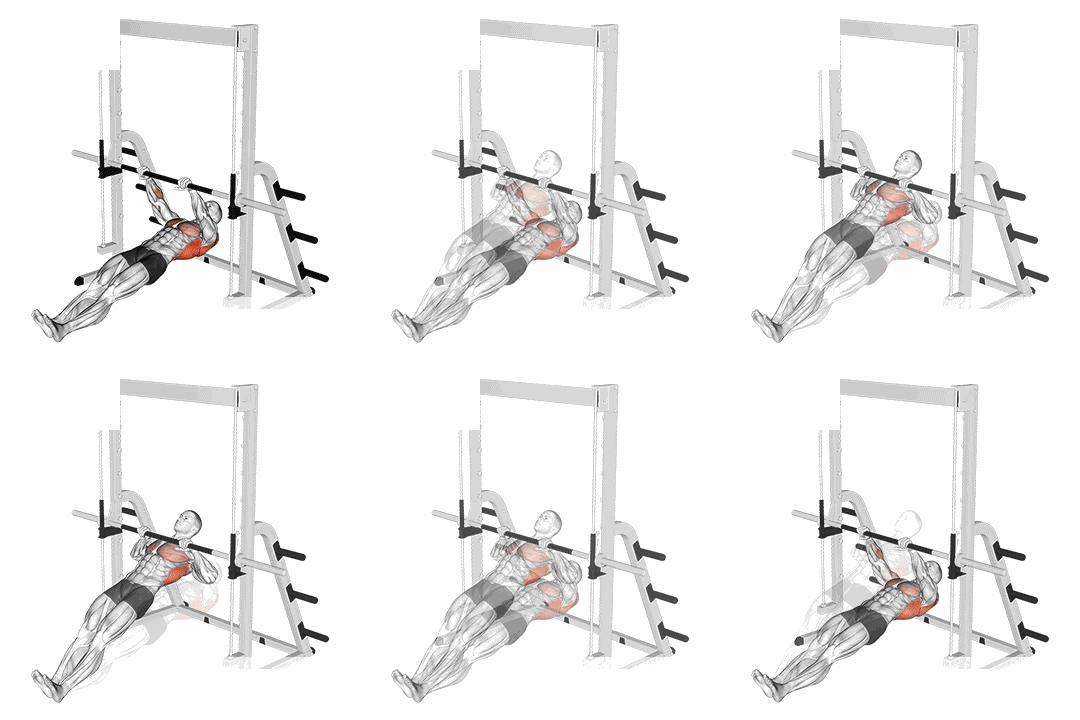
Inverted row on a bar
Same pattern on a fixed bar in a rack or Smith machine. The fixed grip is easier to standardize session to session, and lowering the bar height gives clean progression jumps.
How to program it
Three protocols by goal. Pick one per cycle and aim for progression on load or distance.
| Goal | Sets × distance | Load | Rest |
|---|---|---|---|
| Strength | 4 × 6-8, feet elevated | Hard angle, strict line | 2 min |
| Muscle / volume | 3-4 × 10-15 | Moderate angle | 60-90 s |
| Pull-up groundwork | 5 × 5 with 3 s negatives | Angle you fully control | 90 s |
Suspension Row FAQ
Suspension row or inverted row on a bar?
They train the same pattern; pick by constraint. Straps give rotating handles, a longer range at the top and portability; the bar gives a fixed reference that's easier to measure and slightly more stable for max-effort sets. Many lifters use straps for volume and comfort, and the bar when they want standardized progress numbers.
How do I make suspension rows harder without weights?
In order of impact: walk the feet forward, elevate them on a box, slow the negative to four seconds, add a pause with the chest at the handles, then move to single-arm work. Stacked together, those take the movement from beginner level to a row most gym regulars can't finish.
Will suspension rows get me to my first pull-up?
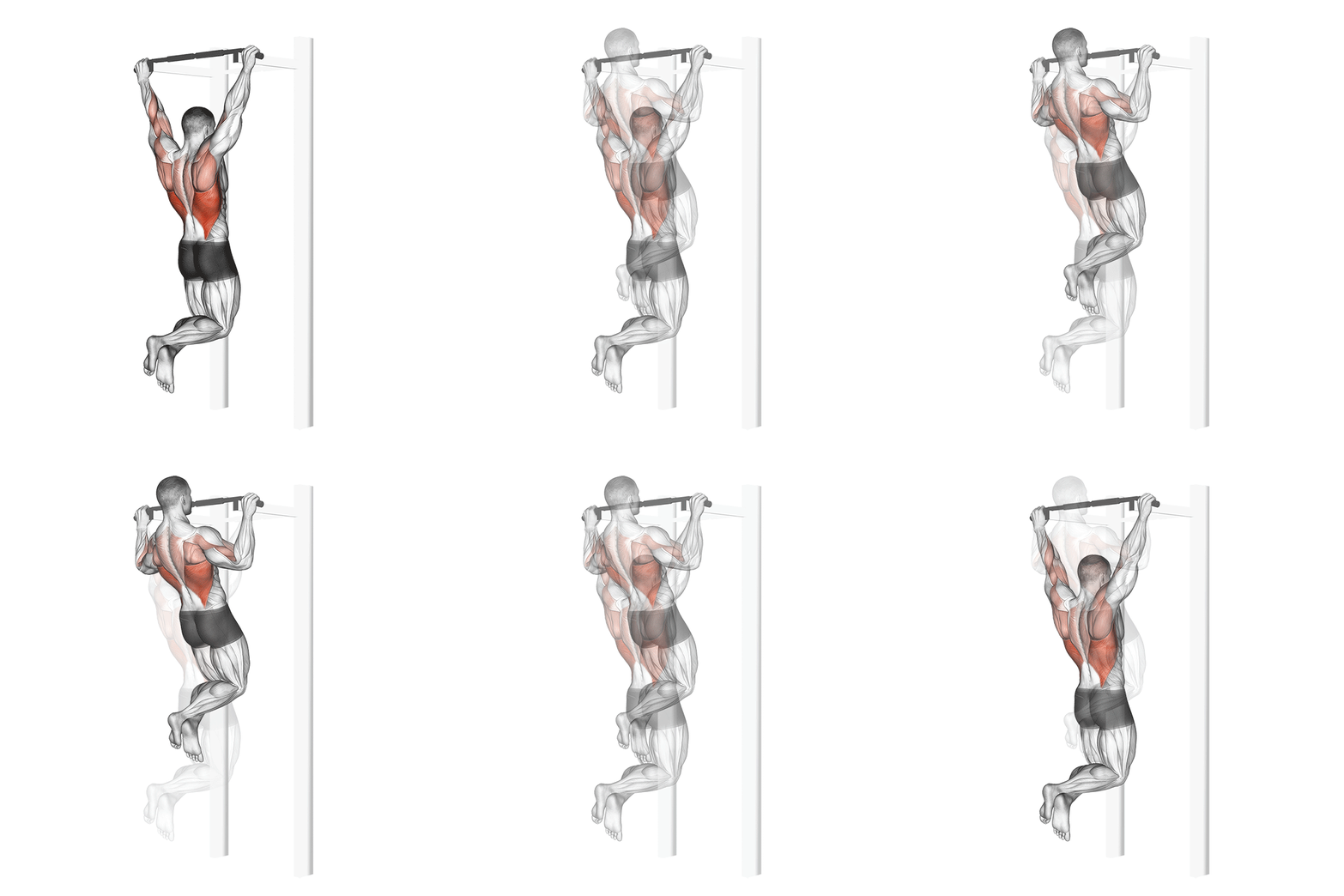
They're half of the recipe. Rows build the scapular control, mid-back and arm flexion a pull-up needs, but the vertical pattern still has to be trained: pair them with dead hangs, scapular pull-ups and slow negatives. Two or three row sessions a week plus that vertical work is a proven route.
Are TRX rows enough to build a big back?
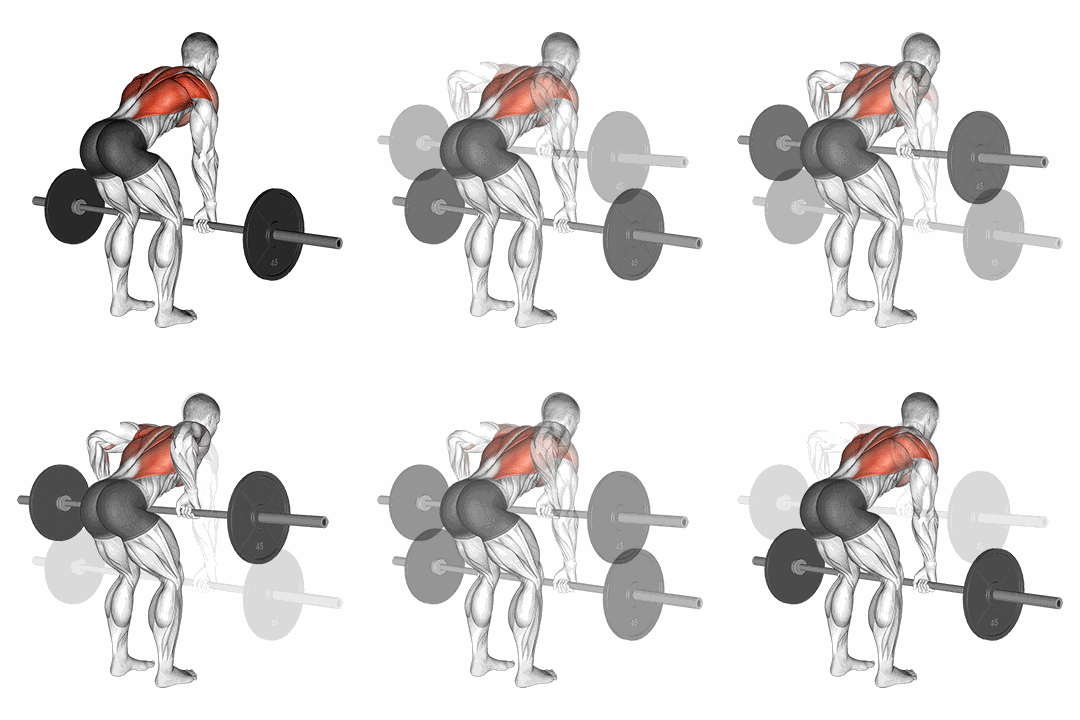
Further than most expect, but not forever. With elevated feet, pauses and single-arm versions you can load the mid-back hard for a long time. Eventually the setup caps resistance, and weighted pull-ups or barbell rows take over as the main course while strap rows become high-quality volume.