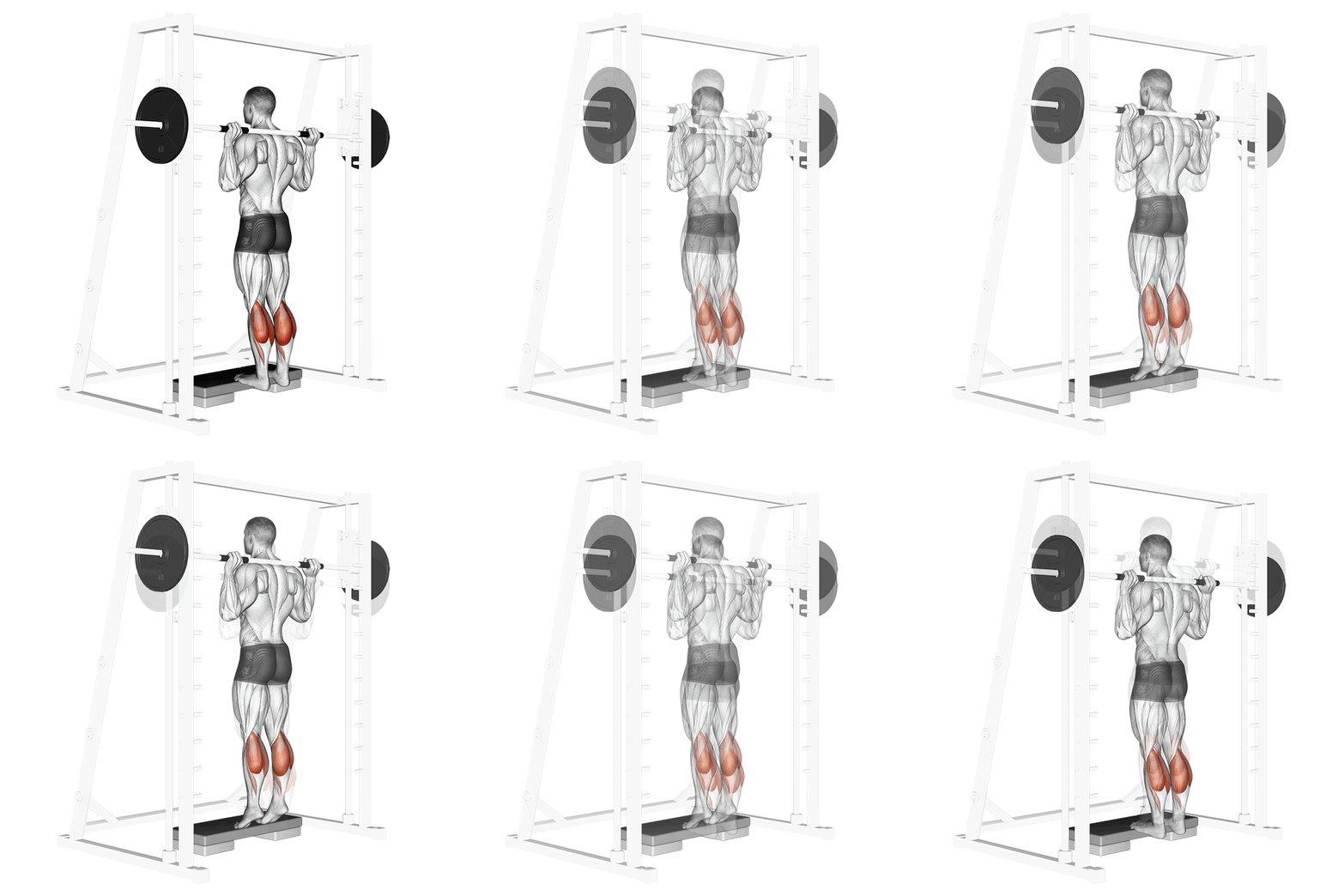
What is the smith machine calf raise?
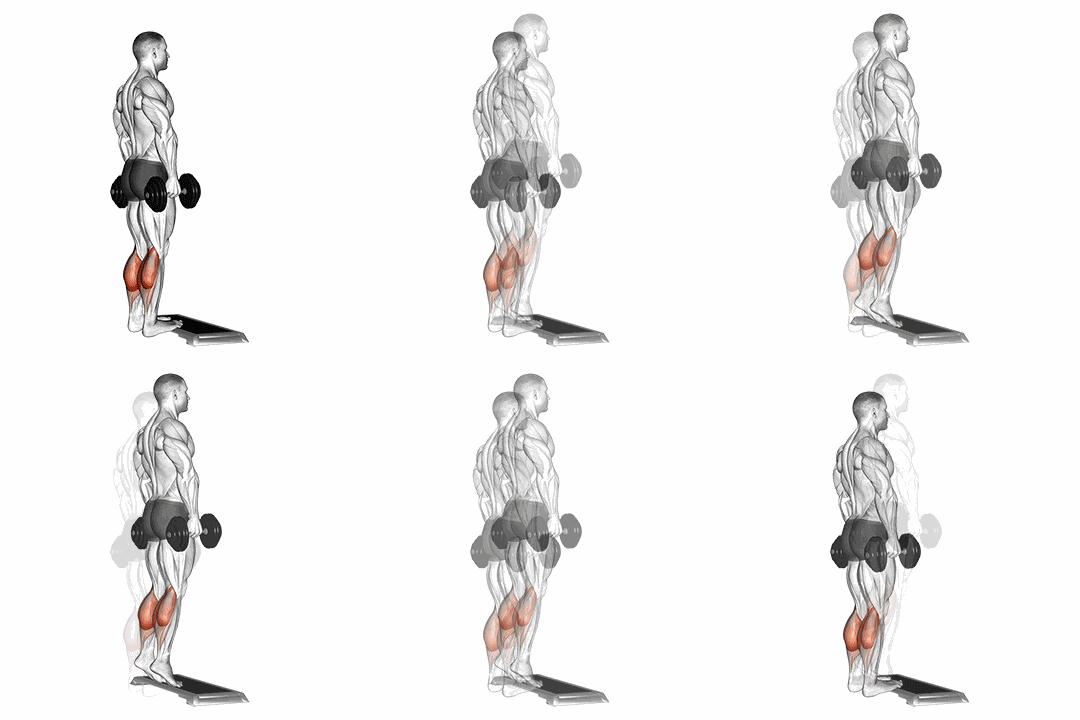
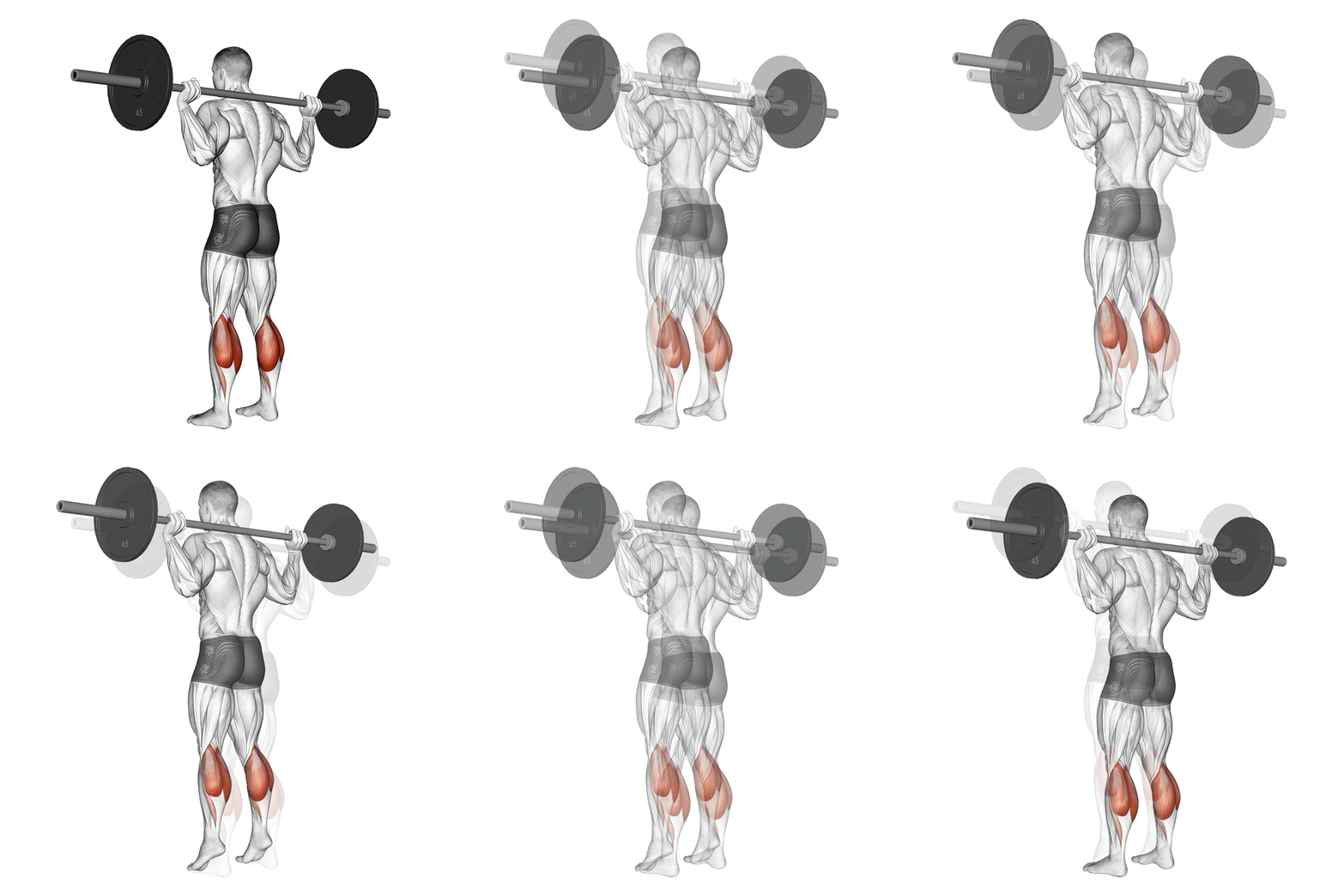
The Smith machine calf raise is a standing, straight-knee calf raise done with the guided bar across your upper traps and the balls of your feet on a block placed directly under the bar path. The fixed rail deletes the wobble that limits a free-weight standing raise, so you can load heavy, set the safety catches just below your bottom position, and push sets to true failure without a spotter. Knees stay locked throughout, which keeps the gastrocnemius, the visible diamond of the calf, in charge of the movement. It is the natural standing-raise choice in any gym that has a Smith machine but no dedicated calf machine.
How to do the smith machine calf raise
- 1
Line the block up with the bar path
Set the bar at shoulder height and place a block or a stack of plates directly under it. Set the safety catches just below the height your shoulders will reach at the bottom of the stretch.
- 2
Get under and stand tall
Bar across the upper traps, balls of both feet on the edge of the block, feet hip width. Stand up straight, rotate the hooks to unrack, and lock your knees: they will not bend again until the set is over.
- 3
Lower to a full stretch
Let the heels sink toward the floor for 2-3 s until the calves pull hard, then hold the bottom for a strict second. The rail keeps you honest: no leaning forward or back to soften the stretch.
- 4
Press to your full height
Drive through the base of the big toes until you stand as tall as possible, squeeze for a second, then begin the next slow descent. Rack by pressing up and rotating the bar back onto the hooks.
Pro tip
The set is won before you unrack: nudge the block until the balls of your feet sit exactly under the bar. Two centimetres of offset turn the fixed rail into a lever that tips you onto your toes or your heels, and the deep stretch at the bottom quietly disappears.
Common mistakes
Skipping the block.
Flat on the floor, the rep ends where the stretch should begin: you keep the top half of the movement and throw away the half that grows calves. Always raise the forefoot so the heels can travel below the level of your toes.
Turning it into a mini squat.
Knees dipping between reps use the quads to bounce the bar and strip tension from the calves. Lock the knees at the start of the set and treat any bend as a failed rep.
Pogo-stick tempo.
Fast, bouncy reps hand the work to the springy Achilles tendon instead of the muscle. Take 2-3 s down, pause a second in the stretch, and make the muscle, not the rebound, start every rep.
Quarter reps under ego loads.
Pile on plates and the range quietly shrinks to a few centimetres around the top. Calves respond to the full arc from deep stretch to full tiptoe; choose the heaviest load that still allows it, not the one that flatters the bar.
Variations and progressions
Easier
Bodyweight calf raise on a step
No bar, just your bodyweight and a stair edge. Perfect for grooving the 2-3 s descent and the paused stretch before the Smith machine adds plates.
Harder
Single-leg Smith calf raise
Same setup, one foot on the block. Each calf now faces the full load, weak sides have nowhere to hide, and the fixed bar makes balancing on one leg a non-issue.
Alternative
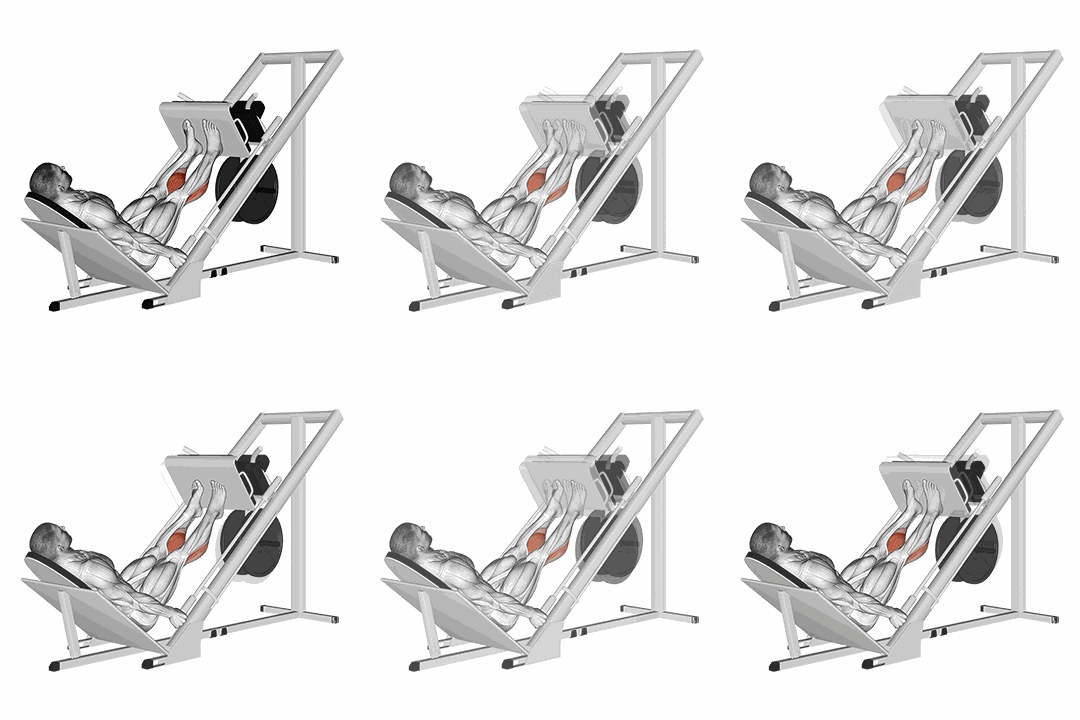
Leg press calf raise
Press the plate with the balls of your feet, knees locked, back supported by the seat. The same straight-leg stimulus with even less setup, and a quick weight change between sets.
How to program it
Three protocols by goal. Pick one per cycle and aim for progression on load or distance.
| Goal | Sets × distance | Load | Rest |
|---|---|---|---|
| Strength | 4 × 6-10 | Heavy, RPE 8, full range | 2 min |
| Hypertrophy | 3-4 × 10-15 | RPE 8-9, 1 s pause in the stretch | 90 s |
| Volume | 2-3 × 15-20 | Moderate, strict tempo | 60 s |
Smith Machine Calf Raise FAQ
Is the Smith machine actually better for calf raises?
For once, yes. Balance adds nothing to calf training: it just caps the load and shortens the range. The fixed rail lets you stand on a small block under a heavy bar without wobbling, and the catches make failure safe. This is one of the few exercises where the Smith machine beats the free barbell outright.
Do I really need a block under my feet?
Yes, and it is not a detail: the stretched bottom half of the rep is where calves respond most, and a flat floor removes it entirely. A step platform, a pair of bumper plates or a purpose-made calf block all work. Aim for heels that drop clearly below your forefoot at the bottom.
Standing or seated calf raises?
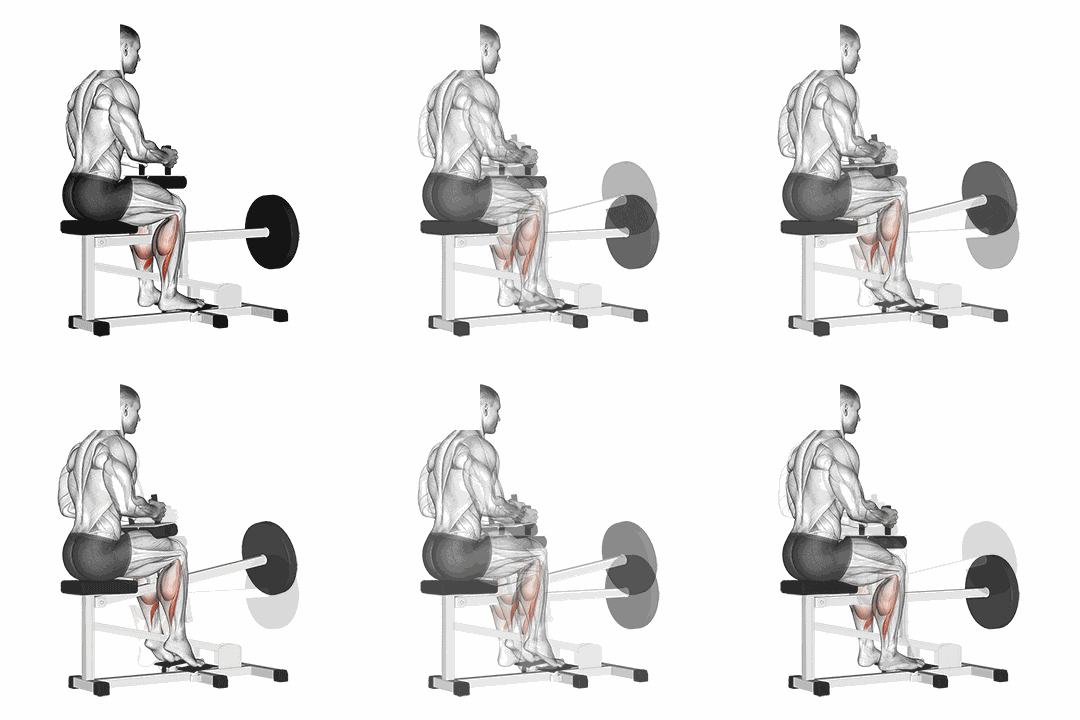
Both, because they train different muscles. Standing with locked knees, like here, loads the gastrocnemius, the visible diamond shape. Seated, with knees bent at ninety degrees, the gastrocnemius goes slack and the soleus underneath does the work. A complete calf program pairs this exercise with a seated raise across the week.
Why won't my calves grow?
Usually because they are trained as an afterthought: fast partial reps, once a week, far from failure. Calves handle your bodyweight all day, so they need an honest stimulus: full range with a paused stretch, sets close to failure, and 2-3 sessions per week. Give this exercise eight strict weeks before blaming genetics.