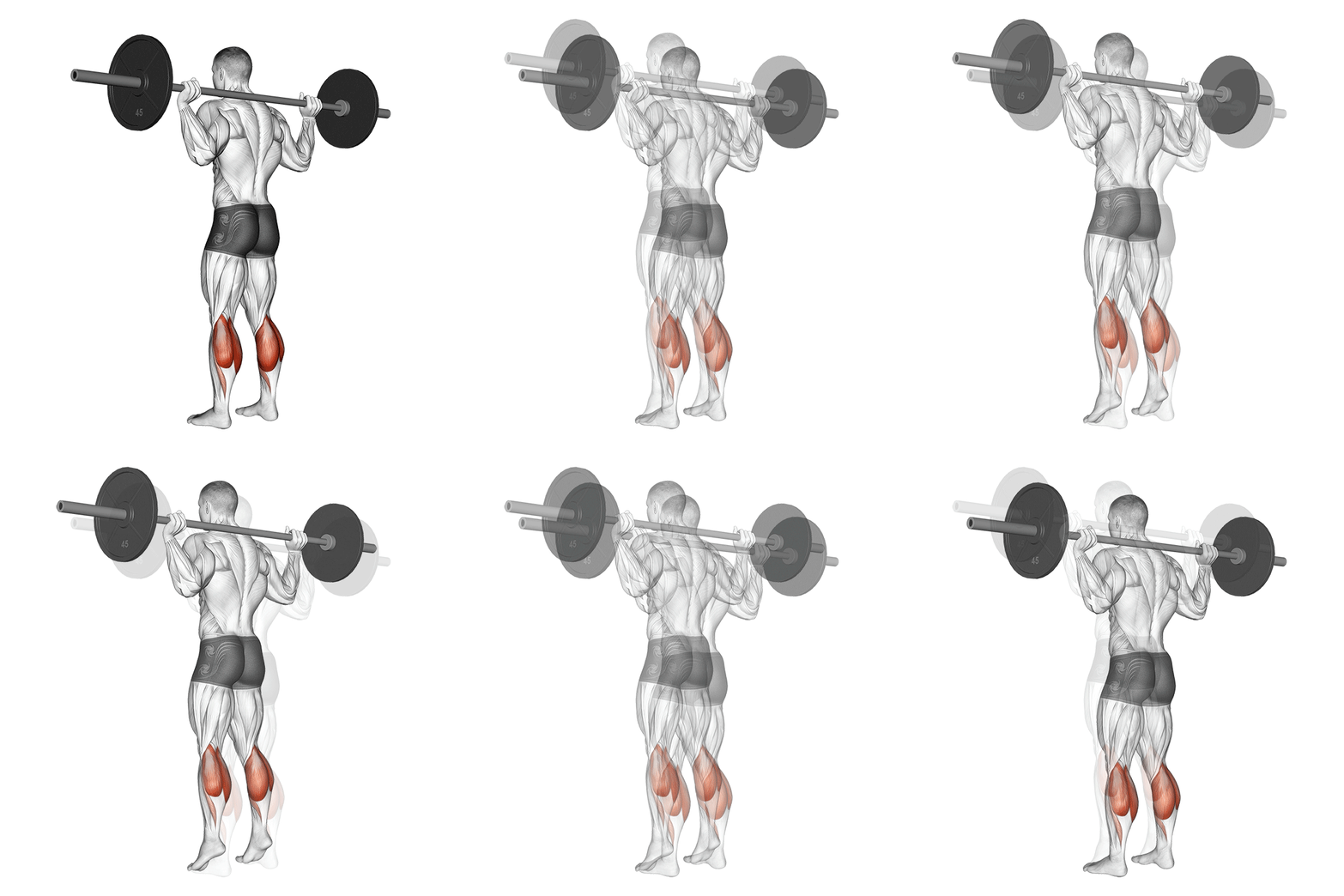
What is the barbell calf raise?
The barbell calf raise is the standing calf raise taken to its logical end: a bar racked across your upper back, the balls of your feet on a plate or step, and your heels travelling through the biggest range of motion you can control. With the knees locked straight, the gastrocnemius does the lifting, exactly the calf fibres that running and jumping rely on. What the barbell adds over a machine is load without a weight-stack ceiling, plus a real stability demand: every rep is also an exercise in not wobbling. That makes it harder to cheat and harsher on sloppy ankles.
How to do the barbell calf raise
- 1
Set up in the rack
Lay a plate or low step on the floor, then take the bar on your upper traps exactly like a squat. Step back once and set the balls of your feet on the edge, hip-width, heels hanging free.
- 2
Lock yourself into one column
Knees straight but not slammed into hyperextension, ribs down, glutes squeezed, eyes on the horizon. The whole body becomes rigid: only the ankles are allowed to move.
- 3
Lower the heels for 2-3 s
Let your heels sink below the level of your toes until you feel a deep stretch through the calf. Come to a complete stop at the bottom, no bounce.
- 4
Rise onto the big toes, pause
Drive through the big toe up to your maximum height and hold for a full second. Ankles stay vertical; they do not roll toward the outside edge of the foot.
Pro tip
Pause a real second at the top and let the stretch settle at the bottom: the Achilles is a spring, and any bounce hands the work back to the tendon instead of the muscle. If you wobble, the fix is slower reps, not shorter range.
Common mistakes
Bouncing out of the stretch.
The rebound comes from tendon elasticity, not muscle, and the set turns into trampoline practice. Dead stop for one second in the stretched position, then climb.
Half reps at the top.
Rising two centimeters and dropping back down is not a rep. Climb to your full tiptoe and hold it: the top is where the calf actually finishes contracting.
Knees unlocking into a mini squat.
A little knee kick pumps the bar up but steals the work from the calves. Knees stay straight from first rep to last: if you have to bend, the bar is too heavy.
Rolling onto the outside of the foot.
Under fatigue the ankles tip outward and the big toe lifts off. Press through the big toe on every rep; it is what keeps the ankle stacked and safe.
Variations and progressions
Easier
Bodyweight calf raise on a step
Both feet on a step, fingertips on a wall for balance. Groove the full range and the one-second top pause before you ever put a bar on your back.
Harder
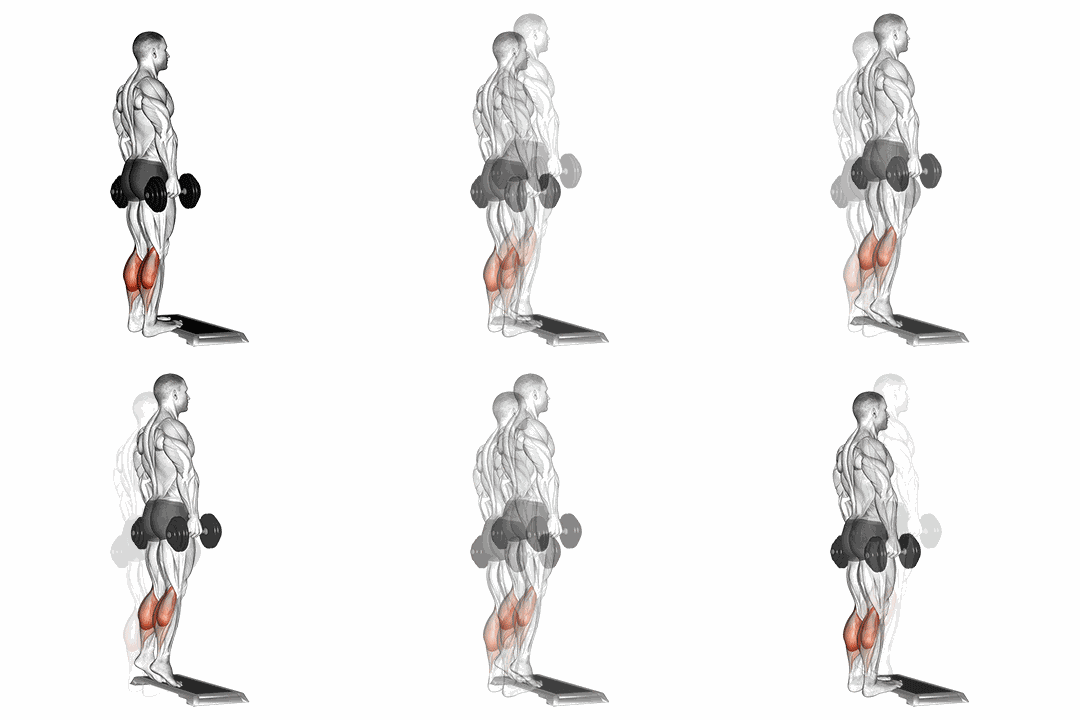
Single-leg calf raise with a dumbbell
One foot on the step, a dumbbell on the same side, free hand on a support. Half the load does double the damage and exposes any left-right gap.
No rack?
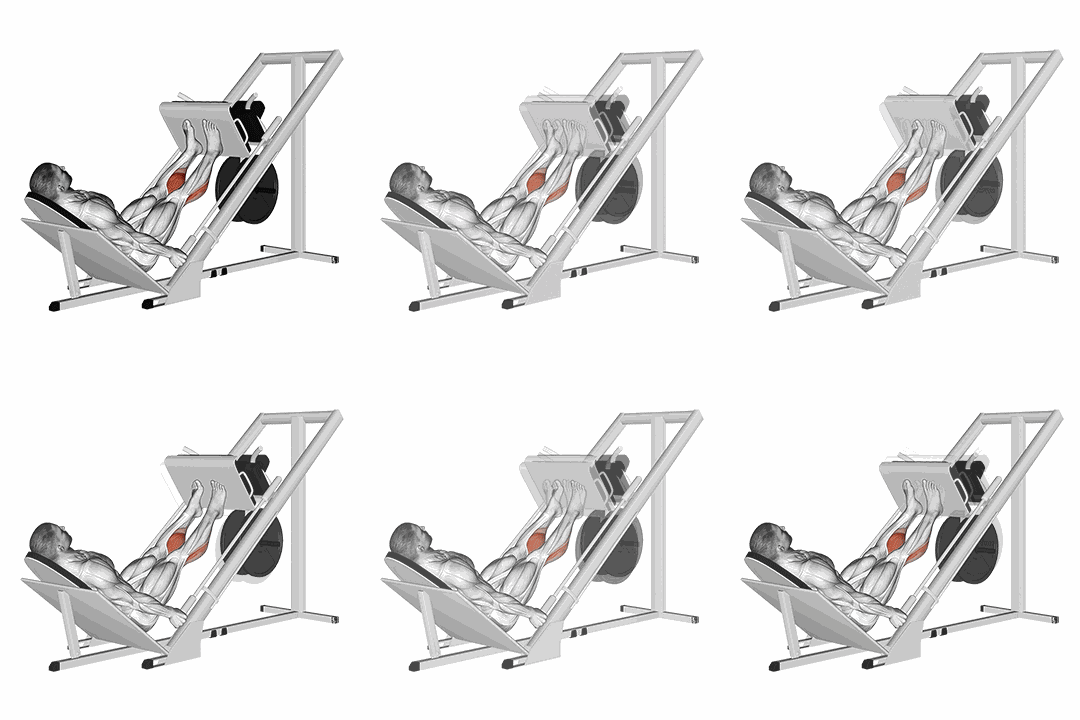
Leg press calf raise
Same movement with zero balance demand. The machine stabilizes everything, so you can load heavy and chase the deep stretch in total safety.
How to program it
Three protocols by goal. Pick one per cycle and aim for progression on load or distance.
| Goal | Sets × distance | Load | Rest |
|---|---|---|---|
| Strength | 4 × 6-8 | Heavy, RPE 8, 1 s pause at the top | 2 min |
| Hypertrophy | 4 × 10-15 | RPE 8-9, 2 s lowering | 90 s |
| Ankle stiffness for running | 3 × 8 | Moderate, 3 s down, 2 s pause at the bottom | 2 min |
Barbell Calf Raise FAQ
Should my knees be straight or bent on calf raises?
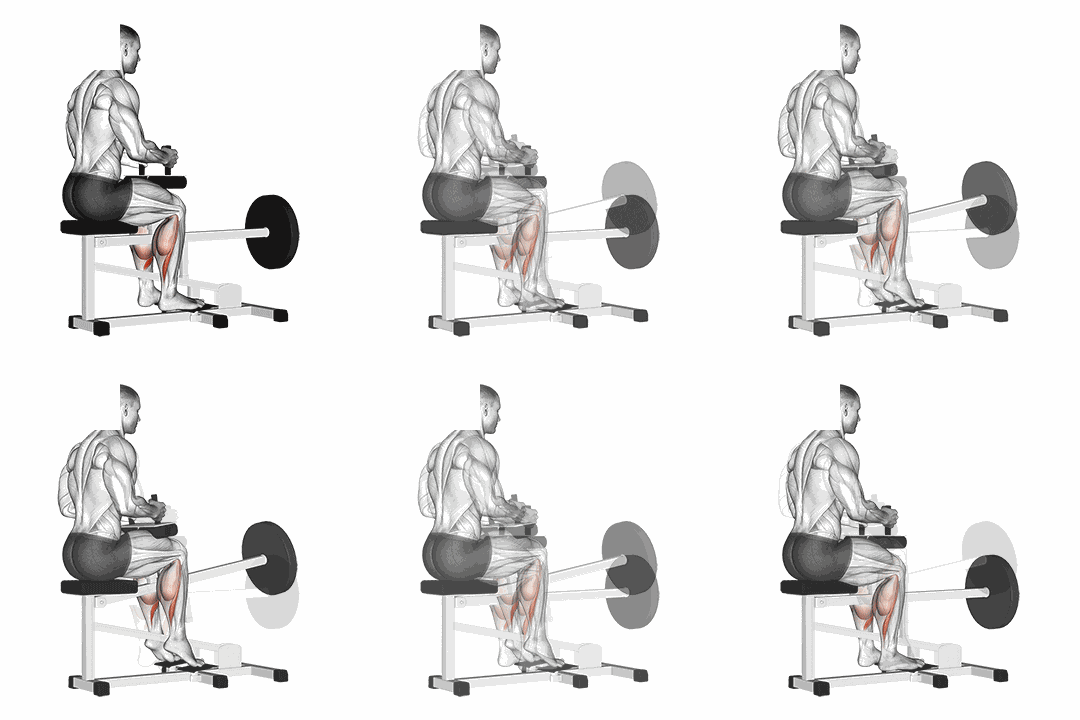
Straight, for this exercise. Locked knees put the gastrocnemius, the big visible calf muscle, in charge. Bending the knees slackens it and shifts the work to the soleus underneath, which is exactly what the seated calf raise machine is for. Both muscles matter if you run, so pair this lift with seated work instead of blurring the two by pumping your knees mid-set.
Do I need to stand on a plate or step?
As soon as your balance allows it, yes. From the floor you only train the top half of the movement; the step adds the stretched half, where the calf does its best growing. A thick bumper plate works, a low step is even better. If the loaded stretch feels sketchy at first, stay on the floor for two weeks, then move up and never shorten the range again.
Barbell or machine for calves?
The calves only read tension, range and time under load: they do not care what provides it. The machine is more stable, so you can push closer to failure safely and load heavier. The barbell version costs you some kilos but trains balance, ankle control and your trunk, and it works in any squat rack, which makes it the pick for home gyms and crowded floors. Do the one you will actually train consistently.