What is the calf raise?
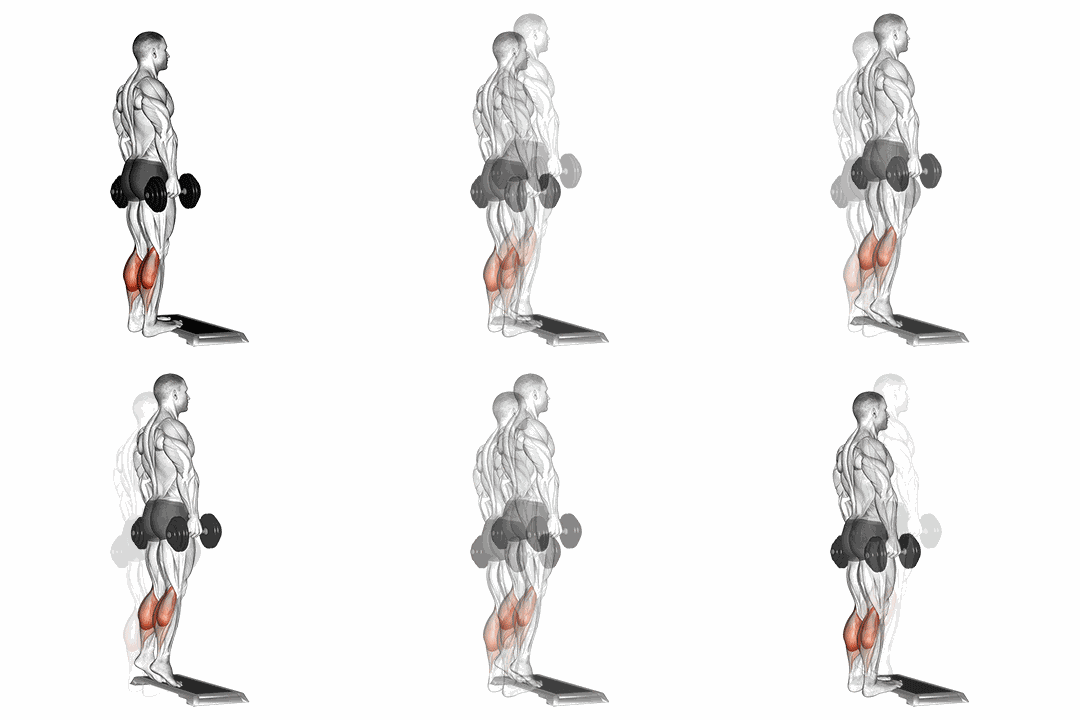
Stand with the balls of your feet on a step, heels hanging off. Drive up onto the toes, pause at the top, lower under control until you feel a stretch. The standing variant emphasises the gastrocnemius (the visible "diamond" calf muscle) more than seated raises, which hit the soleus underneath. For runners, jumpers, and Hyrox athletes who push sleds and carry sandbags, calf strength is non-negotiable. Most lifters do too few reps with too short a range. Fix both and the calves grow.
How to do the calf raise
- 1
Set up on a step
Balls of the feet on the edge, heels hanging in space. Hold a dumbbell in one hand, the other hand on a wall for balance.
- 2
Drop to a full stretch
Heels well below the step. This is where most lifters cheat the range and stunt growth.
- 3
Drive up explosively
Push the floor away through the big toe. Rise as high as possible. The peak contraction matters as much as the stretch.
- 4
Pause and lower
One-second hold at the top, then a 2 to 3 second lower. Tempo is what hypertrophies the calves, not just load.
Pro tip
Calves recover fast and tolerate volume. 4 to 5 sets twice a week, 12 to 20 reps each, with full range. Anything less and you're wasting your time.
Common mistakes
Half range of motion.
Bouncing in the middle of the range hits nothing. Stretch deep, rise tall.
Too few reps.
5 reps of heavy calf raises won't build the slow-twitch dominant calves. 12 to 25 reps is the zone.
Bouncing out of the bottom.
Uses the Achilles tendon's elastic recoil instead of the muscle. Pause for one second at full stretch.
Knees bending.
Bent knees shift the load to the soleus. Keep legs locked for the gastrocnemius variation.
Variations and progressions
Easier
Bodyweight on flat floor
No step, no weight. Build the mind-muscle connection and 30-rep sets before adding load.
Harder
Single-leg with dumbbell
One leg at a time, dumbbell in the same-side hand. Doubles the load per calf and exposes any imbalance.
No step?
Smith machine or leg press calf
Stack heavy load on a Smith machine or push the leg press with the balls of the feet on the edge.
How to program it
Three protocols by goal. Pick one per cycle and aim for progression on load or distance.
| Goal | Sets × distance | Load | Rest |
|---|---|---|---|
| Hypertrophy | 4 × 15 | Moderate, 3s tempo | 60s |
| Strength | 5 × 8 | Heavy | 90s |
| Endurance for runners | 3 × 25 | Light bodyweight | 45s |
Calf Raise FAQ
Why won't my calves grow?
Two reasons usually: not enough volume and not enough range. Calves see thousands of small contractions per day from walking, so they need either heavy load, big stretch, or huge volume to grow. Try 6 sets of 15 with a full stretch twice per week for eight weeks.
Standing vs seated calf raise?
Standing targets the gastrocnemius, the larger surface muscle. Seated bends the knee and shifts load to the soleus underneath. Most programs need both, but if you only have time for one, do standing. It's the muscle visible from outside and the prime mover in running.
Do calf raises help my running?
Yes, particularly for downhill resistance and Achilles tendon stiffness. Strong calves absorb landing impact and store elastic energy. Two sessions per week of standing and seated raises noticeably reduce calf cramping over long runs after about six weeks.