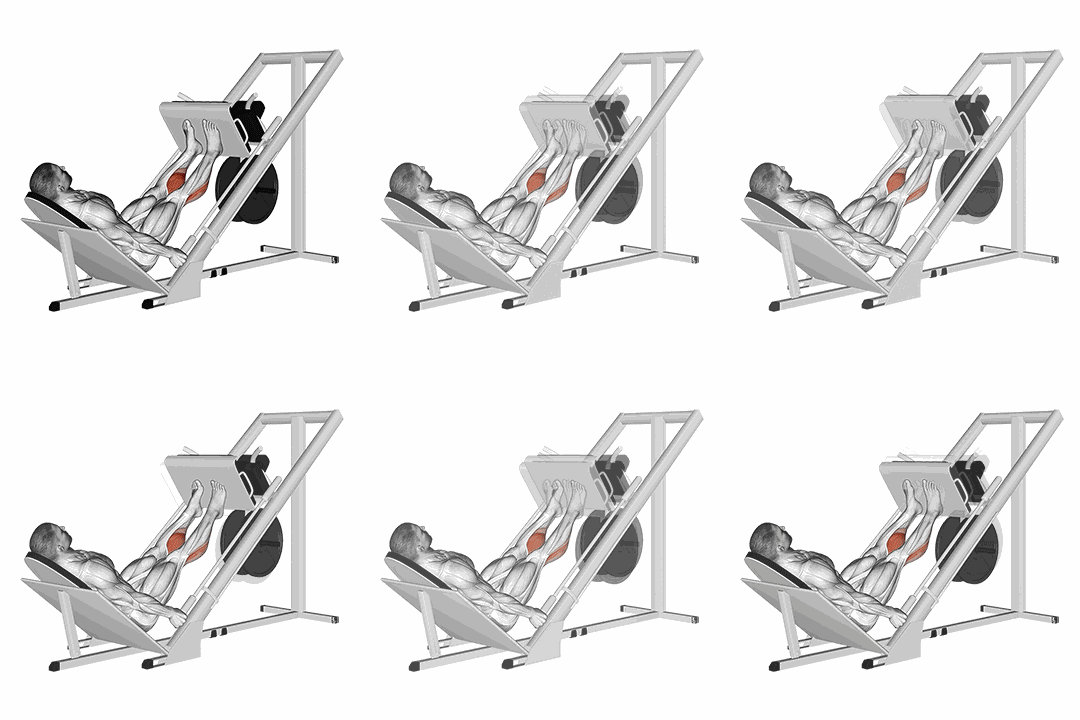
What is the leg press calf raise?
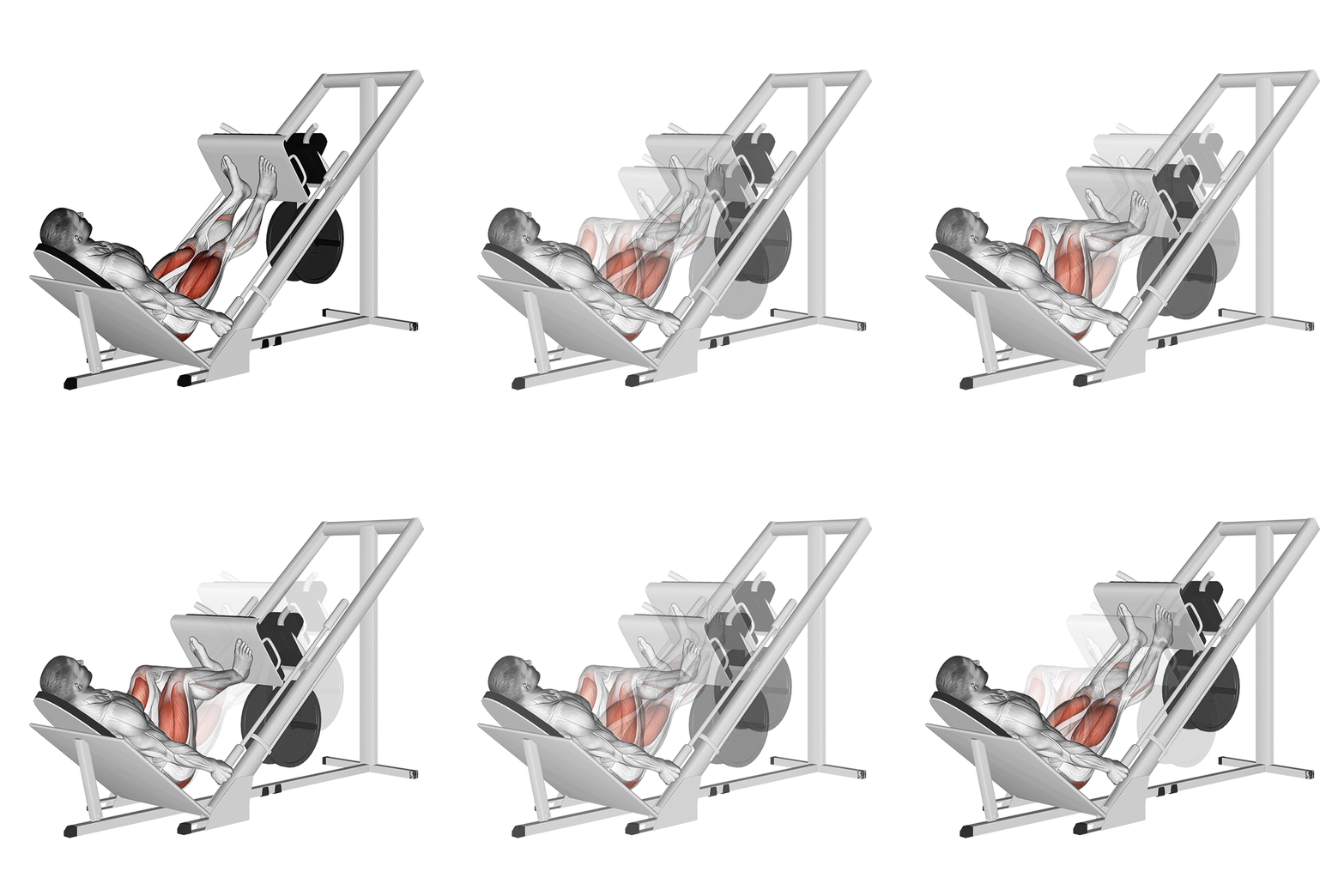
The leg press calf raise uses the leg press sled to load the calves through a full plantar-flexion range. You place the balls of your feet on the bottom edge of the platform, knees slightly soft, then push the sled with the ankles only. It removes spinal compression seen on standing calf raises, lets you push much heavier loads safely, and gives a deeper stretch at the bottom. Ideal for hypertrophy and for athletes who run, jump or play court sport.
How to do the leg press calf raise
- 1
Position your feet
Place the balls of both feet on the bottom edge of the platform, heels hanging off. Feet hip-width, toes pointed straight ahead.
- 2
Soft knees, locked sled
Un-rack the sled and keep your knees with a slight bend, locked in place. They shouldn't move during the set, only the ankles work.
- 3
Drop into a deep stretch
Let the heels drop below the platform under control, feeling a strong stretch in the calves. Two-second lower, no bounce.
- 4
Press up to full plantar flexion
Drive through the balls of your feet, push the sled to a hard, fully pointed-toe top. Hold one count, then lower again.
Pro tip
Reps don't count if the heel doesn't drop and the toes don't fully point. Slow it down, full range, and the calves will finally grow.
Common mistakes
Half-reps.
Tiny ankle pumps skip both the stretch and the squeeze. Full range or no rep.
Bending the knees on each rep.
If the knees bend, the quads help. Lock the knee angle and isolate the ankle.
Bouncing out of the stretch.
A bounce uses elastic recoil and saves the muscle. Pause one count at the bottom.
Feet too high on the platform.
Whole foot on the platform turns it into a quarter leg press. Only the balls of the feet should be in contact.
Variations and progressions
Easier
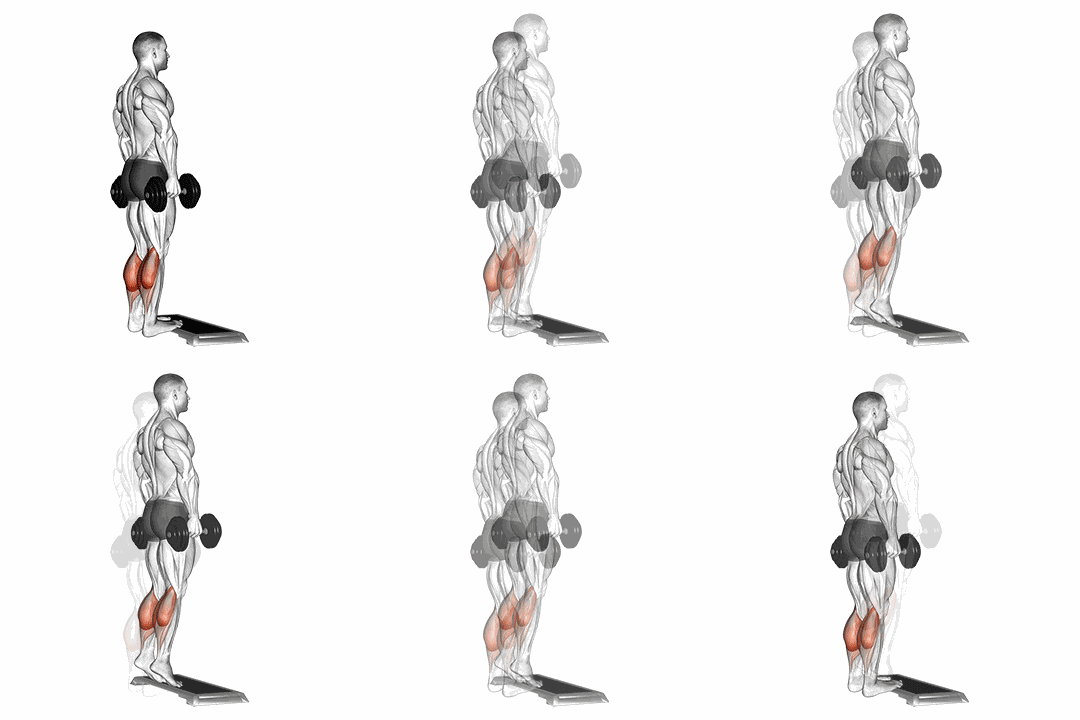
Bodyweight calf raise on a step
Stand on a step, do single-leg or double-leg calf raises with a 2-second lower. Builds the range before adding load.
Harder
Single-leg leg press calf raise
One foot at a time, opposite foot off the platform. Tells you instantly which calf is weaker and fixes the imbalance.
No leg press?
Smith machine calf raise
Bar on the upper traps, feet on a 5 cm block, full range. Same loading pattern without the leg press machine.
How to program it
Three protocols by goal. Pick one per cycle and aim for progression on load or distance.
| Goal | Sets × distance | Load | Rest |
|---|---|---|---|
| Hypertrophy | 4 × 12-15 | RPE 8, 2-1-3 tempo | 60 s |
| Strength | 5 × 8 | Heavy, full range | 90 s |
| Endurance / running | 3 × 25 | Light | 45 s |
Leg Press Calf Raise FAQ
Why won't my calves grow?
Almost always two reasons: not enough load and not enough range. Most people bounce small partials with light weight. Switch to leg press calf raises at 4 × 12-15 with a real stretch, a pause, and a full squeeze. Run that for eight weeks and you'll see the change.
How often should I train calves?
Two to three sessions per week is the sweet spot. The calves recover quickly because they handle bodyweight all day. Hit them hard on lower-body days, and don't be afraid to throw in a second short session of 3-4 sets later in the week.
Should I point toes in or out?
Straight is the default and the best general builder. Toes out slightly biases the inner head, toes in slightly biases the outer head, but the difference is small. Don't overthink it: do most sets with toes straight, vary the angle for one set if you want to chase a specific look.