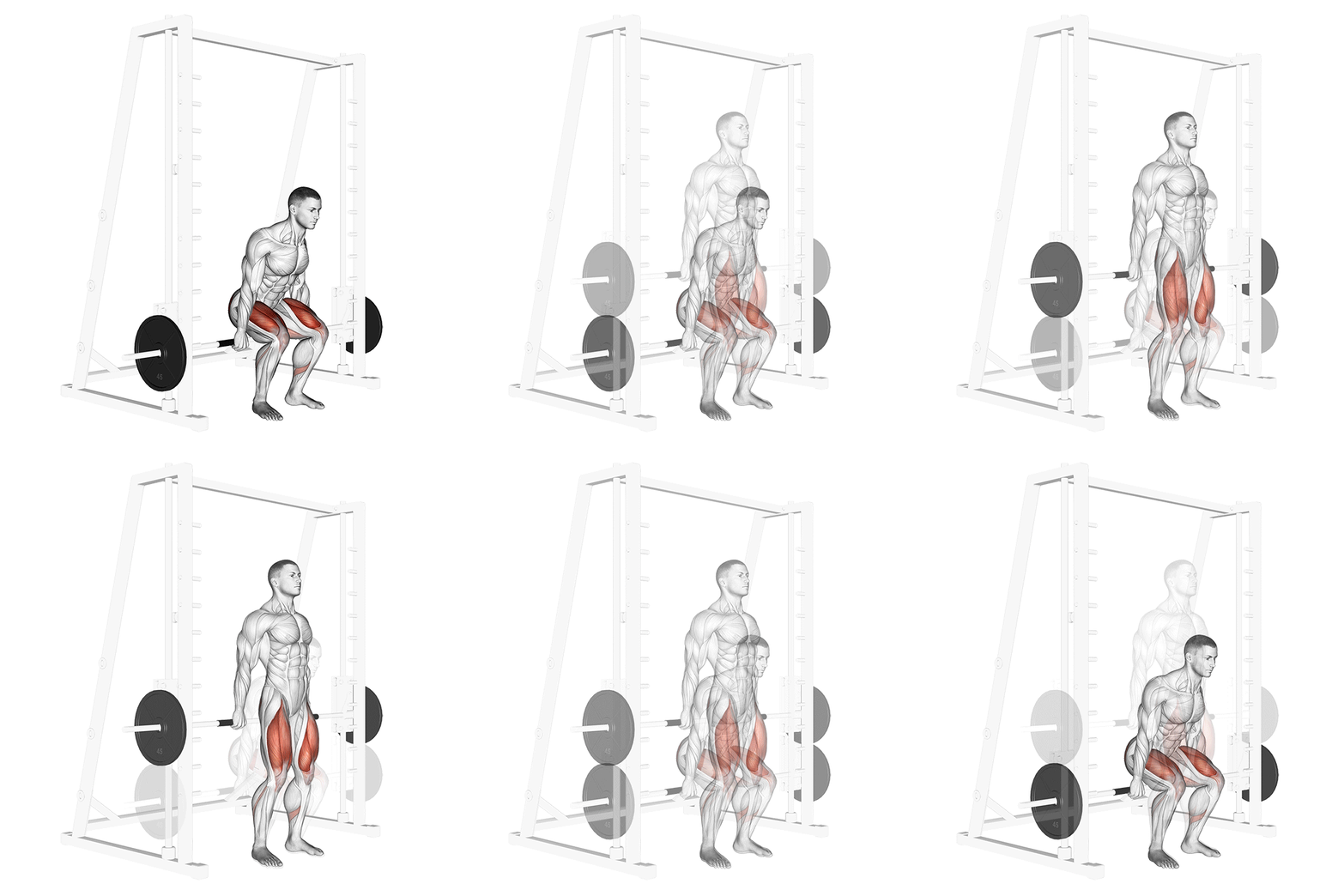
What is the smith machine hack squat?
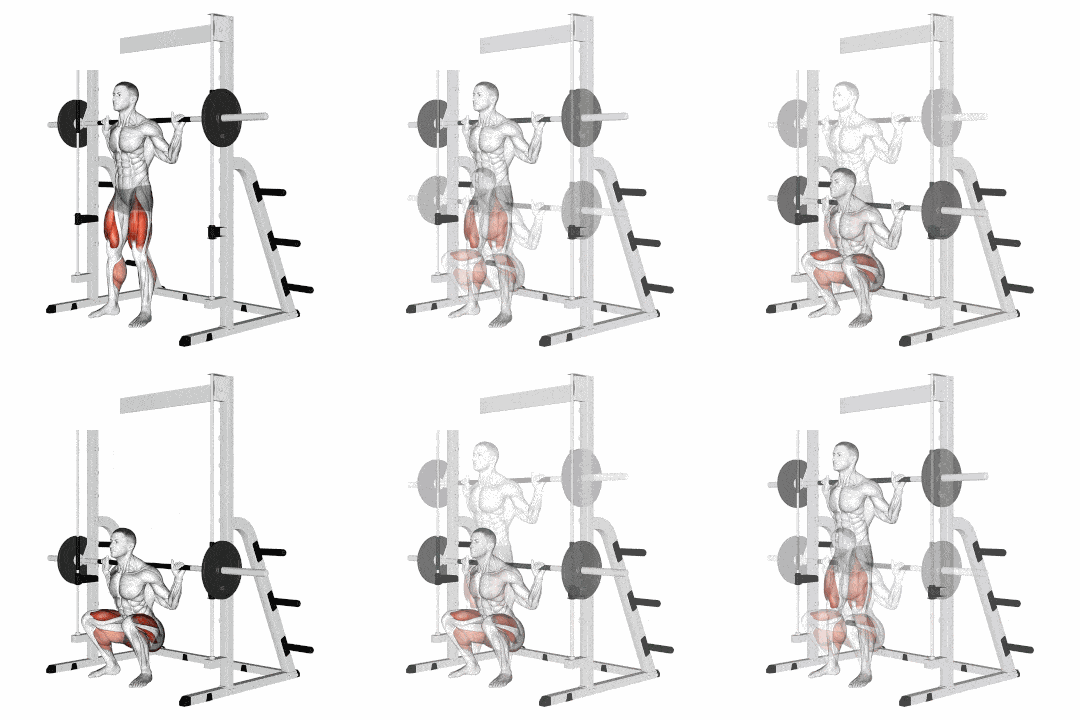
The Smith machine hack squat is a squat done on a Smith machine with the feet planted a step ahead of the bar, so you lean back into the rails as you sink. Because the machine owns the bar path, balance stops being the limiter: you can take the quads close to failure without wobbling, much like a hack squat sled allows. Compared with a free barbell squat it strips away most of the stabilizer and lower-back demand; compared with the dedicated sled, you choose the angles yourself through foot position, which is both its best feature and the thing most lifters get wrong.
How to do the smith machine hack squat
- 1
Set the machine first
Set the bar just below shoulder height and the safety stops a notch under your planned bottom position. Duck under and place the bar across your upper traps like a normal squat.
- 2
Walk the feet forward
Unhook the bar, then step both feet about one foot-length (20 to 30 cm) in front of the bar line, hip-width apart, toes slightly out. Lean back so your torso rests against the fixed path: that lean is the whole point.
- 3
Slide down the rails
Bend the knees and ride the bar straight down, knees tracking over the toes, whole foot pressed into the floor. Descend to parallel or just below, under control the entire way.
- 4
Press, but don't slam the lockout
Drive through the midfoot back to the top, stopping just short of locked knees to keep tension on the quads. Only twist the bar back onto the hooks once the set is done.
Pro tip
Foot position is your loading dial. A full foot-length ahead of the bar keeps the shins near vertical and spares cranky knees; walk the feet back toward the bar line and knee travel grows, biting deeper into the quads. Adjust in 5 cm steps between sets until the target muscle, not your setup, ends the set.
Common mistakes
Feet way too far forward.
Past a certain point the movement turns into a leaning hip drill: shins vertical, knees barely bending, quads on holiday. If you don't feel the front of your thighs by rep five, bring the feet back toward the bar.
Standing like a free squat.
Feet directly under the bar on a Smith machine forces your joints to follow a path they didn't choose, and the hips have nowhere to go. Step forward and lean back; the machine is not a barbell.
Skipping the safety stops.
Pinned at the bottom with the hooks out of reach is the one real danger of this exercise. Set the stops just under your bottom position every single time: it costs ten seconds.
Resting at lockout between reps.
Locking the knees and hanging out turns a 12-rep set into 12 singles and robs the quads of continuous tension. Reverse direction a hair before full extension and keep the set honest.
Variations and progressions
Easier
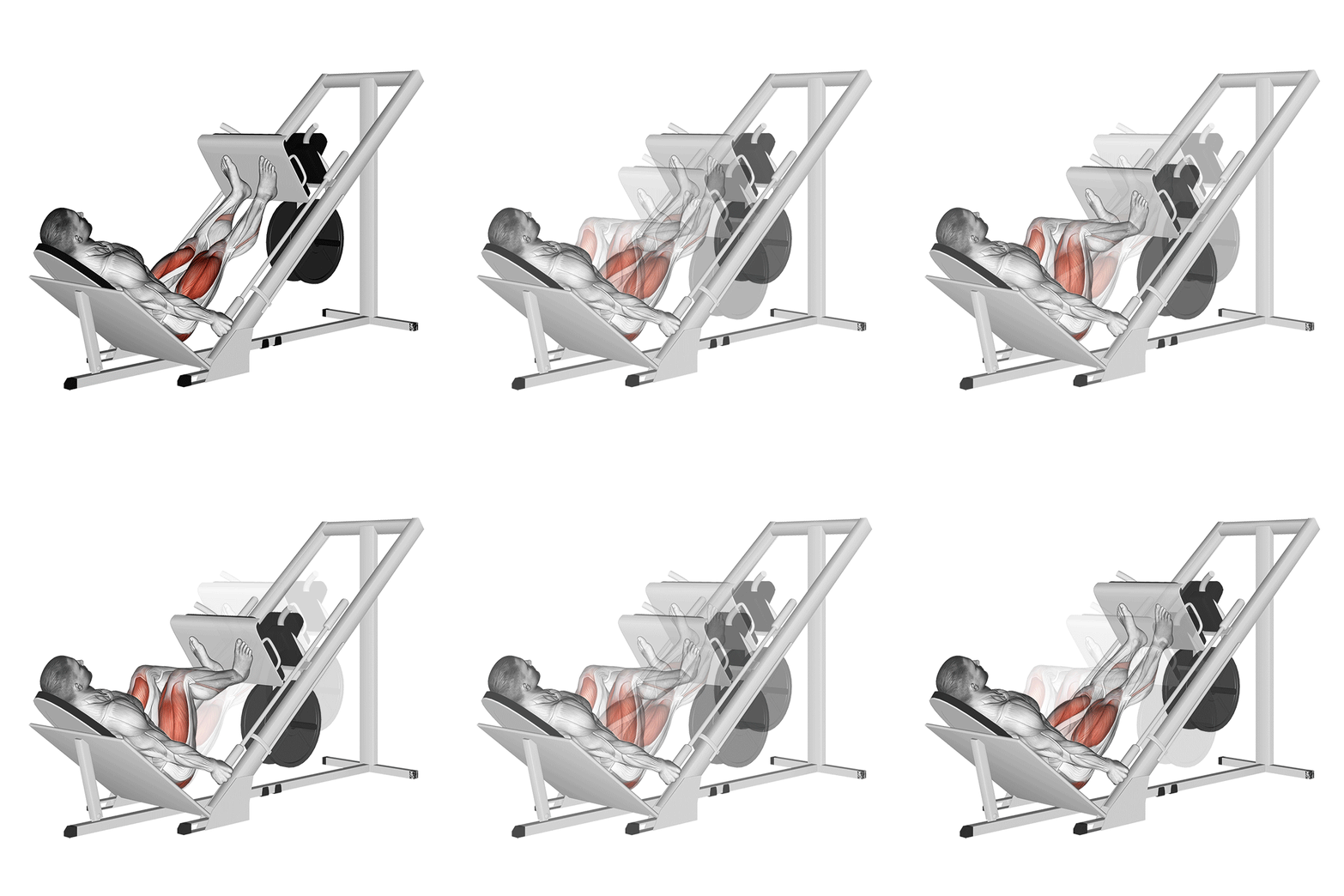
Leg press
Same quad-dominant knee bend with your back fully supported and nothing to balance at all. The simplest entry point if the standing lean feels awkward at first.
Harder
1.5-rep Smith hack squat
Descend to the bottom, come halfway up, sink back down, then stand. Each rep doubles the time spent in the deep, stretched range where quads grow best.
Alternative
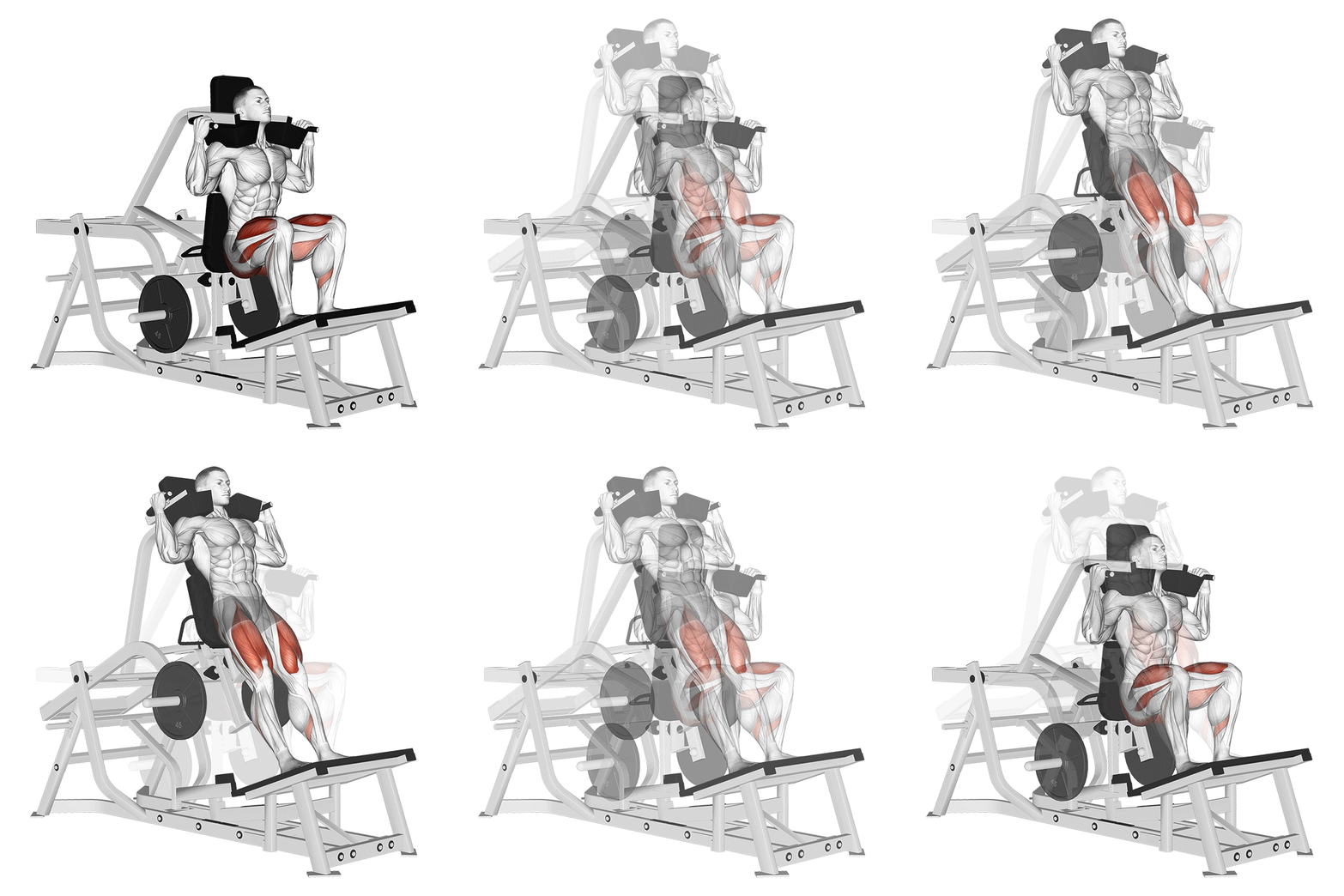
Hack squat machine
If your gym has the sled, use it for the heaviest work: the back pad and fixed angle let you load more with zero setup guesswork. Keep the Smith version for gyms that don't.
How to program it
Three protocols by goal. Pick one per cycle and aim for progression on load or distance.
| Goal | Sets × distance | Load | Rest |
|---|---|---|---|
| Hypertrophy | 4 × 10-12 @ RPE 8 | Moderate | 90-120 s |
| Strength | 5 × 6-8 | Heavy | 2-3 min |
| Finisher | 2 × 15-20 | Light | 60-75 s |
Smith Machine Hack Squat FAQ
Smith machine hack squat or the hack squat sled: which is better?
For pure quad loading they're close. The sled wins on comfort and max load thanks to the back pad and fixed angle; the Smith version wins on availability and adjustability, since you dial the mechanics with your feet. Most lifters should simply use whichever their gym has and train it hard.
How far in front of the bar should my feet be?
Start at about one foot-length, 20 to 30 cm, ahead of the bar line. From there it's a trade: feet closer to the bar means more knee travel and more quad; feet further forward means more vertical shins and more hips. Pick the spot where you feel the quads working and your knees feel good, and keep it consistent so your numbers mean something.
Is the Smith hack squat bad for your knees?
No. It's one of the most adjustable squats for sensitive knees: stepping the feet forward reduces how far the knees travel while still training the legs through a full range. Control the descent, stay in a pain-free range, and progress the load gradually like any other lift.
Am I supposed to lean back into the bar?
Yes, and it's the detail beginners miss. With your feet forward, your body has to rest against the fixed bar path; the machine supports you the way a sled's back pad would. If you try to stay balanced over your own feet like a free squat, the setup fights you the whole way down.