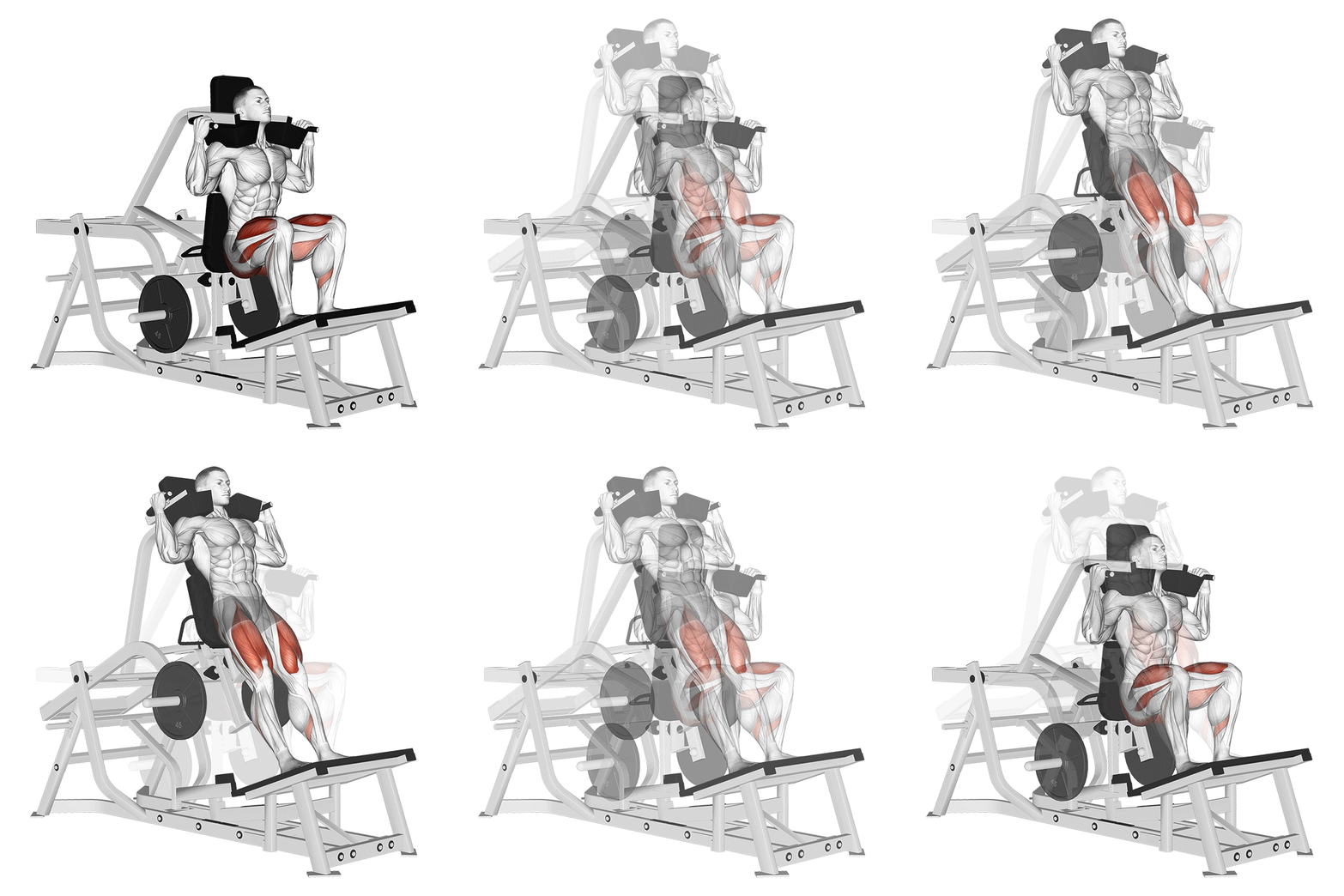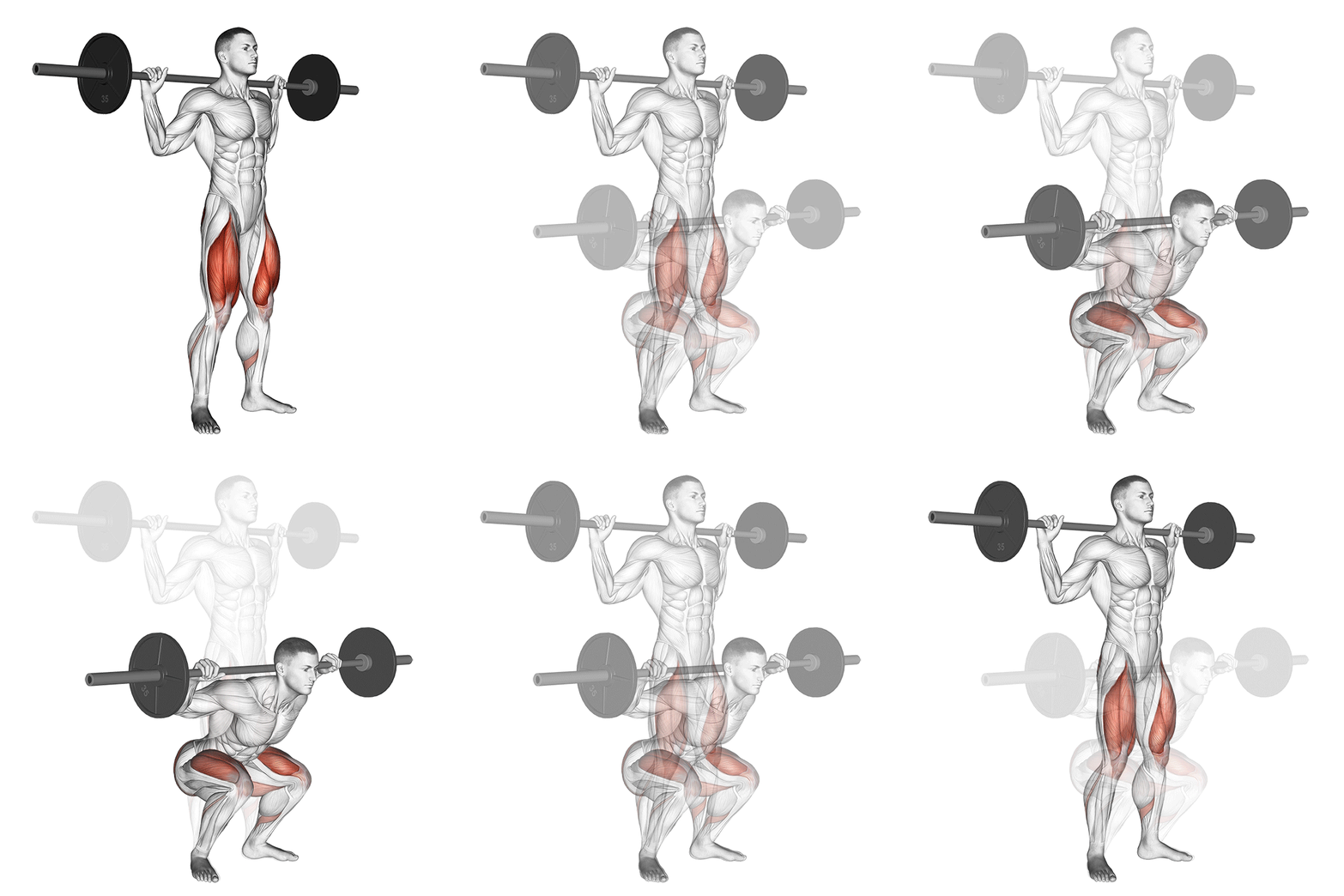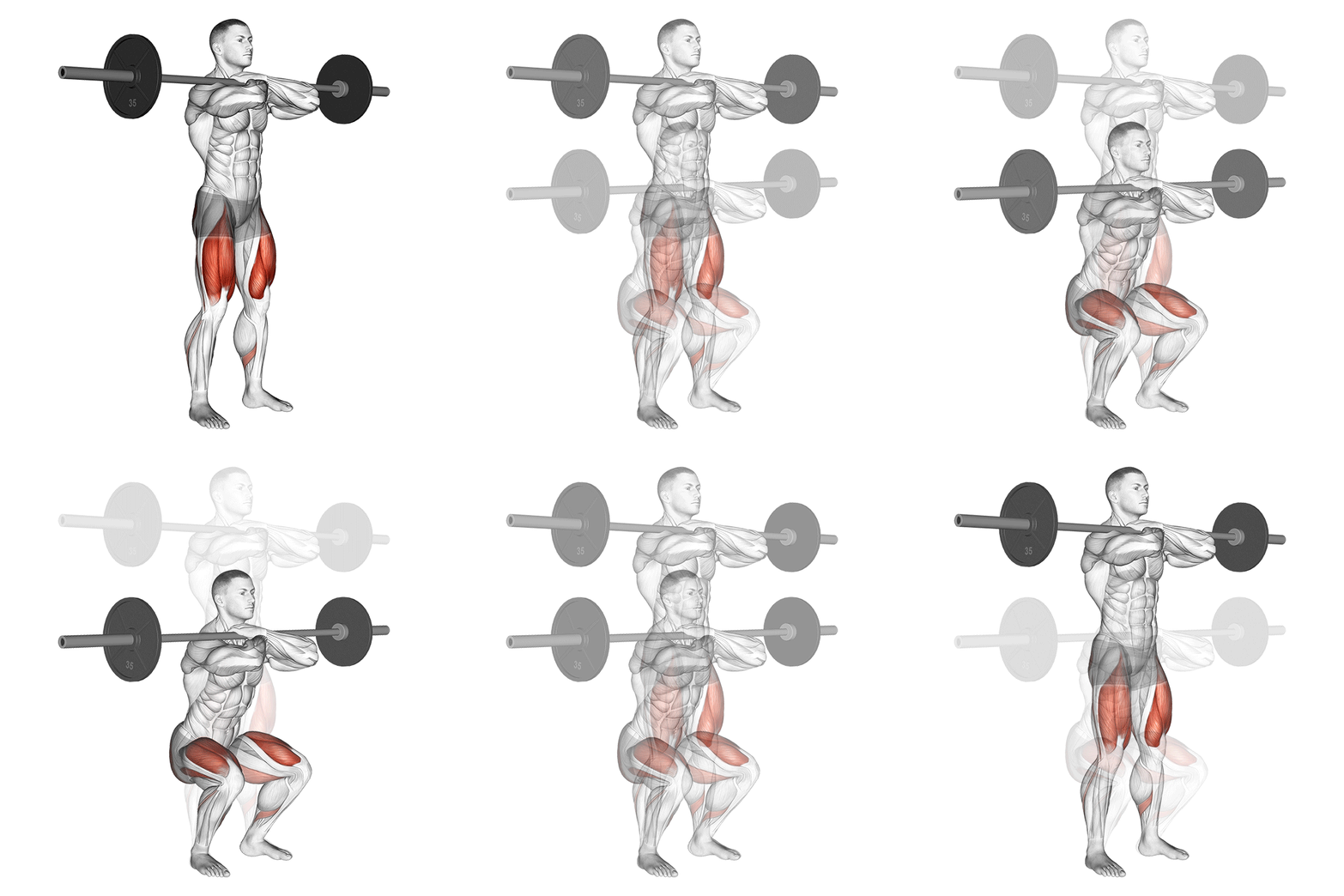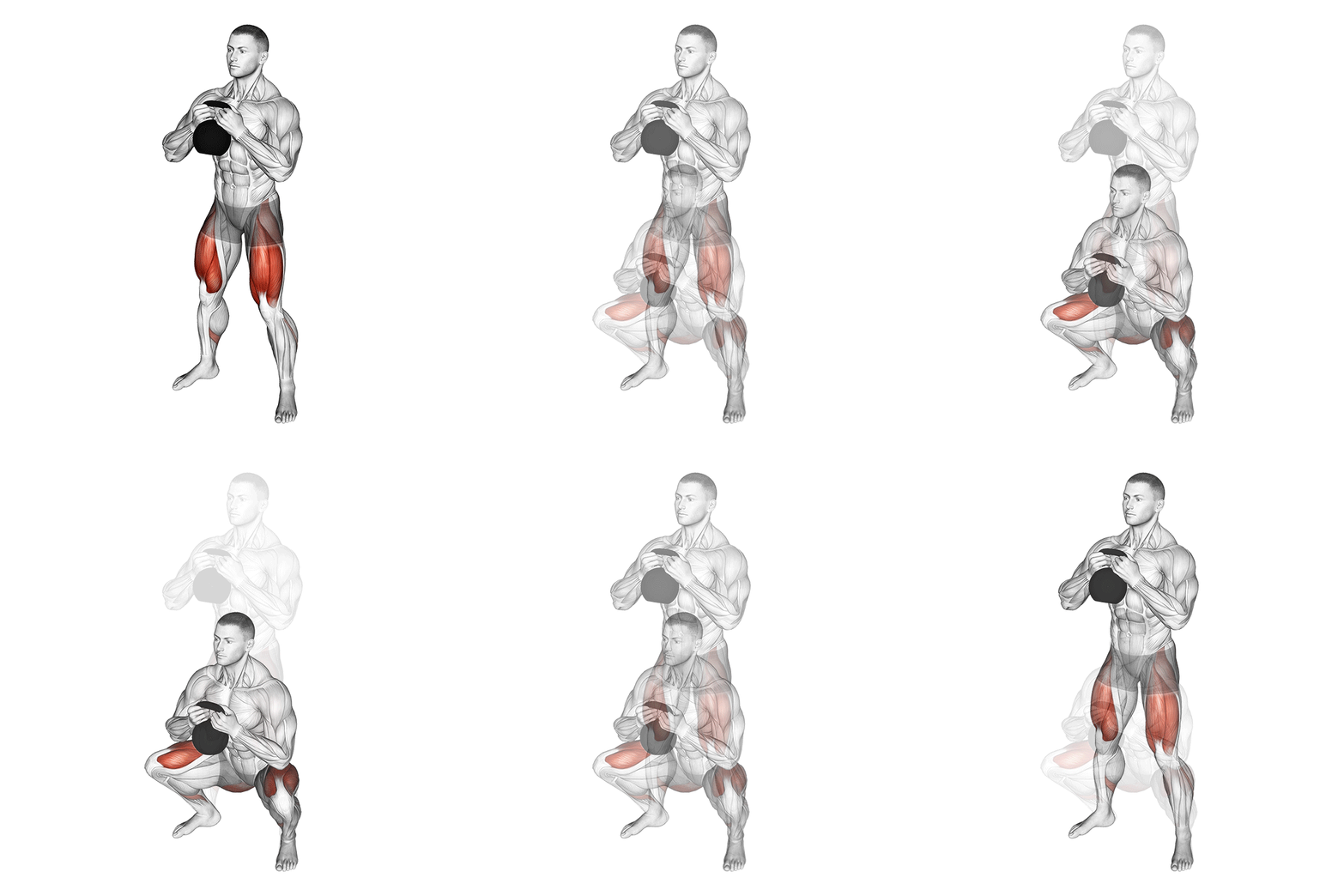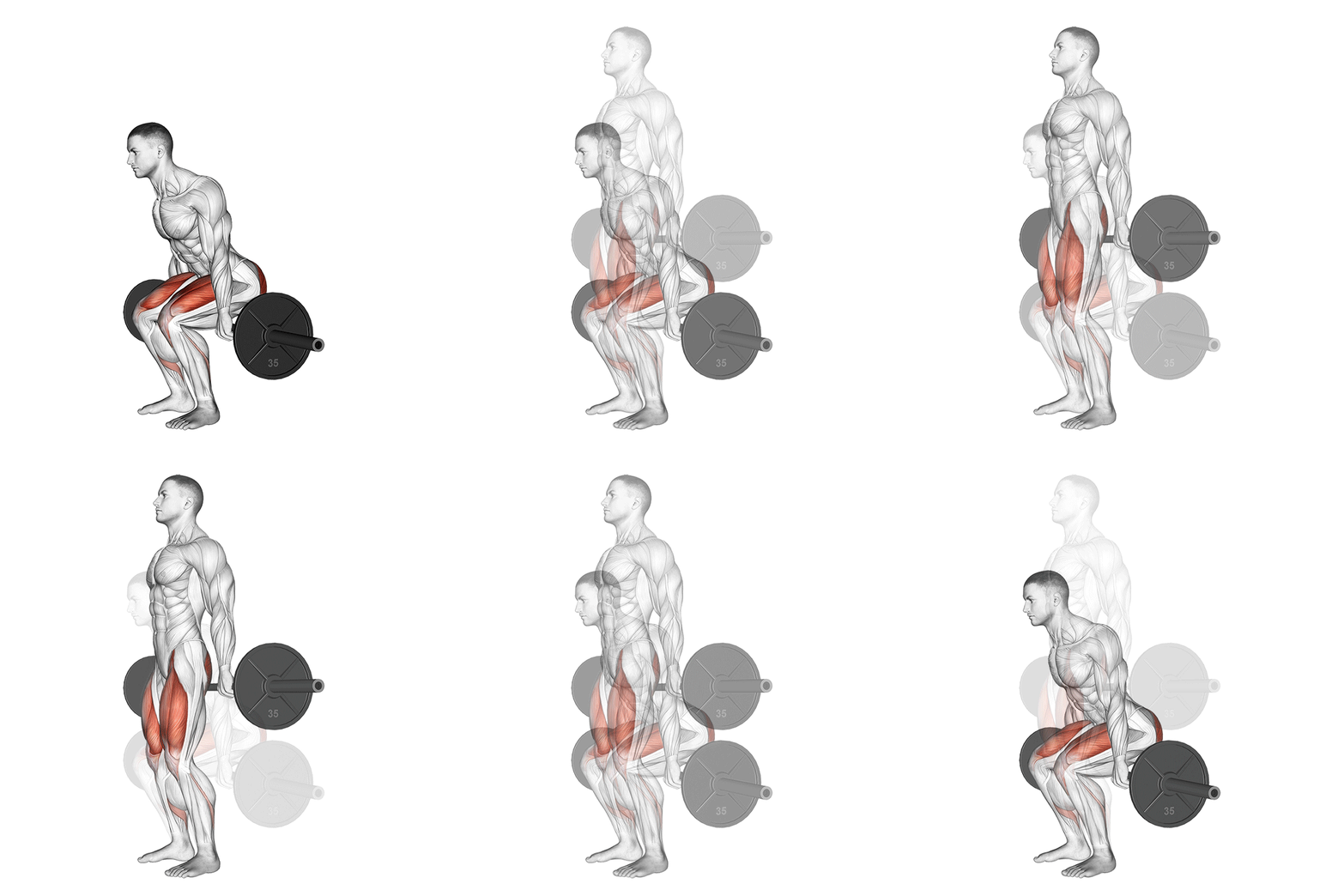
What is the barbell hack squat?
The barbell hack squat is the lift the machine was named after, usually credited to early-1900s strongman George Hackenschmidt: a barbell resting on the floor behind your legs, gripped at arm's length behind you, and stood up like a deadlift in mirror image. Because the load hangs behind your centre line, your torso stays near vertical and your knees travel forward, which shifts the work squarely onto the quads, closer to a front squat than to a deadlift. The bar hangs from your hands, so your spine carries no bar compression. Choose it when there is no hack squat machine or leg press around and you still want direct quad work from a barbell alone.
How to do the barbell hack squat
- 1
Set up with the bar behind you
Stand with your calves almost touching the bar, feet hip width, toes slightly out. Small plates under your heels are legal and often necessary: they buy the forward knee travel this lift lives on.
- 2
Squat down and grip
Bend your knees and sit straight down, torso tall, until your hands reach the bar behind your thighs. Overhand grip just outside your legs; switch to mixed grip or straps when it gets heavy. Flat back, chest proud.
- 3
Stand up, bar sliding up your legs
Drive the floor away through the whole foot, hips and shoulders rising together, knees travelling back as you rise. The bar stays in light contact with the back of your legs; lock out standing tall.
- 4
Sit back down the same line
Bend the knees and lower straight down, torso vertical, until the plates touch the floor. Full stop, reset your breath and your grip, then stand again. No touch-and-go bouncing with this bar path.
Pro tip
The bar scraping your glutes to a halt is the classic complaint. Two fixes stack well: raise your heels on 2-5 kg plates and push the knees further forward. The more vertical your torso, the straighter the bar's lane behind your legs.
Common mistakes
Turning it into a behind-the-back deadlift.
If the hips shoot up first and the torso tips forward, the quads are gone and the lumbar spine inherits the load on an awkward line. Hips and shoulders rise together, torso vertical: that is the entire point of the lift.
Rounding at the bottom.
Reaching for a bar behind you with a rounded lower back is how this lift earned its scary reputation. Only grip as deep as a flat back allows, and raise the bar on blocks if that depth isn't there yet.
Letting the bar hang away from your legs.
Centimetres of gap multiply into leverage against your lower back and drag you off balance backward. Keep a light brush of contact up the calves and thighs from the first centimetre to lockout.
Letting grip end the set.
Your quads can handle far more than your bare hands behind your back. Chalk first, then straps: this is a leg exercise, not a forearm test, and there's no prize for failing it by the fingers.
Variations and progressions
Easier
Hack squat from blocks
Set the bar on low blocks or the bottom rack pins. The shorter range skips the hardest, deepest part while you build the mobility and the grip position.
Harder
Paused hack squat
Dead stop for 2 s at the bottom, plates on the floor, tension on. Removes every hint of rebound and makes the quads start each rep from zero.
No barbell?
Machine hack squat or goblet squat
The machine gives the same quad bias with zero grip cost and a safer bottom position. A heavy goblet squat is the budget option: same upright torso, same forward knees.
How to program it
Three protocols by goal. Pick one per cycle and aim for progression on load or distance.
| Goal | Sets × distance | Load | Rest |
|---|---|---|---|
| Strength | 4 × 5-6 | RPE 8, straps allowed | 2-3 min |
| Hypertrophy | 3 × 8-12 | RPE 7-8 | 90-120 s |
| Quad finisher | 2 × 15-20 | Light, 2 s descent | 60-90 s |
Barbell Hack Squat FAQ
Barbell hack squat or machine hack squat?
The machine wins for pure quad hypertrophy: no grip limit, a guided path, and you can safely go deeper and closer to failure. The barbell version wins on availability and extras: it trains grip, upper back and balance, and every gym on earth has a bar. With both on hand, use the machine for heavy quad work and the barbell version for home gyms and crowded floors.
The bar keeps hitting my glutes. Am I doing it wrong?
Not necessarily: it's the lift's known flaw. Heel plates, more forward knee travel and a slightly wider grip all straighten the bar's lane. But proportions matter; lifters with long thighs and short arms sometimes cannot clear the path at depth no matter the tweaks. If that's you, cut the range with blocks or switch tools. It's a structural no, not a technique failure.
Is it the same thing as a Jefferson squat?
No. In the Jefferson you straddle the bar, one foot on each side, and the load passes between your legs. In the hack squat the bar stays behind both legs. The Jefferson allows more weight and adds an anti-rotation challenge; the hack is the more direct quad move of the two old-timer lifts.