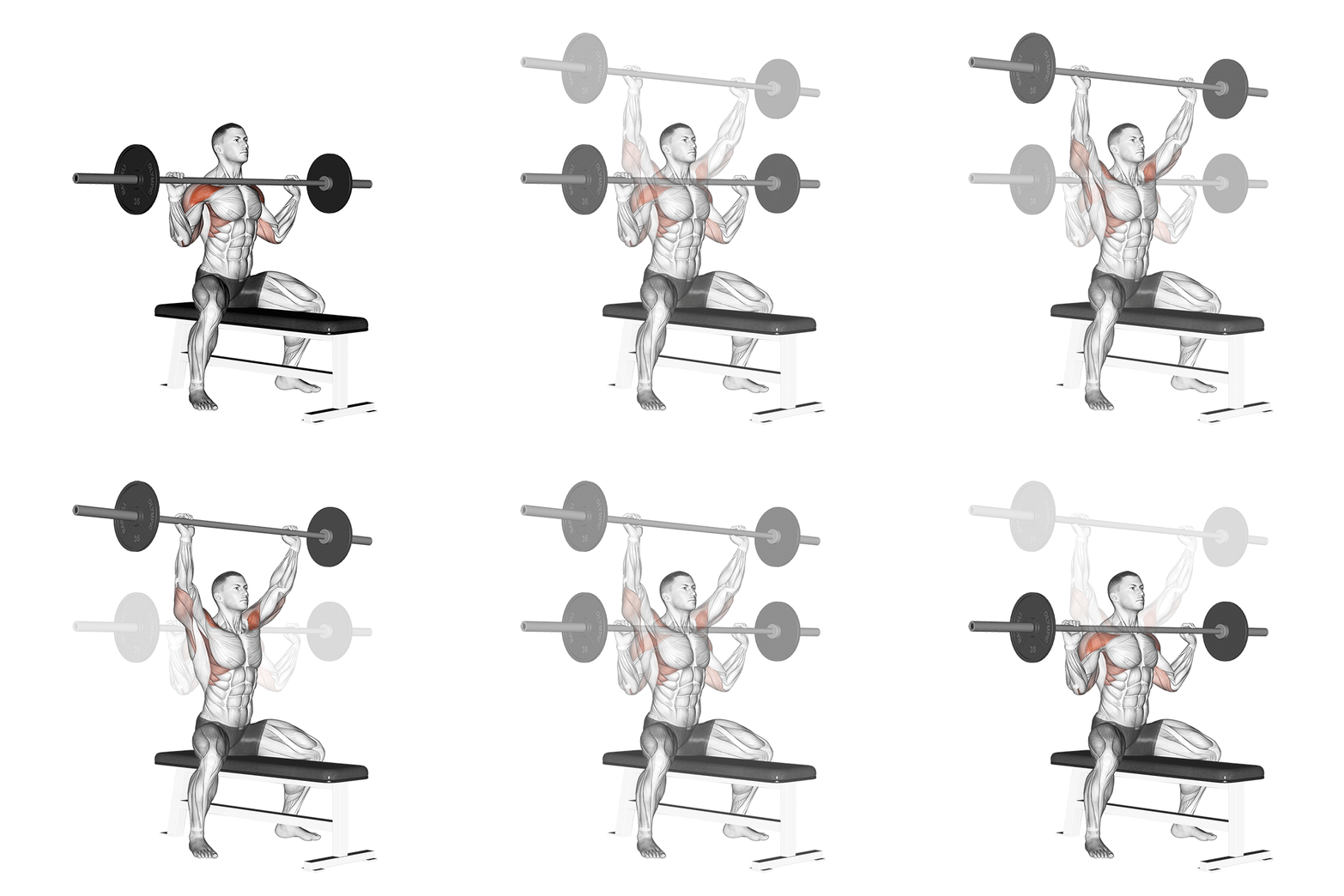
What is the seated barbell shoulder press?
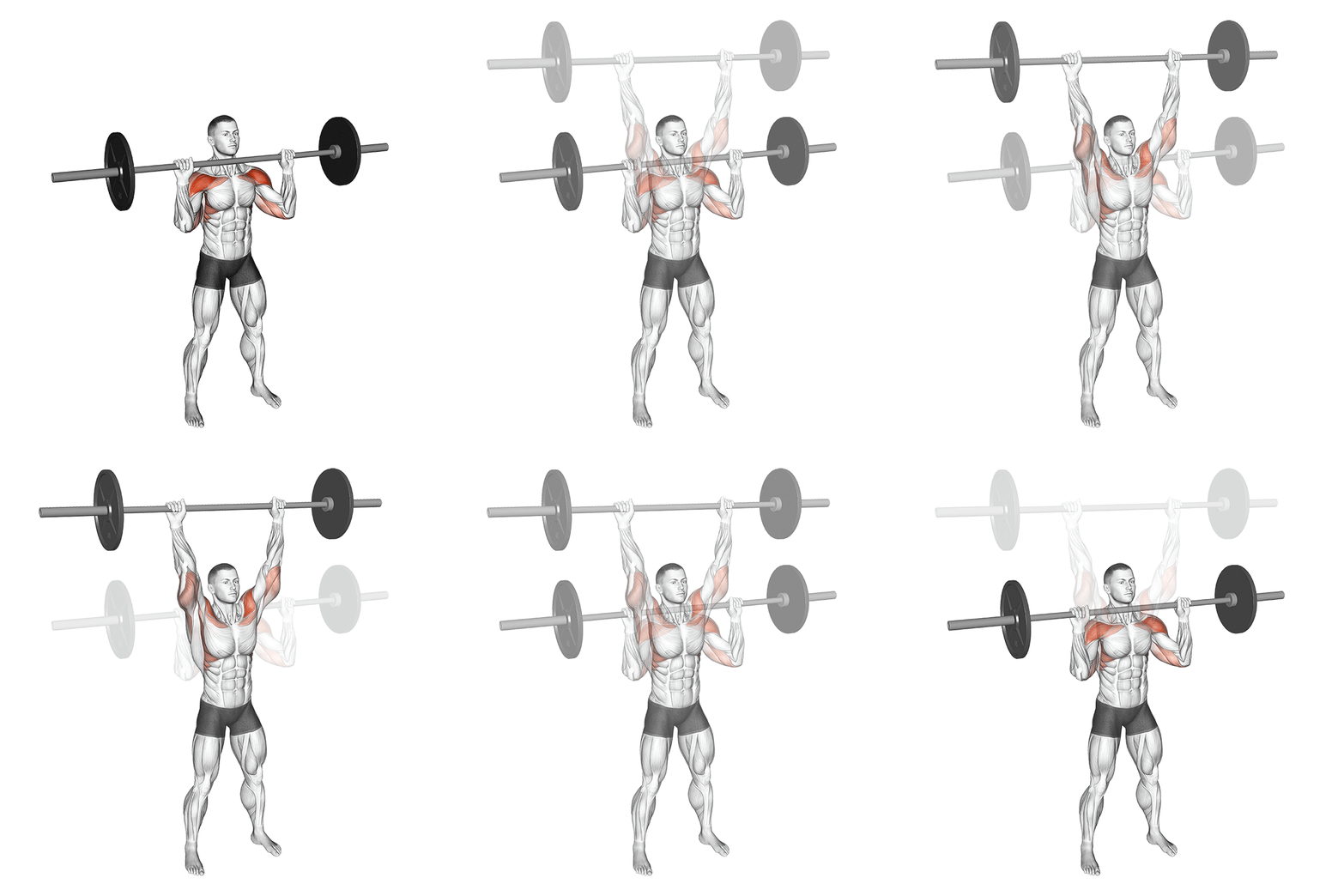
The seated barbell shoulder press is a vertical press performed on an upright bench, usually set inside a power rack. The backrest does the stabilising work your legs and trunk handle in a standing press, so nearly all of your effort pours into the delts and triceps, and most lifters move 5-10 percent more weight seated. What you give up is the standing lift's full-body skill: no bracing from the floor up, less carryover to sport. It suits lifters chasing shoulder size, anyone pressing after a heavy leg day, and those who want overhead volume without taxing a tired lower back.
How to do the seated barbell shoulder press
- 1
Build the station
Set an adjustable bench to 85-90 degrees inside a power rack. Place the J-hooks so the bar sits just above shoulder height once you're seated: you should unrack with bent arms, not a mini press.
- 2
Wedge yourself into the bench
Feet planted wide, glutes and upper back against the pad, natural curve in the lower back. Grip just outside shoulder width so your forearms are vertical at the bottom position.
- 3
Unrack and lower to the chin
Big breath, brace, then bring the bar out over your shoulders. Lower under control until it reaches chin height or lightly touches your upper chest, elbows slightly in front of the bar.
- 4
Press past your face, then through
Drive the bar up close to your face, tipping your head back just enough to clear it, then push your head through once the bar passes your forehead. Finish with the bar stacked over your ears.
Pro tip
The rep isn't finished at lockout, it's finished over your ears. Those last centimetres of pushing your head through stack the bar over your spine; stop short and every heavy single becomes a forward grinder that beats up your shoulders.
Common mistakes
Turning it into an incline press.
Sliding the hips forward and arching off the pad points your chest at the ceiling and shifts the load onto the pecs. Ribs down, glutes deep in the seat, abs braced.
Pressing in an arc around the head.
The further the bar drifts from your face, the longer the lever on your shoulders and lower back. Tuck the chin and keep the bar path nearly vertical, at grazing distance from your nose.
Wrong hook height.
Hooks set too low force a mini press just to unrack; too high and you smash the bar on the way back. You should lift out and re-rack with elbows clearly bent.
Stopping at eye level.
Half reps overload the already-strong top range and skip the stretch that grows delts. Lower to at least chin level, and work on mobility if you can't get there.
Variations and progressions
Easier
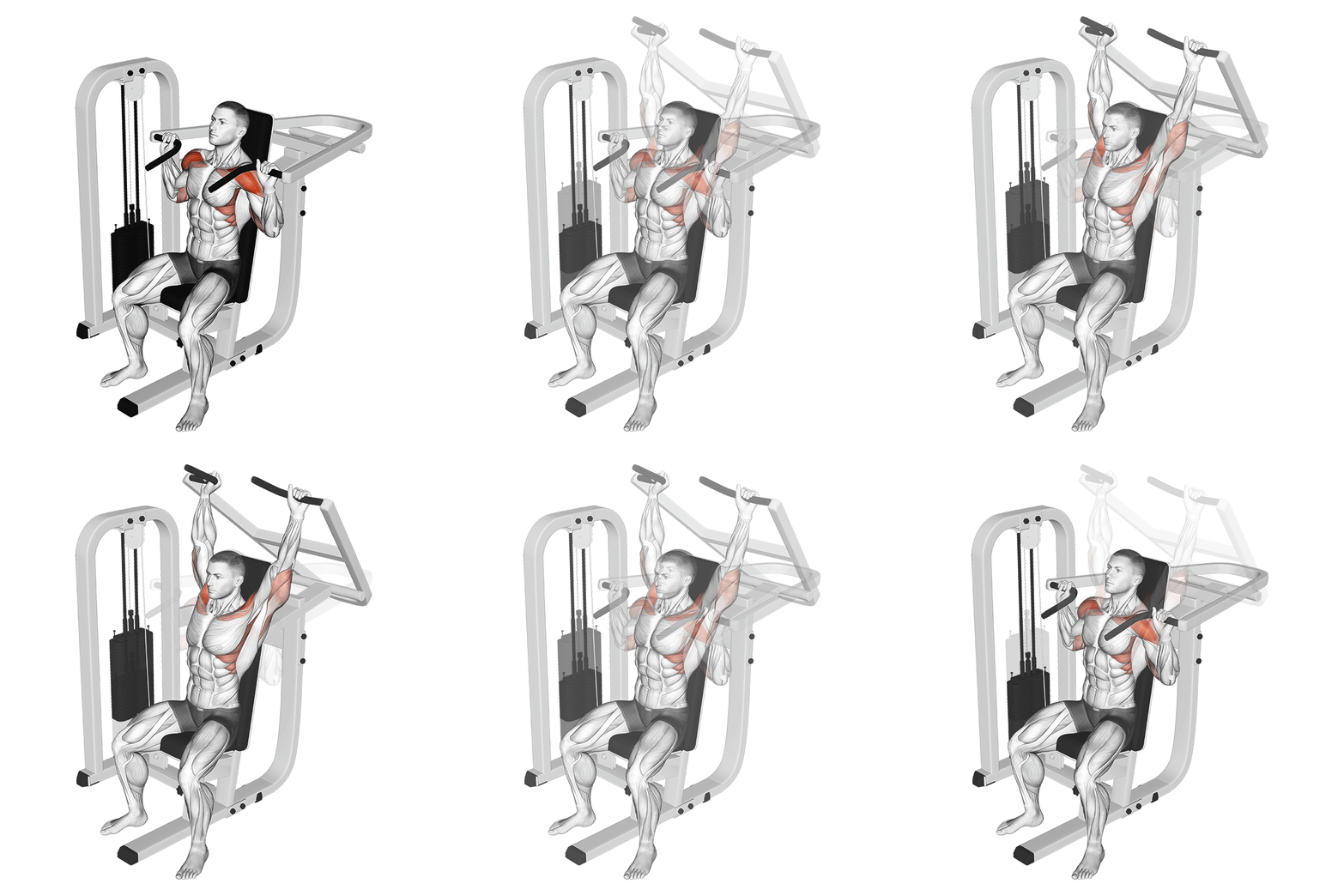
Machine shoulder press
A guided path with no bar to balance or unrack. The right starting point to build pressing strength before handling a free barbell overhead.
Harder
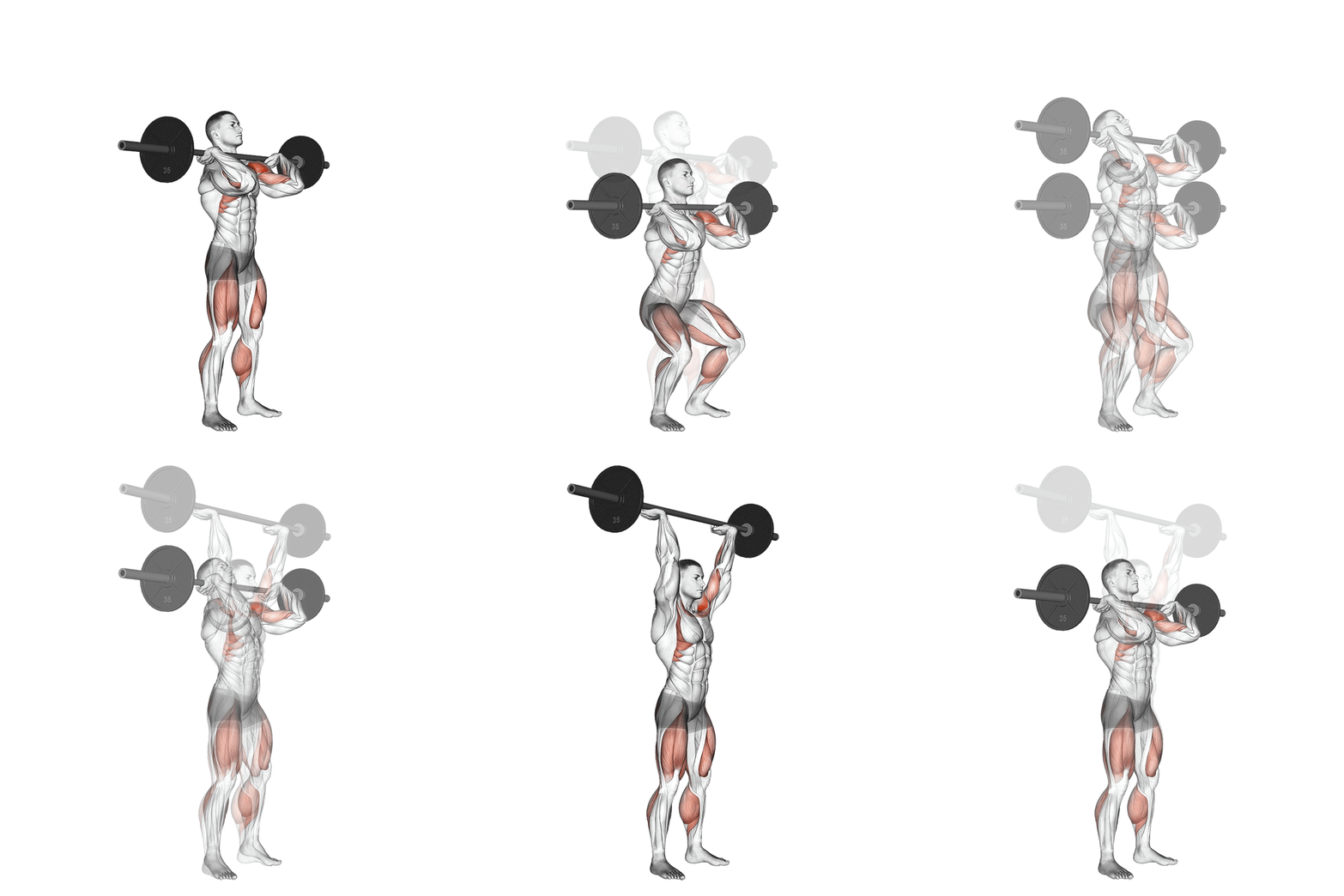
Standing barbell overhead press
Take away the backrest and your whole body joins the lift: glutes, abs and legs brace every rep. Less weight on the bar, far more total-body strength.
Alternative
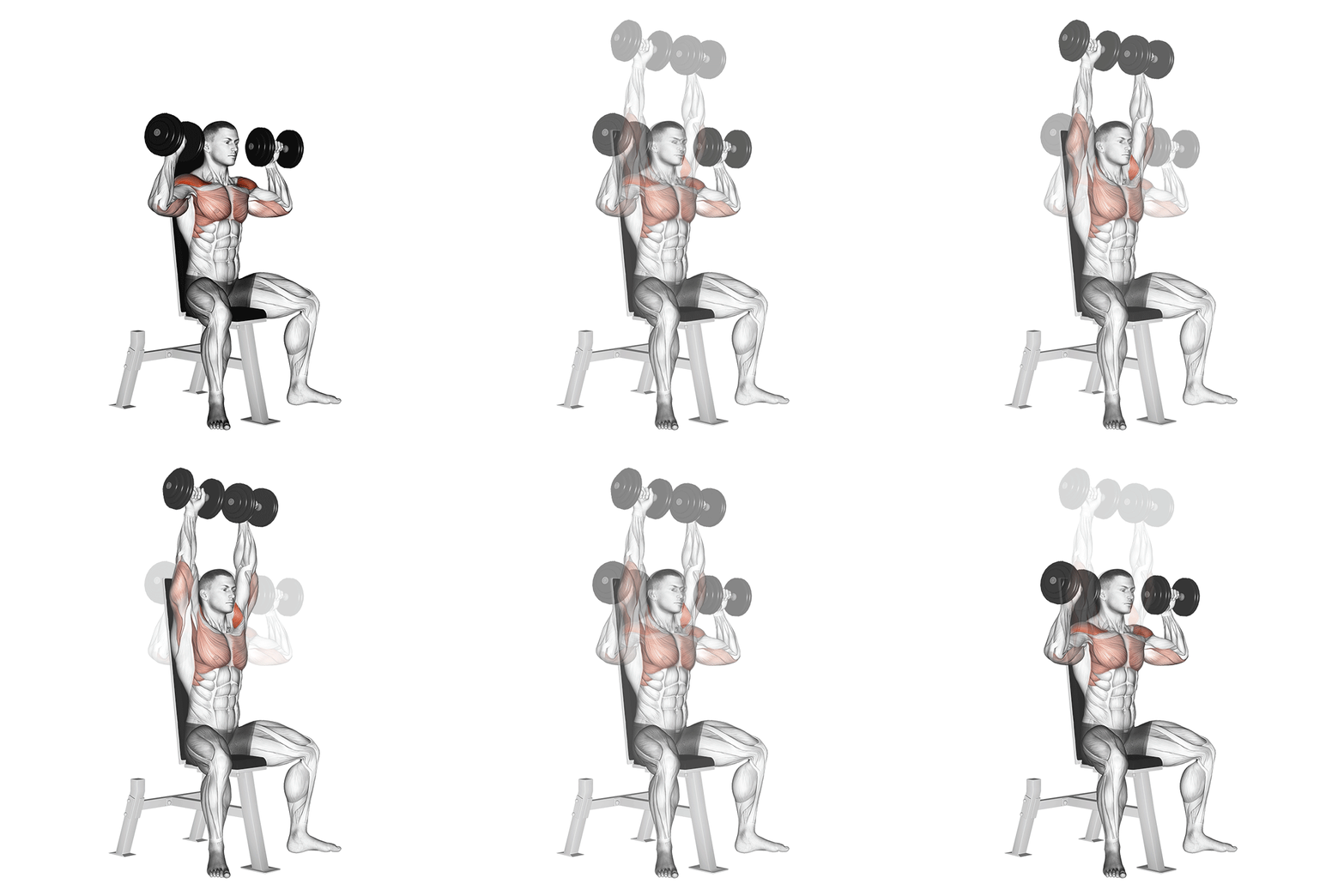
Seated dumbbell shoulder press
Dumbbells free each arm to follow its own path, kinder to cranky shoulders and great for evening out a stronger side. No rack required.
How to program it
Three protocols by goal. Pick one per cycle and aim for progression on load or distance.
| Goal | Sets × distance | Load | Rest |
|---|---|---|---|
| Strength | 5 × 5 | 80-85% 1RM | 2-3 min |
| Hypertrophy | 4 × 8-10 | 70-75% 1RM | 90-120 s |
| Delt volume | 3 × 12-15 | 60-65% 1RM | 60-90 s |
Seated Barbell Shoulder Press FAQ
Seated or standing overhead press?
Standing builds more than shoulders: trunk, glutes and overhead stability that carry into sport. Seated isolates the delts, costs less energy and lets you handle more volume. Hybrid athletes do well running the standing press as the main lift and the seated version for extra delt volume.
Why can I press more seated than standing?
The backrest replaces the stabilising work of your legs and trunk, so none of your output is spent staying upright. Most lifters press roughly 5-10 percent more seated; a much bigger gap suggests your trunk, not your shoulders, limits the standing version.
How low should the bar go?
To the chin at minimum, to a light touch on the upper chest if your mobility allows. The deeper stretch recruits more delt; just never bounce the bar off your clavicles to buy depth.
Is the behind-the-neck press better for delts?
It loads the three heads a little more evenly, but it demands shoulder mobility most lifters don't have, and the margin for error is thin. Stick with the front version; if you're exceptionally mobile, keep the behind-the-neck press light, as an accessory.