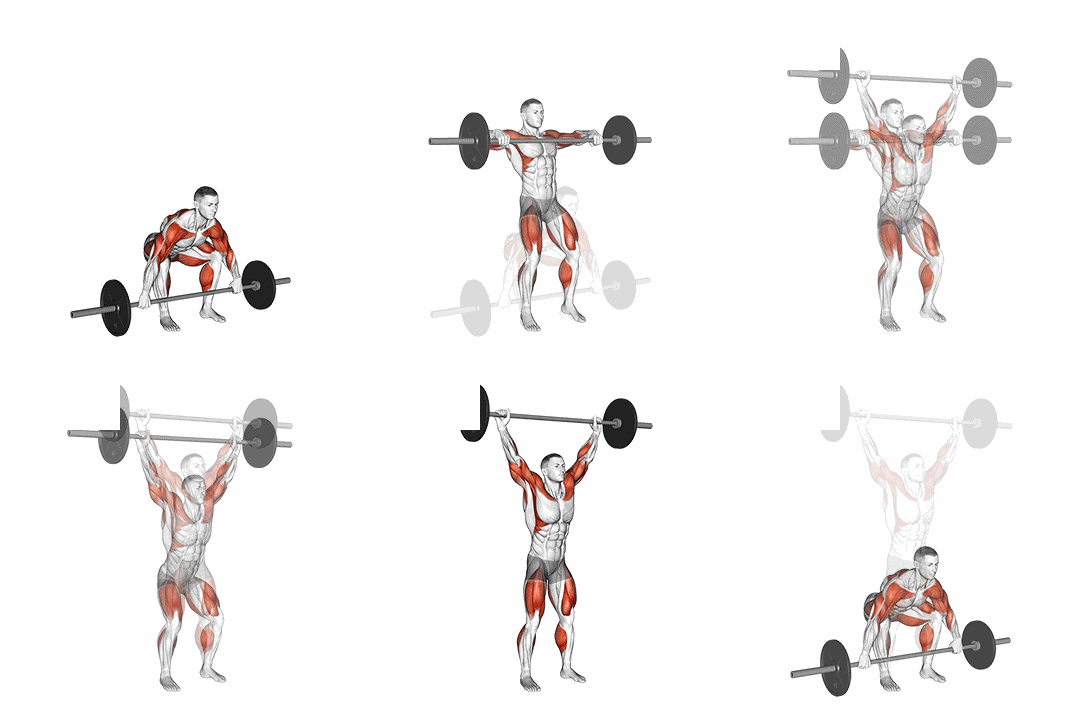
What is the power snatch?
The power snatch sends a barbell from the floor to locked arms overhead in a single pull, received with the hips above parallel instead of in a deep overhead squat. That catch height is the only thing separating it from the full squat snatch, but it changes the lift's character: loads drop to roughly 80 to 90 percent of a full snatch, the mobility bill shrinks dramatically, and you must finish the pull higher because you can't ride the bar down into a squat. For hybrid athletes it's usually the smarter choice: total-body power, an overhead stimulus and bar-speed practice without months of mobility work first.
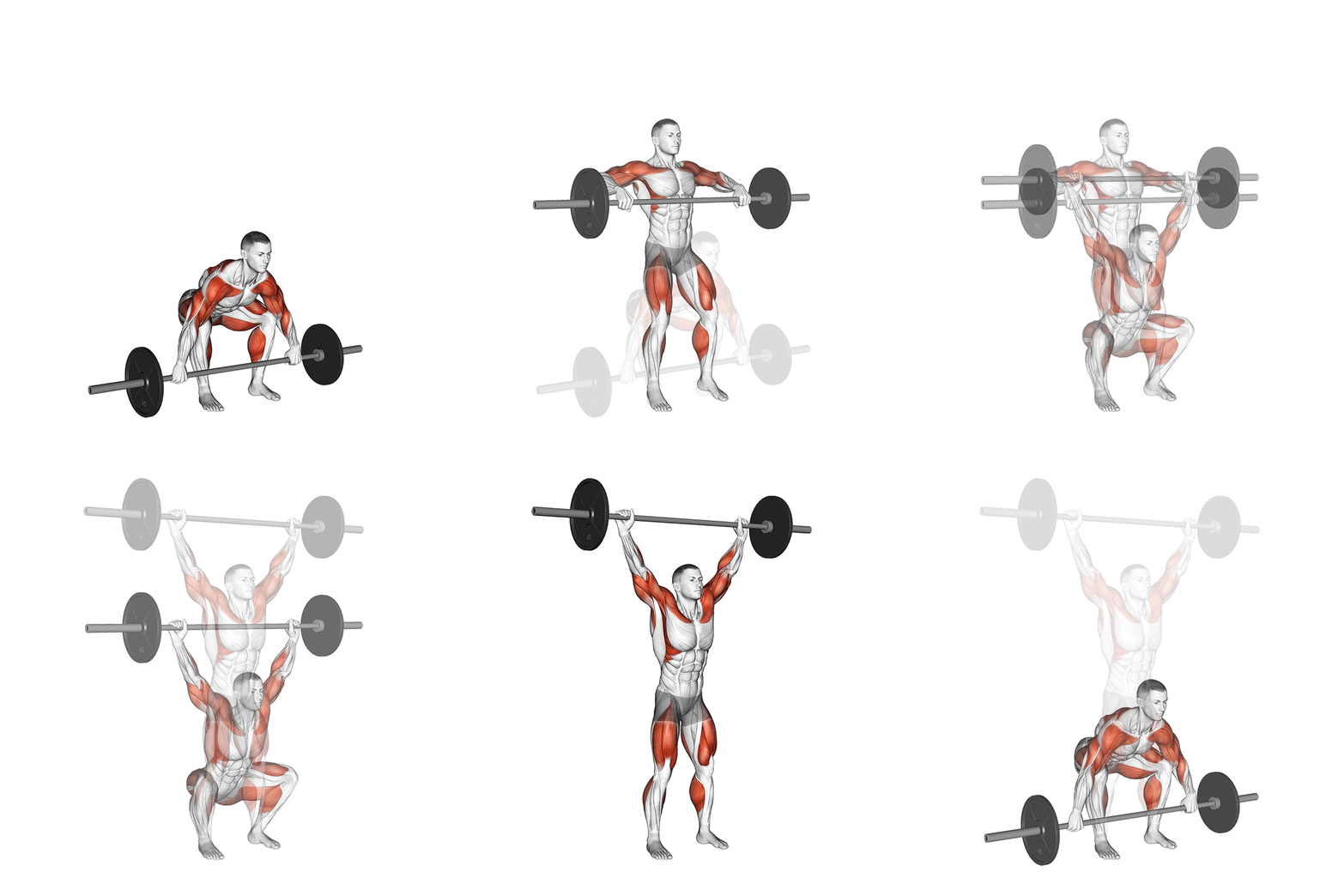
How to do the power snatch
- 1
Build the wide start
Snatch grip (the bar sits in your hip crease when standing), hook grip, feet hip-width. Bar over mid-foot, shoulders just ahead of it, back flat, arms long and relaxed.
- 2
Stay patient off the floor
Push the legs into the floor and bring the bar back toward you. Chest and hips rise at the same rate; nothing explosive yet. Rushing here is what pulls you forward later.
- 3
Hit full extension
As the bar passes mid-thigh, drive the hips through and extend everything: ankles, knees, hips, then a violent shrug. The bar brushes the hip crease and travels up, not out.
- 4
Punch under, catch high
Pull yourself under just enough, turn the bar over fast and punch the arms to lockout. Feet land at squat width, hips above parallel, bar stacked over the shoulders. Stand to finish.
Pro tip
If you keep catching low or pressing the bar out, look at your feet first. They should jump from pulling stance to squat stance, barely wider. A wide starfish landing is usually a weak extension in disguise: the legs splay because the pull didn't give the bar enough height.
Common mistakes
Pressing out the catch.
If the elbows bend then straighten overhead, the turnover was too slow or the load too heavy. In competition that's a no-lift; in training it builds a soft lockout. Lighten the bar and punch the catch.
Swinging the bar forward.
When the hips bang the bar outward instead of upward, you end up chasing it on your toes. Keep the lats tight so contact redirects the bar up the body, and finish the extension vertically.
Cutting the pull short.
A high catch doesn't mean a shorter pull. Athletes who dive under early receive the bar with no height and get buried. Finish the full triple extension first; the catch is a consequence, not a goal.
Muscling it with the arms.
An early arm bend robs the hips of their job and caps the load fast. Keep the elbows straight until the hips finish extending; after that the arms guide the bar into place, they never curl it upward.
Variations and progressions
Easier
Hang power snatch
Start from above the knee instead of the floor. You remove the first pull, where most faults are born, and get to rehearse the extension and turnover on repeat.
Harder
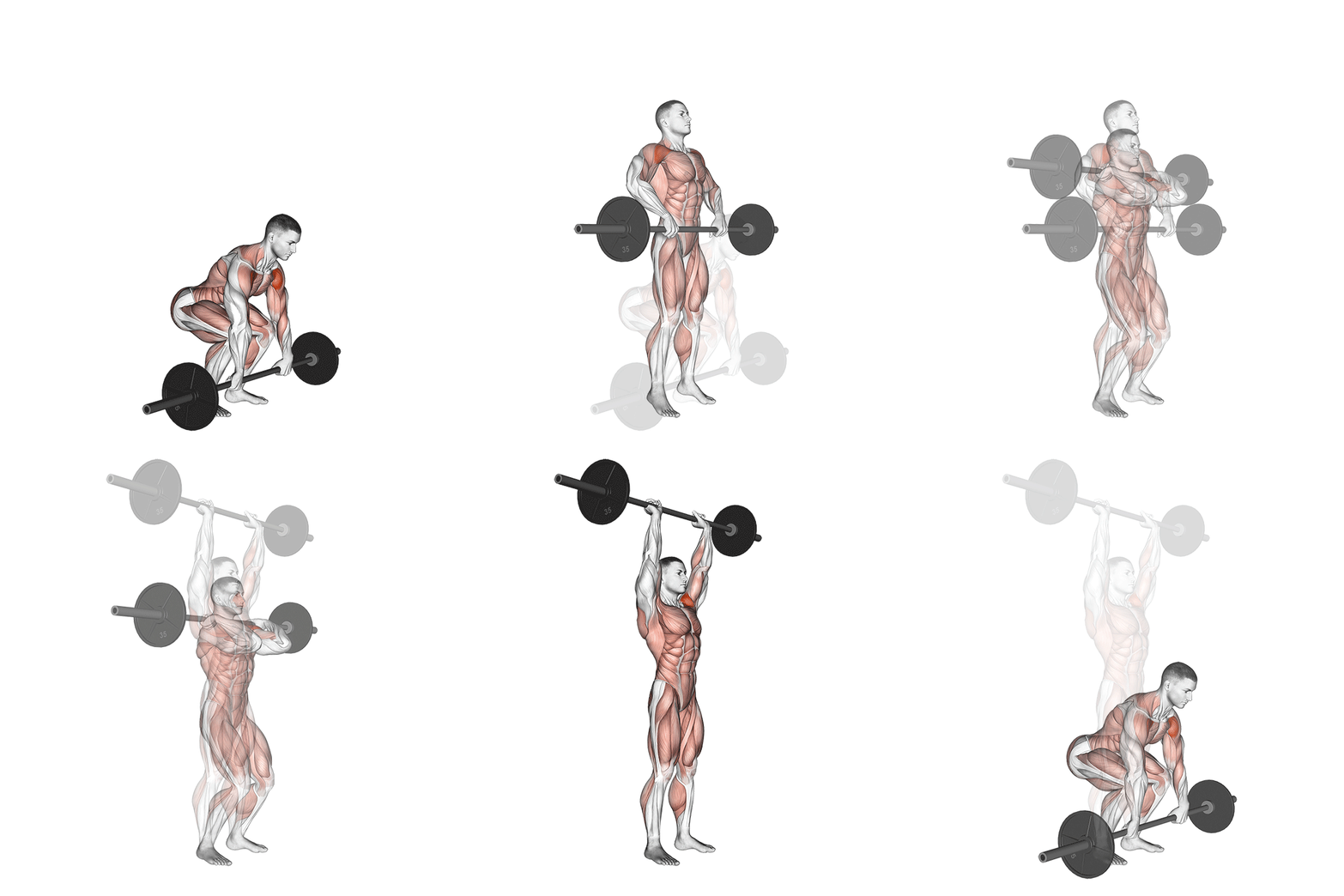
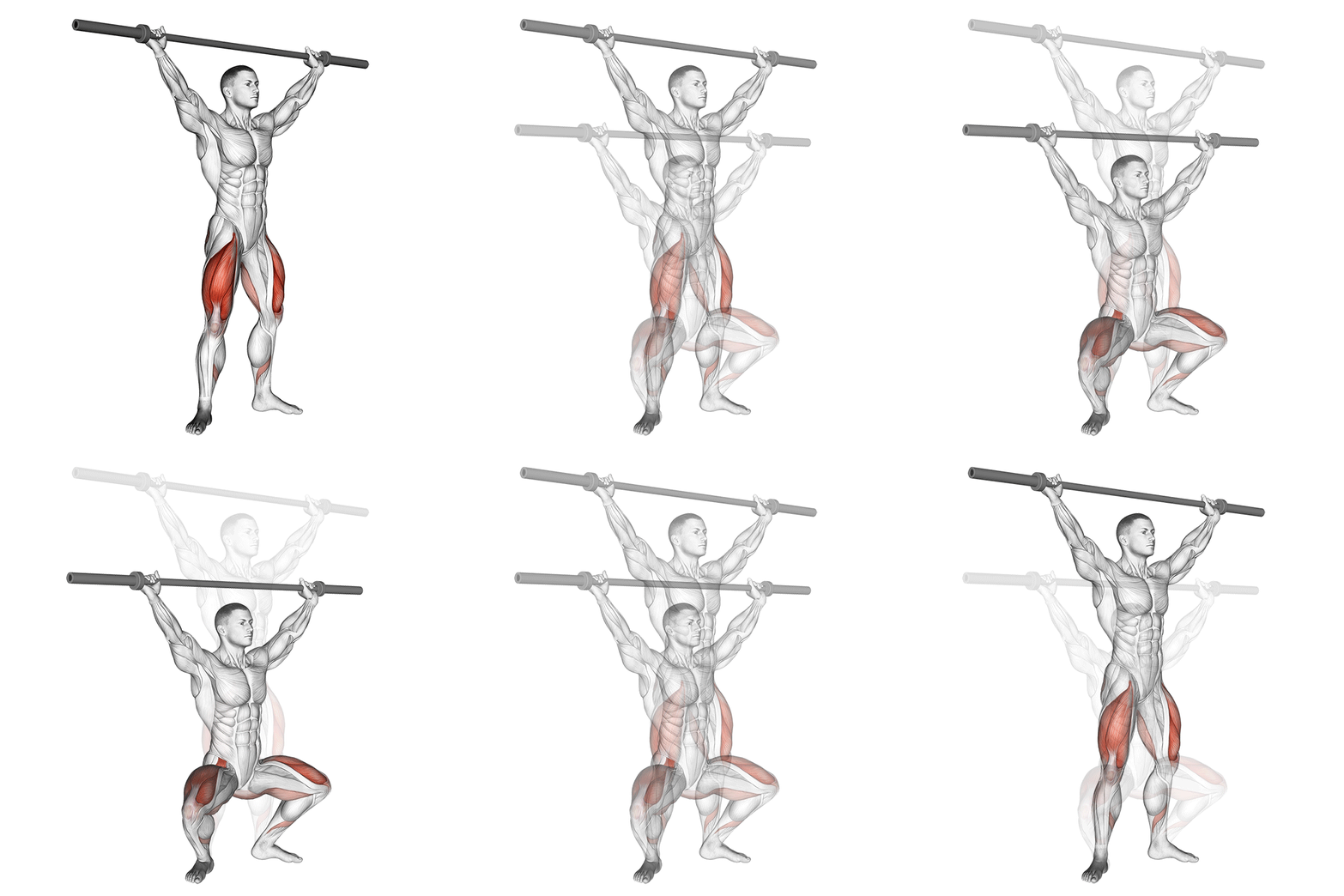
Full (squat) snatch
Receive the bar in a deep overhead squat. More load, more mobility, more time under the bar. The logical next step once your power snatch is consistent and your overhead squat is solid.
Alternative
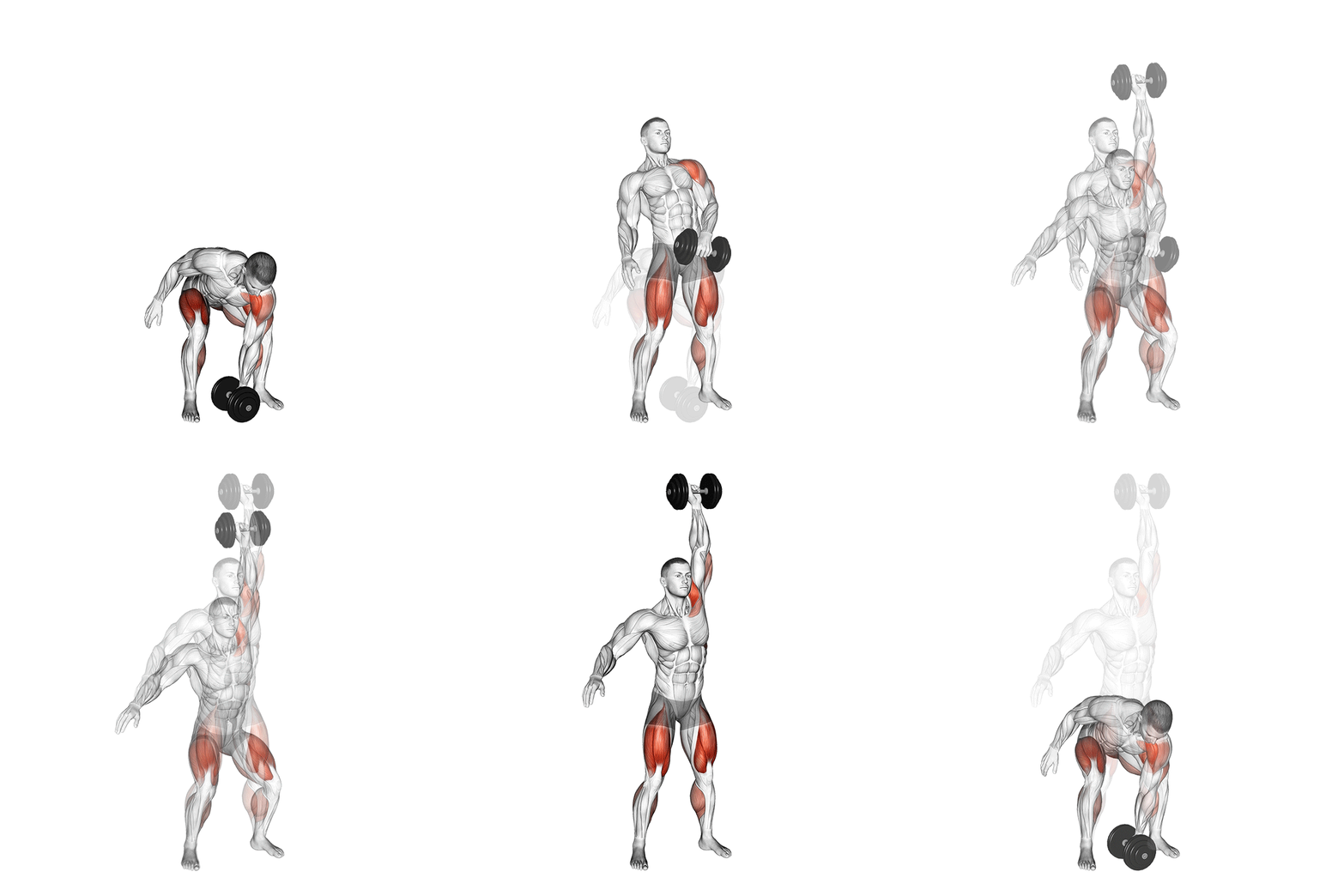
Dumbbell snatch
One arm, floor to overhead, a fraction of the technique. The go-to for snatch-style power inside circuits or without a barbell. Loads stay light, so it leans conditioning more than strength.
How to program it
Three protocols by goal. Pick one per cycle and aim for progression on load or distance.
| Goal | Sets × distance | Load | Rest |
|---|---|---|---|
| Technique | 6 × 2 @ 60-70% 1RM | Light, every rep identical | 2 min |
| Power | 5 × 2 @ 75-85% 1RM | Moderate-heavy, bar still quick | 2-3 min |
| Barbell conditioning | EMOM 12 × 2 @ 55-65% | Light, unbroken form | Inside the minute |
Power Snatch FAQ
Power snatch or full snatch first?
For most people, the power snatch. It rewards the same pull and turnover but forgives limited ankle, hip and thoracic mobility, so you can train hard from week one while the overhead squat catches up. Dedicated weightlifters often learn both together; a hybrid athlete rarely needs the full version at all.
Why is my power snatch almost equal to my full snatch?
It usually means your pull is strong but you don't trust, or can't hold, the deep overhead squat, so you never collect the extra kilos the low catch should offer. Attack overhead squats and snatch balances; the full snatch should eventually be clearly bigger.
How heavy should I go on power snatches?
Working sets live between 60 and 85 percent of your power snatch max, almost always in singles and doubles. The bar has to move fast enough to be caught high; the first rep that turns into a slow grind or a press-out is the signal to stop climbing.
Is the power snatch good in conditioning workouts?
Yes, and it's one of its best uses: light power snatches under fatigue teach you to hold positions when your lungs are gone. Keep loads around 50 to 60 percent, cap sets before form decays, and switch to dumbbell snatches when the barbell version gets sloppy.