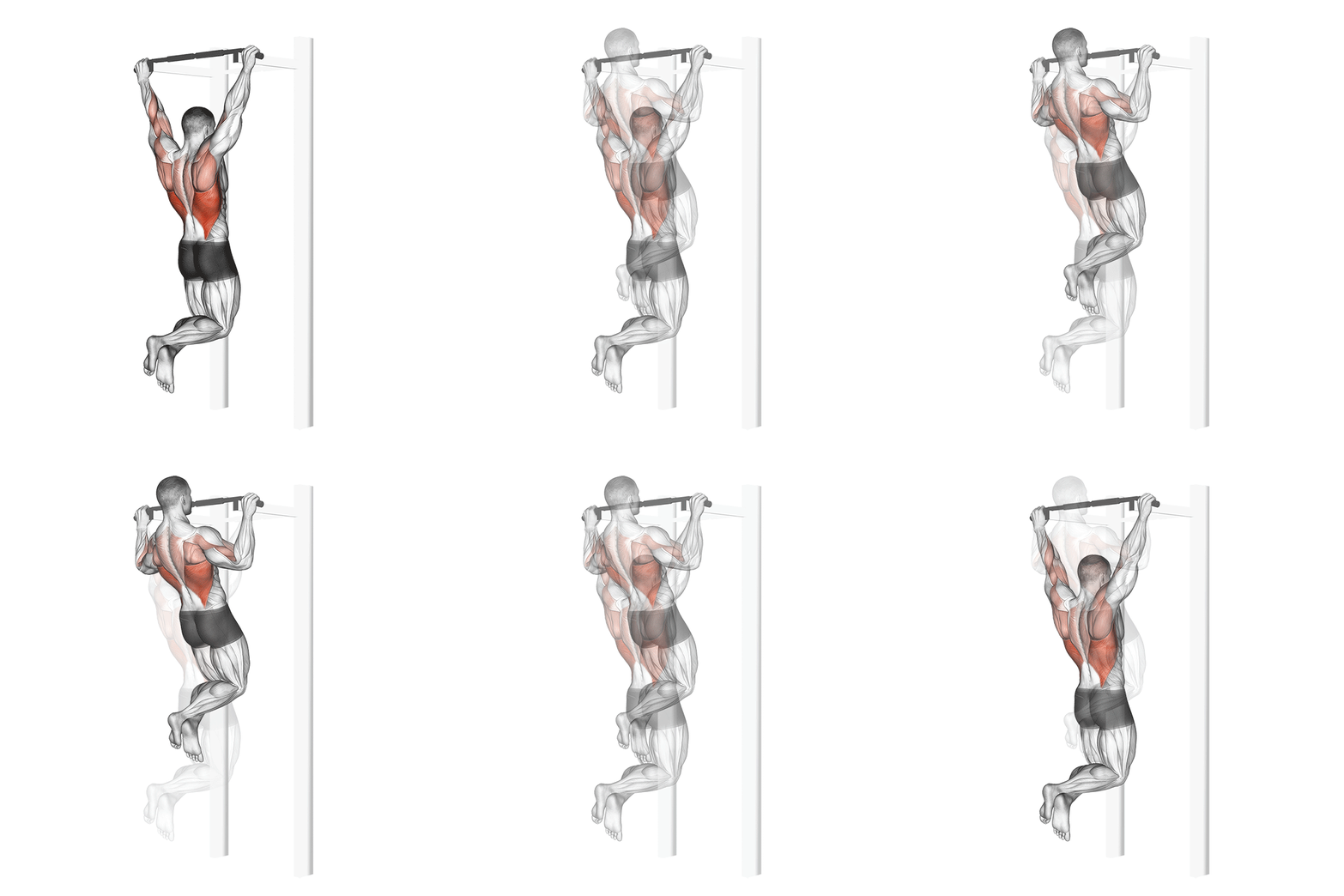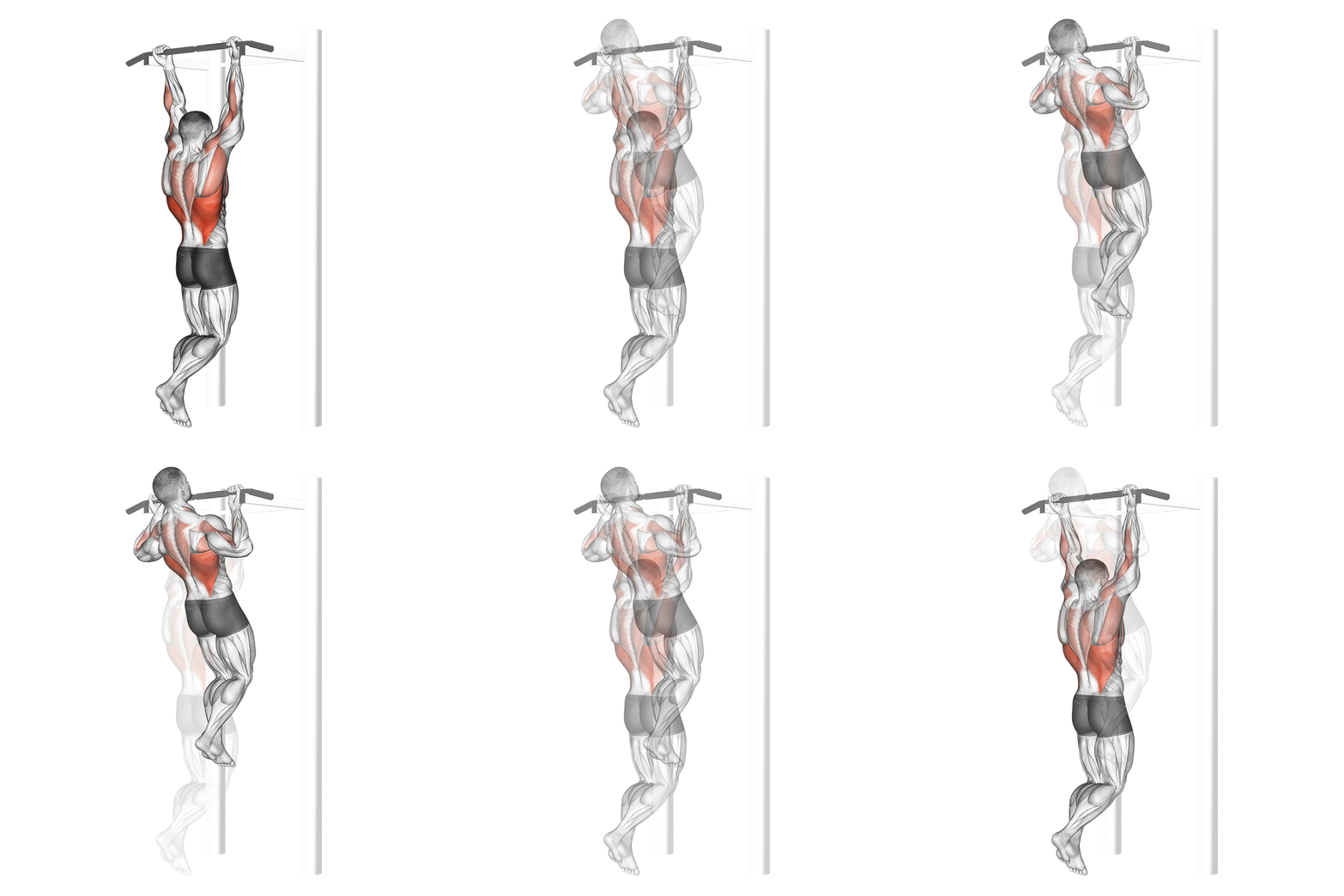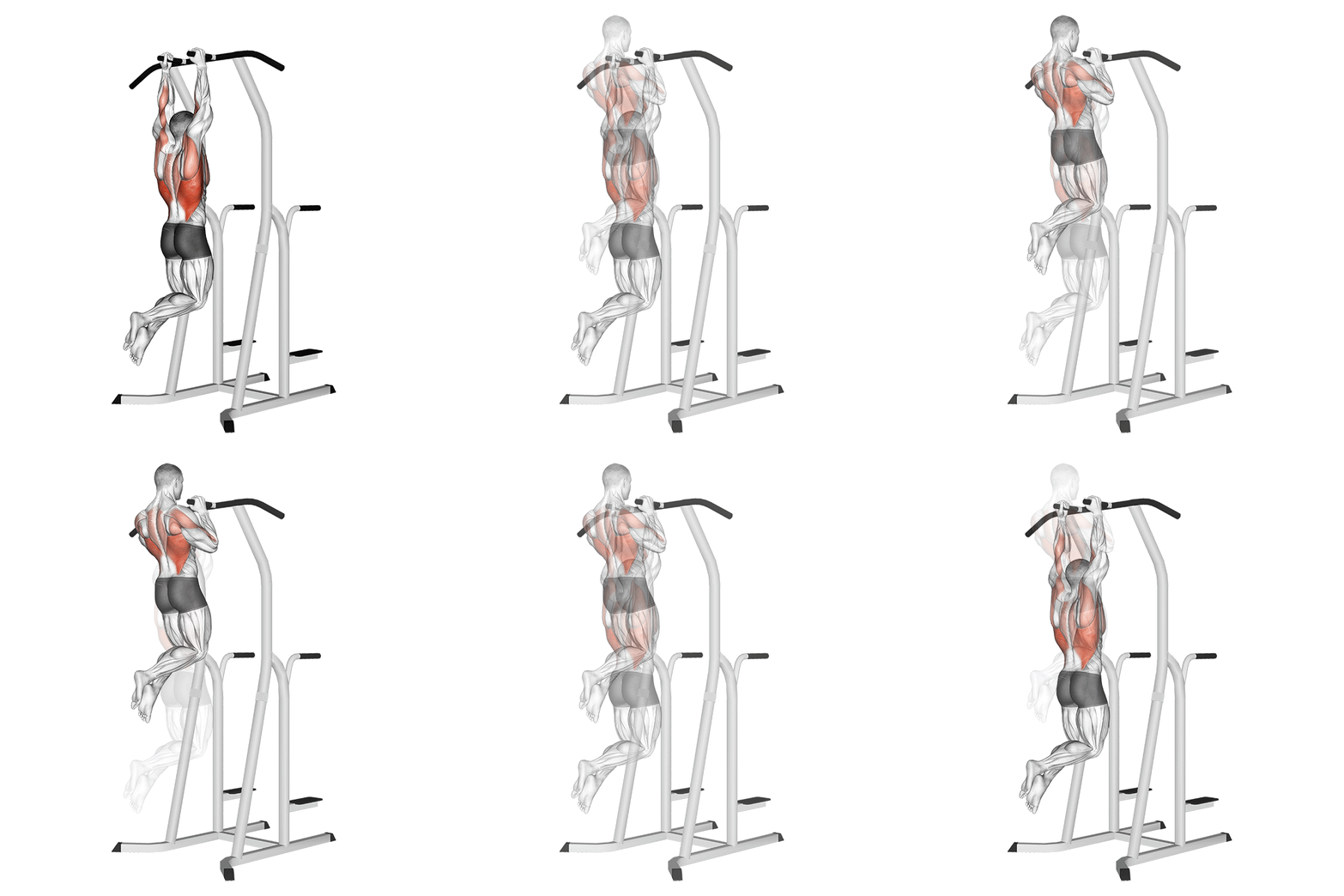
What is the neutral-grip pull-up?
The neutral-grip pull-up is done on parallel handles with the palms facing each other. That hand position sits halfway between a pull-up (palms away) and a chin-up (palms toward you), and for most people it is the strongest of the three: the brachialis and brachioradialis join the biceps at a mechanically happy angle, and the forearm is neither fully pronated nor fully supinated, which spares the elbow tendons. The lats still do the heavy lifting. It is the grip to choose when standard pull-ups flare up a cranky elbow, and when you simply want the most reps or the most load on a vertical pull.
How to do the neutral-grip pull-up
- 1
Take the handles deep
Use parallel handles about shoulder-width apart and seat them deep in your palms, thumbs wrapped. A fingertip grip wastes the one advantage this variation gives you.
- 2
Hang hollow
From straight arms, tuck the ribs, squeeze the glutes and set the shoulder blades slightly down. Your body should form a shallow banana, feet just in front of the handles.
- 3
Drive the elbows to the ribs
Pull by driving the elbows down and slightly back until your chin clears your hands and your chest rises toward the handles. The elbows naturally track in front of you; let them.
- 4
Lower longer than you pulled
Take a controlled two-second descent to fully straight elbows, shoulders still active. Rushing the bottom is how a joint-friendly grip stops being joint-friendly.
Pro tip
Because neutral is your strongest grip, your arms will happily steal the rep. Start every pull by driving the shoulder blades down for a beat before the elbows bend; if your chin clears your hands but your chest never rises toward them, the lats have checked out.
Common mistakes
Turning every rep into a curl.
The arm muscles love this grip so much that the back can coast. Lead with the shoulder blades, pause with the chest high at the top, and you will feel the work move from elbows to armpits.
Stopping short of straight arms.
Staying ten degrees bent at the bottom keeps the biceps comfortable and the rep incomplete. Reach full extension every time; if that costs you reps, those reps were not real.
Swinging between reps.
Parallel handles often sit on a rig where a little sway builds fast. Hold the hollow position, lower on a count, and let the body go still before each new pull.
Shrugging through the top.
When the lats fatigue, the traps hike the shoulders toward the ears to finish the rep. The fix is to end the set there: a shrugged top adds neck tension and nothing else.
Variations and progressions
Easier
Band-assisted neutral-grip pull-up
A band under one foot keeps the exact hand position while trimming bodyweight. Since grip is rarely the limiter in neutral, the band mostly buys you clean lat work near failure.
Harder
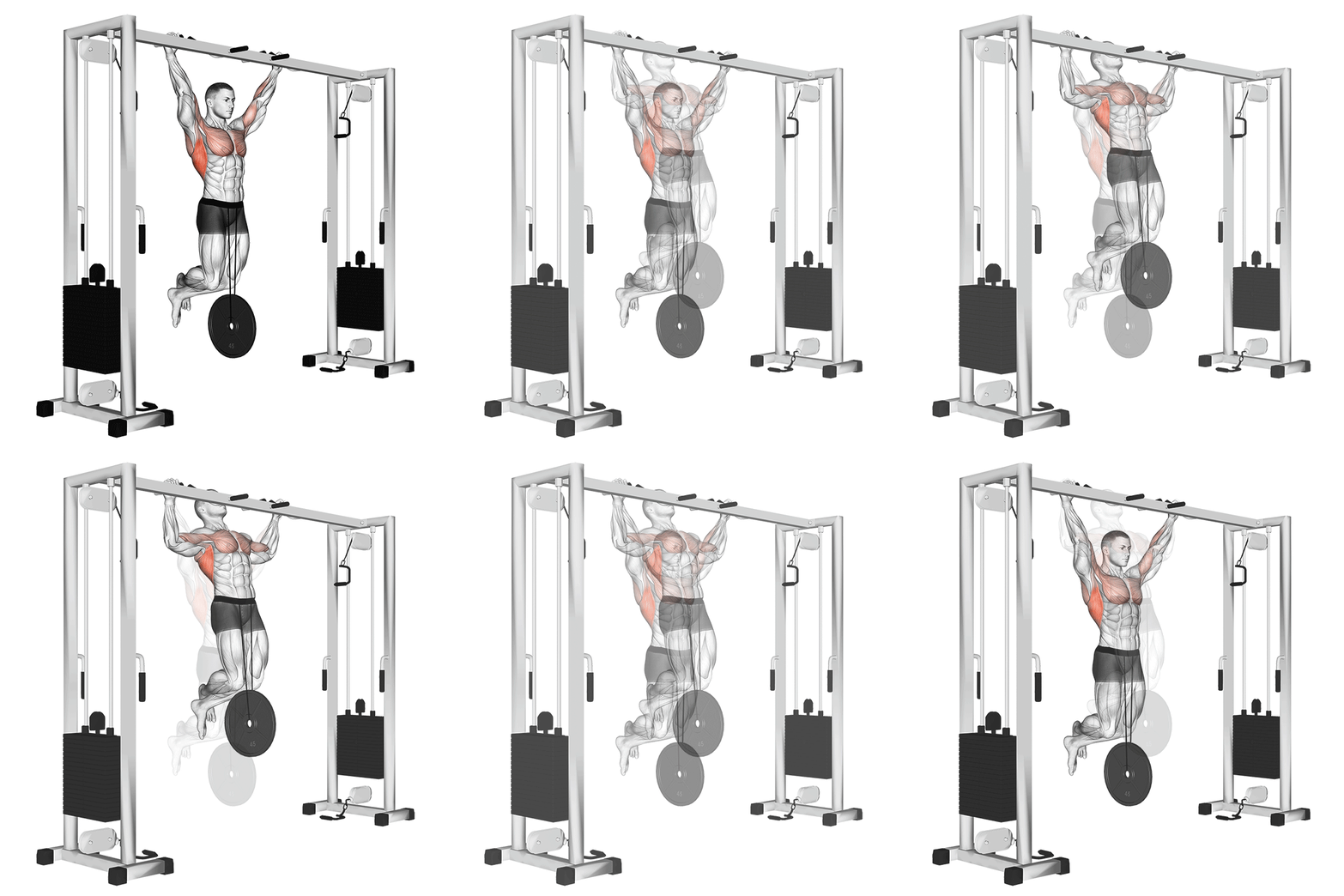
Weighted neutral-grip pull-up
Dip belt, plate, same strict standards. Neutral is the grip most people can load heaviest, which makes it the best candidate for a long-term weighted pull-up progression.
Alternative
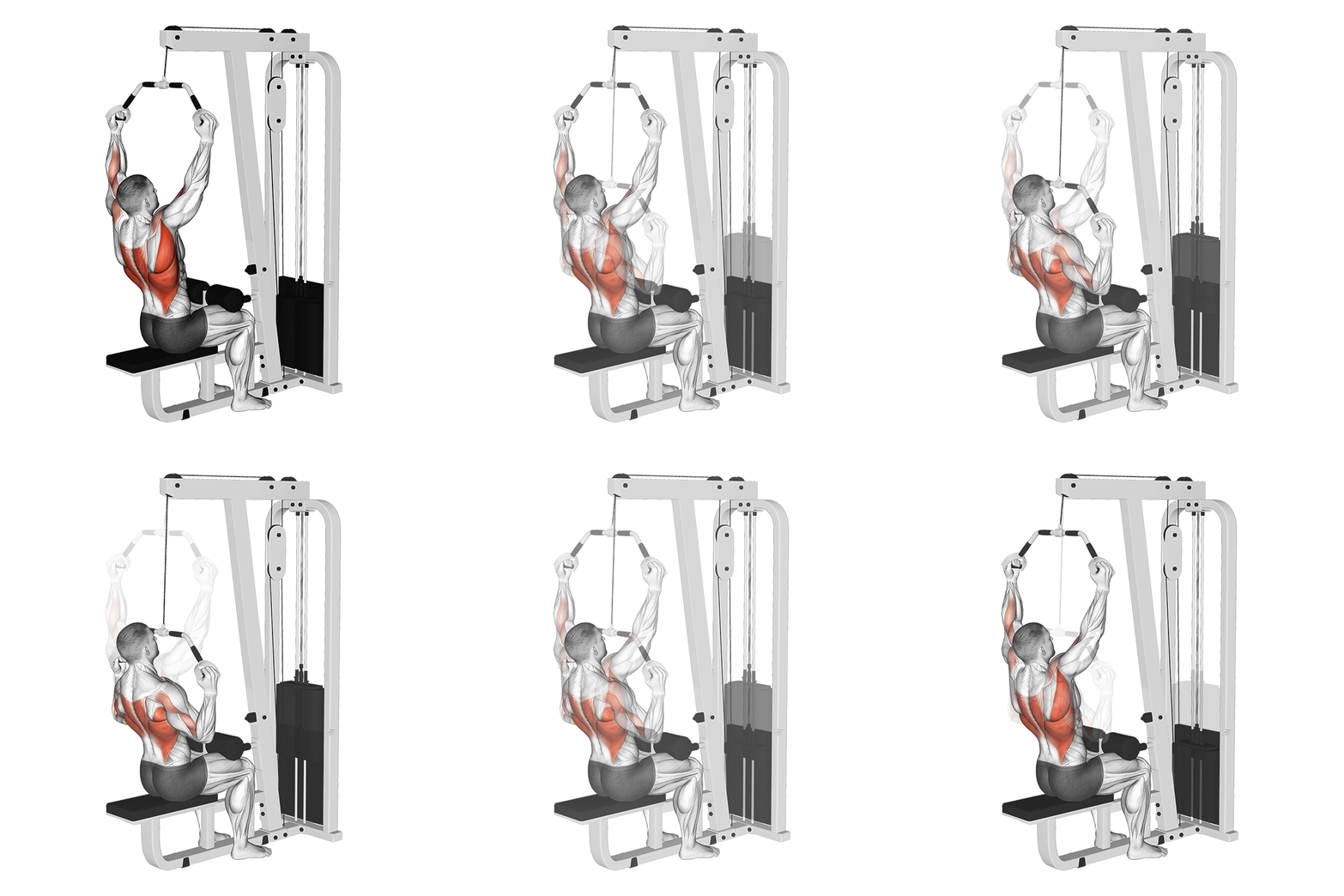
Neutral-grip lat pulldown
The same elbow path with an adjustable stack, useful on high-volume days or while a sore elbow calms down. Match the slow eccentric; do not just drop the stack.
How to program it
Three protocols by goal. Pick one per cycle and aim for progression on load or distance.
| Goal | Sets × distance | Load | Rest |
|---|---|---|---|
| Max strength | 5 × 3-5 | Weighted, around RPE 8 | 3 min |
| Hypertrophy | 4 × 6-10 | Bodyweight or light load, full range | 2 min |
| Rep capacity | 3 × max reps minus 1 | Bodyweight, strict to the last rep | 2-3 min |
Neutral-Grip Pull-Up FAQ
Is a neutral grip easier than a pull-up or a chin-up?
For most people, yes: the typical ranking runs neutral first, chin-up close behind, pronated pull-up last. The neutral position lets the brachialis and brachioradialis pull at their best angle and gives you your strongest grip on the handle. The back works just as hard in all three; what changes is how much help the arms can offer. That is why neutral is where most lifters hit their rep and load records.
Are neutral-grip pull-ups better if my elbows hurt?
Often, yes. With the forearm in mid-position, the tendons that attach at the inner and outer elbow see less twisting stress than in a fully pronated or supinated grip, which is why many lifters with golfer's or tennis elbow tolerate neutral work when a straight bar bites. It is a load management tool, not a cure: trim volume, slow the eccentrics, and see a professional if the pain lingers for weeks.
Do neutral-grip pull-ups still build the back, or mostly arms?
The lats remain the prime mover in any vertical pull; changing the grip only changes which assistants show up. Neutral recruits the brachialis and brachioradialis more than a pronated grip does, so your arms will grow too, but a strict rep finished chest-high is still a back rep. If your back never feels it, the fault is in execution (arms leading, no scapular set), not in the grip.
How far apart should the neutral handles be?
Shoulder width is the sweet spot: the elbows track naturally forward and down, and the range of motion stays long. Very narrow handles push the elbows together and turn the top into a cramped grind, while wide neutral handles start borrowing the trade-offs of a wide pronated grip. If your rig offers several options, pick the pair where the top of the rep feels roomy.