What is the man makers?
The man maker is a dumbbell complex that strings together a push-up on the handles, a renegade row on each side, a jump or step of the feet toward the hands, a clean to the shoulders and an overhead press, all counting as one rep. Where a burpee only moves your bodyweight, the man maker loads every stage: horizontal push, horizontal pull, hip extension and vertical press. The cost is coordination and a heart rate that climbs fast, which is exactly why CrossFit-style workouts love it. It belongs in conditioning pieces and finishers for experienced lifters; beginners should own each piece separately first.
How to do the man makers
- 1
Plank on the handles
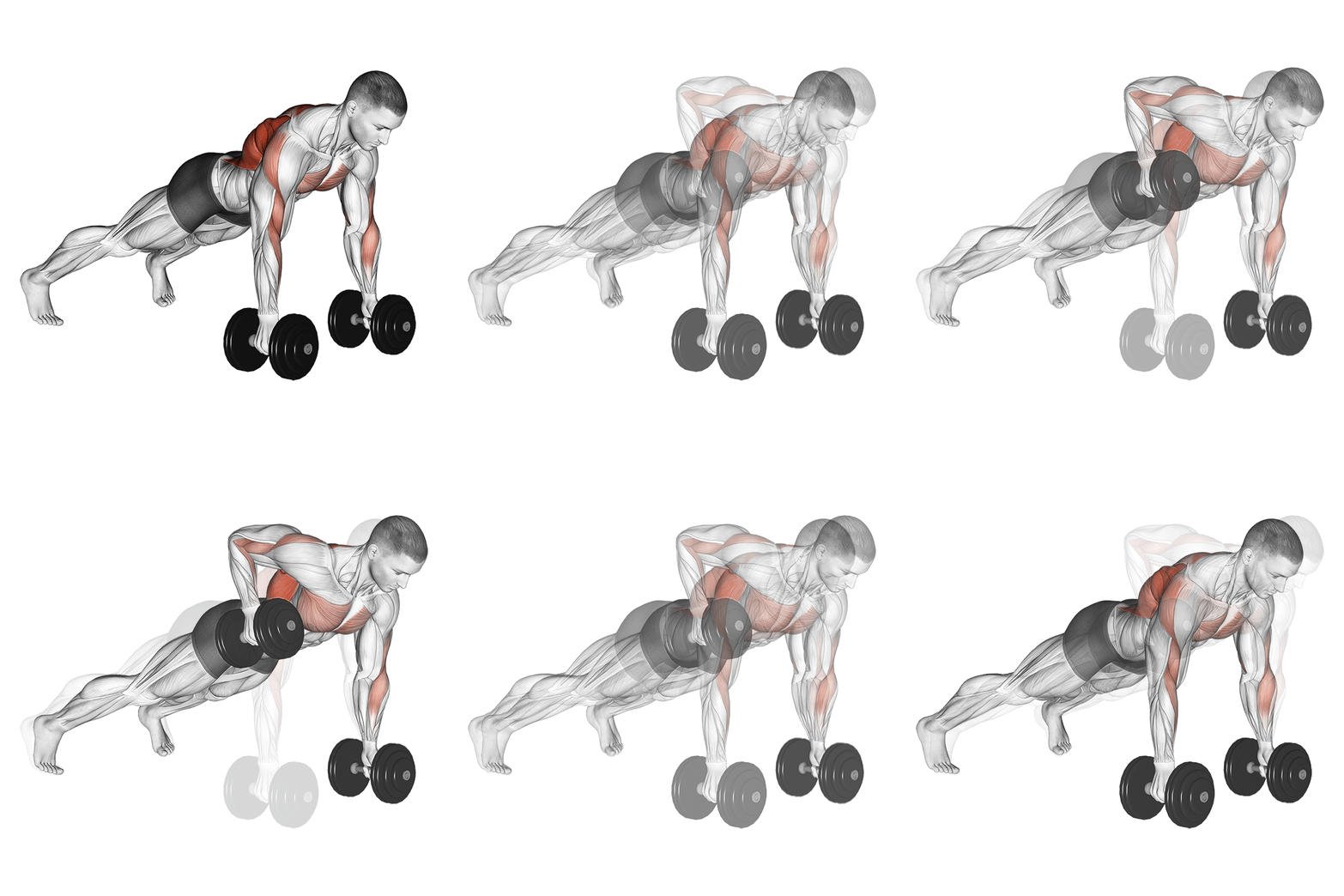
Place two hex dumbbells on the floor at shoulder width and take a push-up position gripping the handles, feet wider than usual for balance. Do one strict push-up, chest dropping between the bells.
- 2
Row right, row left
From the top of the push-up, row one dumbbell to your ribs while the other arm and both feet hold the plank, then switch sides. The hips stay level with the floor the whole time.
- 3
Feet in, clean the bells
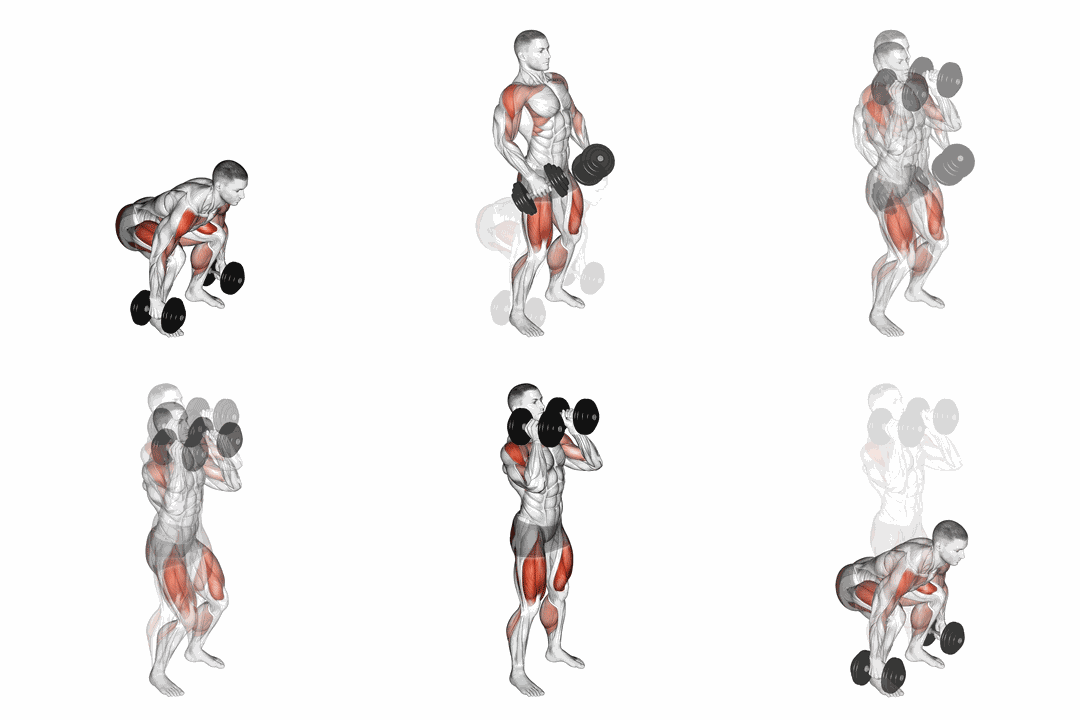
Jump or step the feet up toward your hands, hips low and back flat, then drive hard through the legs to clean both dumbbells onto the front of the shoulders as you rise.
- 4
Stand and finish overhead
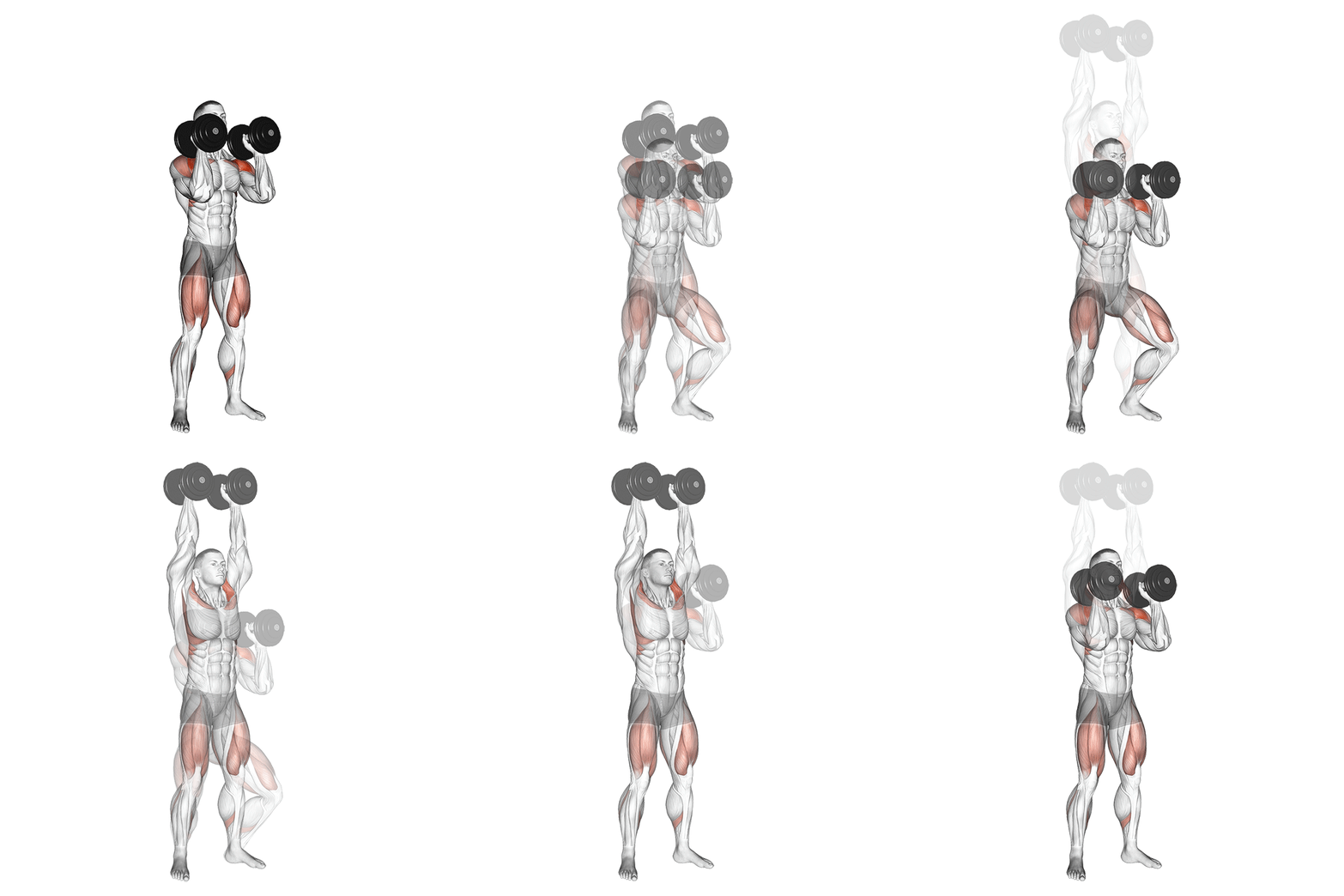
Stand tall and press or push-press both bells to lockout overhead, biceps close to the ears. Lower them to the shoulders, then to the floor, and flow straight into the next rep.
Pro tip
Choose the load with your overhead press, not your row: the press is the weakest link of the chain, and a weight you can row all day will still bury you overhead by rep six. A good starting point is about half of what you use for strict dumbbell presses.
Common mistakes
Twisting the hips during the rows.
Rocking the pelvis open to hoist the bell turns the row into a flop and loads the lower back sideways. Widen the feet, squeeze the glutes and keep both hip bones pointing at the floor; row a shorter range if you must.
Curling instead of cleaning.
Lifting the bells to the shoulders with the arms alone fries the biceps and elbows and skips the hip drive that makes the movement work. The legs throw the dumbbells up; the arms only guide them into the rack position.
Planking on round dumbbells.
Supporting your bodyweight on dumbbells that can roll is a wrist sprain waiting for its moment. Use hex dumbbells whenever you can; if the gym only has round ones, do the push-up with the hands flat on the floor beside the bells, then grip them for the rows.
Sprinting the first minute.
Man makers punish bad pacing harder than almost any movement: each rep takes 10 to 15 seconds and the heart rate keeps climbing for several reps after you stop. Start at a pace you could hold for twice the planned duration, then negotiate.
Variations and progressions
Easier
No-row man maker
Keep the squat thrust, the clean and the overhead finish, but drop the push-up and the rows. You keep the full-body engine work while removing the two stages where form breaks down first.
Harder
Man maker with thruster finish
Instead of standing up and then pressing, drop into a full front squat with the bells racked and drive out of the hole straight into the overhead lockout. More legs, more lungs, same dumbbells.
Alternative
Burpee
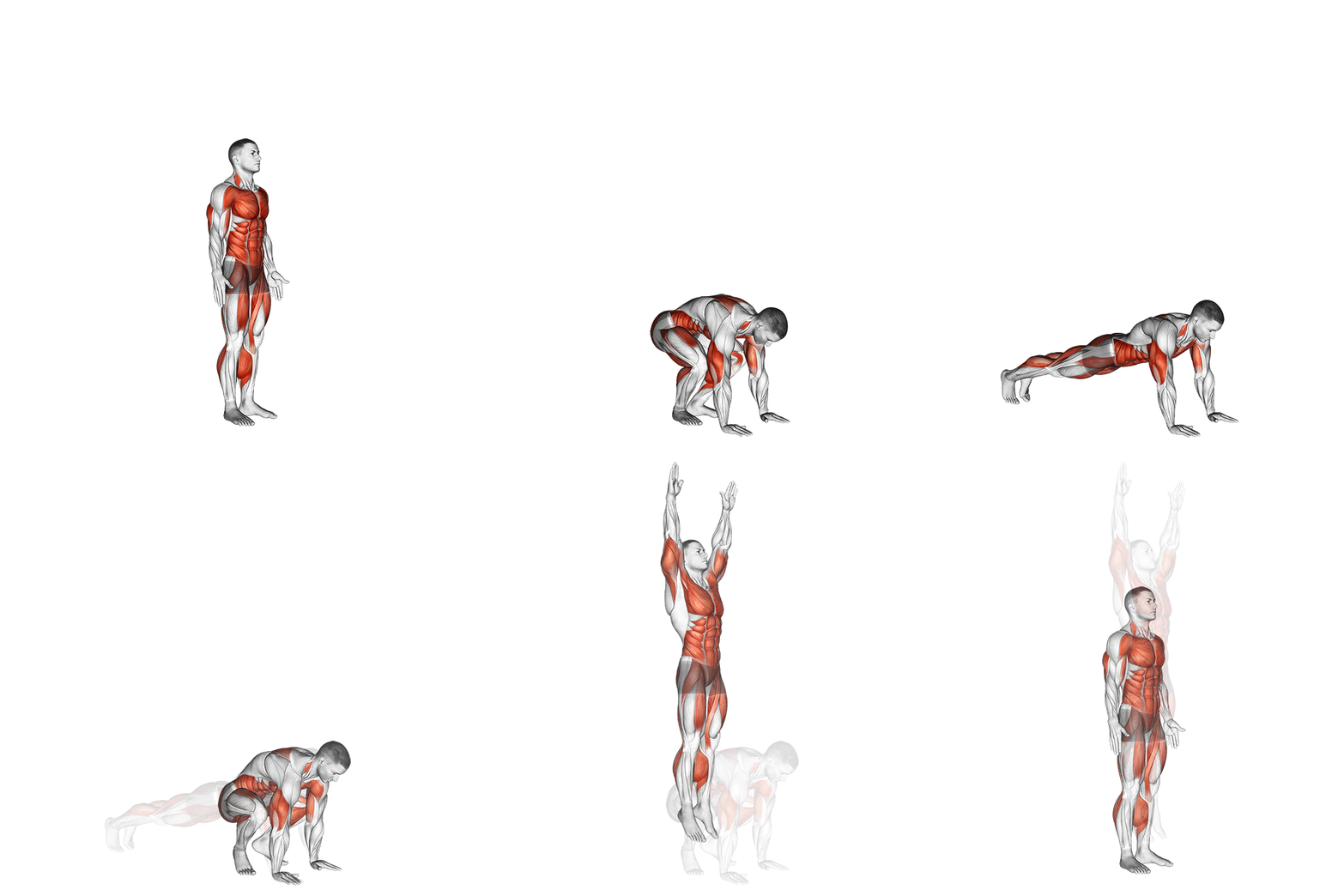
No dumbbells, or form falling apart mid-workout? Swap in bodyweight burpees at roughly double the rep count. You lose the loaded pulling and pressing, but keep the floor-to-standing conditioning hit.
How to program it
Three protocols by goal. Pick one per cycle and aim for progression on load or distance.
| Goal | Sets × distance | Load | Rest |
|---|---|---|---|
| Conditioning EMOM | EMOM 10-12 min: 3-4 reps | Light, 2 × 7.5-12.5 kg | Remainder of each minute |
| Strength-endurance | 4 × 6-8 | Moderate, RPE 7-8 | 2 min |
| Session finisher | 2 × 8-10 | Light | 90 s |
Man Makers FAQ
What muscles do man makers work?
Nearly all of them, by design. The push-up loads chest and triceps, the rows hit the lats and upper back, the clean and stand-up drive through quads and glutes, the press finishes with the shoulders, and the trunk braces through every transition. That said, it is first a conditioning tool: no single muscle gets enough focused tension to grow the way it would from dedicated sets.
How heavy should man makers be?
Lighter than your pride wants. Most athletes use 7.5 to 15 kg per hand in workouts, because the overhead press at the end of each rep caps the load once fatigue arrives. If the last press of a set turns into a grinding push-out or a lean-back, the bells are too heavy for that day's format. When in doubt, go down a pair.
Man maker vs devil press: what's the difference?
The devil press skips the rows and the clean: after the push-up you swing both dumbbells straight from the floor to overhead in one ballistic arc. It is faster, simpler and easier to cycle, which suits sprint-style workouts. The man maker is slower and stricter, with a real pull and a real press in every rep. Pick the devil press for speed, the man maker for complete, controlled full-body work.
Are man makers good for fat loss?
They are one of the most expensive movements per minute you can do, because every rep moves a load through pushing, pulling, squatting and pressing with almost no rest built in. That makes them a strong conditioning choice inside a fat-loss phase, once or twice a week. But the deficit still comes from your diet; no finisher outruns a kitchen.