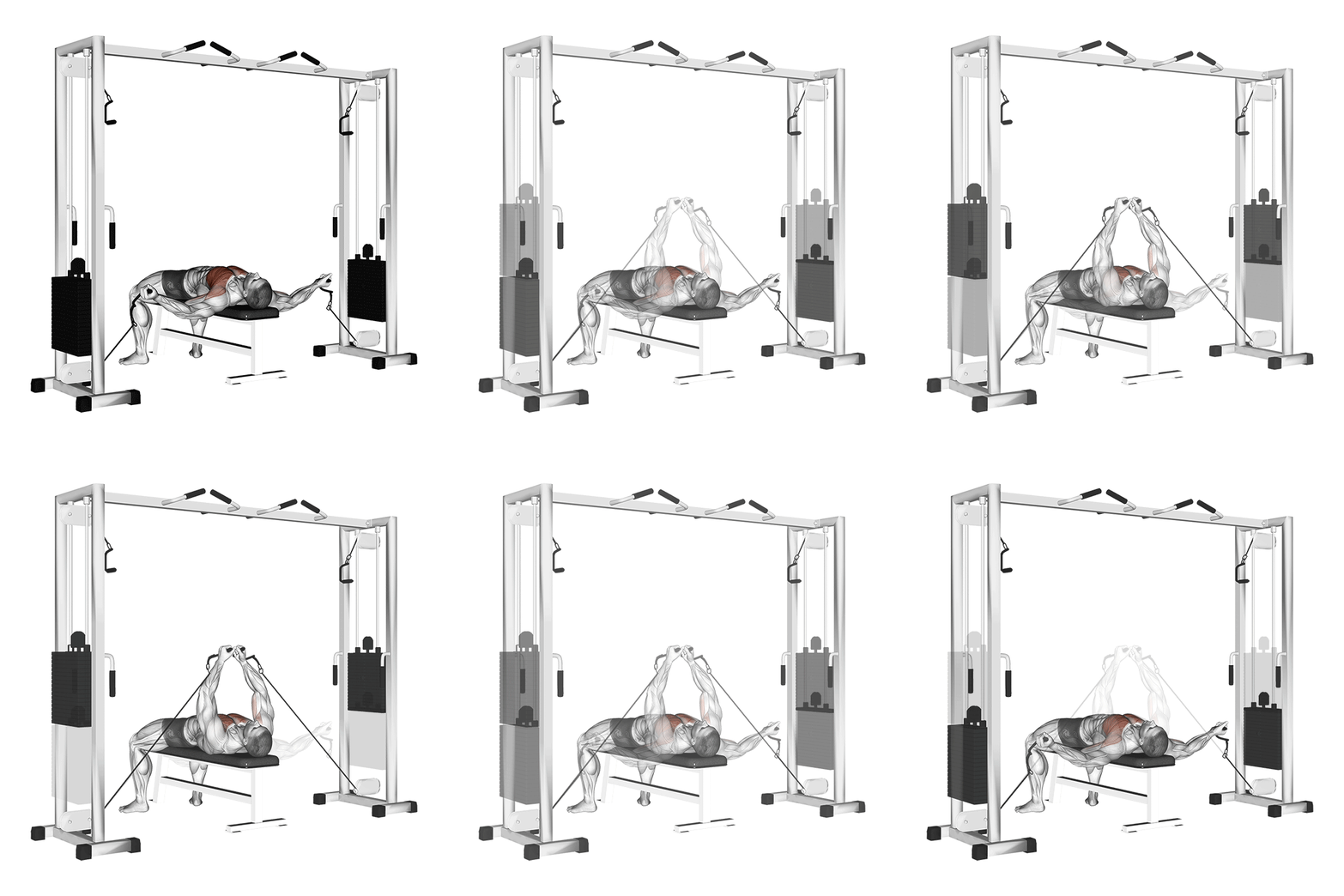
What is the lying cable fly?
The lying cable fly is the dumbbell fly rebuilt on a cable station: a flat bench centred between the two low pulleys, one handle in each hand, arms sweeping together above the mid-chest. The difference is the resistance curve. A dumbbell loads the stretch hard and gives you almost nothing at the top, while the cables pull from below and outside, so the squeeze stays as loaded as the bottom. Next to its incline sibling, the flat bench points the work at the sternal, mid-chest fibres rather than the clavicular ones. It is the right pick for lifters who want serious fly volume without wrestling heavy dumbbells into position.
How to do the lying cable fly
- 1
Centre the bench
Drop both pulleys to the floor setting, clip in D-handles and place a flat bench exactly midway between the columns, your chest in line with the pulleys once you lie down.
- 2
Pick up the handles
Grab one handle, lie back while holding it, then reach for the second, or have a partner hand it to you. Feet flat, shoulder blades squeezed into the bench.
- 3
Sweep up and together
With the elbows bent about 15 degrees and frozen there, draw both handles in a wide arc until they meet above your mid-chest. Hold the contraction for a full second.
- 4
Open wide, under control
Let the arms travel back out over 3 seconds until the upper arms sit just below the bench line and the pecs are on full stretch. Stay tight at the bottom.
Pro tip
Check where the handles hover at arm's length: straight above the nipple line is right. If they drift toward your hips, the bench is too far forward and the lats join the party; if they drift over your face, you have slid too far back and the bottom loses its stretch.
Common mistakes
Copying your dumbbell fly weight.
Cables load the whole arc, including the top where dumbbells rest, so the same number feels much harder. Start noticeably lighter and judge the load by the quality of the squeeze.
Handles travelling in straight lines.
A straight path to the ceiling means you are pressing, not flying, and the triceps take over. Picture wrapping your arms around a wide barrel: the hands move out, around and in.
Shrugging as the handles meet.
Pulling the shoulders up toward the ears at the top shifts tension into the traps and neck. Keep the shoulders packed down and let the pecs close the arc on their own.
Treating the stretch as a rest.
Going slack at the bottom lets the shoulder joint, not the muscle, catch the load. Hold tension in the stretch, pause briefly, and start the next rep from that tension, never from slack.
Variations and progressions
Easier
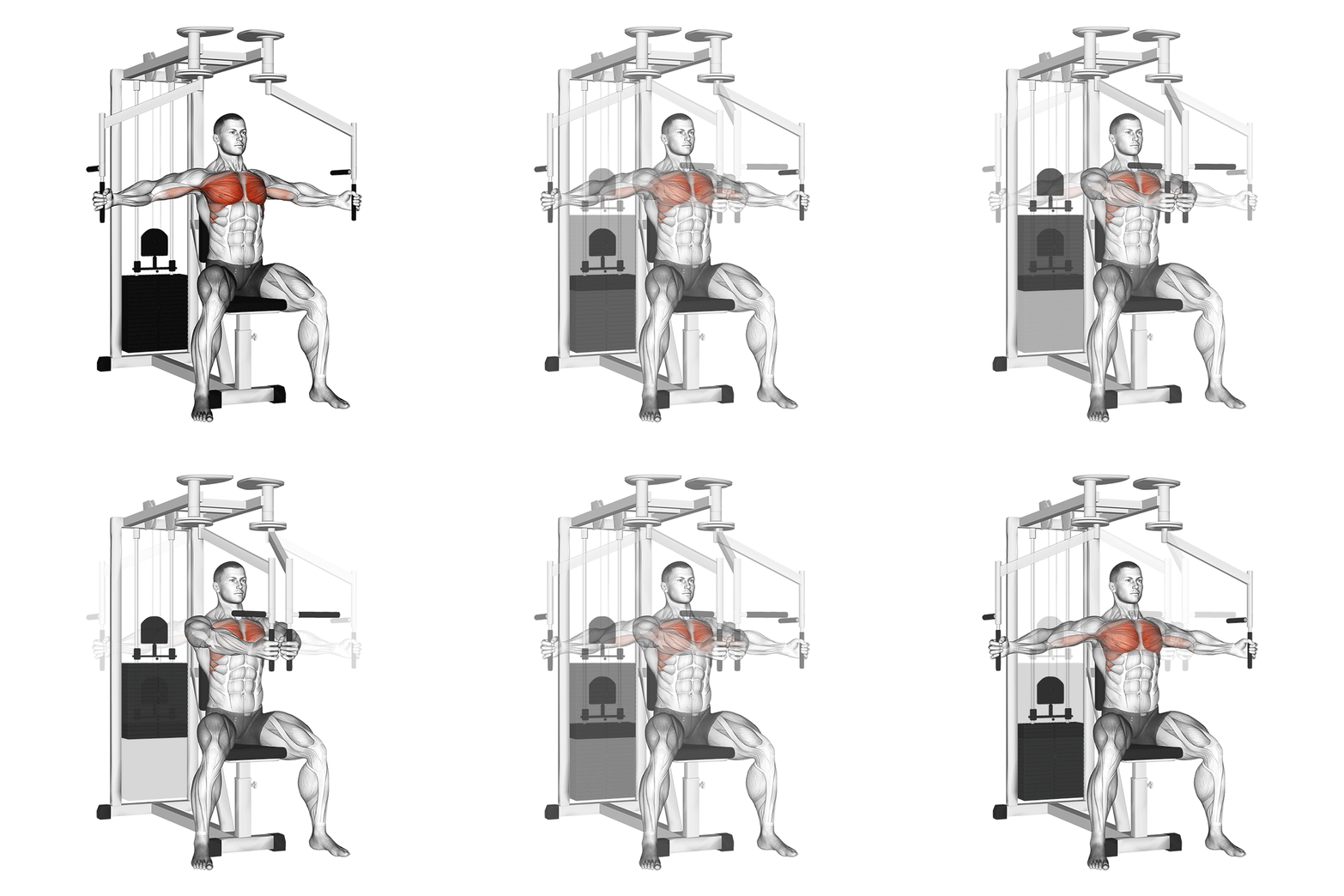
Machine chest fly (pec deck)
The fixed path removes the setup and the stability demand entirely. Learn the squeeze there, then come back to the cables for the free arc and the bigger stretch.
Harder
Paused lying cable fly
Hold 2 full seconds in the stretch on every rep, then climb out slowly. Same weight, far more time under tension exactly where the pec is longest.
Alternative
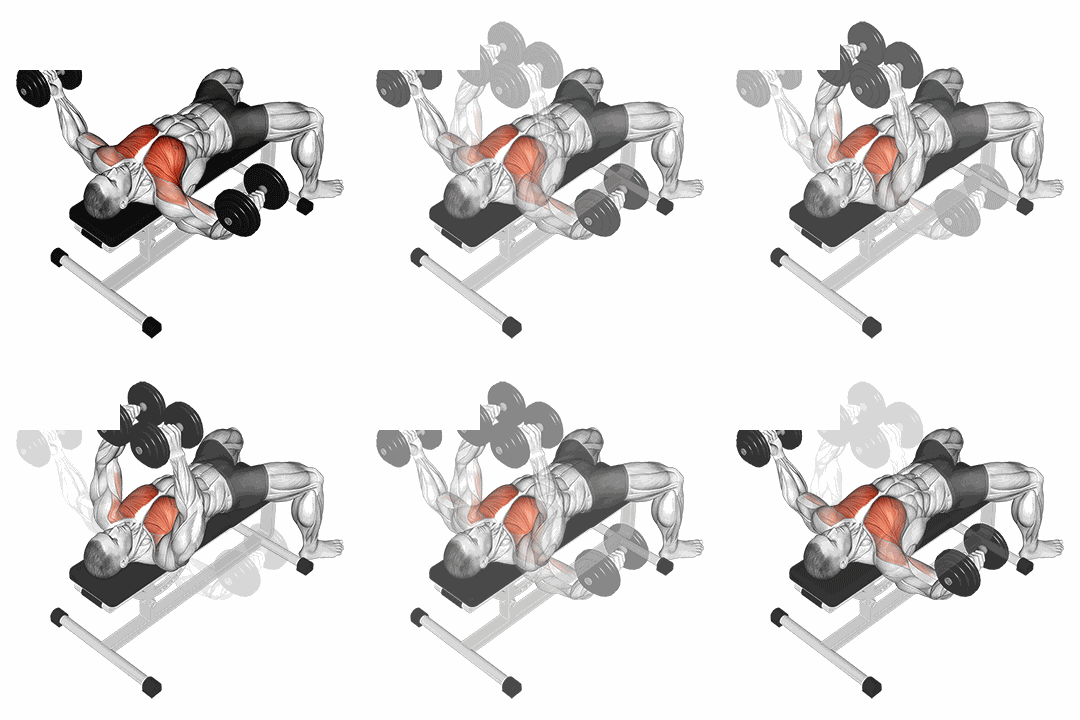
Flat dumbbell fly
The classic it descends from: a bench and two dumbbells are all you need. The top of the rep is unloaded, so earn it back with a hard 1-second contraction.
How to program it
Three protocols by goal. Pick one per cycle and aim for progression on load or distance.
| Goal | Sets × distance | Load | Rest |
|---|---|---|---|
| Technique | 2 × 15 | Very light, RPE 5 | 60 s |
| Hypertrophy | 3 × 10-12 | RPE 8 | 75 s |
| Chest-day finisher | 2 × 15-20 | RPE 9 | 60 s |
Lying Cable Fly FAQ
Lying cable fly or dumbbell fly: which builds more chest?
Both grow the pec; they just load it differently. The cable version keeps tension through the top and feels smoother on the shoulders, the dumbbell version hammers the stretch. If you train at a busy gym, run the cables when the station is free and dumbbells the rest of the time: consistency beats the choice itself.
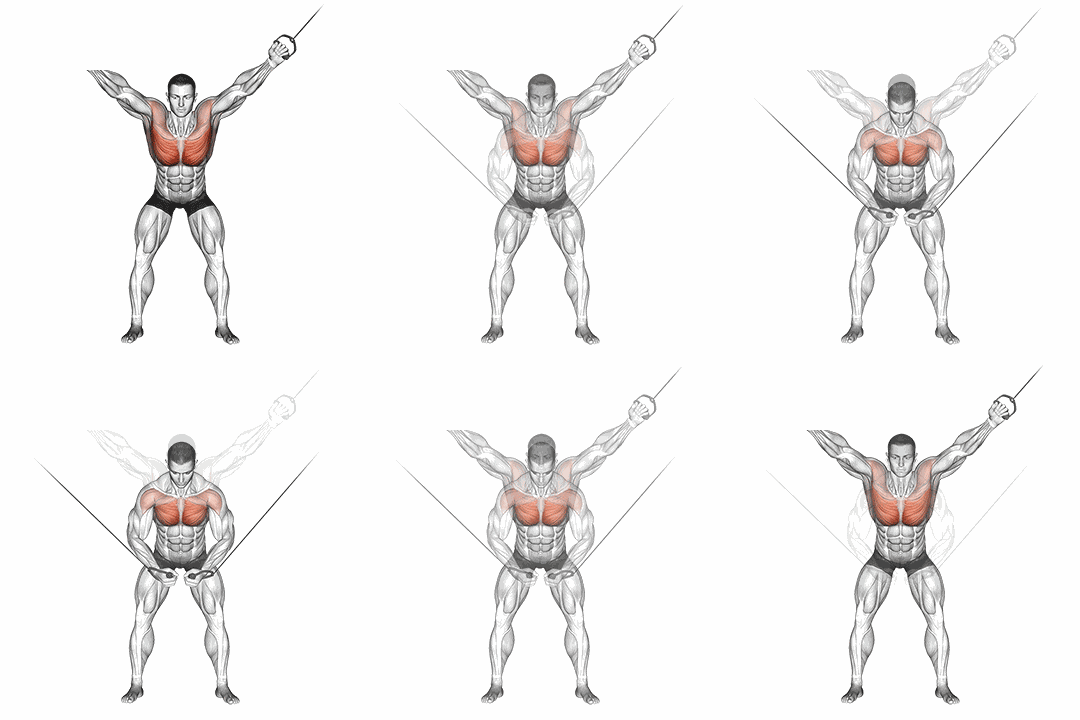
Why lie on a bench instead of doing a standing crossover?
Standing, your legs and core share the work and a little body lean can rescue ugly reps. On the bench there is nowhere to hide: the pec moves the load or the rep stops. That strictness makes small weekly load jumps honest and is exactly why the lying version exists.
How is it different from the incline cable fly?
Only the bench angle changes. Flat points the arc at the sternal, mid-chest fibres; around 30 degrees of incline shifts the emphasis to the upper chest. Cues and setup are otherwise identical, so pick by whichever region lags, or run flat and incline on different days of the week.
My biceps ache during flies. Is something wrong?
Common and usually harmless: with a nearly straight arm, the biceps works isometrically to hold the elbow angle while under stretch. Bend the elbows a touch more, around 20 degrees, and drop the load a notch. Sharp or lingering pain at the front of the shoulder is different: get that checked.