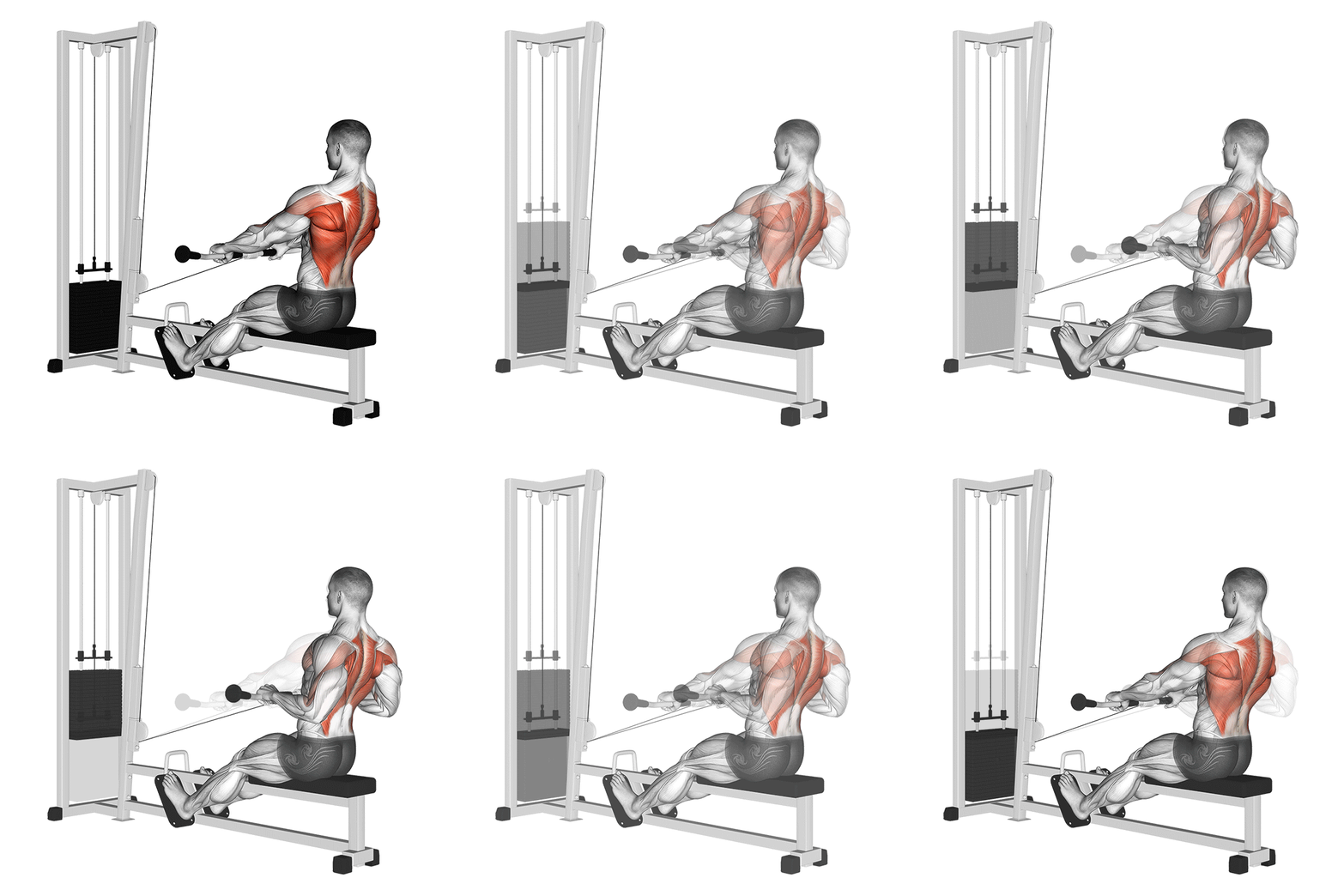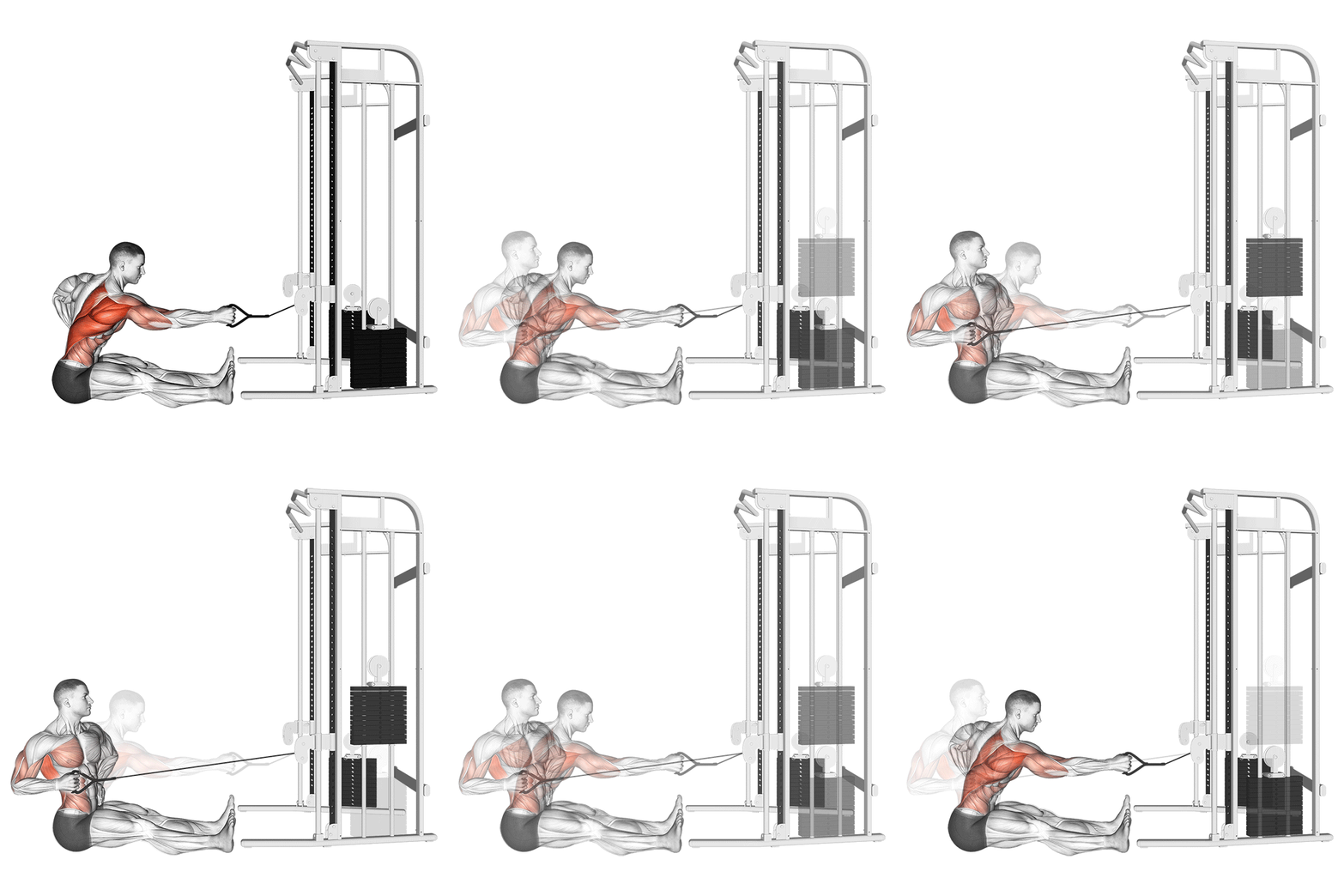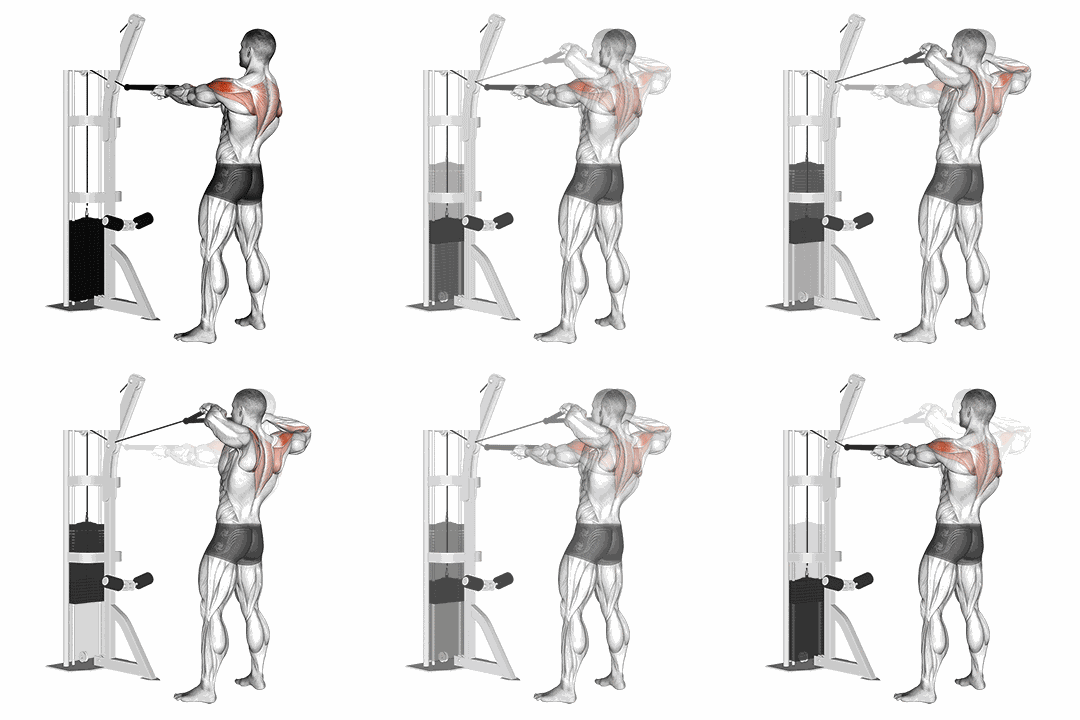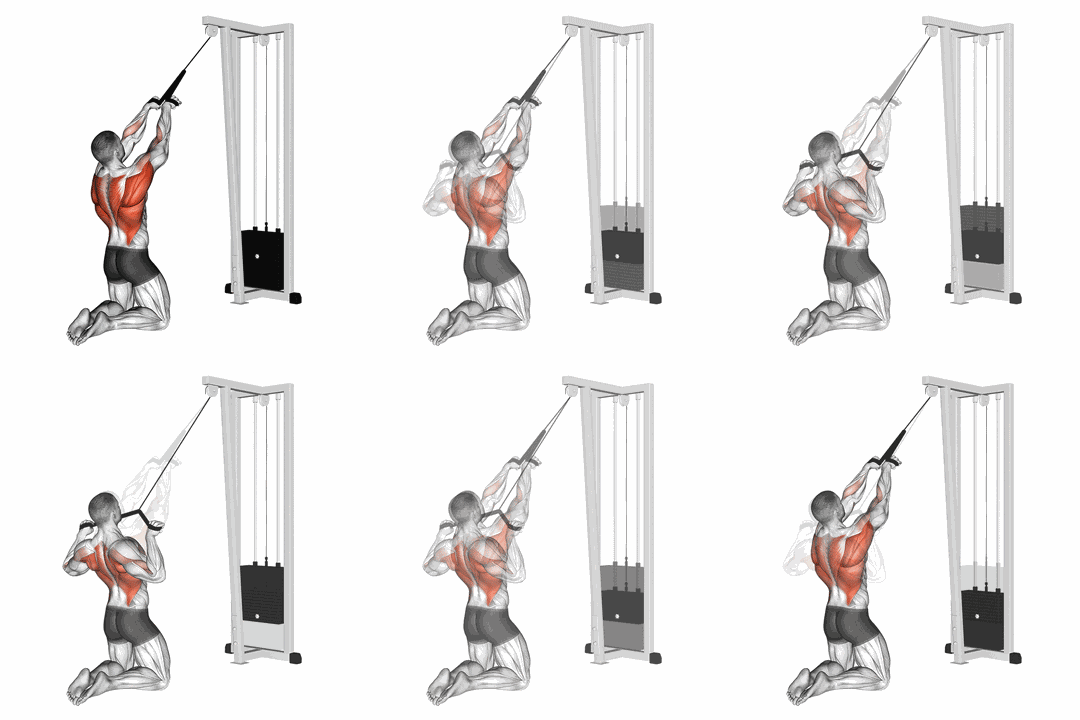
What is the kneeling cable row?
The kneeling cable row is a horizontal pull performed tall-kneeling or half-kneeling in front of a cable stack, drawing a handle from a mid or high pulley into your ribs. Remove the chest pad and seat of a machine row and your trunk and glutes must hold the position themselves: no leaning back, no leg drive, no hiding. The downhill cable angle also pulls your arms into a long, almost overhead stretch at the start of each rep, biasing the lats more than a flat pull does. Pick it when you want strict lat work plus anti-flexion or anti-rotation core training inside one movement.
How to do the kneeling cable row
- 1
Set the pulley and clip in
Set the cable anywhere between your kneeling chest height and the top of the column; the higher it sits, the more the lats are biased. Attach a straight bar or double-D handle for two arms, a single handle for one.
- 2
Kneel tall and build the pillar
Walk back until the stack floats with your arms long. Tall kneeling: knees under hips, glutes squeezed, ribs down. Half kneeling: opposite foot forward, back-leg glute locked on.
- 3
Row to the ribs
Start by drawing the shoulder blade back, then drive the elbow to your lower ribs. The torso stays a vertical pillar; nothing rocks, nothing twists, only the arm and shoulder blade travel.
- 4
Resist the long return
Give the cable two seconds back and let it pull your arm long and your shoulder blade forward into a full stretch, without letting it drag your trunk along. Stay tall into the next rep.
Pro tip
In the half-kneeling version, squeeze the rear-leg glute like you are finishing a lunge. It bolts your pelvis to the floor, and the torso rock most people mistake for rowing strength disappears on the spot.
Common mistakes
Sitting back on the heels.
As fatigue builds, the hips fold and the tall pillar becomes a crouch, changing the pulling angle and dumping the core work. Keep the hips extended: knees, pelvis and shoulders on one line.
Rowing with the lower back.
A backward lean at the end of each pull adds fake centimetres: the stack moved, the lat didn't. If you cannot finish the rep with a frozen torso, the pin is set too deep in the stack.
Finishing with a shrug.
When the lats tire, the shoulder creeps up toward the ear and the upper traps steal the last part of the pull. Think elbow toward the back pocket, shoulder blade pulled down as well as back.
Kneeling too close to the stack.
If the plates settle between reps, tension and the stretch die together. Shuffle back until the stack floats with your arms fully long, and keep it floating for the whole set.
Variations and progressions
Easier
Seated cable row
Feet braced and hips supported, so all your attention goes into the pull. The right place to build basic rowing strength before you remove the furniture.
Harder
Single-arm row with a 2 s pause
One handle, one arm, and a two-second freeze on the ribs every rep. The offset cable fights to rotate you the whole time, and the pause strips out every trace of momentum.
Alternative
Inverted row
No cable stack required: a bar in a rack and your bodyweight give you the same horizontal pull with the trunk tension built in. Raise or lower the bar to set the difficulty.
How to program it
Three protocols by goal. Pick one per cycle and aim for progression on load or distance.
| Goal | Sets × distance | Load | Rest |
|---|---|---|---|
| Hypertrophy | 4 × 10-12 | RPE 8, 1 s squeeze on the ribs | 90 s |
| Core + unilateral | 3 × 8-10 per side | Half kneeling, moderate, zero rotation | 60-90 s |
| Technique volume | 3 × 12-15 | Light, 2 s eccentric | 60 s |
Kneeling Cable Row FAQ
Why kneel instead of sitting for a cable row?
Kneeling removes the seat and foot braces, so your glutes and trunk have to stabilise everything the bench normally handles, and the higher cable angle stretches the lats harder at the start of each pull. The seated row still wins for absolute load; the kneeling version buys strictness, core work and a longer lat stretch from the same stack.
Tall kneeling or half kneeling: which should I use?
Half kneeling, with the opposite foot forward, gives a wider base and is the natural home of single-arm rows and anti-rotation work. Tall kneeling narrows the base, demands more from the glutes and deep trunk, and suits two-arm rows. Learn half kneeling first, then graduate.
What height should the pulley be?
Anywhere from kneeling chest height to the top of the column works; it only changes the emphasis. A high pulley pulls your arms up and forward, adding a bigger lat stretch and a pulldown flavour; a mid pulley keeps it a purer horizontal row for the mid-back. Rotate both.
What muscles does the kneeling cable row work?
The lats do the bulk of the pulling, helped by the rhomboids, mid traps, rear delts and biceps. The difference from other rows is below the waist: glutes and obliques fire isometrically all set long to keep you tall and square, which is exactly why coaches programme it.