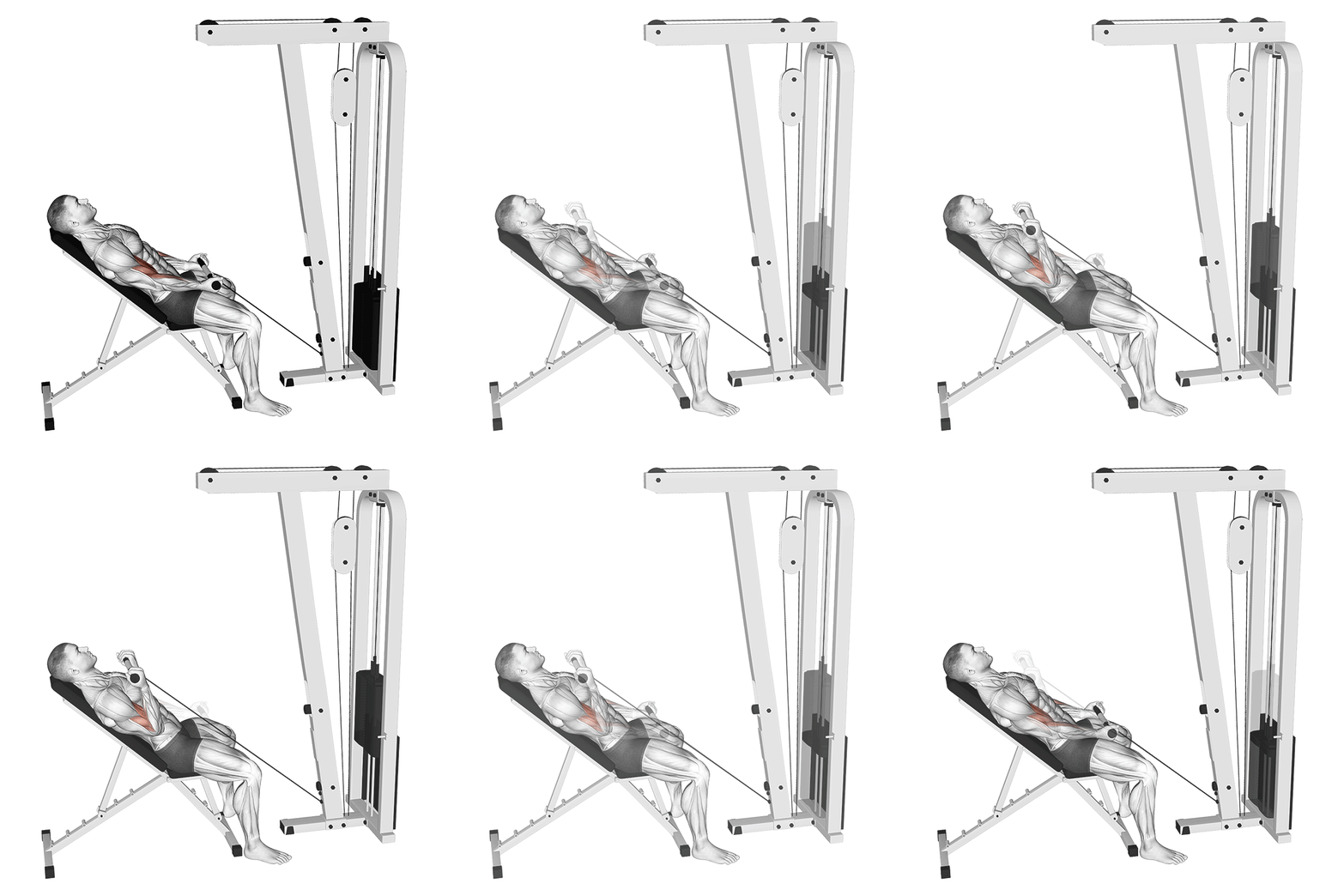
What is the incline cable curl?
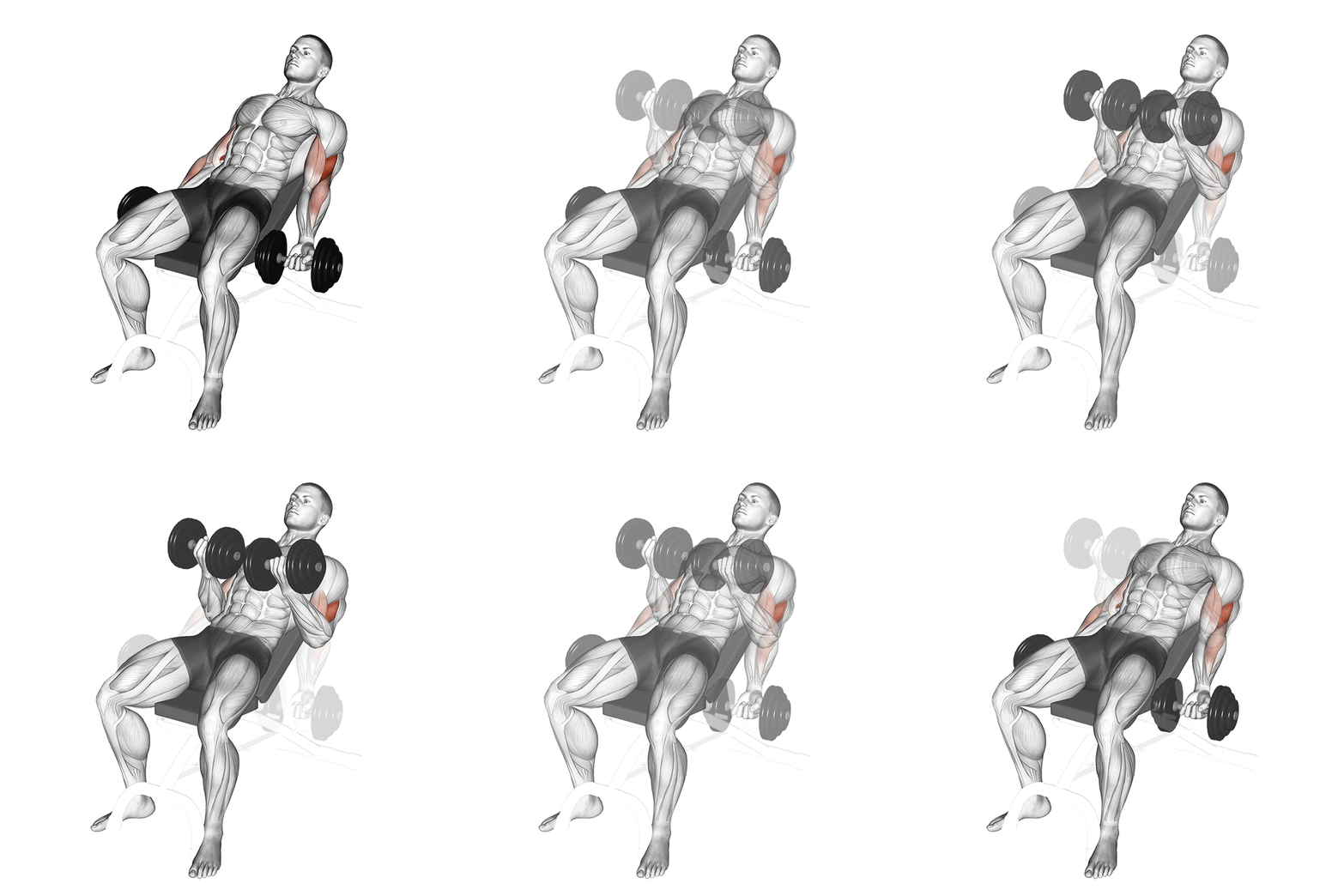
The incline cable curl is a biceps curl done lying back on an incline bench placed a step in front of a low pulley, the cable running up to your hand from behind. The incline pushes your upper arm behind your torso, so the biceps starts every rep at a long muscle length, exactly as in the incline dumbbell curl. The cable changes the one thing that matters: at the bottom, a dumbbell hangs almost in line with your arm and produces nearly zero torque, while the cable keeps pulling from behind and loads the stretched position hard. It suits lifters chasing long-head growth who already curl strictly.
How to do the incline cable curl
- 1
Build the setup
Clip a single handle to a low pulley and set an incline bench at 45-55 degrees about one step in front of the column, back pad facing the stack. Grab the handle before you lie back; the cable should run past your hip so it pulls your arm down and behind you.
- 2
Hang into the stretch
Lie back, let the working arm hang long with the palm facing forward, and keep the shoulder blade set against the bench rather than letting the stack drag it up. You should feel a clear stretch in the biceps, not a pull in the front of the shoulder.
- 3
Curl with a frozen elbow
Curl the handle toward your shoulder while the upper arm stays exactly where it started, elbow pointing at the floor. Stop when your forearm meets your biceps and hold the contraction for one count.
- 4
Lower past where you’d like to stop
Take 3 seconds to lower all the way to a dead-straight elbow. The last few degrees are the whole point of this exercise: that is where the biceps works at its longest and where the cable, unlike a dumbbell, still resists.
Pro tip
If the bottom position pinches the front of your shoulder, don’t grit through it: raise the back pad one notch more upright. The benefit comes from the upper arm sitting behind the torso at all, not from the most extreme angle you can tolerate, and a 60-degree bench you can load beats a 40-degree bench that hurts.
Common mistakes
Letting the stack unseat your shoulder.
Between reps the cable keeps pulling down and back, and a relaxed shoulder rolls forward out of its strong position. Keep the shoulder blade pinned to the bench; the stretch belongs in the biceps, not in the joint capsule.
The elbow creeping toward the ceiling.
As fatigue builds, the upper arm drifts forward so the front delt can help finish each rep. The rep count keeps climbing but the biceps stopped getting the credit; re-pin the elbow toward the floor or end the set.
Loading it like your standing curl.
At long muscle lengths you are weaker, and the bench removes every trace of body english. Expect to use 20-30% less than your standing cable curl; keeping the same pin guarantees half reps and a yanked shoulder.
Reversing before the arm is straight.
Turning around at 20 degrees of elbow bend keeps the set comfortable and deletes the stretched range, the only thing this setup does better than every other curl. Straighten completely, feel the pull, then curl.
Variations and progressions
Easier
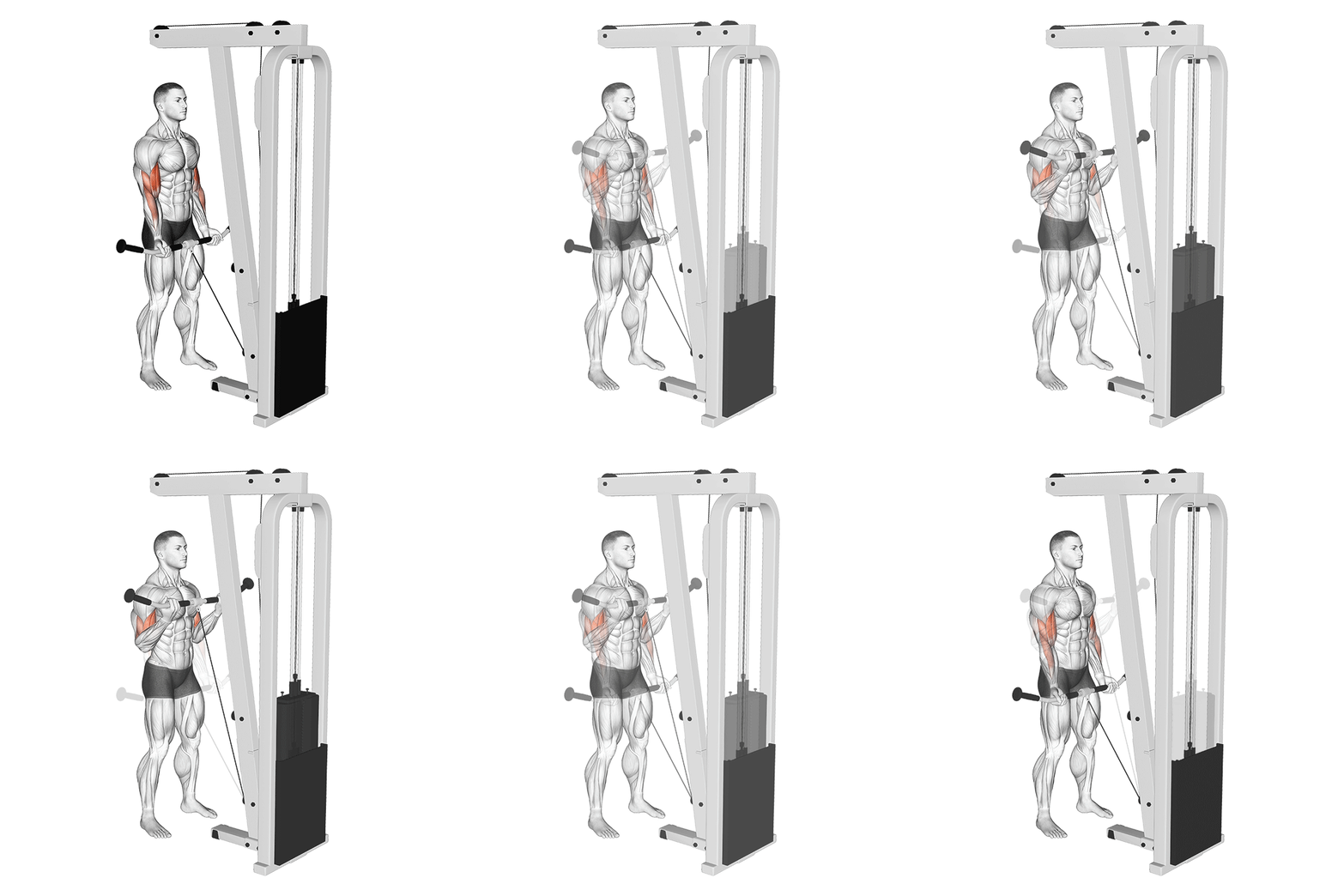
Standing cable curl
Same constant tension without the long-length stretch or the bench logistics. Groove strict elbows there first; everything you learn transfers directly once you lie back.
Harder
Paused incline cable curl
Add a strict 2 s dead stop at full extension on every rep. The pause kills the stretch reflex, so the biceps must restart each rep from zero at its weakest length; take another 10-15% off the stack.
Alternative
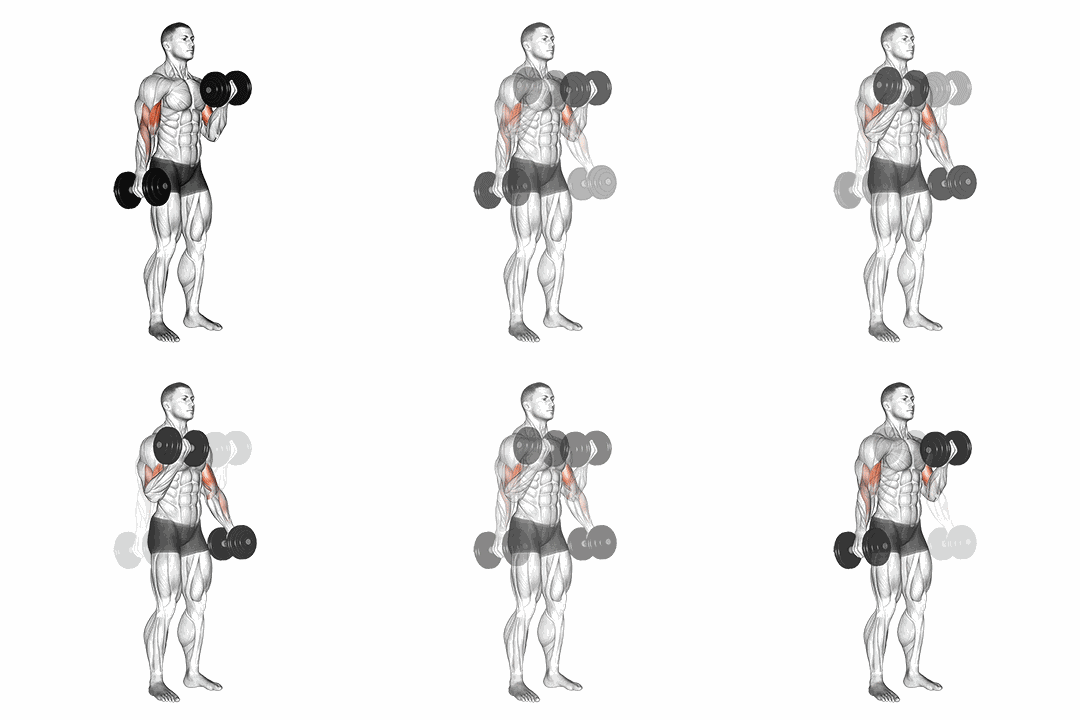
Incline dumbbell curl
The same shoulder-extended position with free weights. The torque now peaks at mid-range and vanishes near the bottom, so add a slow 3-4 s eccentric to claw back part of what the cable gives for free.
How to program it
Three protocols by goal. Pick one per cycle and aim for progression on load or distance.
| Goal | Sets × distance | Load | Rest |
|---|---|---|---|
| Hypertrophy | 3 × 10-12 per arm | RPE 8 | 90 s |
| Stretch emphasis | 3 × 8-10, 3 s down, 1 s pause at the bottom | Moderate, RPE 8 | 90 s |
| Finisher | 2 × 15-20 | Light, RPE 9 on the final set | 60 s |
Incline Cable Curl FAQ
Incline cable curl vs incline dumbbell curl: what actually changes?
The position is identical; the resistance profile is not. With a dumbbell, gravity pulls straight down, so torque at the elbow peaks at mid-range and drops toward zero when the arm hangs at the bottom. The cable approaches from behind, which keeps meaningful load on the biceps precisely in that bottom stretch. Both are good incline curls; the cable version simply works the long-length position harder, which is the reason to set the bench up in the first place.
Is this just a Bayesian curl on a bench?
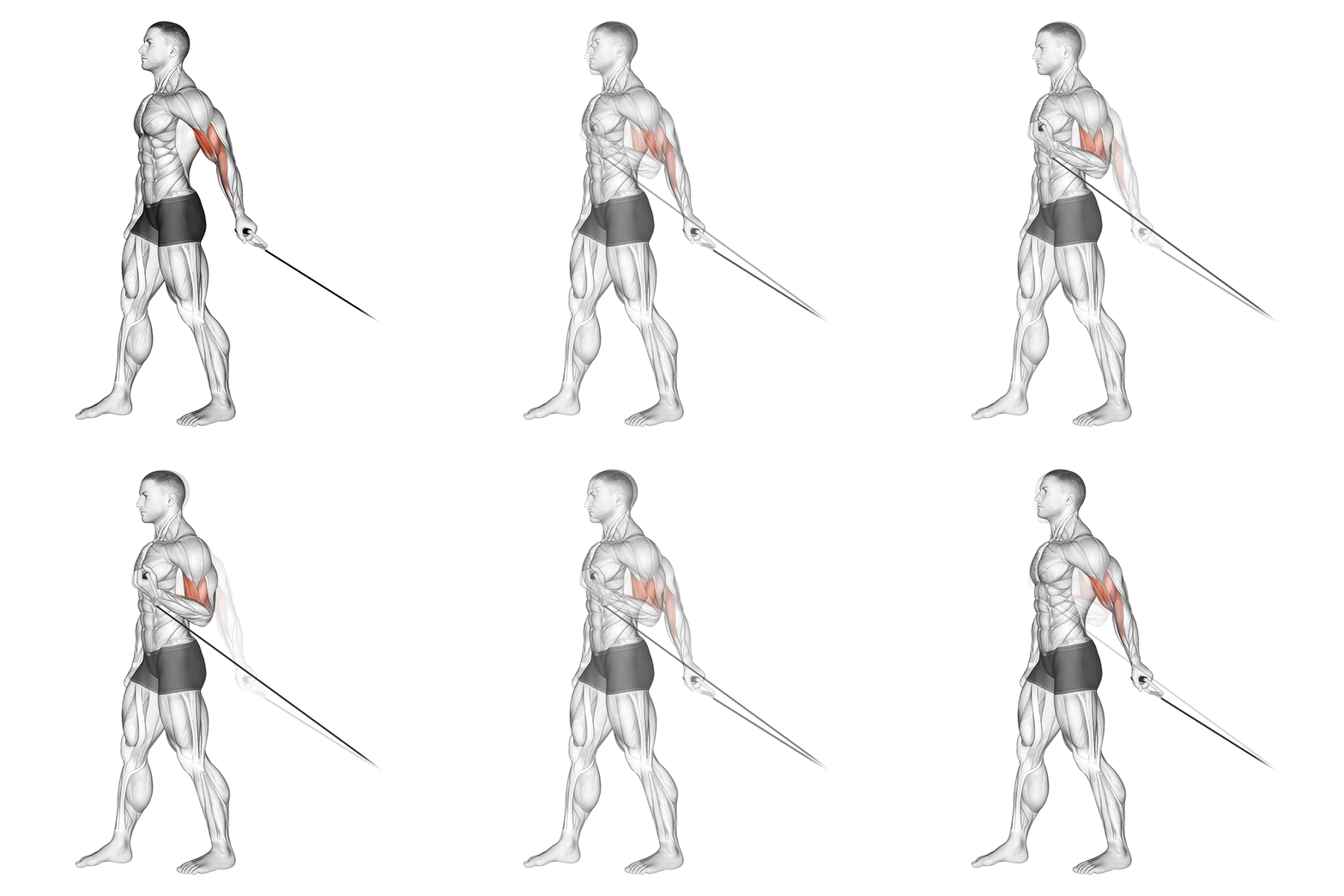
They are close cousins. Both put the upper arm behind the torso with cable tension in the stretch. The Bayesian curl is done standing, so you also manage balance and posture, and fatigue tends to show up as a slowly drifting body position. The incline version trades that freedom for a back pad: less to stabilise, a more honest failure point, and an easier set to push hard. If your Bayesian curls degrade into leaning and shifting, the bench is the stricter classroom.
What bench angle works best?
Anywhere between 45 and 60 degrees does the job. The flatter the bench, the further the upper arm travels behind the torso and the more extreme the stretch, but also the more the front of the shoulder is asked to tolerate. Start at 55-60 degrees and only go flatter if the bottom position stays comfortable for a full set. The angle is a dial, not a test of toughness.
Why is the weight so low on this exercise?
Three reasons stack up: muscles produce less force at long lengths, the bench removes all momentum, and the cable never gives you a free zone to recover in. A drop of 20-30% from your standing cable curl is normal and says nothing about your arms. Judge progress against your own log on this lift, not against what the dumbbell rack suggests you should be curling.