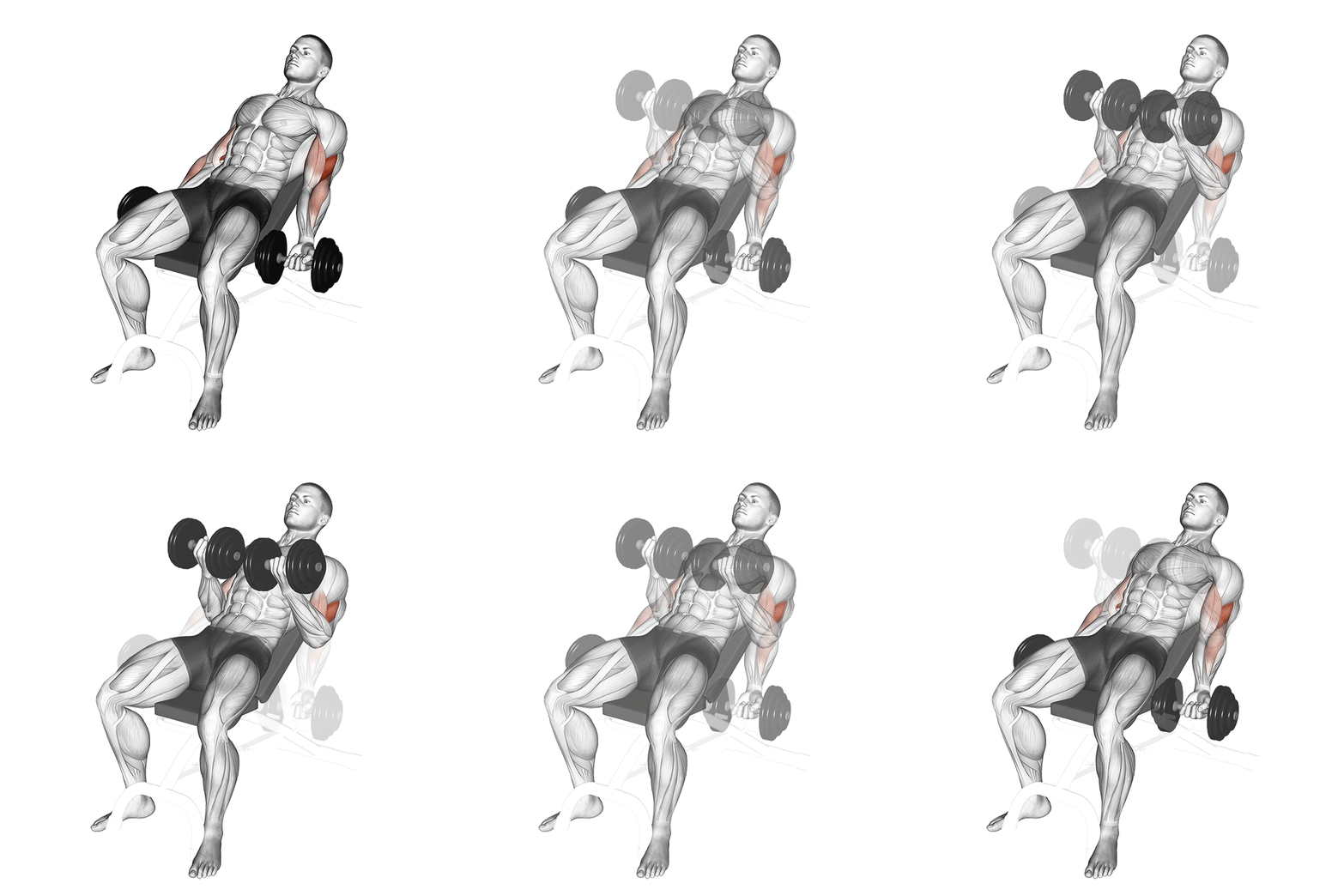
What is the seated incline dumbbell curl?
The seated incline dumbbell curl is a biceps curl performed lying back on a 45-60 degree incline bench, dumbbells hanging straight down at your sides. The reclined torso pulls the elbows behind the body, putting the long head of the biceps into a deep stretch at the bottom of every rep. Training under that long stretch is one of the most potent hypertrophy stimuli for the biceps. You can't curl as much weight as standing, but the growth-per-pound is significantly higher.
How to do the seated incline dumbbell curl
- 1
Set the bench angle
Set an incline bench to 45-60 degrees. Sit back fully so head, upper back and glutes are in contact.
- 2
Let the arms hang
Dumbbells hang straight down at your sides, palms facing forward. Shoulders pulled down and back.
- 3
Curl without shifting the elbow
Bend only at the elbow, curling the dumbbells up. Keep the elbows pinned beside or just behind the torso.
- 4
Lower into a deep stretch
Lower over 3 seconds to a full hang, feeling the long head stretch. Don't relax at the bottom, stay tense.
Pro tip
Resist the urge to swing the elbow forward at the top, that's where standing curls quietly turn into front raises. The whole point of the incline bench is that the elbow stays behind the body.
Common mistakes
Elbow drifting forward.
Letting the elbow swing forward cuts the stretch and turns the rep into a regular curl. Pin the upper arm to the bench side.
Shoulders rolling forward.
If the shoulders curl forward you cheat the long head stretch. Keep shoulder blades flat on the bench.
Going too heavy.
Heavy loads force you to swing or shift the torso. Use 60-70 percent of the dumbbell you'd use standing.
Resting at the bottom.
Letting the dumbbells dangle relaxed wastes the stretch position. Stay loaded, then curl back up.
Variations and progressions
Easier
Less incline (75 degrees)
Use a steeper bench around 75 degrees. Shorter stretch, easier on the shoulder, still effective.
Harder
Tempo incline curl
Use a 4-1-1 tempo: 4 seconds down, 1 second pause, 1 second up. Brutal long-head stimulus.
No incline bench?
Bayesian cable curl
Step away from a low cable and curl with the arm behind the body. Same stretched-position stimulus, no bench needed.
How to program it
Three protocols by goal. Pick one per cycle and aim for progression on load or distance.
| Goal | Sets × distance | Load | Rest |
|---|---|---|---|
| Hypertrophy | 4 × 10 | Moderate | 75 s |
| Stretch overload | 3 × 12, 4 s eccentric | Light to moderate | 90 s |
| Pump finisher | 2 × 15-20 | Light | 45 s |
Seated Incline Dumbbell Curl FAQ
Why does this build more biceps than standing curls?
Recent training research shows training a muscle in its stretched position produces more hypertrophy per set than training in shortened or mid-range positions. The incline bench drags the elbow behind the body, stretching the biceps long head deeper than any standing variation. More stretch under load means more growth.
What bench angle is best?
45 to 60 degrees is the sweet spot. Below 45 the shoulder takes too much strain. Above 60 the stretch is too short and you lose the main benefit. Most lifters find 55 degrees the most productive compromise of stretch and shoulder comfort.
Does this hurt the shoulder?
It can if you go too heavy or relax the shoulder blades. Keep the shoulder blades flat on the bench and the chest tall, and start with around 60 percent of your standing dumbbell curl weight. If anything pinches, raise the bench angle a notch.