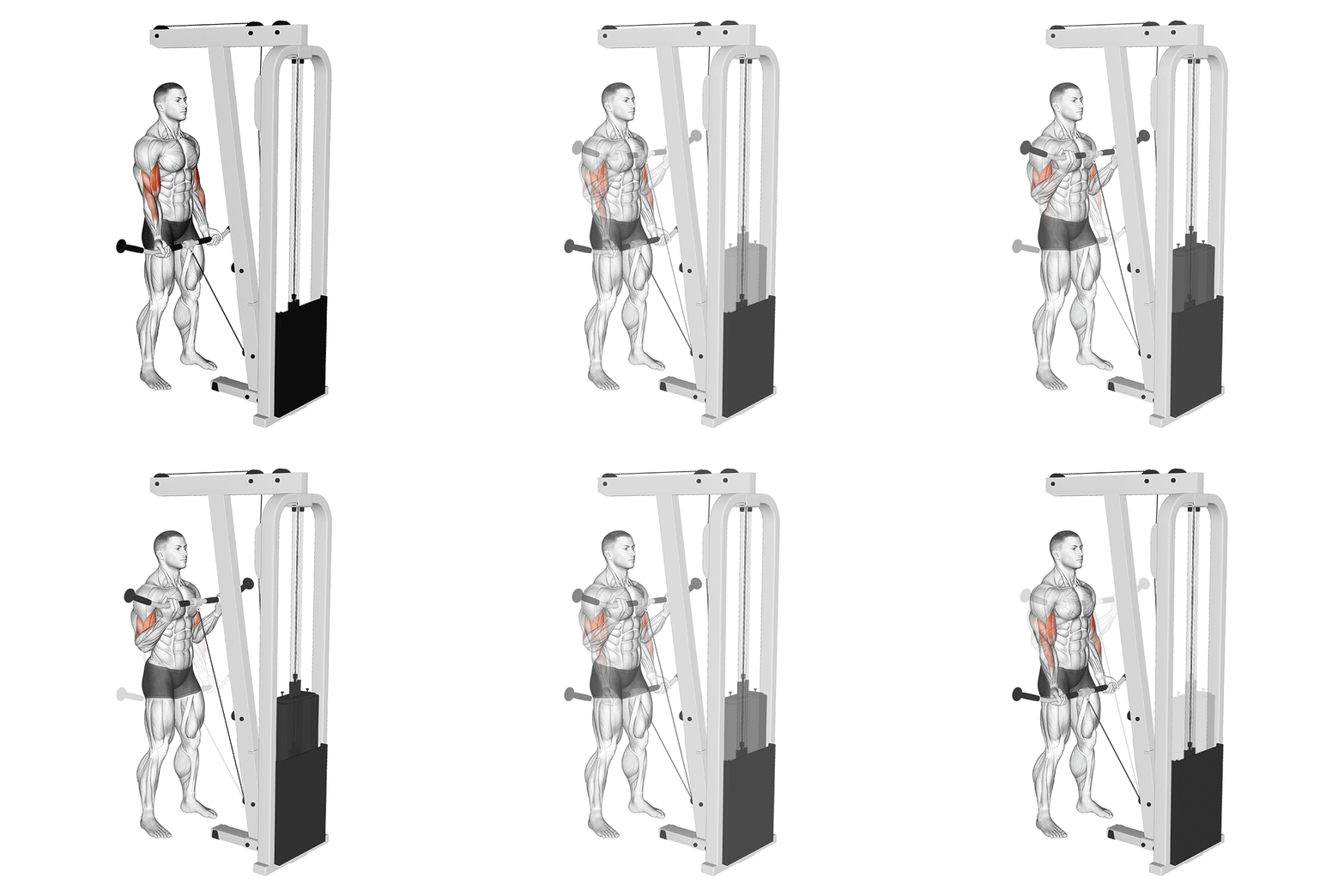
What is the cable curl?
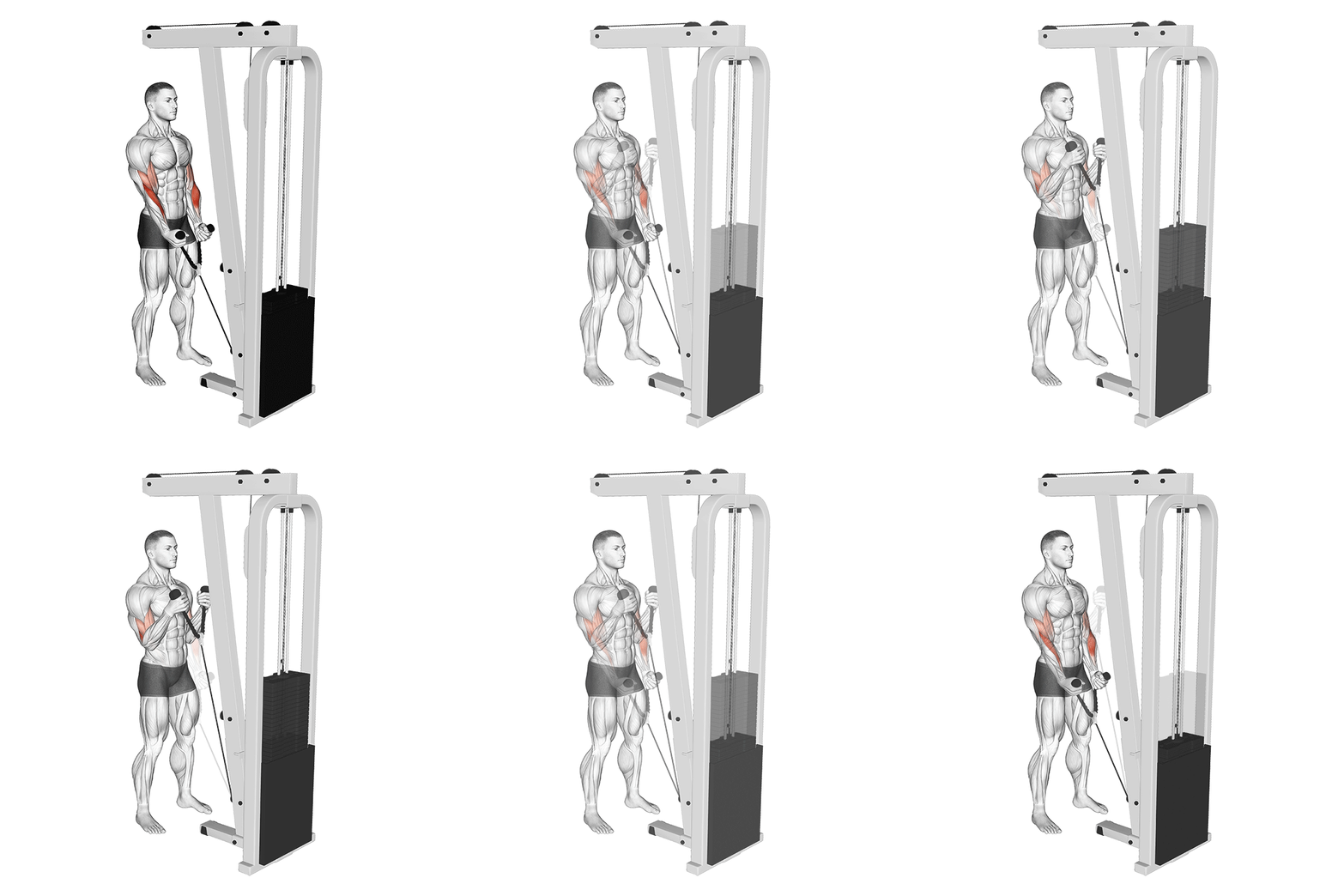
The cable curl is a standing biceps curl done with a straight or EZ attachment clipped to the low pulley. The movement is the same as a barbell curl, elbows at your sides, forearms doing the lifting, but the resistance is not: a free bar loads the biceps hardest at mid-range and almost not at all near the bottom and top, while the cable pulls back along its own line for the entire arc. The result is longer time under tension per rep and a strict pattern that punishes swinging. It has earned a place in most biceps sessions alongside, not instead of, free-weight curls.
How to do the cable curl
- 1
Clip the bar and step back
Attach a straight or EZ bar to the low pulley, grab it underhand at shoulder width and take one step back. Standing on top of the pulley leaves the cable slack at the bottom; a step back keeps it taut through the whole rep.
- 2
Set your anchor
Feet hip width, knees soft, ribs down, elbows pinned to your sides. The cable will try to drag you forward; counter it with a few degrees of lean from your ankles, not your lower back.
- 3
Curl to full flexion
Curl the bar up until your forearms press into your biceps, and squeeze there for a second. Unlike a barbell, the cable is still loading you at the top, so the squeeze actually costs something.
- 4
Lower to a straight arm
Take 2-3 s to lower until your elbows are completely straight. The bottom is not a rest stop on a cable, so stay braced and go straight into the next rep.
Pro tip
Watch the plates, not the mirror: if the stack bounces at the turnaround or clinks down between reps, you're using momentum and giving the biceps free time. A stack that glides smoothly from first rep to last is the best form check this exercise offers.
Common mistakes
Standing on top of the pulley.
With your feet against the column the cable goes slack in the bottom third and you've thrown away the exact advantage you came for. One step back restores tension on the full arc.
Elbows drifting forward.
When the elbows ride up and forward at the top, the front delts lift the last portion and the biceps finish their day early. Keep the elbows welded to your sides and accept a slightly shorter, far more honest rep.
Hips doing the first ten degrees.
A small hip snap at the bottom of each rep can add ten kilos to the stack and nothing to your biceps. If your shoulders rock backward as the bar leaves the bottom, strip weight until they stop.
Half-lowering.
Stopping the eccentric at 45 degrees keeps the pump and discards the range where the biceps work at length. Straighten the arms fully each rep; on a cable there is no valid excuse not to.
Variations and progressions
Easier
Machine preacher curl
The pad fixes your upper arms and the machine fixes the path, leaving only elbow flexion to think about. Build the strict pattern there before managing a free-standing cable.
Harder
Bayesian cable curl
Face away from the stack, arm trailing behind you, and curl one arm at a time. The biceps now work at long muscle lengths under constant tension, a combination free weights cannot copy.
No cable?
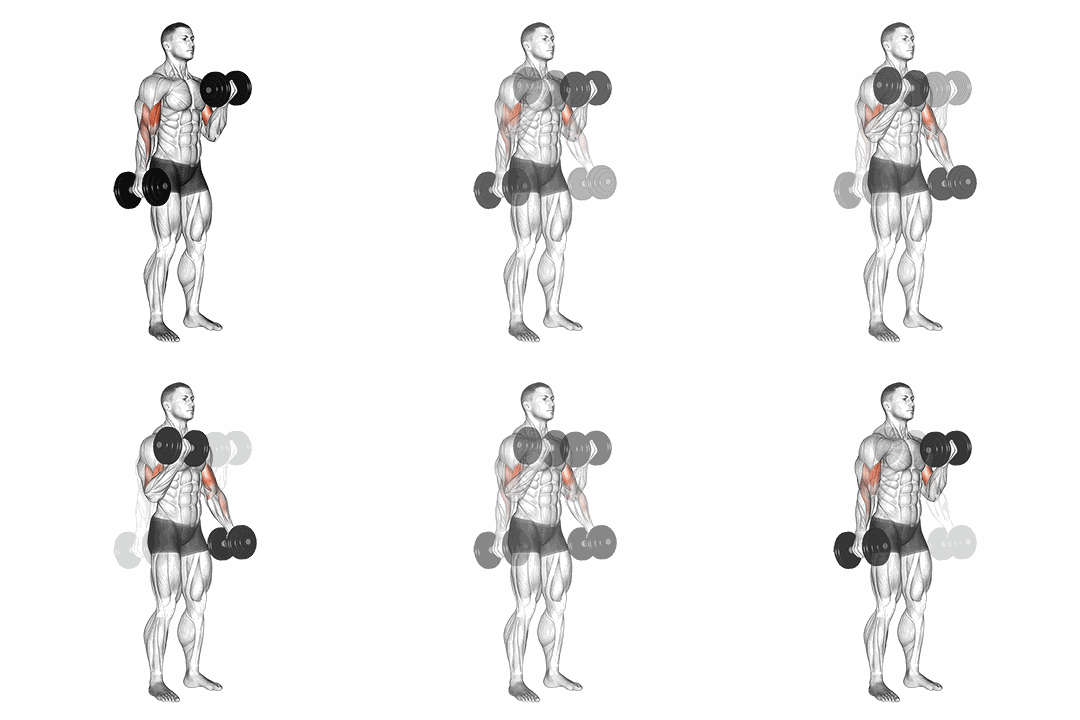
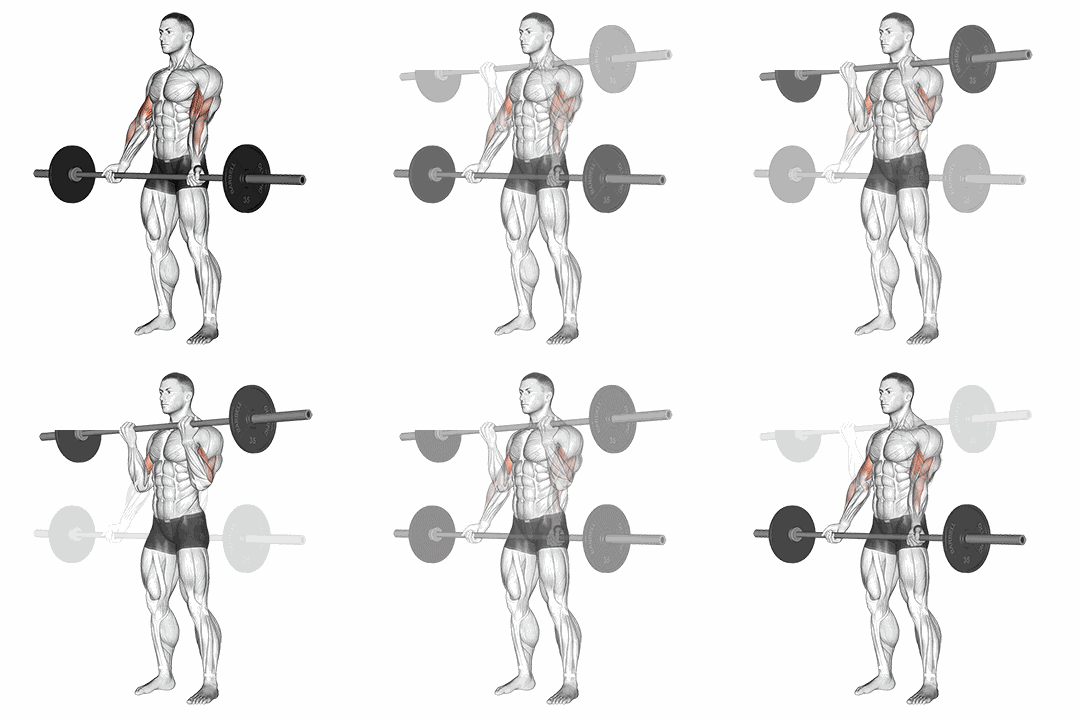
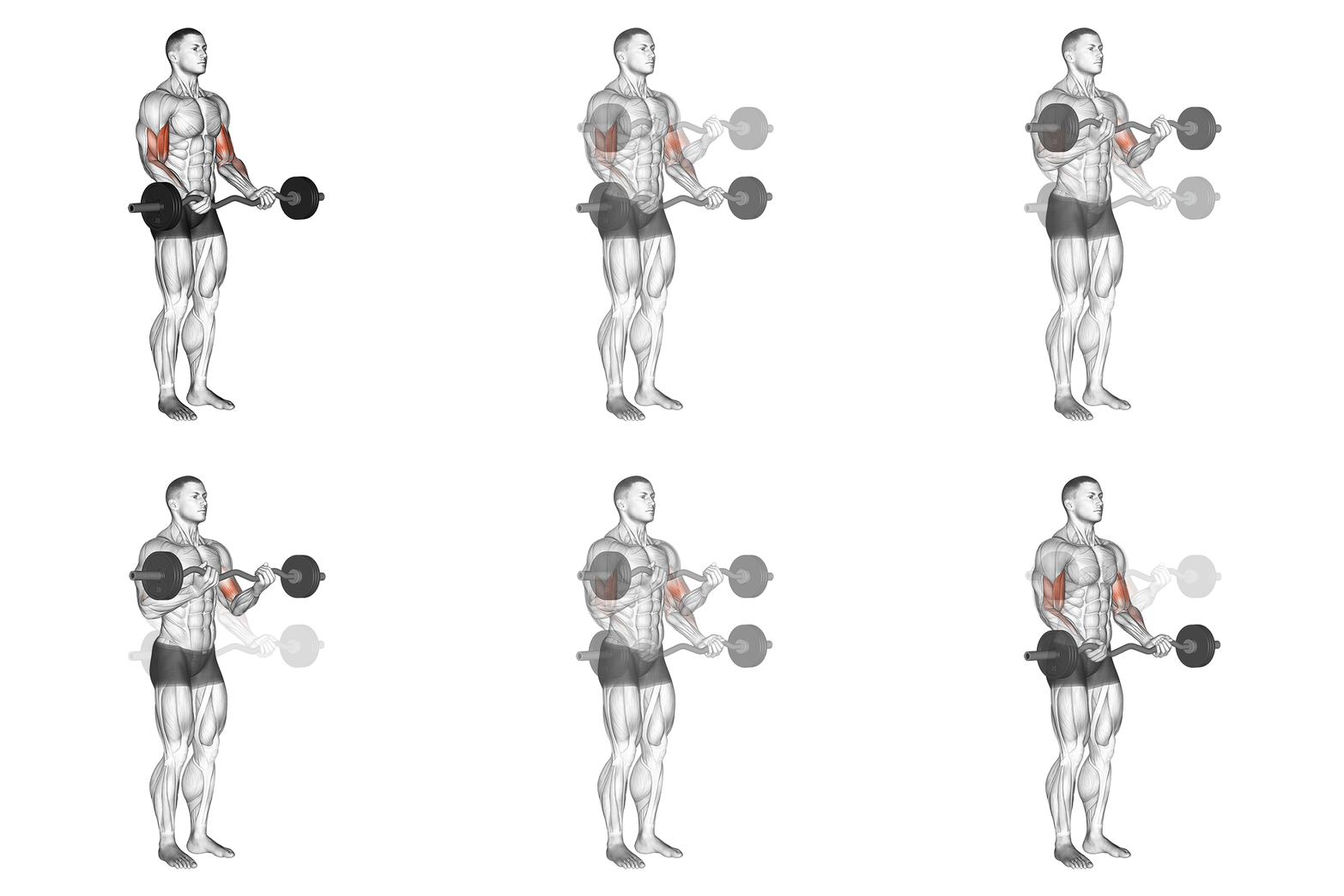
Barbell curl with slow eccentrics
Load an EZ or straight bar and take 4 s on every descent. The slow lowering plugs part of the tension gap a free bar leaves at the extremes of the rep.
How to program it
Three protocols by goal. Pick one per cycle and aim for progression on load or distance.
| Goal | Sets × distance | Load | Rest |
|---|---|---|---|
| Hypertrophy | 4 × 10-12 | RPE 8 | 90 s |
| Time under tension | 3 × 12-15, 2 s up, 2 s down | Moderate, RPE 8-9 | 60 s |
| Drop-set finisher | 2 × 12 + double drop | Start RPE 9, drop 30% twice | 2 min after each full set |
Cable Curl FAQ
Cable curl or barbell curl: which builds bigger biceps?
Neither wins outright; they fail in opposite places. The barbell lets you load heavier and overload the mid-range, but gives the biceps near-zero resistance at full extension and full flexion. The cable is lighter on the bar yet keeps tension across the whole rep, including the stretched bottom. A sensible biceps session uses both: a heavy free-weight curl first, the cable after it to accumulate strict, full-range volume.
Straight bar or EZ bar on the cable?
Pick with your wrists. The straight bar holds you in full supination, the position where the biceps contribute most, so it is the default if your wrists accept it. The EZ attachment angles the hands a few degrees inward, which many lifters find instantly more comfortable at the cost of a slightly reduced supination demand. Any wrist or inner-elbow ache on the straight bar settles the question: switch, the difference in growth is marginal.
How far from the pulley should I stand?
About one step back, enough that the cable stays taut when your arms are fully extended. Stand against the column and the bottom of each rep goes slack; walk out two metres and the cable's pull angles so far forward that it drags your posture down more than it loads your biceps. The test is simple: at the dead bottom, arms straight, you should still feel the stack trying to pull the bar out of your hands.