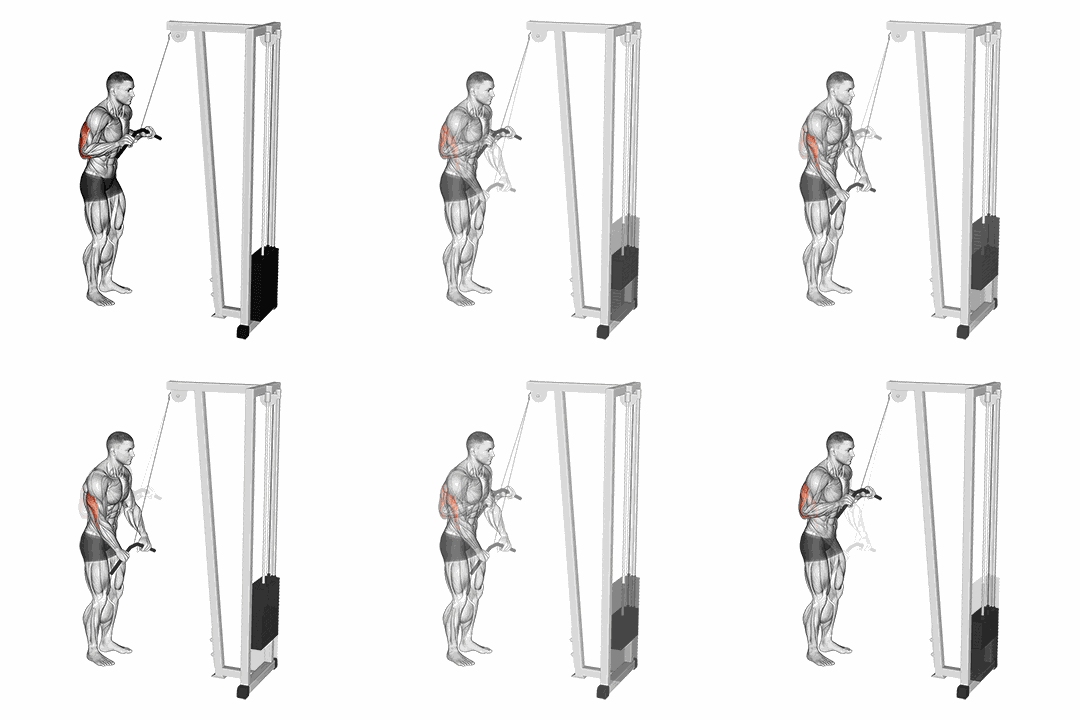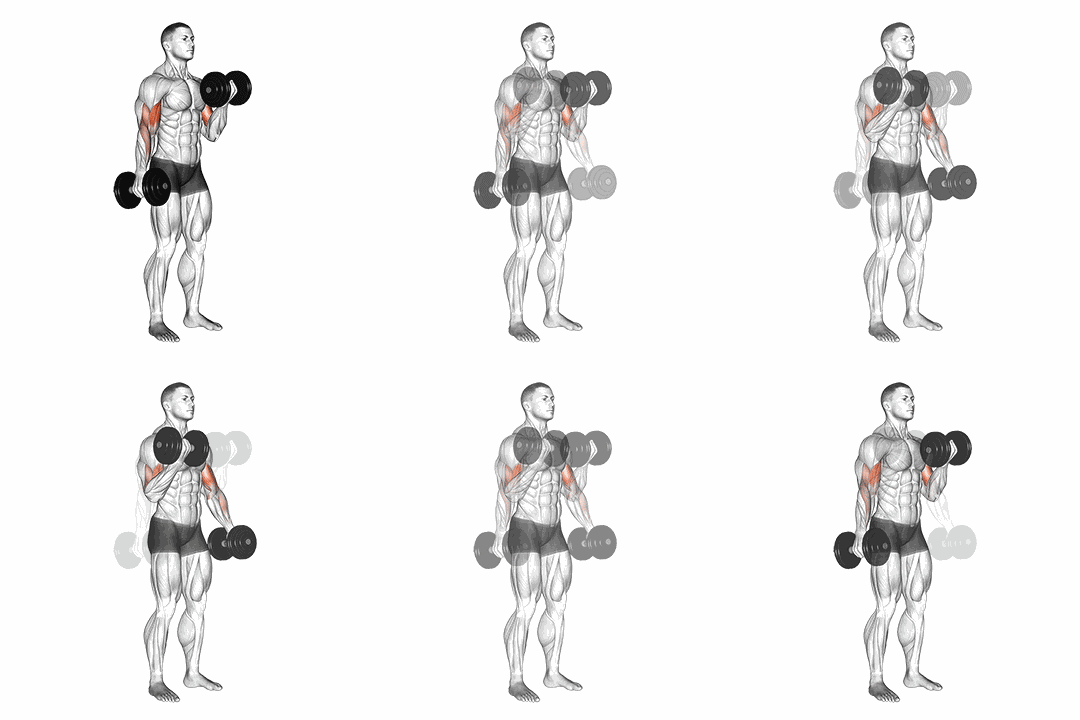
What is the bicep curl?
The bicep curl flexes the elbow against resistance, contracting the biceps brachii, brachialis and brachioradialis. With dumbbells, a barbell, a cable or a machine, the goal is the same: move only the forearm, keep the elbow under the shoulder, and let the biceps do every bit of the work. Used as an isolation lift it adds size, strengthens the elbow flexors for pulls, and protects the joint by balancing front and back of the arm.
How to do the bicep curl
- 1
Set your stance
Stand tall, feet hip-width, ribs stacked over hips. Brace abs lightly so the torso can't rock.
- 2
Pin the elbows
Tuck elbows against your sides, slightly in front of the torso. They should stay there for the whole set.
- 3
Curl with the forearm
Flex the elbow and lift the weight in an arc. Supinate the wrist at the top, palm fully facing you.
- 4
Lower under control
Lower on a 2 to 3 second count, all the way to a soft elbow lockout. The eccentric is where most of the growth happens.
Pro tip
If the elbows drift forward at the top, the front delts have taken over. Lock the elbows down and lighten the load until they stay put.
Common mistakes
Swinging the torso.
Hip thrust to start the curl turns it into a power clean. Strict torso, slower reps.
Half reps.
Stopping short at the bottom skips the strongest stretch position. Lockout fully every rep.
Flicking the wrist.
Wrist flexion adds inches with no extra work. Keep the wrist locked straight.
Elbows drifting forward.
Once elbows pass the rib line, the front delt does the lift. Anchor them to your sides.
Variations and progressions
Easier
Seated dumbbell curl
Sit on a bench with back support so there's no chance to swing. Forces pure elbow flexion.
Harder
Incline dumbbell curl
Lie back on a 60-degree bench. Elbows behind the torso put the long head of the biceps under deep stretch.
Cable version
Cable curl
Use a low pulley with a straight bar or rope. Constant tension across the whole range, especially the contraction.
How to program it
Three protocols by goal. Pick one per cycle and aim for progression on load or distance.
| Goal | Sets × distance | Load | Rest |
|---|---|---|---|
| Hypertrophy | 4 × 10-12 | 12-16 kg / arm | 60-90 s |
| Pump / metabolic | 3 × 20-25 | 8-10 kg / arm | 45 s |
| Strength | 5 × 6 (barbell) | 40-50 kg barbell | 2 min |
Bicep Curl FAQ
Barbell, dumbbell or cable, which is best?
Dumbbells give the best range and allow supination. Barbell lets you load heaviest. Cable holds tension at the top of the curl where free weights lose it. Best play: dumbbell or barbell as the main lift, cable as a finisher.
How many curl sets per week to grow?
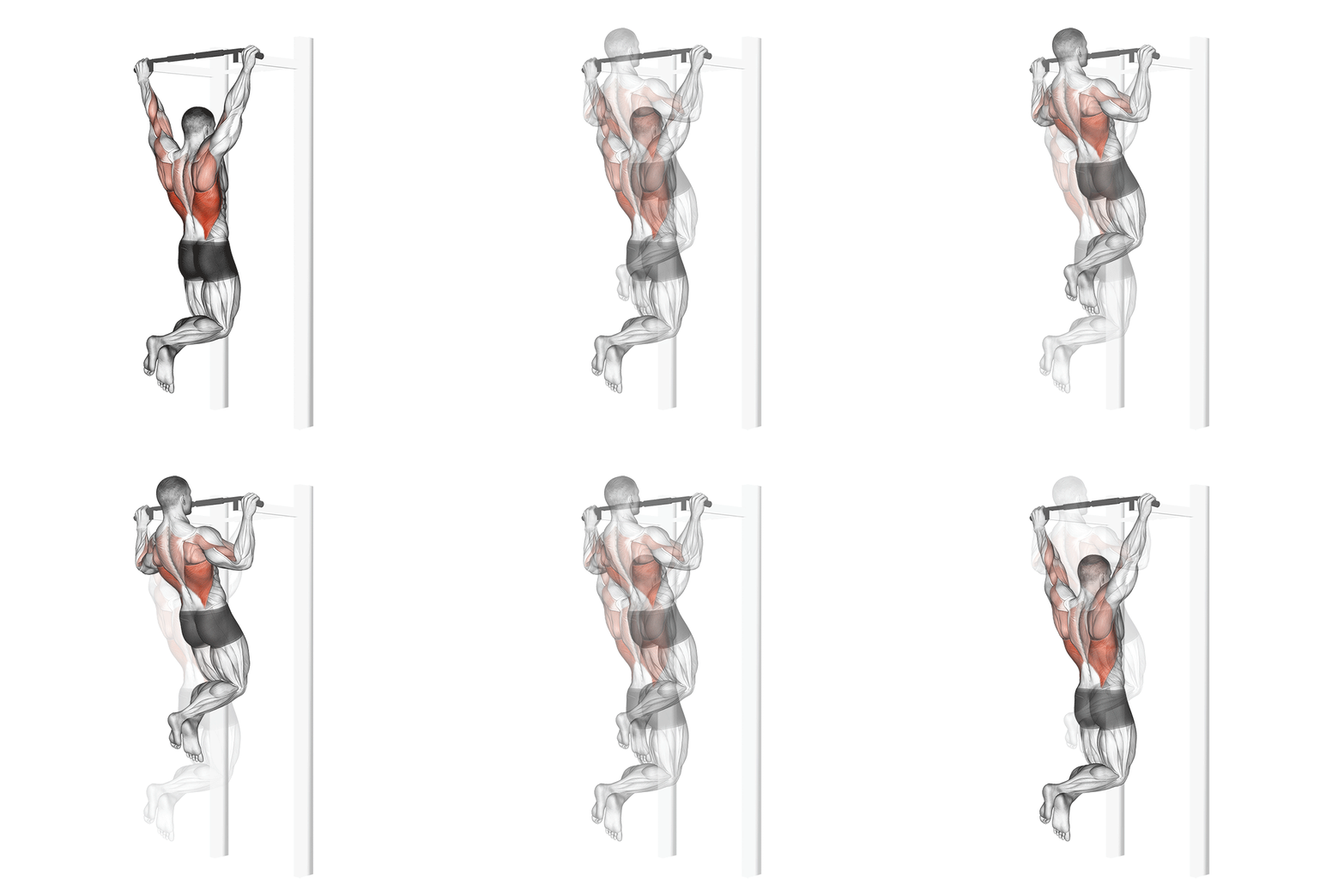
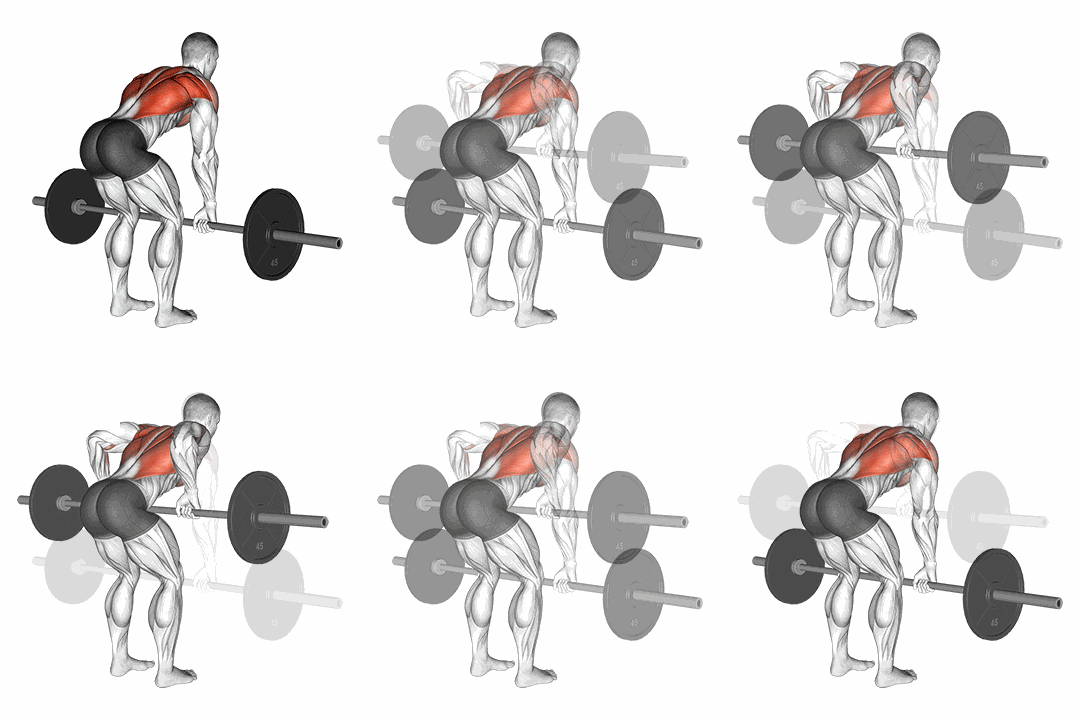
10 to 16 hard sets per week, split across 2 or 3 sessions, is the sweet spot for most lifters. More than that gives diminishing returns unless you're advanced. Compounds like rows and pull-ups already train the biceps, count their indirect work in the total.
My elbows hurt when I curl, what now?
Switch to a neutral grip with dumbbells (hammer curl) or use an EZ bar instead of a straight bar. Drop the load 20%, slow the eccentric, and make sure the wrist stays neutral. If pain persists past two weeks, see a physio.