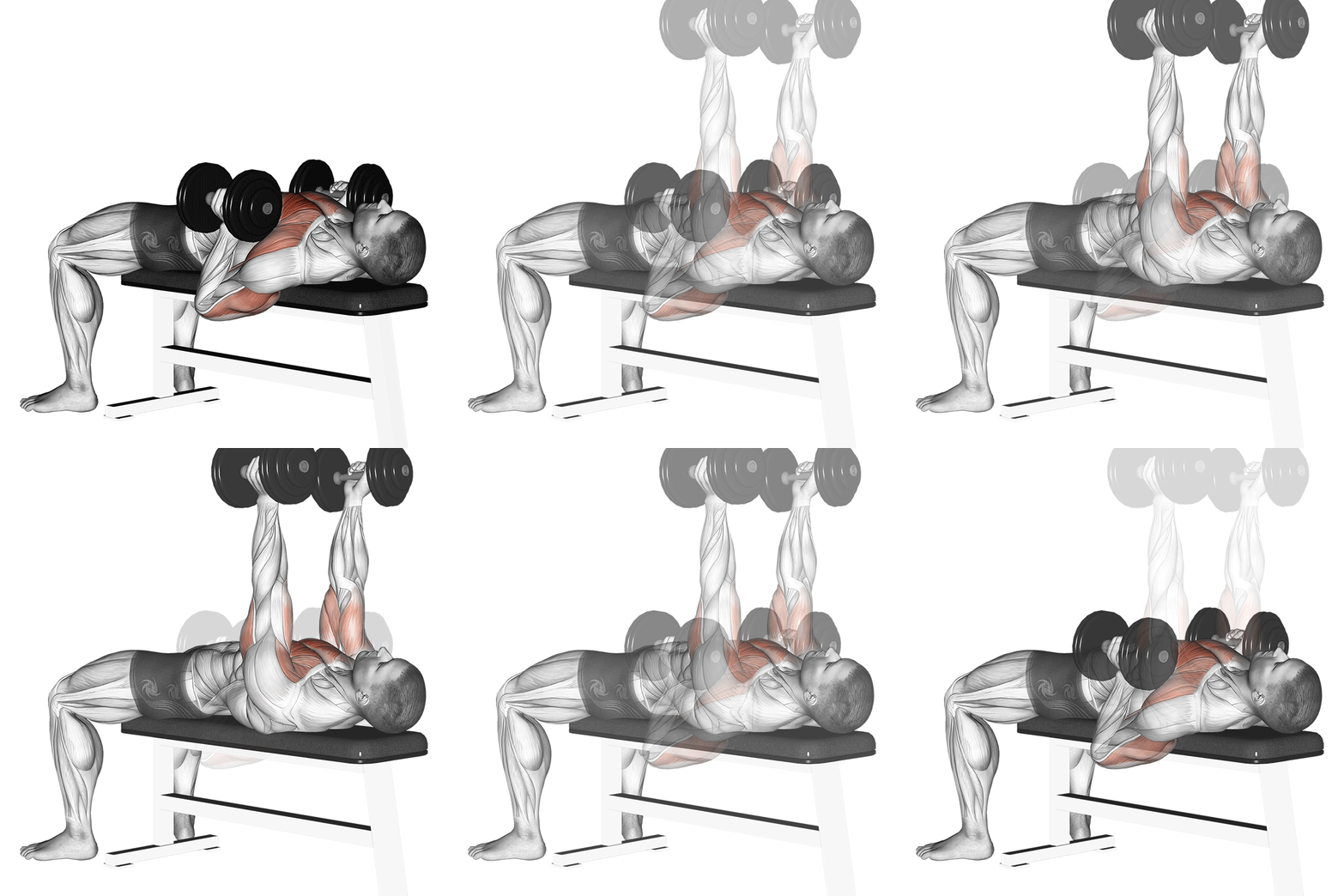
What is the hammer grip dumbbell bench press?
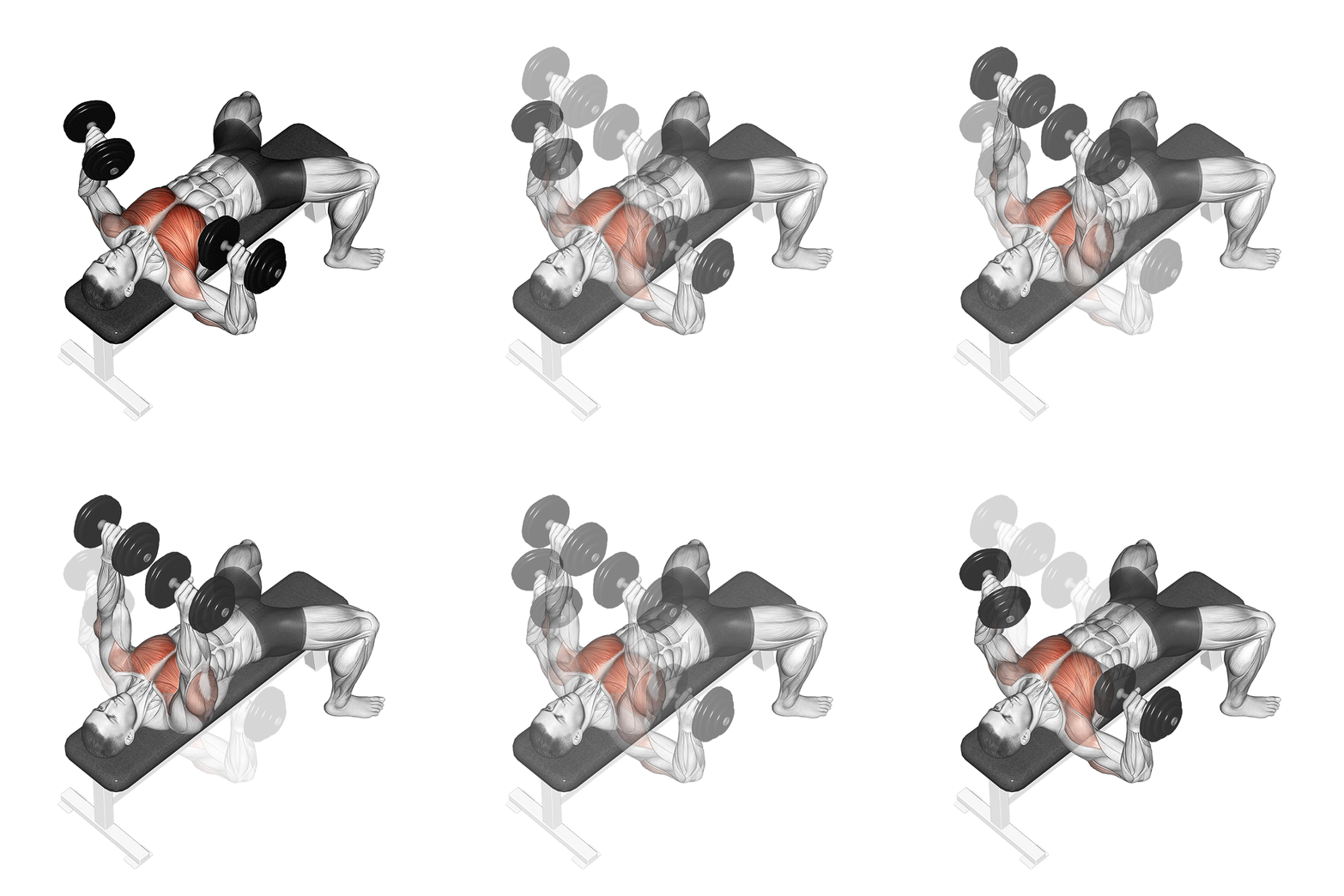
The hammer grip dumbbell bench press, often searched as the neutral grip dumbbell press, is a flat pressing movement where the palms face each other for the whole rep. The grip itself changes little; what it changes is the elbows. They track naturally at roughly 45 degrees from the torso or closer instead of flaring wide, which cuts the shoulder stress that bothers many pressers on barbell or standard dumbbell work. The trade is a slightly bigger share of work for the triceps and front delts, and a slightly shorter pec stretch. It is a first-choice press for shoulder-sensitive lifters and a smart volume press for everyone else.
How to do the hammer grip dumbbell bench press
- 1
Kick the dumbbells into place
Sit on the end of the bench with a dumbbell upright on each thigh. Lie back while driving the knees up one at a time, so each bell arrives at chest level with the handles parallel and the palms already facing each other.
- 2
Build the platform
Pull the shoulder blades back and down into the bench, plant the feet flat and keep a natural arch. Press both bells up to the start position above your mid-chest, arms vertical.
- 3
Lower along the ribs
Bend the elbows and lower the dumbbells toward the sides of your chest, letting the upper arms travel at about 45 degrees from the torso or closer. Wrists stay stacked over elbows; stop around chest level, or wherever the shoulders stay silent.
- 4
Press up and slightly in
Drive the bells back up over the chest along a gentle inward curve, without letting them crash together at the top. Reach full lockout, take one breath, and go again.
Pro tip
Film one set from the foot of the bench: in the bottom position, both forearms should be dead vertical from that angle and from the side. If a wrist drifts outside its elbow, that bell is running its own race and your pressing line is leaking force.
Common mistakes
Flaring the elbows anyway.
Palms facing with elbows out wide gives you the downsides of both grips and the benefits of neither. Let the neutral grip do its job: upper arms close to the body, bells over the lower half of the chest at the bottom.
Cutting the rep short because the grip feels strong.
The neutral grip often lets you handle a bit more weight, and half reps creep in with it. Keep lowering until the handles reach roughly chest level: the comfort of this grip is precisely what lets you train deep safely.
Rotating the wrists mid-rep.
Twisting from neutral to pronated on the way up is a different exercise, and it makes every rep inconsistent. Choose one grip before the set and hold it; if you want rotation, program it deliberately, not by accident.
Smashing the bells together at lockout.
Banging the dumbbells overhead bleeds tension out of the pecs and eventually chews up the plates and your wrists. Finish with the bells a few centimetres apart, arms vertical, and keep the chest squeezing instead.
Variations and progressions
Easier
Neutral-grip floor press
Lying on the floor cuts the range exactly where shoulders complain most and adds a built-in safety net: the elbows simply rest down. Ideal while building confidence or working around a flare-up.
Harder
Single-arm hammer grip press
Press one dumbbell at a time with the free hand resting on your abs: the offset load tries to roll you off the bench, so the trunk works as hard as the chest. Expect to use well under half your two-arm load.
Alternative
Close-grip bench press
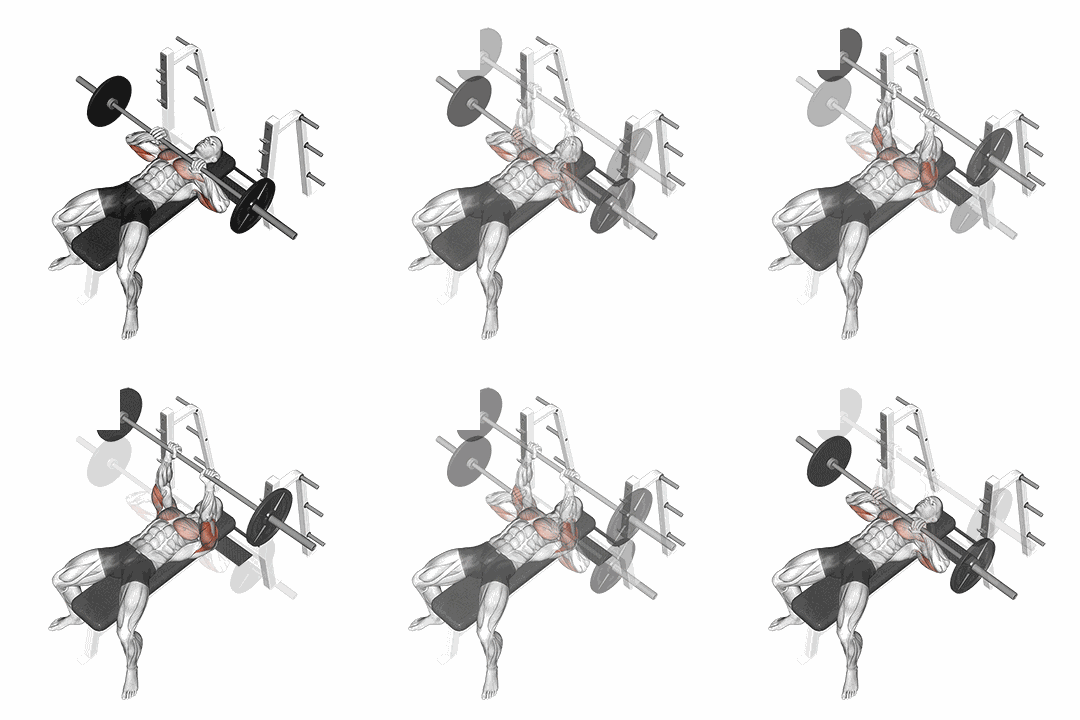
The barbell version of the same idea: a narrower grip, elbows tucked, triceps heavily involved. Pick it when you want the tucked pressing pattern with barbell loading and simpler progression.
How to program it
Three protocols by goal. Pick one per cycle and aim for progression on load or distance.
| Goal | Sets × distance | Load | Rest |
|---|---|---|---|
| Strength | 4 × 6-8 | Heavy, RPE 8 | 2-3 min |
| Hypertrophy | 3-4 × 8-12 | Moderate, RPE 8-9 | 90 s |
| Shoulder-friendly volume | 3 × 12-15 | Light to moderate, RPE 7 | 60-90 s |
Hammer Grip Dumbbell Bench Press FAQ
Is the hammer grip bench press better for your shoulders?
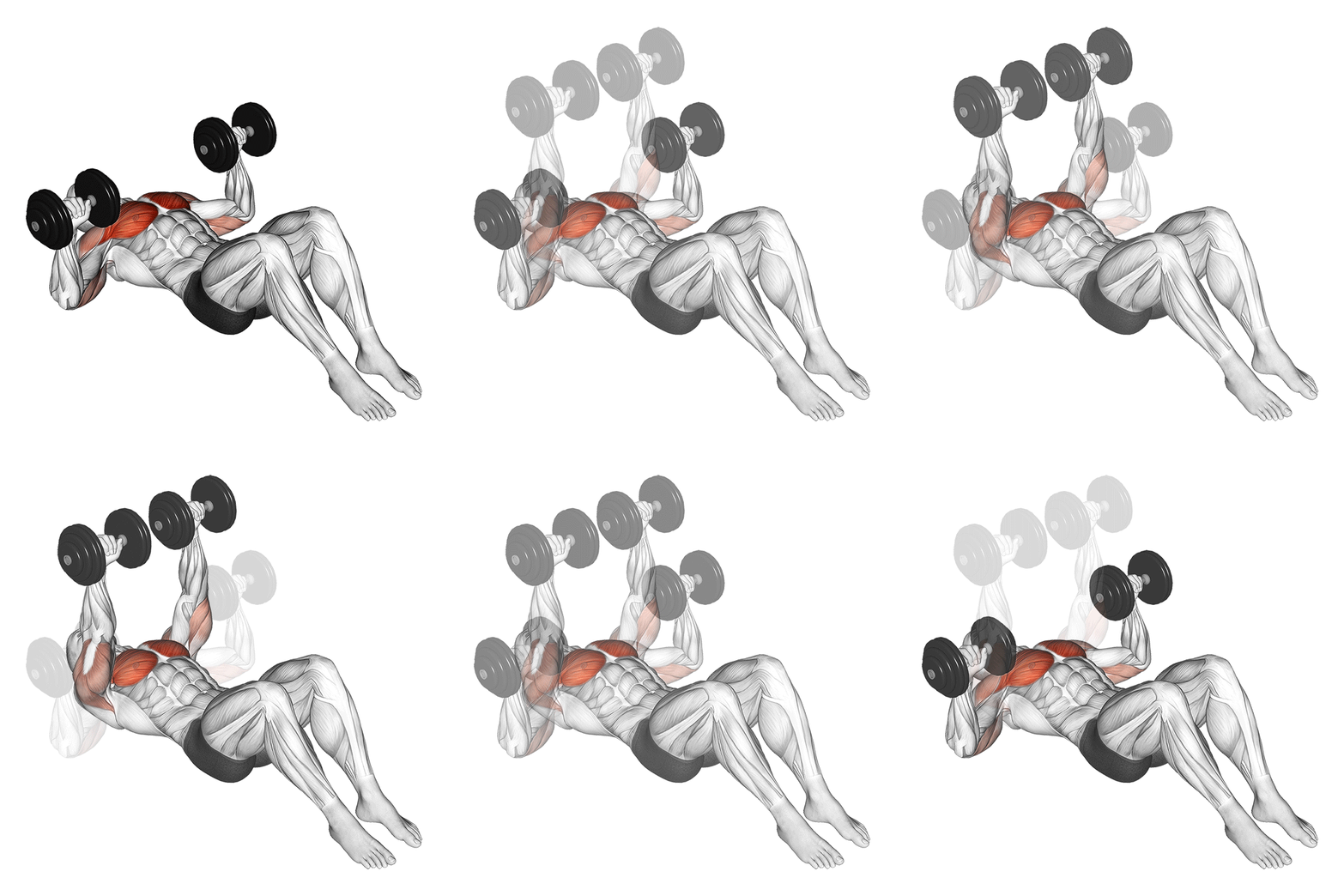
For many lifters, yes. The neutral grip naturally pulls the elbows closer to the body and reduces how much internal rotation the shoulder sits in under load, which is often enough to remove the pinch people feel when benching. It is not magic: depth, bar path and load still matter, but it is usually the first variation worth trying when pressing hurts.
Does the neutral grip build less chest than a regular dumbbell press?
The difference is small. The tucked path shortens the pec stretch slightly and hands the triceps a bigger cut, so on paper the standard grip edges it for pure chest. In practice, the version you can push hard, pain free, for months is the one that builds more muscle, and for plenty of lifters that version is the hammer grip.
Can I use the same weight as my normal dumbbell press?
Start with the same dumbbells and adjust from there. Most lifters press comparable loads with both grips; some feel immediately stronger in neutral because the triceps contribute more and the position is more comfortable, while others need a session or two for the slightly different balance of the bells to settle.
Is this the same as a squeeze press?
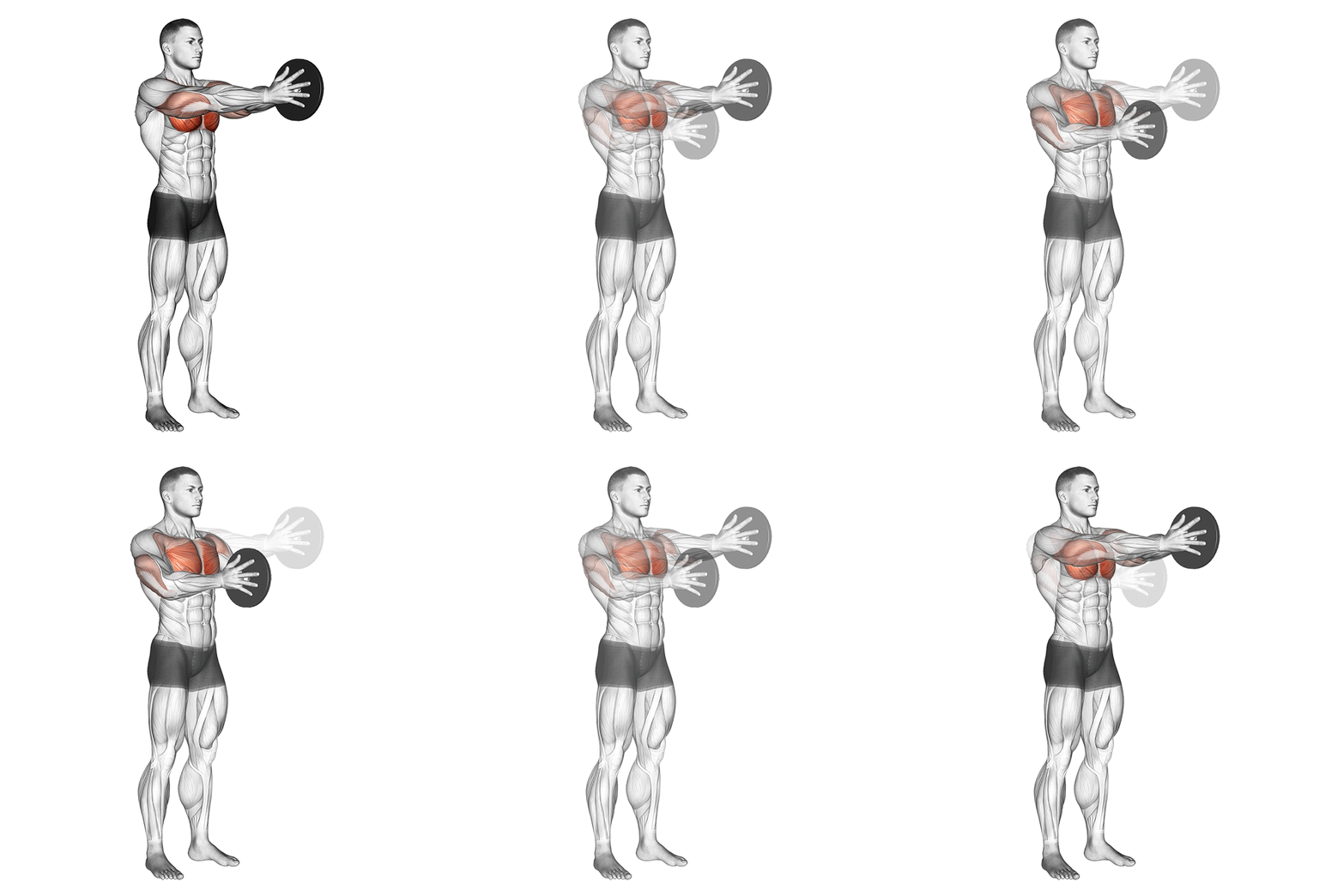
No. In a squeeze press (the Svend press logic applied to dumbbells), you actively crush the bells together through the whole rep, which turns constant adduction into the main stimulus. In the hammer grip press, the dumbbells stay apart at normal width; only the palm orientation changes. One is a press with a modified grip, the other a press with a built-in fly.