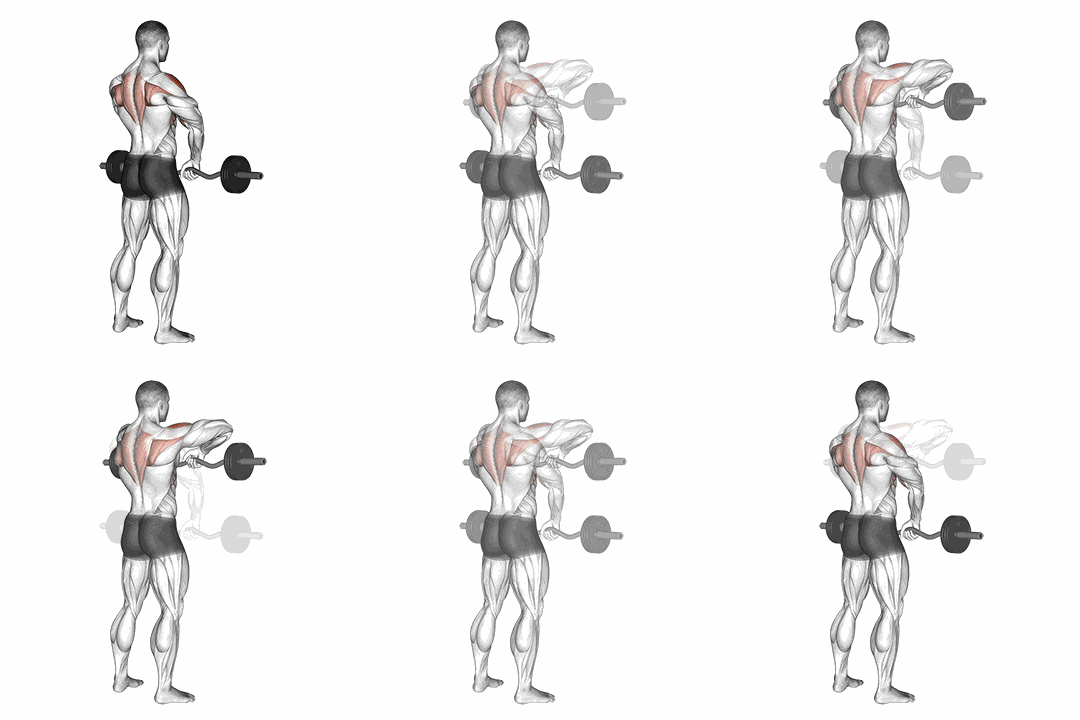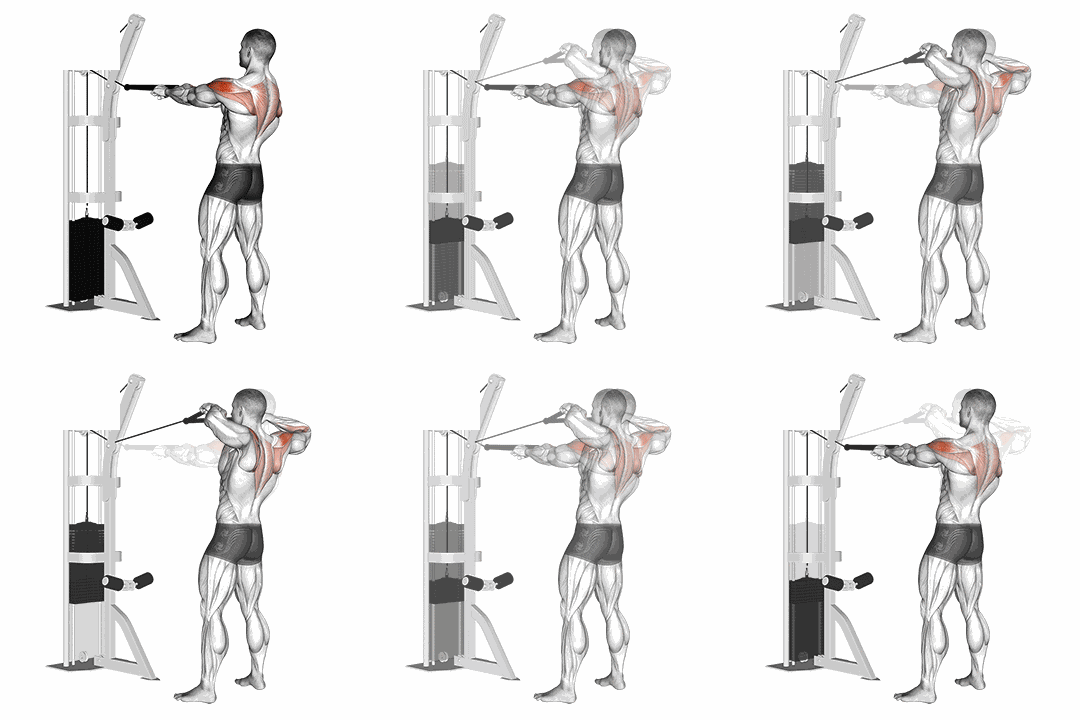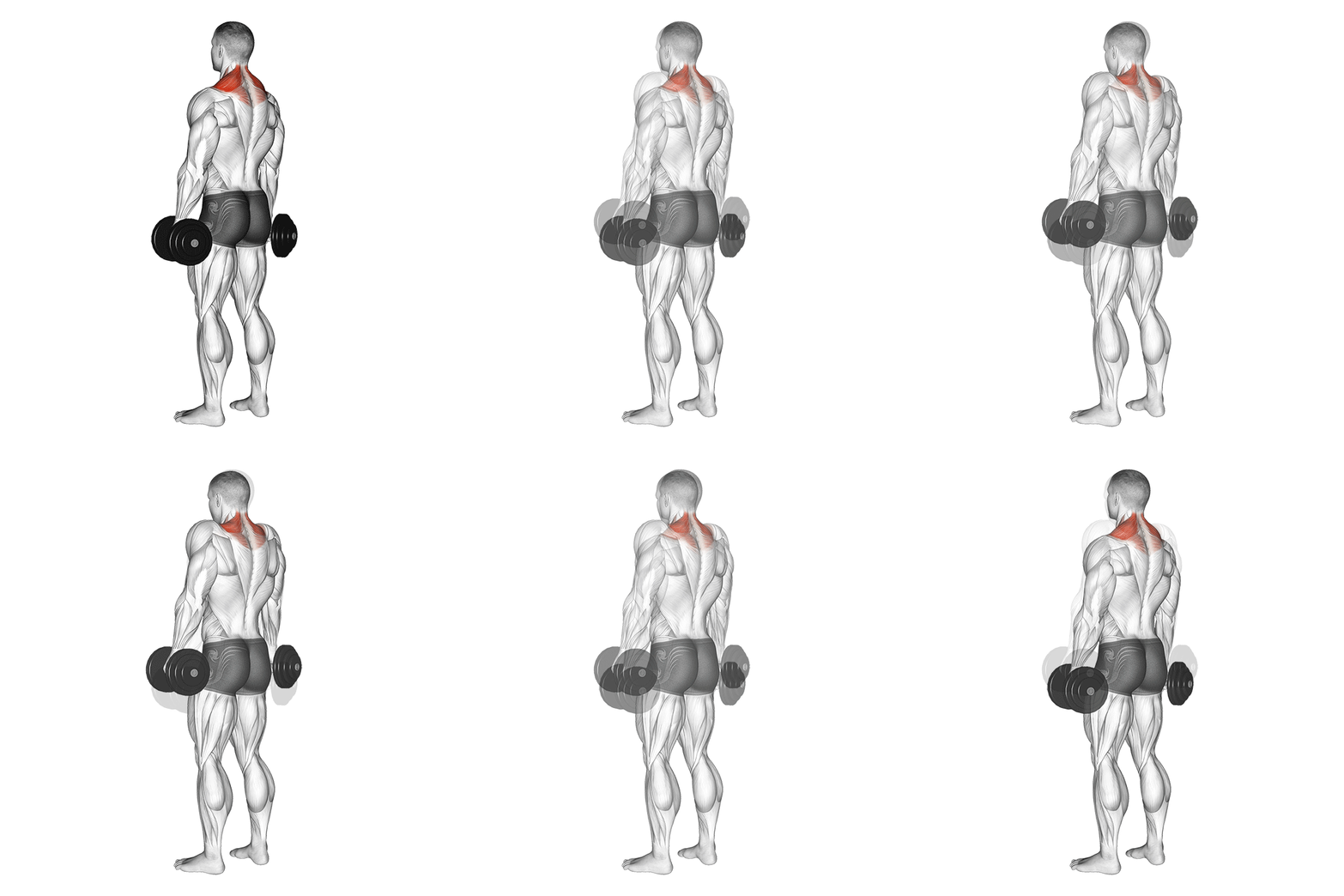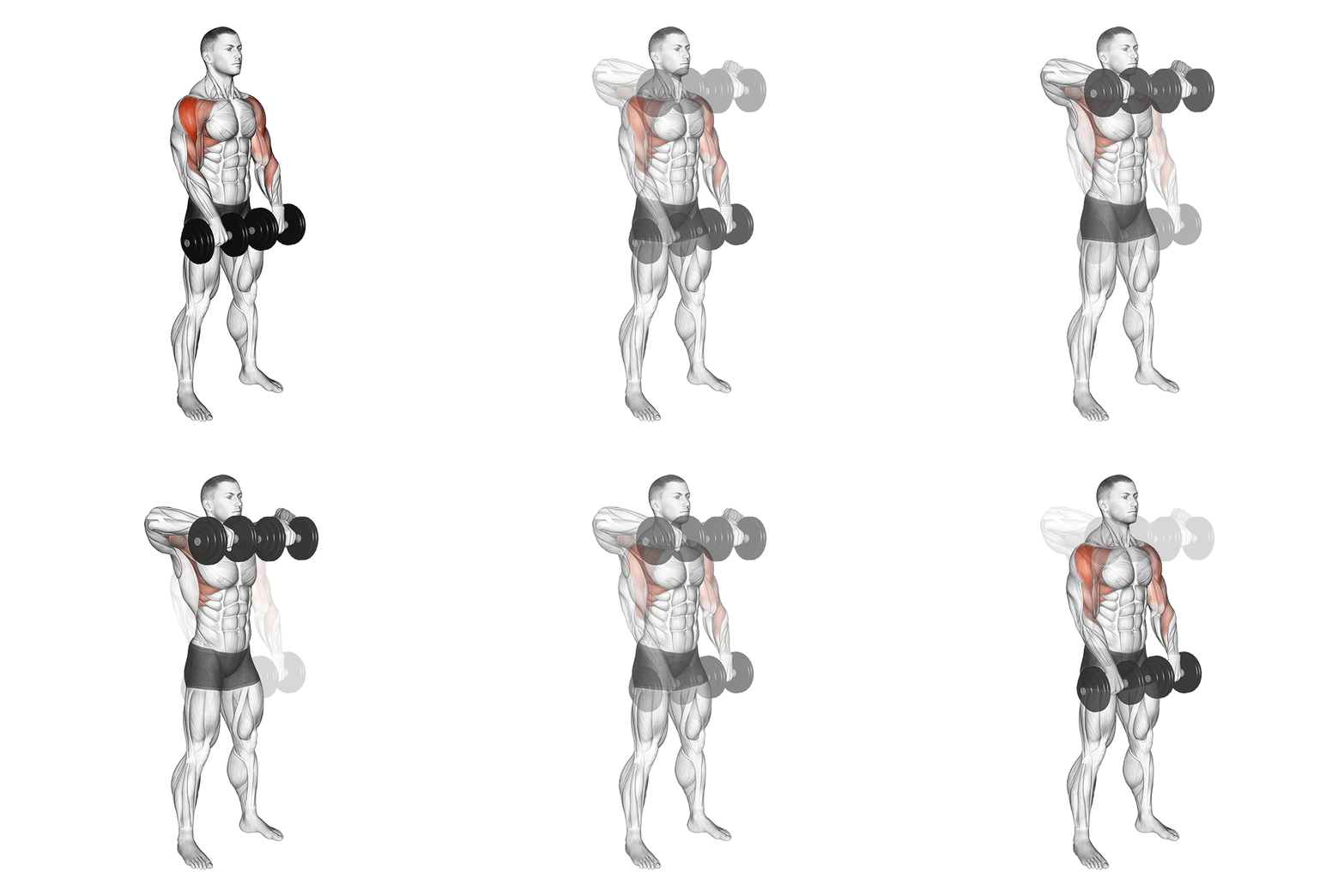
What is the dumbbell upright row?
The dumbbell upright row takes the most criticized shoulder exercise and gives it back its freedom: a dumbbell in each hand, elbows leading the pull, hands finishing at chest height. Without a bar connecting your wrists, each hand chooses its own path, so the dumbbells can travel apart as they rise and your wrists never get cranked into a fixed position. That freedom is exactly why coaches who ban the barbell version still program this one. It builds the side delts and upper traps that give shoulders their width, it works one arm at a time if you want it to, and it asks nothing but a pair of dumbbells.
How to do the dumbbell upright row
- 1
Set your stance and grip
Stand tall with a dumbbell in each hand resting on the front of your thighs, palms facing you. Feet hip width, knees unlocked, shoulder blades heavy.
- 2
Lead the pull with your elbows
Drag the dumbbells up close to your torso by driving the elbows up and out. From the first centimetre, the elbows stay higher than the hands.
- 3
Let the dumbbells drift apart
As they rise, allow the hands to finish wider than they started. Stop when your elbows reach shoulder height, hands around chest level, and hold for a beat.
- 4
Lower on the same track
Take 2 s to bring the dumbbells back down the path they came up, finishing long against your thighs. No bouncing out of the bottom into the next rep.
Pro tip
Picture two zippers on the sides of your jacket and pull one up with each hand: close to the body on the way up, finishing wider than they started. That V-shaped path is the whole reason you picked dumbbells over a bar.
Common mistakes
Forcing a barbell path.
Keeping the dumbbells glued together up the midline recreates the cranked-wrist position you ditched the bar to escape. Let each hand ride its own rail.
Rowing with your knees.
A dip-and-drive turns the upright row into a sloppy high pull and robs the delts of the slow work. If you cannot lift the dumbbells without bouncing, they are too heavy.
Elbows past shoulder height.
Higher elbows mean more joint squeeze, not more delt. Shoulder height is the finish line; park the ego two centimetres below it.
Dumbbells swinging away from you.
When the weights drift forward off your torso, the move becomes a half front raise and the traps lose their line of pull. Brush your shirt on every rep.
Variations and progressions
Easier
Single-arm upright row with support
One dumbbell, free hand on a rack or bench. You can watch the elbow path in a mirror, feel the working side without balance noise, and even out left-right differences.
Harder
Dumbbell high pull
Add a hip hinge and an explosive extension: the dumbbells get pulled to chest height with momentum you then control back down. More load, more athletic carryover, less isolation.
Cranky shoulders?
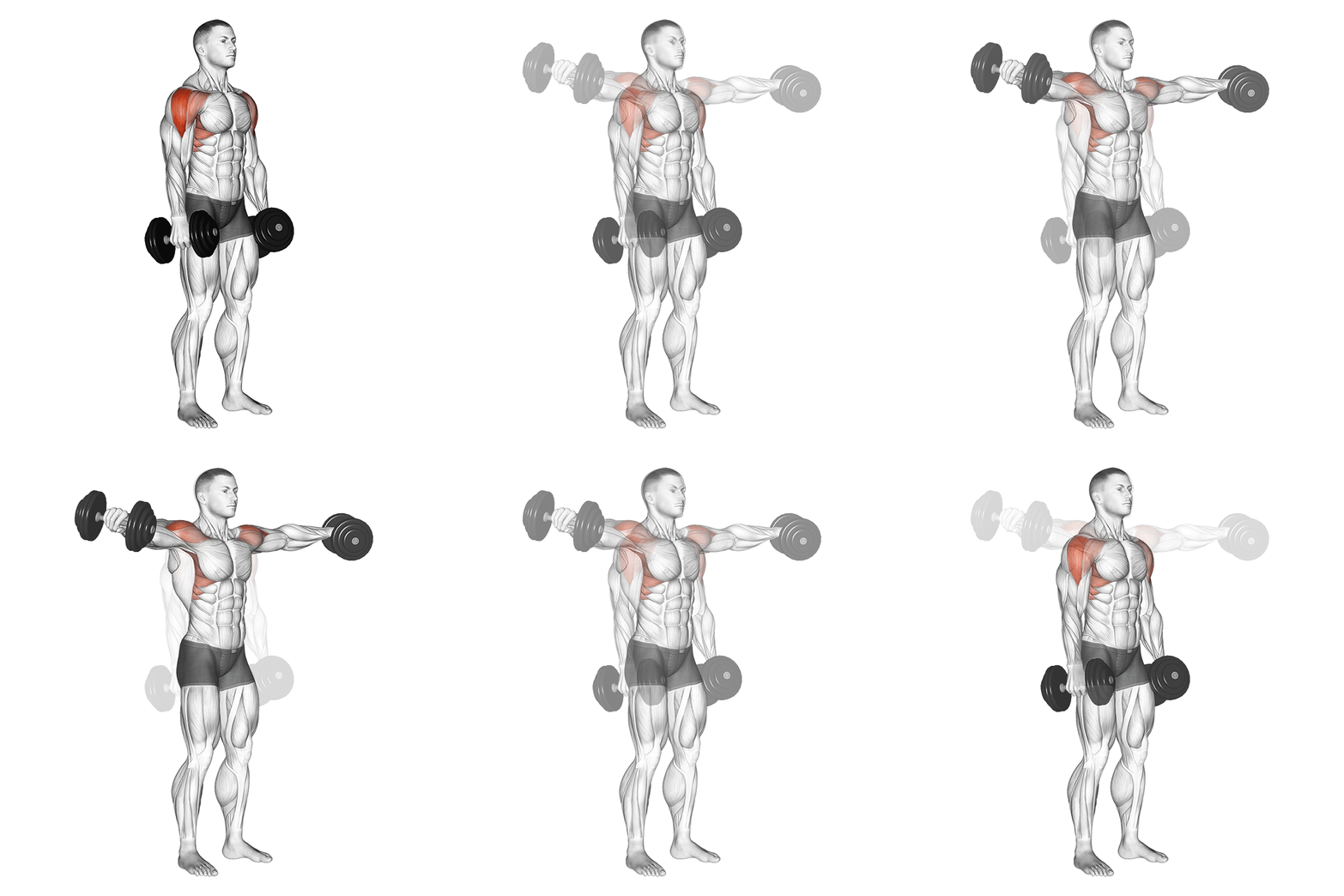
Dumbbell lateral raise
Same side-delt target, zero internal rotation under load. Trade the vertical pull for a pure raise and come back to upright rows when the joint calms down.
How to program it
Three protocols by goal. Pick one per cycle and aim for progression on load or distance.
| Goal | Sets × distance | Load | Rest |
|---|---|---|---|
| Hypertrophy | 3-4 × 10-12 | Moderate dumbbells, RPE 8 | 90 s |
| Shoulder-width volume | 3 × 15 | Light, RPE 8 | 60 s |
| Catching up a weak side | 3 × 10 per arm, single-arm | Light, weak side sets the reps | 60 s |
Dumbbell Upright Row FAQ
Dumbbell or barbell upright row?
Dumbbells for shoulder health and everyday training, the bar for maximum load. A bar fixes your hands at one width from start to finish, which forces the shoulders into increasing internal rotation as it climbs. Dumbbells let the hands widen on the way up, so the joint keeps room to breathe. You will row a little less total weight with dumbbells, and for an isolation aimed at delts and traps, that costs you almost nothing.
What muscles do dumbbell upright rows work?
Side delts and upper traps split the bill, with the biceps and forearms assisting the pull and the rear delts and rhomboids steadying the shoulder blades. Your path decides the split: elbows driven wide bias the side delts, while a narrower pull where the shoulders ride up biases the traps. Pick your emphasis, then keep it consistent for the whole set.
How heavy should I go on upright rows?
Lighter than your pride wants. The movement lives in a mid-range of reps, 10 to 15, where you can pause at the top and lower in 2 s without the torso joining in. A useful test: if the last rep looks different from the first, slower elbows, a slight lean back, a bounce from the knees, you have crossed from training the delts into rehearsing bad habits. Progress by adding a rep per set before adding kilos.