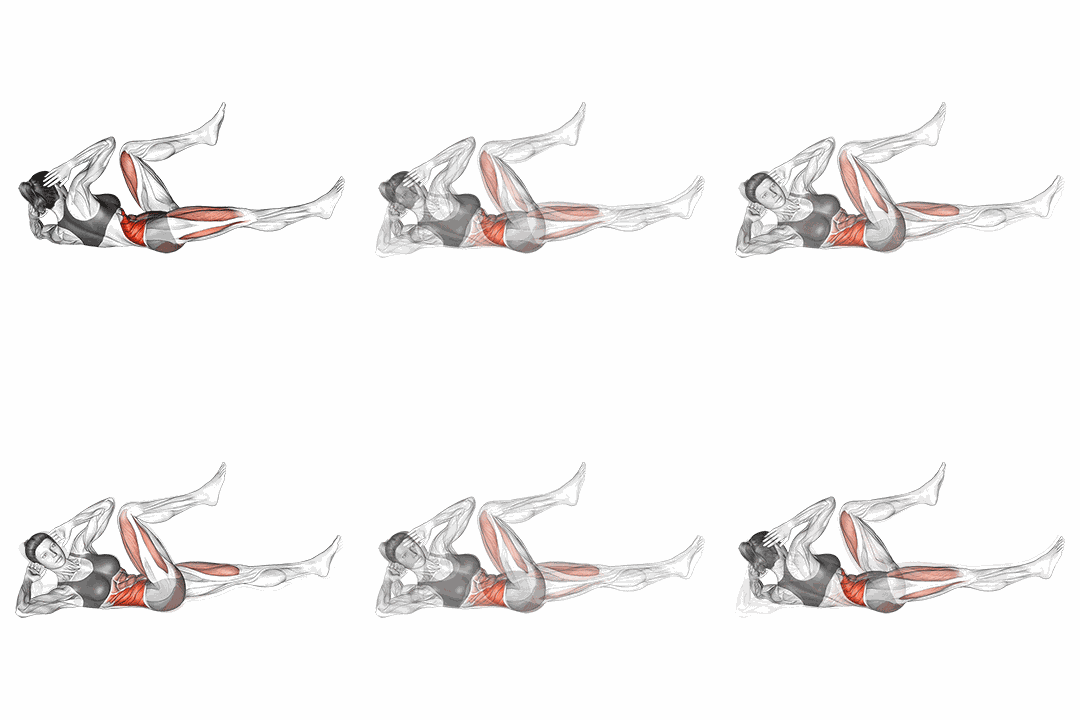
What is the bicycle crunch?
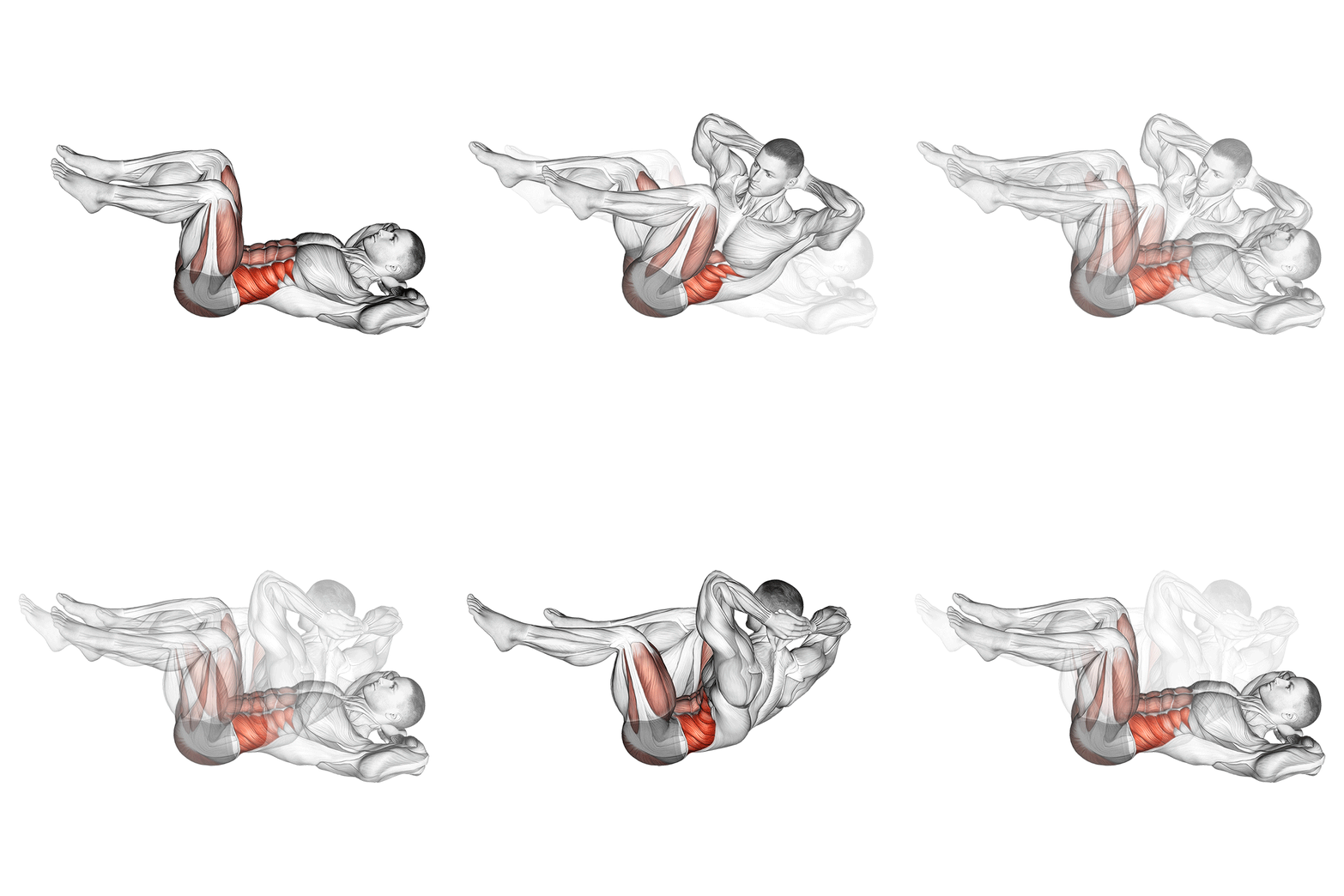
The bicycle crunch is a supine rotational sit-up. You lift the shoulders and legs off the floor, then bring the opposite elbow to the opposite knee while the other leg extends long. The trunk rotates, the abs crunch, and the hip flexors cycle. ACE-sponsored EMG research ranks it among the top three exercises for rectus abdominis and oblique activation. Slow it down, finish each twist, and it becomes a serious core builder.
How to do the bicycle crunch
- 1
Set the base
Lie back, fingers light at the temples, elbows wide. Knees bent over hips, shins parallel to the floor, lower back pressed down.
- 2
Crunch and twist
Lift the shoulder blades off the floor and twist the trunk so the right elbow points to the left knee. The rotation is in the rib cage, not the neck.
- 3
Extend the opposite leg
At the same time, push the right leg long and low, hovering above the floor. Hold a half-second contraction at the top.
- 4
Switch under control
Pass through centre, then mirror the move on the other side. Aim for a 2-second tempo per side, not fast pedalling.
Pro tip
If you don't feel the obliques on every rep, you're going too fast. Pause for a count of one at full twist; that single second separates a rotational core builder from a hip flexor flail.
Common mistakes
Yanking the head.
Hands belong at the temples as a rest. Pulling the head forward strains the neck and disengages the abs.
Elbow chasing the knee.
If the elbow flaps in to touch the knee without trunk rotation, the obliques don't fire. Rotate the rib cage, the elbow follows.
Lower back arching.
When the extending leg drops too low and the back lifts, you stress the lumbar. Raise the leg until the pelvis stays neutral.
Resting between reps.
Dropping the shoulders to the floor each rep cancels the tension. Stay crunched the entire set.
Variations and progressions
Easier
Tabletop bicycle
Keep the non-working leg in a 90/90 tabletop instead of extending. Removes the lever, keeps the obliques in.
Harder
Tempo bicycle 3-1-3
Three seconds to twist in, one-second hold, three seconds to switch. Brutally slow, exposes any weakness.
Neck-friendly?
Pallof press rotation
Standing anti-rotation with a band trains the same obliques without any neck or hip flexor load.
How to program it
Three protocols by goal. Pick one per cycle and aim for progression on load or distance.
| Goal | Sets × distance | Load | Rest |
|---|---|---|---|
| Technique | 3 × 10/side | Bodyweight | 45 s |
| Oblique hypertrophy | 4 × 15/side tempo | Bodyweight | 60 s |
| Core finisher | AMRAP 45 s × 3 | Bodyweight | 45 s |
Bicycle Crunch FAQ
Why does the ACE study rate it so highly?
Because it combines two demands at once: a crunch for the rectus abdominis and a rotation for the obliques. Most ab moves hit one or the other. The bicycle crunch fires both with bodyweight only, which makes it efficient and accessible. The catch is that the result depends on slow, controlled tempo, not the speed pedalling most people do.
Bicycle crunch vs air bike, what's the difference?
Same family, same pattern. The bicycle crunch puts more emphasis on holding the rotation at full contraction. The air bike usually means a faster, continuous cycling motion. Use the bicycle crunch as a strength move with tempo, and the air bike as a conditioning finisher with reps and time.
Will it give me a six-pack?
It will thicken the abs, especially the obliques. Visibility still depends on body fat. A male athlete needs roughly 12 percent body fat to see definition, a female athlete around 18 percent. Combine bicycle crunches with full body strength work and a calorie-controlled diet for the visible result.