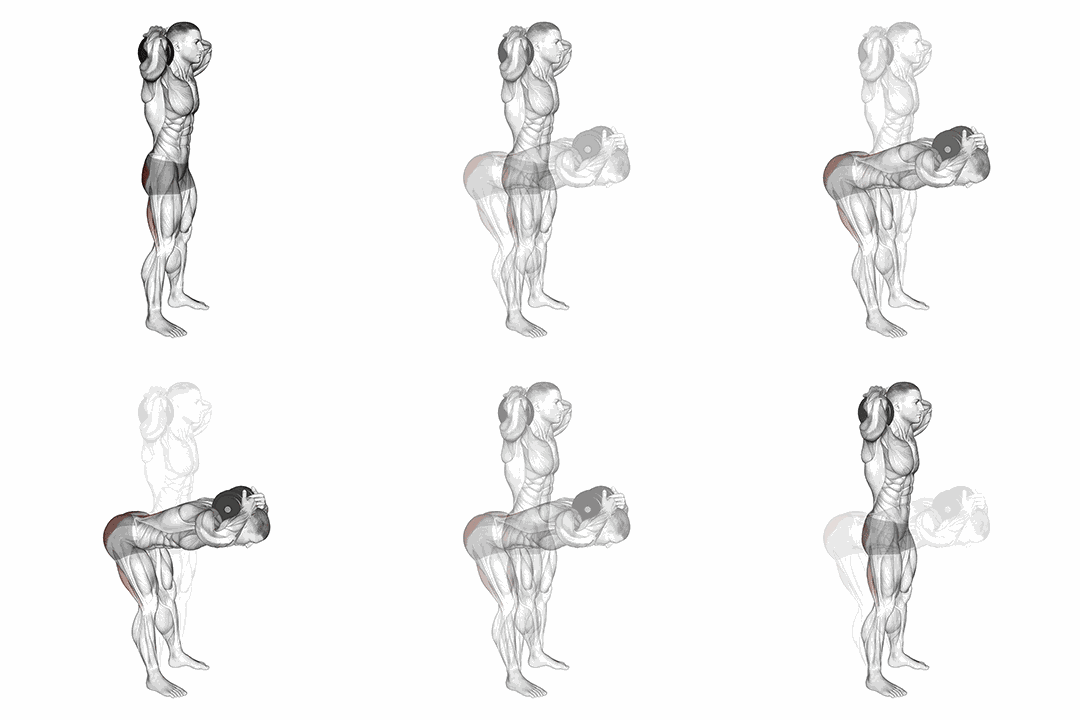
What is the dumbbell good morning?
The dumbbell good morning is a hip hinge performed with a dumbbell hugged against the upper chest, goblet style, or resting across the back of the shoulders. From a soft-knee stance you push the hips back, let the torso tip toward the floor, then stand tall by squeezing the glutes. Because the load is light and sits close to your centre of mass, it forgives far more than the barbell version: less shear on the spine, no rack needed, easy to dump if a rep goes wrong. It suits beginners learning to hinge, warm-ups before deadlift sessions, and high-rep posterior-chain work at home with minimal equipment.
How to do the dumbbell good morning
- 1
Choose your hold
Hold one dumbbell vertically against your sternum, both palms cupping the top head, elbows pointing down. Alternatively, rest it across the back of your shoulders with both hands.
- 2
Set the stance and brace
Feet hip-width, toes forward, a slight bend in the knees that will not change during the rep. Inhale into the belly and lock the ribs down over the pelvis.
- 3
Send the hips back
Push the hips straight back and let the torso tilt forward with a flat back. Stop when you feel a strong hamstring stretch, usually with the chest around 45 degrees, lower if your mobility allows.
- 4
Stand up through the glutes
Drive the hips forward to return to standing and finish with a deliberate glute squeeze. Stand tall without leaning back at the top.
Pro tip
You should be able to wiggle your toes at the deepest point of every rep. If you can't, your weight has drifted onto the forefoot and the hamstrings are off the hook: shift back into the heels and mid-foot.
Common mistakes
Bending the knees on the way down.
If the knees keep flexing you end up squatting and the hamstrings never stretch. Set a slight bend at the start and freeze that angle for the whole set.
Rounding the upper back around the dumbbell.
A collapsing chest drags the whole spine into flexion. Keep the dumbbell glued to the sternum, chest proud, and think of showing your collarbones to the wall in front of you.
Hyperextending the finish.
Driving the hips past neutral and leaning back loads the lumbar facets for nothing. The rep ends when you stand tall, glutes tight, ribs stacked over the pelvis.
Rushing the eccentric.
Dive-bombing the descent skips the hamstring loading that makes the exercise worth doing. Take 2-3 seconds down and feel the stretch build before you reverse.
Variations and progressions
Easier
Bodyweight good morning
Cross your hands over your chest and hinge with no load. Perfect for warm-ups and for learning to move from the hips before adding any weight.
Harder
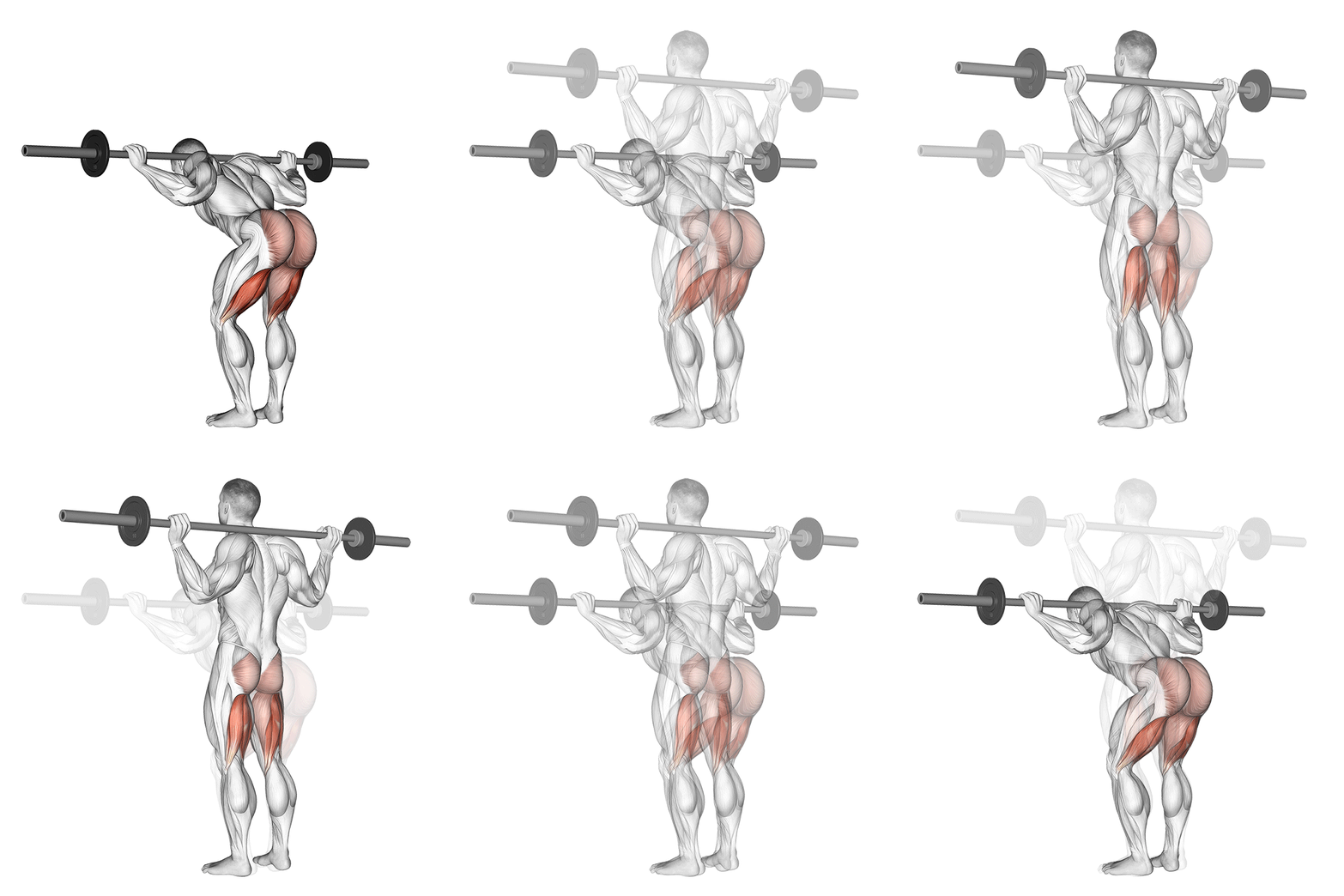
Barbell good morning
Once a 20-24 kg dumbbell feels easy for clean sets of 12, the barbell version lets you keep progressing the load and brings the spinal bracing challenge with it.
Alternative
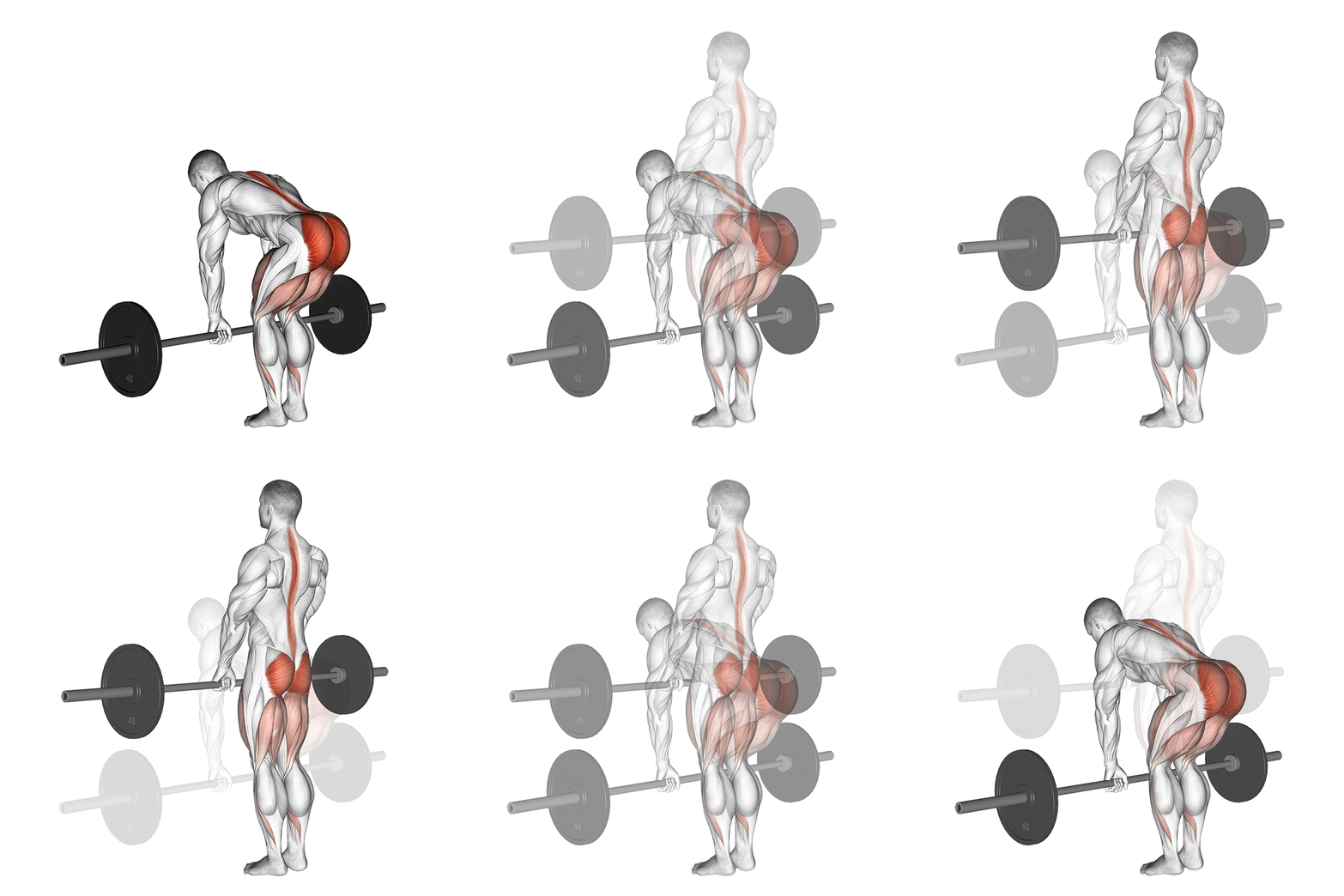
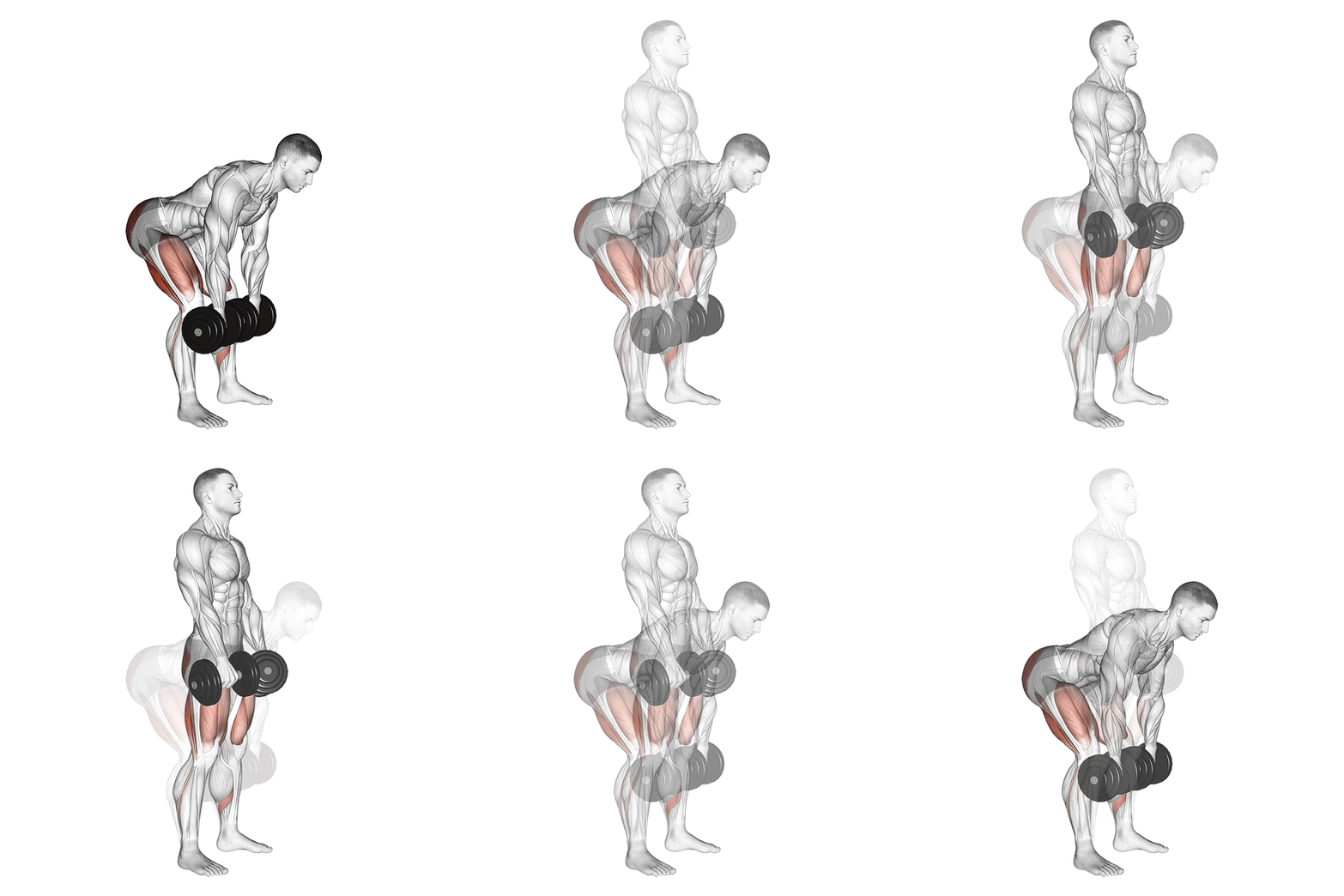
Dumbbell Romanian deadlift
Same hinge with the dumbbells in your hands instead of on your torso. The lever on the spine is shorter, so it scales much heavier and becomes your main hamstring builder.
How to program it
Three protocols by goal. Pick one per cycle and aim for progression on load or distance.
| Goal | Sets × distance | Load | Rest |
|---|---|---|---|
| Movement prep | 2 × 12 | Light (5-10 kg) | 45 s |
| Hypertrophy | 3-4 × 10-12 | Moderate (12-22 kg) | 90 s |
| Pattern and tempo work | 3 × 8, 3 s down | Light to moderate | 60-90 s |
Dumbbell Good Morning FAQ
Goblet hold or dumbbell behind the neck?
Start goblet. It takes two seconds to set up, keeps the load in front where it counterbalances the hinge, and your upper back failing is a built-in safety valve. The behind-the-neck hold mimics the barbell position and lets you go a little heavier, but it demands shoulder mobility and offers nothing extra for most people.
How heavy should I go?
Not very. This is a pattern and volume exercise, not a strength test: most lifters top out around 20-24 kg before the hold becomes the limit. When that weight moves cleanly for sets of 12, progress to the barbell good morning or shift your heavy hinge work to Romanian deadlifts.
What's the difference with a dumbbell RDL?
Where the load sits. In the good morning the dumbbell rides on your torso, so every kilo creates a long lever on the spine and the erectors work hard at light loads. In the RDL the load hangs from your hands, close to your legs, so you can go much heavier. Use the good morning to learn and reinforce the hinge, the RDL to load it.
Where should I feel it working?
A clear hamstring stretch as you fold forward, a strong glute contraction as you stand, and a quiet, steady tension in the lower back holding position. If the lower back is the loudest sensation, shorten the range or slow the descent and check that the knees aren't creeping into flexion.