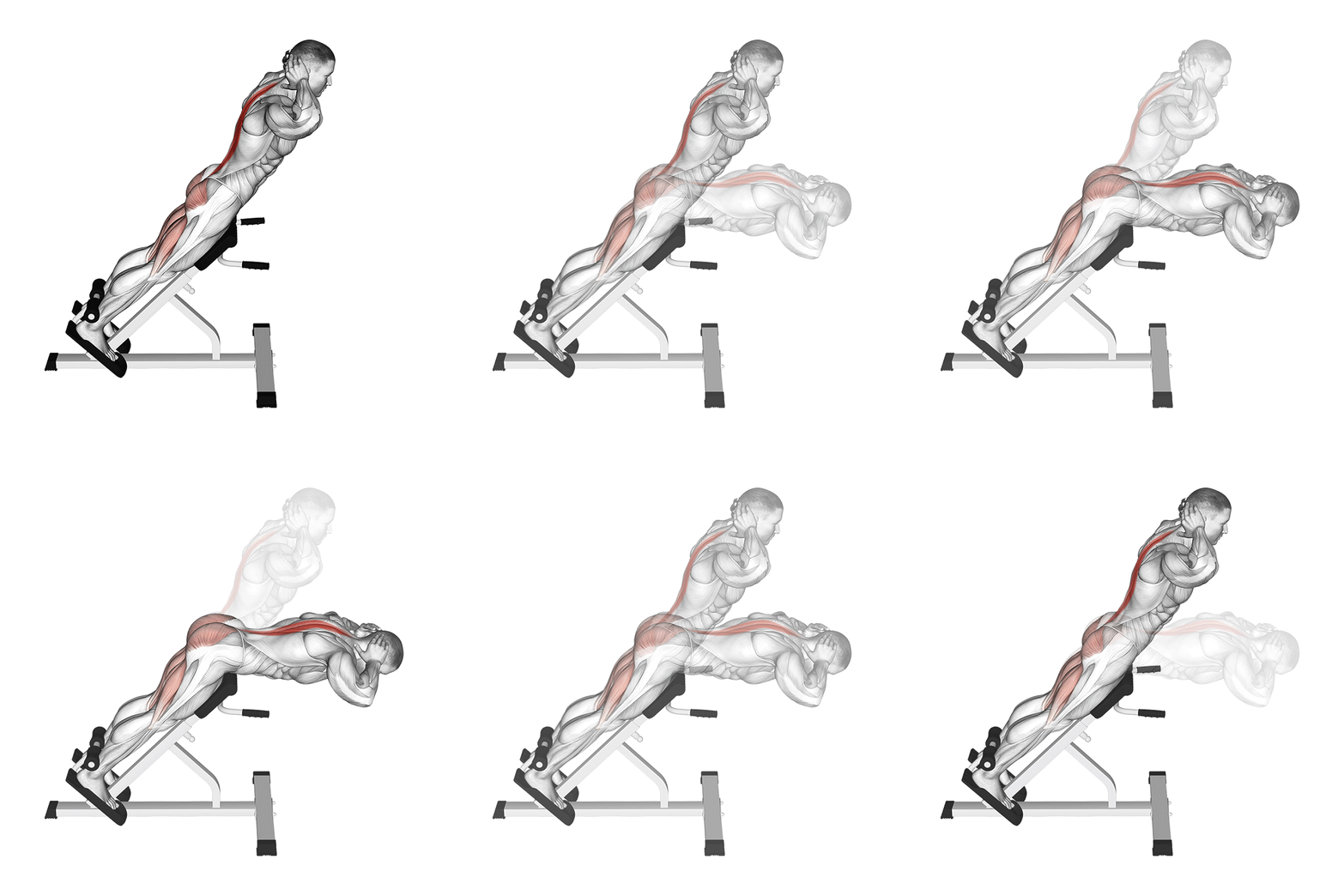
What is the back extension?
The back extension is performed on a 45-degree or horizontal hyperextension bench. You hinge from the hips, lower your torso, then drive back up to a straight line. Done with glute focus, it trains hip extension. Done with spinal focus, it builds erector endurance. It's one of the safest ways to add posterior-chain volume, and a non-negotiable accessory for deadlifters and runners with weak lower backs.
How to do the back extension
- 1
Set the pads
Top pad just below the hip crease so you can hinge freely. Ankles locked under the rear pads.
- 2
Start tall, brace
Cross arms over chest or hold a plate. Brace your abs lightly so the spine stays neutral throughout.
- 3
Hinge down
Hinge from the hips and let the torso drop until you feel a strong stretch in the hamstrings. Don't round the back.
- 4
Drive hips into the pad
Squeeze the glutes hard and drive back up to a straight body line. Don't hyperextend past neutral.
Pro tip
Round the upper back slightly to bias the glutes, keep a flat back to bias the erectors. Pick a focus per set, don't mix in the same rep.
Common mistakes
Hyperextending at the top.
Cranking the lower back past neutral hammers facet joints. Stop at a straight line.
Bending only the spine.
Letting the hips stay locked turns it into a spinal flexion exercise. Lead with the hips.
Pad too high.
If the pad sits on the lower abdomen, you can't hinge. Slide down so the pad is under the hip crease.
Adding load too soon.
Big plates with sketchy form is a back tweak waiting to happen. Master bodyweight technique first.
Variations and progressions
Easier
Bodyweight back extension
Arms across chest, no load. Build perfect hinge technique and endurance before adding weight.
Harder
Weighted with pause
Hold a plate or kettlebell at the chest, pause 2 seconds at the bottom stretch and 1 second at the top squeeze.
No bench?
Glute-ham raise or good morning
Glute-ham raise loads hamstrings and back at the same time. Good morning with light barbell trains the same hinge under load.
How to program it
Three protocols by goal. Pick one per cycle and aim for progression on load or distance.
| Goal | Sets × distance | Load | Rest |
|---|---|---|---|
| Lower-back endurance | 3 × 15-20 | Bodyweight | 60 s |
| Glute focus | 4 × 12 | 10-20 kg plate | 90 s |
| Deadlift accessory | 4 × 8 with pause | 20-30 kg plate | 2 min |
Back Extension FAQ
45-degree or horizontal bench?
45-degree is the most versatile and shoulder-friendly, easier on most people's hips. Horizontal (Roman chair) gives a longer lever arm and harder peak contraction. Both work. Choose whichever your gym has and rotate if you have access to both.
Is it safe with a history of low back pain?
In most cases yes, and often it helps. Bodyweight back extensions are a staple of rehab protocols for chronic low back pain because they build erector endurance without compression. Start unloaded, slow tempo, no hyperextension. If symptoms flare, talk to a physio.
How is it different from a Romanian deadlift?
An RDL is a standing hinge with weight in your hands, loading the whole posterior chain heavily. A back extension is supported by a bench, so the spine is unloaded and you can chase higher reps with less recovery cost. Use the RDL for strength, the back extension for volume.