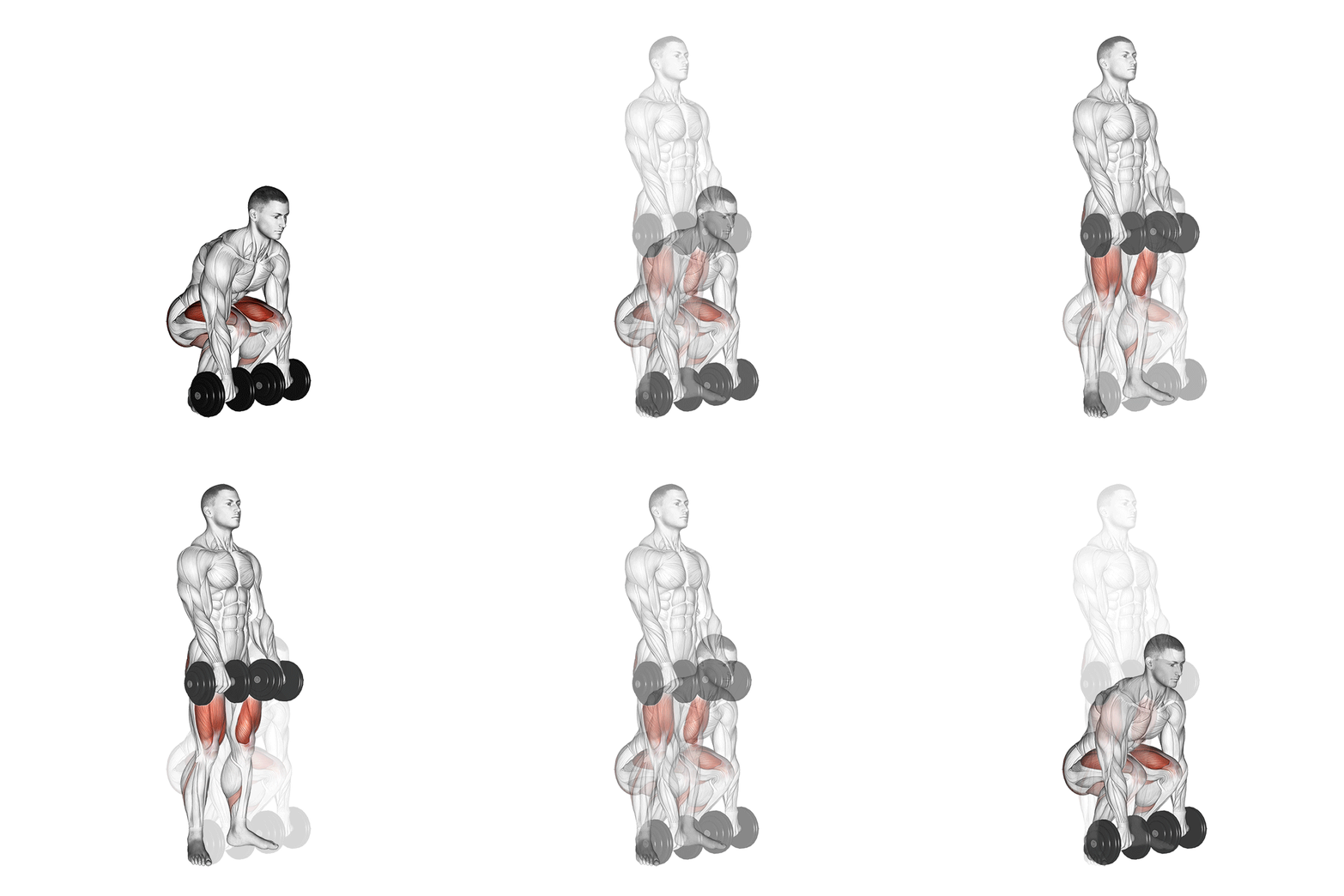
What is the dumbbell deadlift?
The dumbbell deadlift is the full deadlift pattern, floor to lockout, performed with a dumbbell in each hand instead of a barbell. You hinge down with real knee bend, grab the bells beside your feet, and stand up by pushing the floor away. Because the load hangs at your sides rather than out in front, it behaves like a trap bar pull: a more upright torso, more quad involvement, and less stress on the lower back than a bar. That makes it the natural place to learn deadlifting, the home-gym option when there is no barbell, and a high-rep hinge for hybrid conditioning once the dumbbells stop feeling heavy.
How to do the dumbbell deadlift
- 1
Build the start position
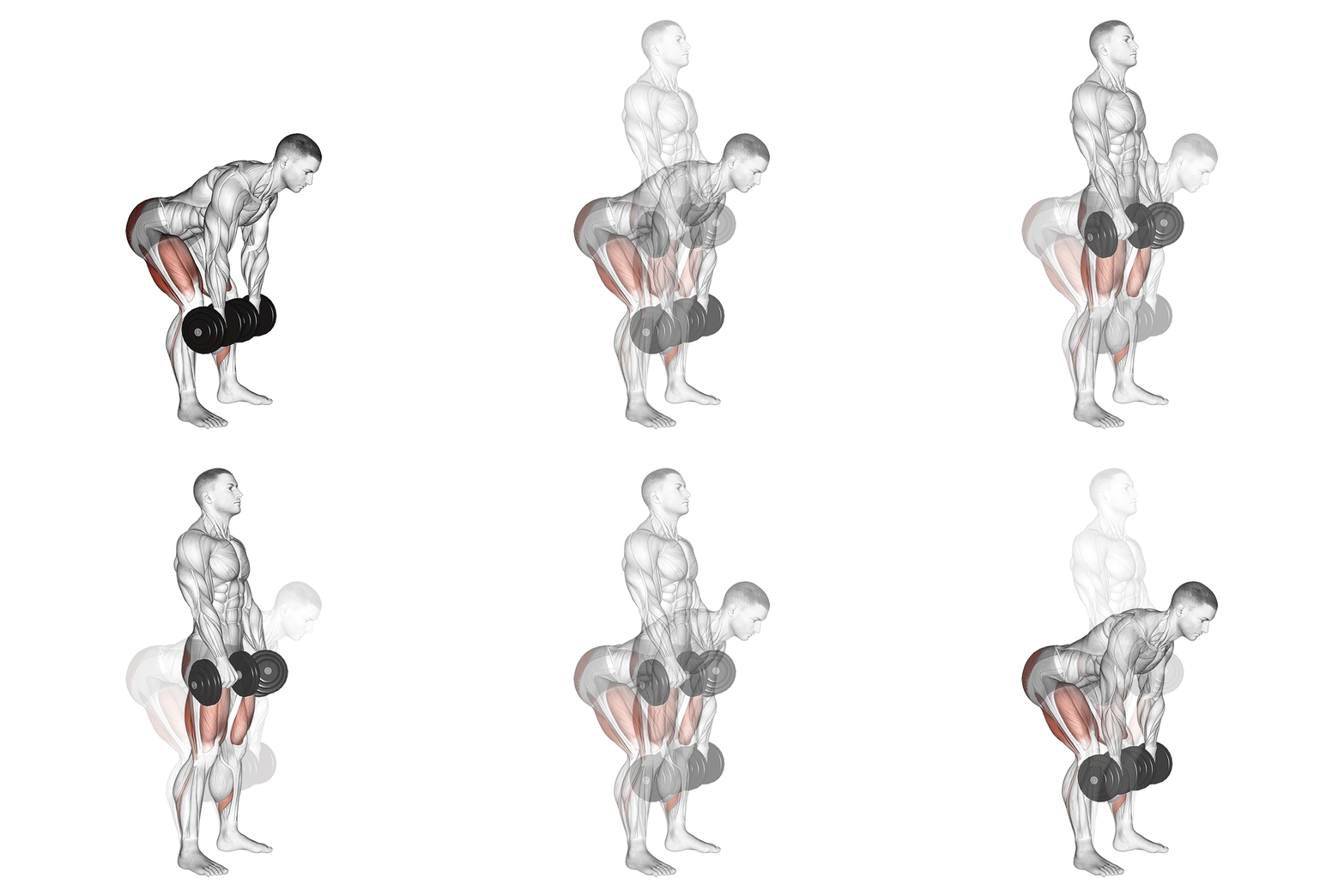
Stand hip-width with a dumbbell outside each foot. Hinge back and bend your knees until your hands reach the handles: flat back, chest proud, shoulders just in front of the bells.
- 2
Wedge yourself in
Big breath into the belt line, lats switched on, arms straight like cables. Your hips sit between a squat and a hinge, lower than a Romanian deadlift ever goes.
- 3
Push the floor away
Stand up in one piece: hips and chest rise at the same speed, bells brushing your legs the whole way. Finish tall by squeezing the glutes, with no lean-back.
- 4
Hinge back down
Hips travel back first; bend the knees once the bells pass them. Set the dumbbells down under control, re-brace, and pull the next rep from a dead stop.
Pro tip
Think trap bar, not barbell: with the load hanging at your sides you can sit your hips lower and keep your chest taller than any bar allows. The moment the dumbbells drift in front of your toes, your lower back starts paying bills your hamstrings were supposed to cover.
Common mistakes
Dumbbells drifting forward.
Load in front of mid-foot turns a leg lift into a back lift. Keep the bells tracking along your legs, close enough to brush them, from floor to lockout.
Rounding to reach the floor.
Dumbbell handles sit lower than a loaded bar, and some hips do not have that range yet. Put the bells on low blocks or a step rather than folding your spine to get there.
Hips shooting up first.
If the legs straighten before the chest rises, the back finishes the lift alone. Push the floor so hips and shoulders travel upward together.
Hyperextending the lockout.
Leaning back at the top adds spine stress and zero extra muscle work. The finish is tall and quiet: glutes squeezed, ribs stacked over hips.
Variations and progressions
Easier
Elevated dumbbell deadlift
Set the bells on low blocks or a step so the handles start just below your knees. Shorter range, guaranteed flat back, same pattern.
Harder
Barbell deadlift
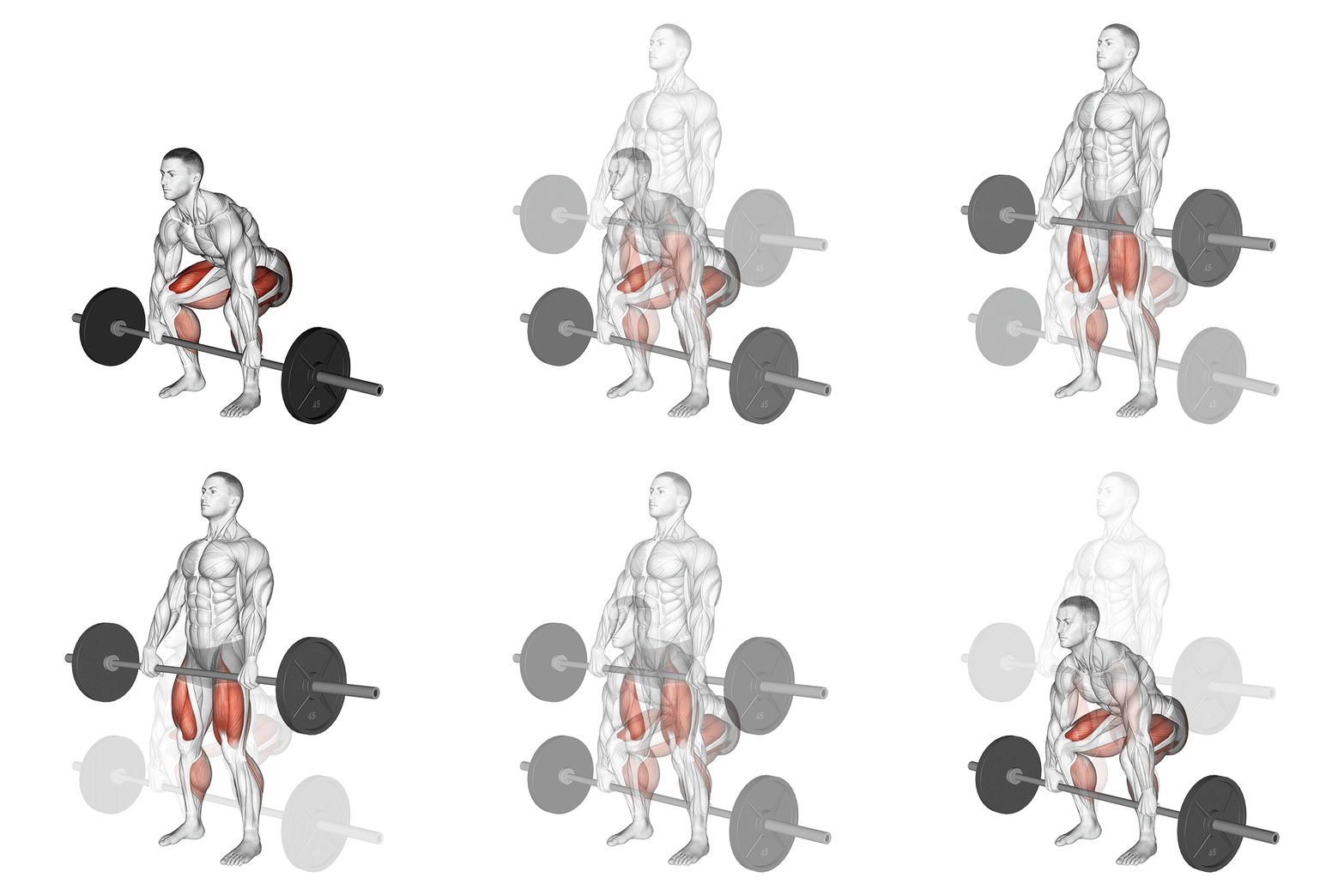
When the rack runs out of dumbbells, the bar is the next chapter: the same hinge with no load ceiling, plus the skill of pulling around your knees.
One dumbbell?
Single dumbbell sumo deadlift
Stand the bell on its end between a wide stance and grip the top with both hands. The very upright torso makes it the gentlest deadlift in the gym.
How to program it
Three protocols by goal. Pick one per cycle and aim for progression on load or distance.
| Goal | Sets × distance | Load | Rest |
|---|---|---|---|
| Strength | 4 × 6-8 | Heaviest pair available, RPE 8 | 2-3 min |
| Hypertrophy | 3 × 10-12 | RPE 8, 3 s lowering | 90 s |
| Hybrid conditioning | EMOM 10 min: 10 reps | Moderate, unbroken | Remainder of the minute |
Dumbbell Deadlift FAQ
Dumbbell deadlift vs dumbbell Romanian deadlift?
The deadlift starts from the floor every rep, with real knee bend: quads, glutes and hamstrings share the work and you practice the full pattern. The Romanian starts standing, keeps the knees nearly fixed and lowers only to mid-shin, hunting a hamstring stretch, and the bells never touch down. Learn the pattern and build general strength here; use the RDL when you want to target the hamstrings specifically.
Is the dumbbell deadlift as good as the barbell version?
For learning the hinge and building muscle at moderate loads, yes, and the more upright torso is kinder to a touchy lower back. For absolute strength, no: the dumbbell rack tops out, and your legs will outgrow the heaviest pair long before a barbell runs out of plates. Treat the dumbbell version as the entry point and the high-rep tool, not the destination.
How heavy should I go on dumbbell deadlifts?
Start with a pair you can pull for 10 crisp reps with a flat back; for most beginners that lands between a third and half of bodyweight in total. Progress the weight while the reps stay clean. Once the heaviest pair in the gym gives you easy sets of 12-15, stop stacking reps forever: slow the lowering, add a pause at the shin, or graduate to the bar.