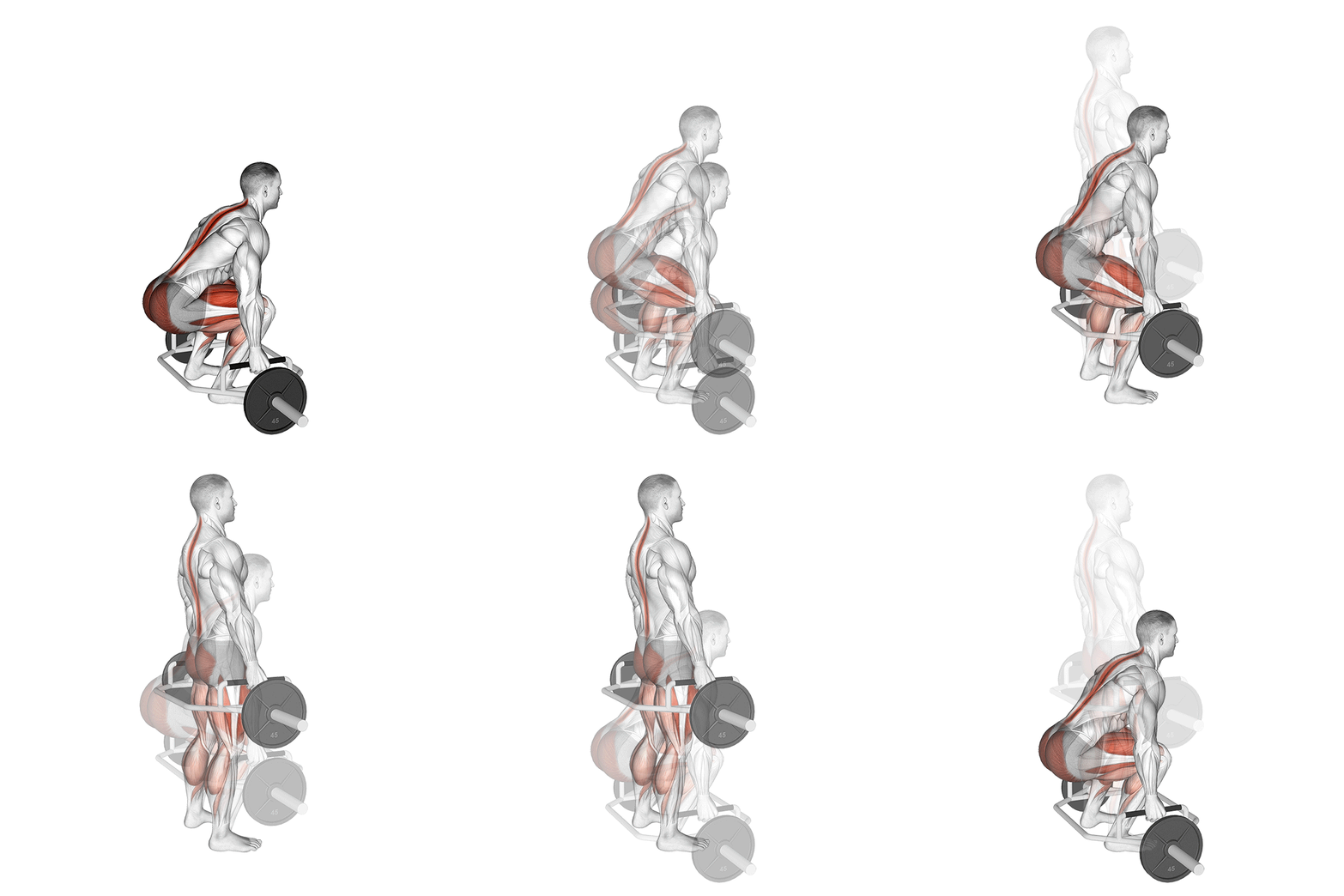
What is the trap bar deadlift?
The trap bar deadlift is a hybrid hinge-squat pattern performed inside a hexagonal bar. Because the handles sit at your sides rather than in front of you, the load lines up with your center of mass and reduces shear on the lower back. Compared to the conventional deadlift, the trap bar lets you bend the knees more, recruits more quadriceps, and is much harder to mess up technically. It is the single best deadlift variation for hybrid athletes: heavy loads with low injury risk, fast learning curve, and direct transfer to sled push, hill sprints and box jumps. Most lifters can move 5 to 15 percent more weight on a trap bar than on a conventional pull.
How to do the trap bar deadlift
- 1
Step inside the bar
Center yourself inside the hex. Feet hip-width, mid-foot under the handles. Toes pointed slightly out or straight, whichever feels natural.
- 2
Hinge and grip
Push hips back, bend knees, grab the handles. Chest tall, shoulders pulled back and down, lats squeezing armpits. Take a deep belly breath and brace hard.
- 3
Drive the floor away
Push your feet through the floor and stand up. The bar tracks straight up. Hips and shoulders rise together, not hips first.
- 4
Lock out and control down
Stand tall, shoulders over hips, no leaning back. Lower with control by pushing the hips back first, then bending the knees to set the bar down.
Pro tip
Use the high handles when you're learning or when low-back is fried from running volume. Drop to the low handles when you want more range, more hamstring stretch, and a heavier strength stimulus.
Common mistakes
Rounding the lower back.
Even on a trap bar, a soft brace ends in a tweaked back. Brace before the bar leaves the floor, every rep.
Hips shoot up first.
If the hips outrun the chest, you turn the lift into a stiff-leg deadlift. Push the floor with the legs and keep the chest up.
Hyperextending at the top.
Leaning back at lockout pinches the lower spine and gains you nothing. Stand tall, ribs down, glutes squeezed.
Dropping the bar from the top.
Eccentric matters. Controlled lowering builds tendon strength and protects the back. Save the drop for max singles only.
Variations and progressions
Easier
High-handle trap bar
Reduces range of motion by about 10 cm. Much friendlier on hamstring and lower-back mobility, perfect for beginners or running-heavy weeks.
Harder
Deficit trap bar
Stand on a 5 to 10 cm plate. Bigger range, deeper hip and knee flexion, stronger pull off the floor. Brutal on the legs.
No trap bar?
Sumo deadlift or dumbbell deadlift
Sumo mimics the more upright torso and quad-heavy pattern. Heavy dumbbell deadlifts work the same hinge with the load at your sides.
How to program it
Three protocols by goal. Pick one per cycle and aim for progression on load or distance.
| Goal | Sets × distance | Load | Rest |
|---|---|---|---|
| Technique | 4 × 5 @ 60% 1RM | Light, controlled tempo | 2 min |
| Strength | 5 × 3 @ 85% 1RM | Heavy | 3-4 min |
| Hypertrophy / capacity | 3 × 10 @ 65-70% 1RM | Moderate | 90-120 s |
Trap Bar Deadlift FAQ
Trap bar or conventional deadlift?
For hybrid athletes, trap bar wins. Lower injury risk, faster learning, more quad recruitment, and lighter on the lower back the day after a long run. Conventional is the right choice if you compete in powerlifting or want to maximize posterior-chain strength specifically. For everything else (Hyrox, running, general performance) the trap bar is the more honest tool.
Should I use straps?
On heavy sets above 5 reps, yes. Grip will fail before legs and back, and you want the training stimulus on the legs. Keep one or two strap-free sets per session to maintain grip strength. For max singles and triples, choose: train grip or train pull. Don't try to do both on the same rep.
How often should I trap bar deadlift?
Once a week heavy is plenty for most hybrid athletes. The lift is taxing on the central nervous system and recovery competes with running. If you want a second exposure, make it lighter and faster: trap bar jumps or speed pulls at 50 to 60 percent. That gives you power development without the recovery cost of a second heavy day.