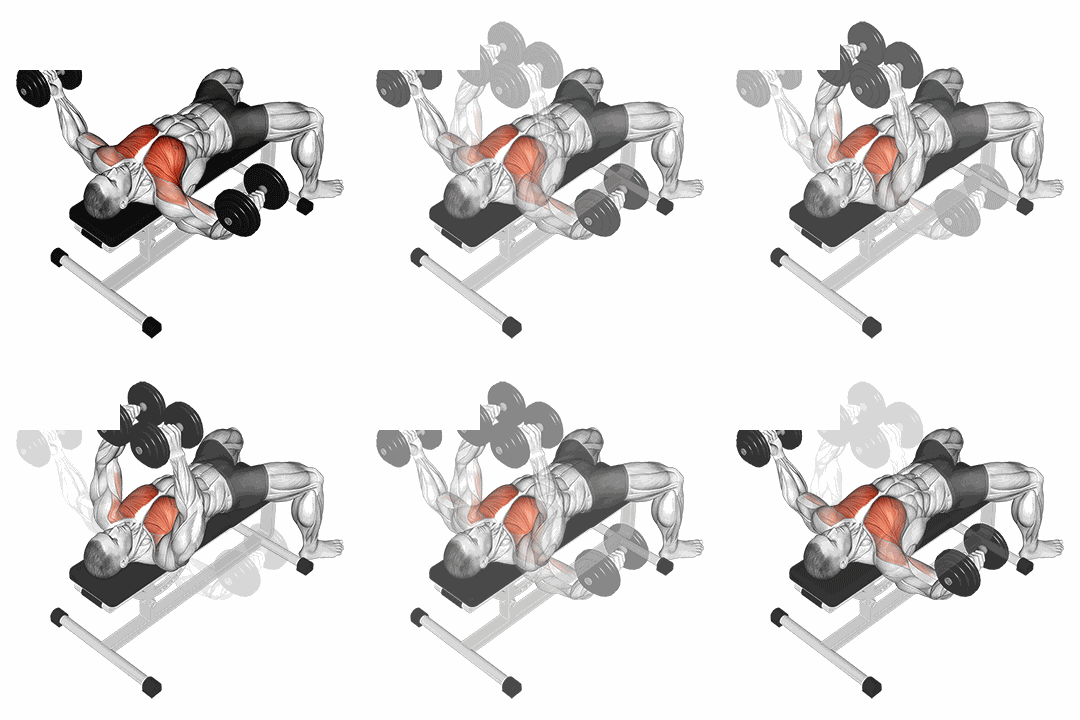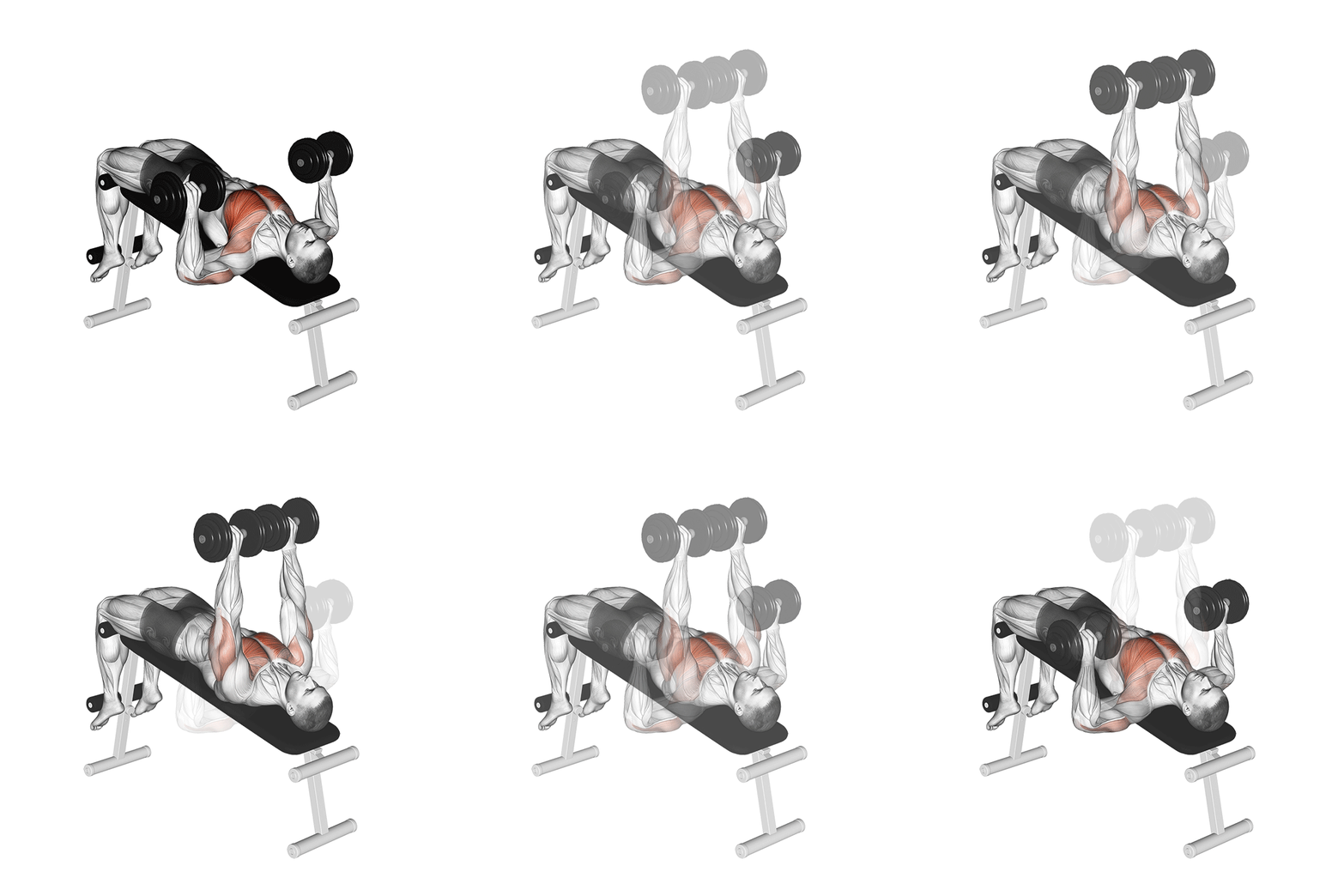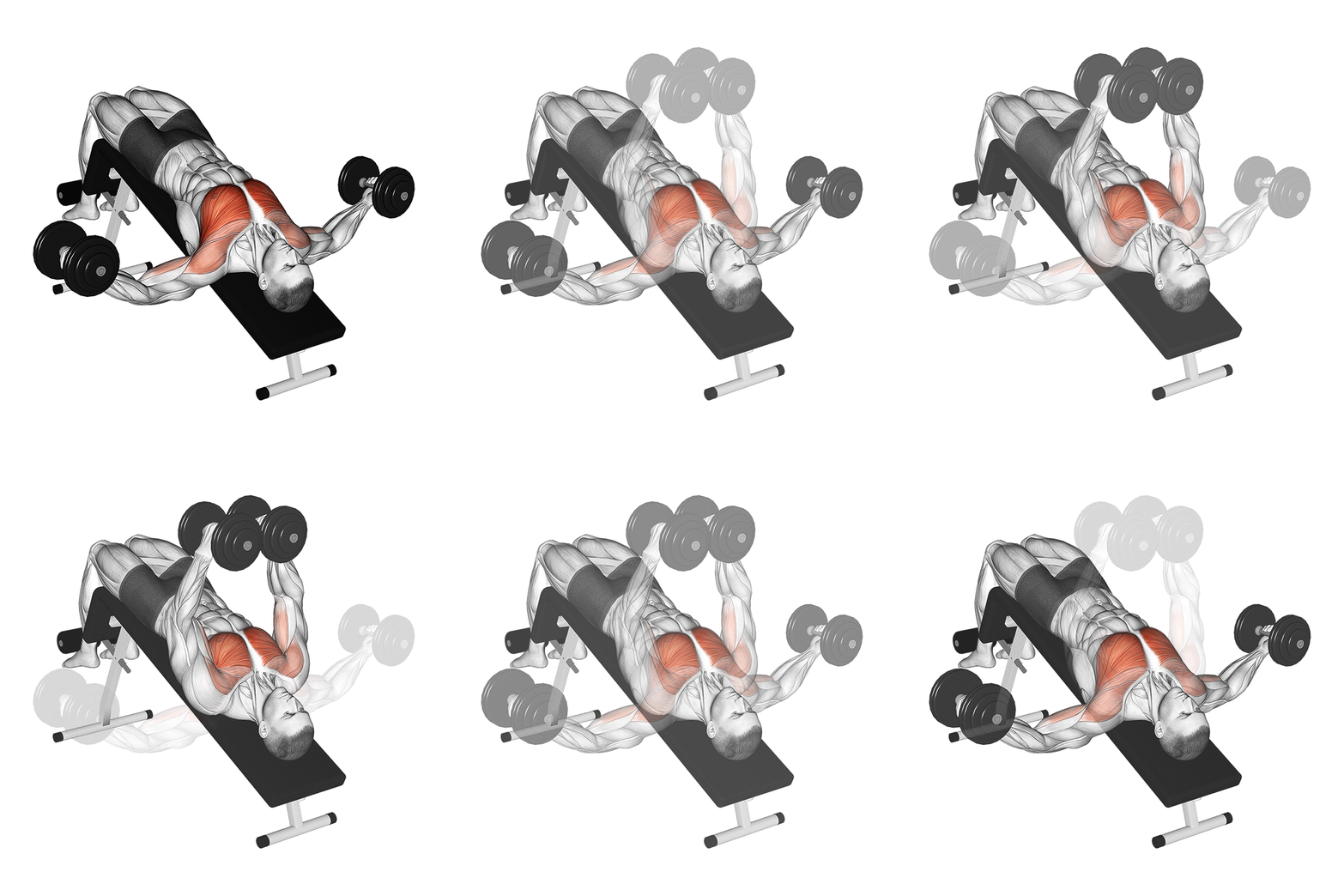
What is the decline dumbbell fly?
The decline dumbbell fly is an isolation movement done lying head-down on a bench set to a 15-30 degree decline, feet hooked under the rollers. From there you open slightly bent arms into a wide arc, then bring the dumbbells back together above the lower chest. Compared with the flat version, the decline lines the resistance up with the lower, sternocostal portion of the pec, and it keeps the upper arm on a path that lifters with cranky shoulders often find noticeably more comfortable. It suits intermediates whose lower chest lags behind the rest, and anyone whose flat flys pinch at the bottom of the stretch.
How to do the decline dumbbell fly
- 1
Set a modest decline
Set the bench between 15 and 30 degrees of decline and hook your feet firmly under the rollers; they are your only anchor. Steeper is not better: past 30 degrees the range shrinks and the blood rushes to your head.
- 2
Get the dumbbells up safely
Sit on the high end with the dumbbells standing on your thighs, then lie back and bring them to your chest in the same motion. With anything heavy, have a partner hand them to you once you are already lying down.
- 3
Open the arc over the lower chest
Press the bells up over your lower chest, palms facing, and set a soft bend in the elbows. Lower them out to the sides in a wide curve, keeping the arc level with your lower sternum rather than your shoulders.
- 4
Stretch, then squeeze back together
Stop when you feel a strong stretch across the lower chest, pause briefly, then drag the dumbbells back along the same curve until they nearly touch. Exhale through the squeeze and keep the feet driving into the rollers.
Pro tip
The stretch arrives a few centimetres earlier on a decline than on a flat bench, so your usual depth marker no longer applies: cut the descent slightly higher, right where the lower pecs light up, and breathe on every rep, because the head-down position punishes a held breath fast.
Common mistakes
Cranking the bench to maximum decline.
A steep angle shortens the arc, piles pressure into your skull and turns the fly into a vague shrug of the arms. Fifteen to thirty degrees is plenty to shift the work onto the lower chest.
Letting the arc drift toward your face.
Head-down, gravity nudges the dumbbells toward your shoulders, which converts the fly into a lopsided pullover and stresses the shoulder joint. Keep the hands tracking level with your lower sternum on every rep.
Loading it like a press.
The decline makes you feel strong, but the lever is just as long as on a flat fly: heavy bells bend the elbows and steal the stretch. Use the same light loads you would pick flat, or lighter.
Dismounting carelessly.
Ending a set by relaxing into the stretched position, or dropping the bells sideways while head-down, is how shoulders get hurt. Finish the last rep at the top, bring the dumbbells to your chest and sit up with them, or hand them off.
Variations and progressions
Easier
Flat dumbbell fly
Losing the head-down angle makes setup, breathing and bailing far simpler while training the same arc. Own the flat version first, then tilt the bench when the lower chest needs direct attention.
Harder
Paused decline fly
Lower over three full seconds and hold the stretched position for two before sweeping back up. Same dumbbells, far more time under tension exactly where the fly earns its keep.
Alternative
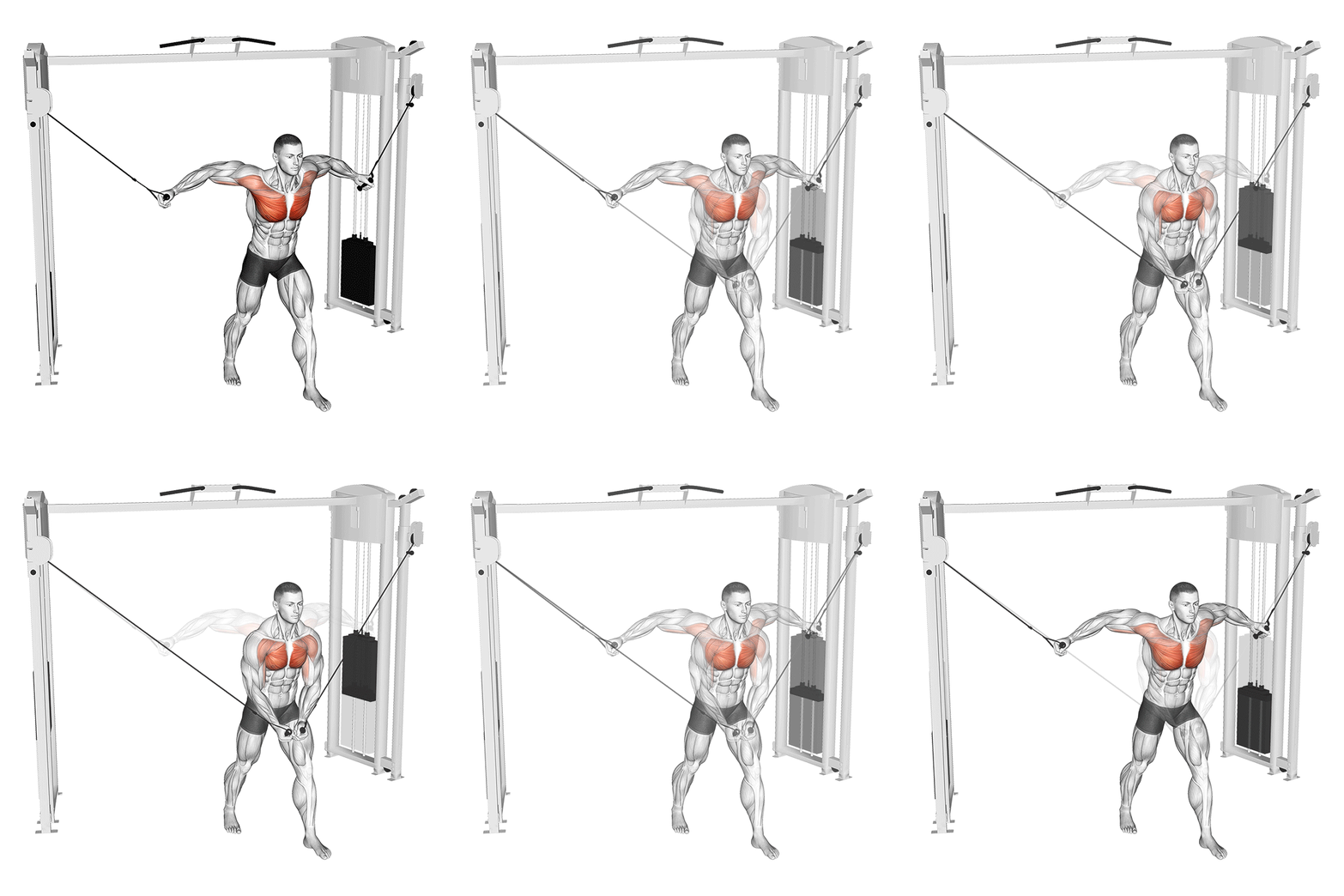
High-to-low cable fly
Standing between two high pulleys and sweeping the handles down and together hits the same lower-chest fibres with constant tension, and without a decline bench or the head-down position.
How to program it
Three protocols by goal. Pick one per cycle and aim for progression on load or distance.
| Goal | Sets × distance | Load | Rest |
|---|---|---|---|
| Hypertrophy | 3 × 10-12 | Light, RPE 8 | 90 s |
| Time under tension | 3 × 8, 3 s descent | Light | 90 s |
| High-rep finisher | 2 × 15-20 | Very light, RPE 9 | 60 s |
Decline Dumbbell Fly FAQ
Does the decline fly really target the lower chest?
The bias is real but modest. The head-down angle lines the arc up with the lower, sternocostal fibres, so they take a larger share of the work than on a flat bench; the rest of the pec still contributes on every rep. Treat it as a way to emphasise a lagging region inside a complete chest programme, not as a laser that carves a specific area.
Is the decline fly easier on the shoulders than the flat fly?
Often, yes. The decline keeps the upper arms slightly lower relative to the torso at the bottom, which many lifters experience as less pinching in the front of the shoulder than a deep flat fly. It is not a free pass: keep the elbow bend, stop at a pec stretch rather than at the end of your mobility, and the comfort advantage holds.
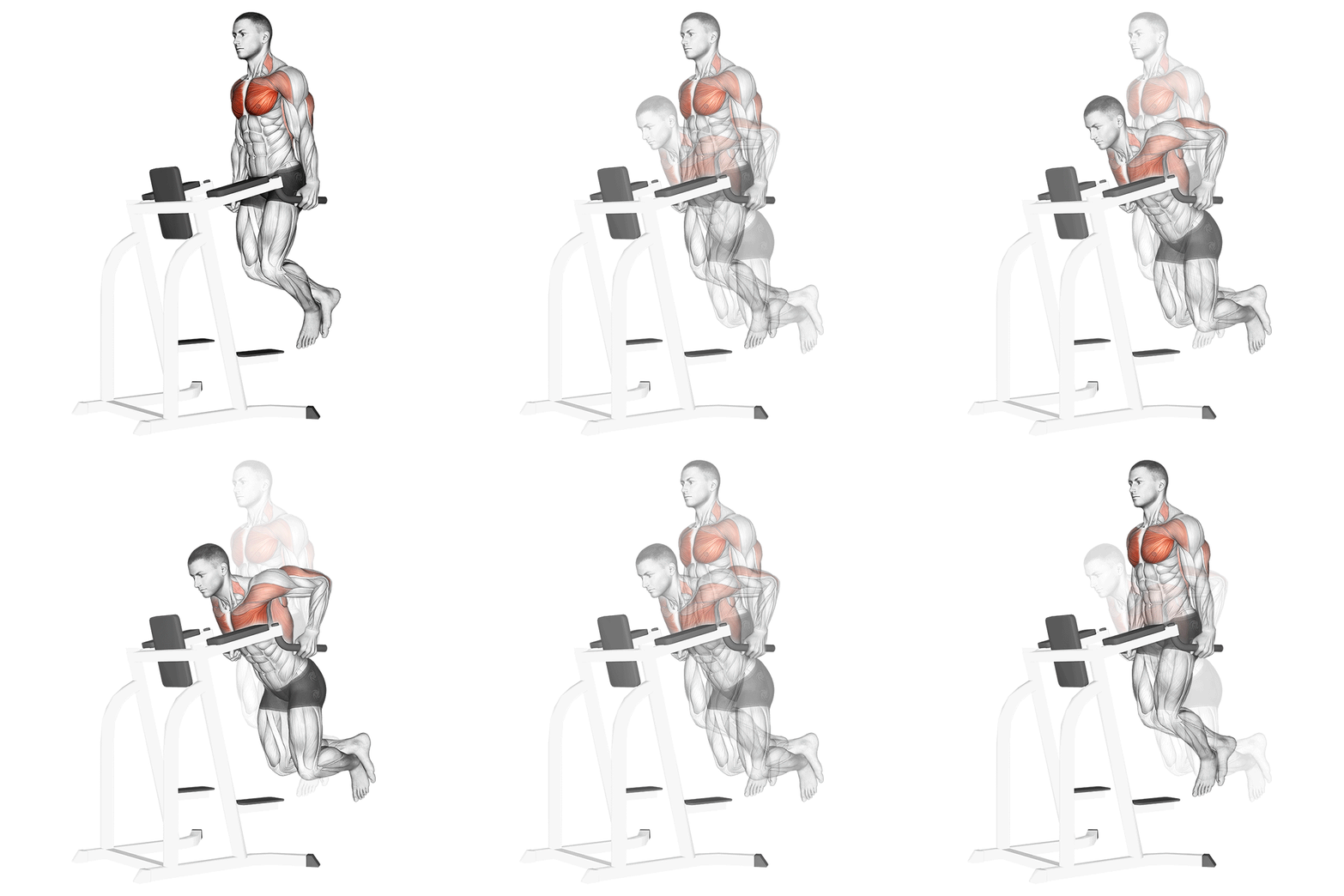
Decline flys or dips for the lower chest?
Different jobs. Dips are a compound you can load heavy and progress for years; they build the lower chest along with triceps and shoulders. The decline fly isolates the same region with light weights, a long stretch and almost no fatigue elsewhere. In a well-built programme, dips take the heavy slot and decline flys add targeted volume behind them.
Why do I feel pressure in my head on a decline bench?
With your head below your heart, blood pressure in the skull rises, and holding your breath amplifies it sharply. Keep the decline at 15-30 degrees, exhale on every squeeze, keep sets short rather than marathon length, and sit up slowly between them. If you have blood pressure or eye conditions, clear decline work with a doctor first.