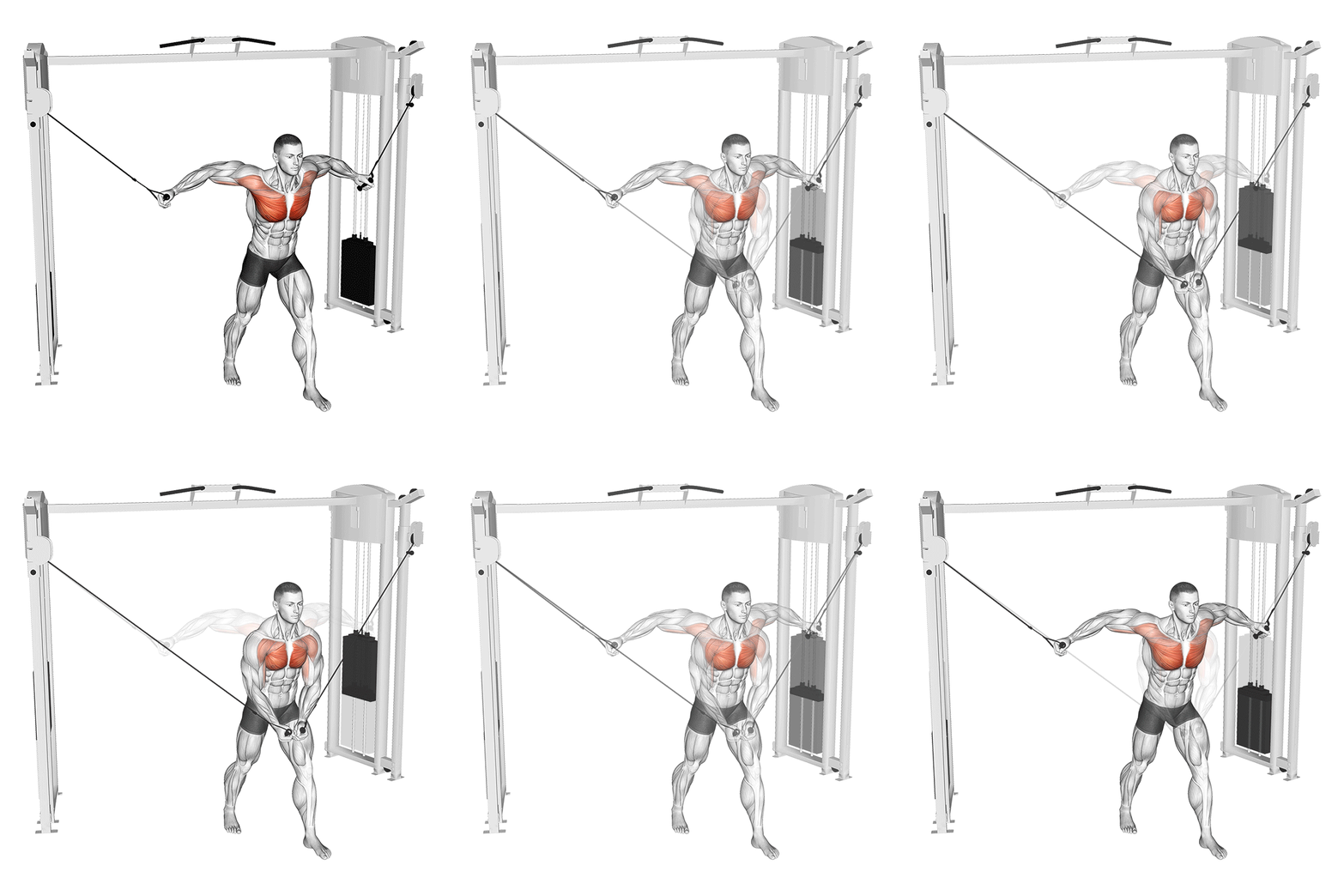
What is the high-to-low cable chest fly?
The high-to-low cable chest fly uses two cable pulleys set above shoulder height. With a handle in each hand, you step forward into a slight stagger and pull the handles down and across the body until they meet near the hips. The cables keep constant tension on the lower chest fibres through the full range, something dumbbells can't match. It's the best isolation tool for the bottom edge of the pec, the area that gives the chest its visible square outline.
How to do the high-to-low cable chest fly
- 1
Set both pulleys above shoulder height
Roughly head-height or slightly higher. Attach single D-handles. Grab one in each hand, palms facing down.
- 2
Step into a stable stance
Step one foot forward into a soft split stance. Lean the torso forward 10-20°, slight bend in the elbows.
- 3
Pull down and across
Arc the hands down toward your hips, finishing with wrists crossed in front of the pelvis. Squeeze the chest hard for one count.
- 4
Return with control
Take three seconds to let the cables pull the hands back to start, keeping the slight elbow bend constant. Feel the stretch, don't lose tension.
Pro tip
Cross your wrists at the bottom. That extra inch of overlap turns on the inner pec like nothing else, and it's the difference between a flat finish and a striking one.
Common mistakes
Pressing instead of flying.
If the elbows bend and straighten, it's a cable press. Keep the elbow angle locked.
Standing too far forward.
If the cables are slack at the top, you've stepped past the pulley line. Step back until they're under tension before rep one.
Hunching the shoulders.
Shoulders rolling forward steals tension from the chest. Pack the shoulder blades down and back.
Too much weight.
Cable flies are an isolation move. If you can only do 6 reps with form, drop the stack two pegs.
Variations and progressions
Easier
Single-arm version
One side at a time, free hand on the hip. Easier to feel the pec contracting, great for fixing imbalances.
Harder
Drop set finisher
Three drops in a row, reducing the stack by 25% each time, no rest. Brutal lower-chest pump.
No cables?
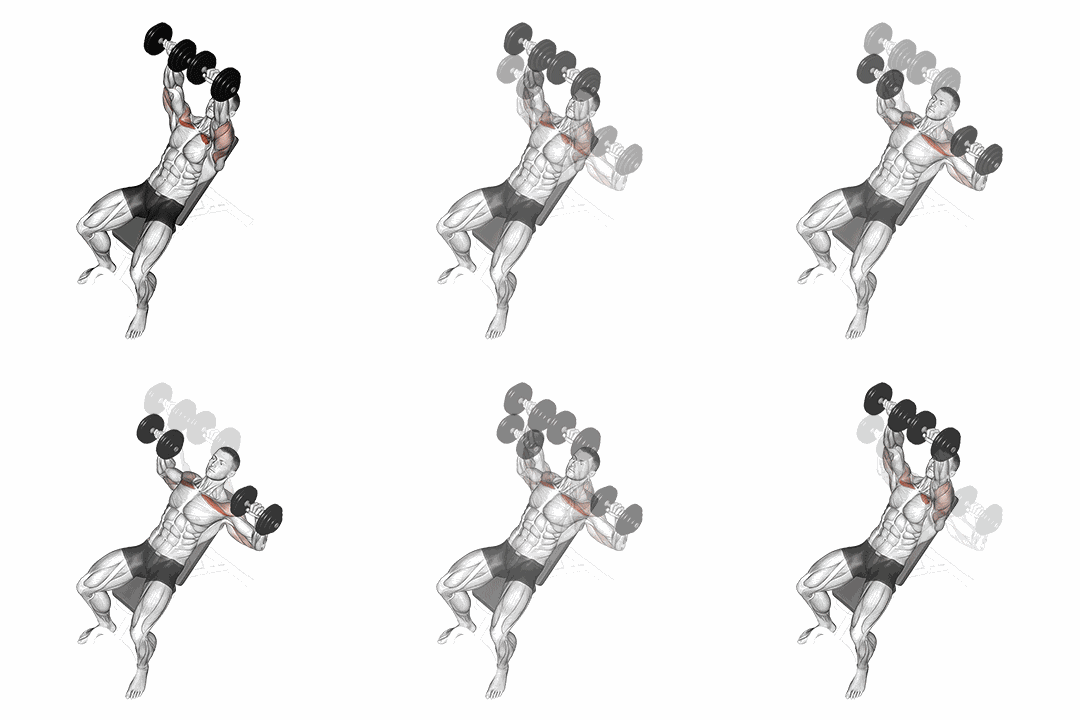
Decline dumbbell fly
Bench set to a slight decline, dumbbells arcing out and back. Same lower-chest emphasis without the constant tension.
How to program it
Three protocols by goal. Pick one per cycle and aim for progression on load or distance.
| Goal | Sets × distance | Load | Rest |
|---|---|---|---|
| Hypertrophy | 4 × 12 | RPE 8 | 60-90 s |
| Pump / finisher | 3 × 15-20 | Light, slow tempo | 45 s |
| Pre-exhaust | 2 × 15 before bench | Light | 60 s |
High-to-Low Cable Chest Fly FAQ
Cable fly or dumbbell fly?
Cables win for constant tension and joint comfort. Dumbbells give a deeper stretch at the bottom but lose tension at the top. The honest answer: do both. Cables on volume days, dumbbells on heavier days. The chest doesn't care which tool, it cares about total quality reps.
Does this really build the lower chest?
Yes. The high-to-low arc matches the fibre direction of the lower pec, the same way decline pressing does. Combined with dips and decline work, this is the sharpest tool for the bottom edge of the chest. Two sets twice a week is enough to see a change in eight weeks.
Should I cross my hands at the bottom?
Yes, alternate which hand is on top each rep. Crossing recruits more of the inner-chest fibres and gives a noticeably better contraction. Hold the cross for one full count before opening back up. It's the single biggest cue to make this exercise feel right.