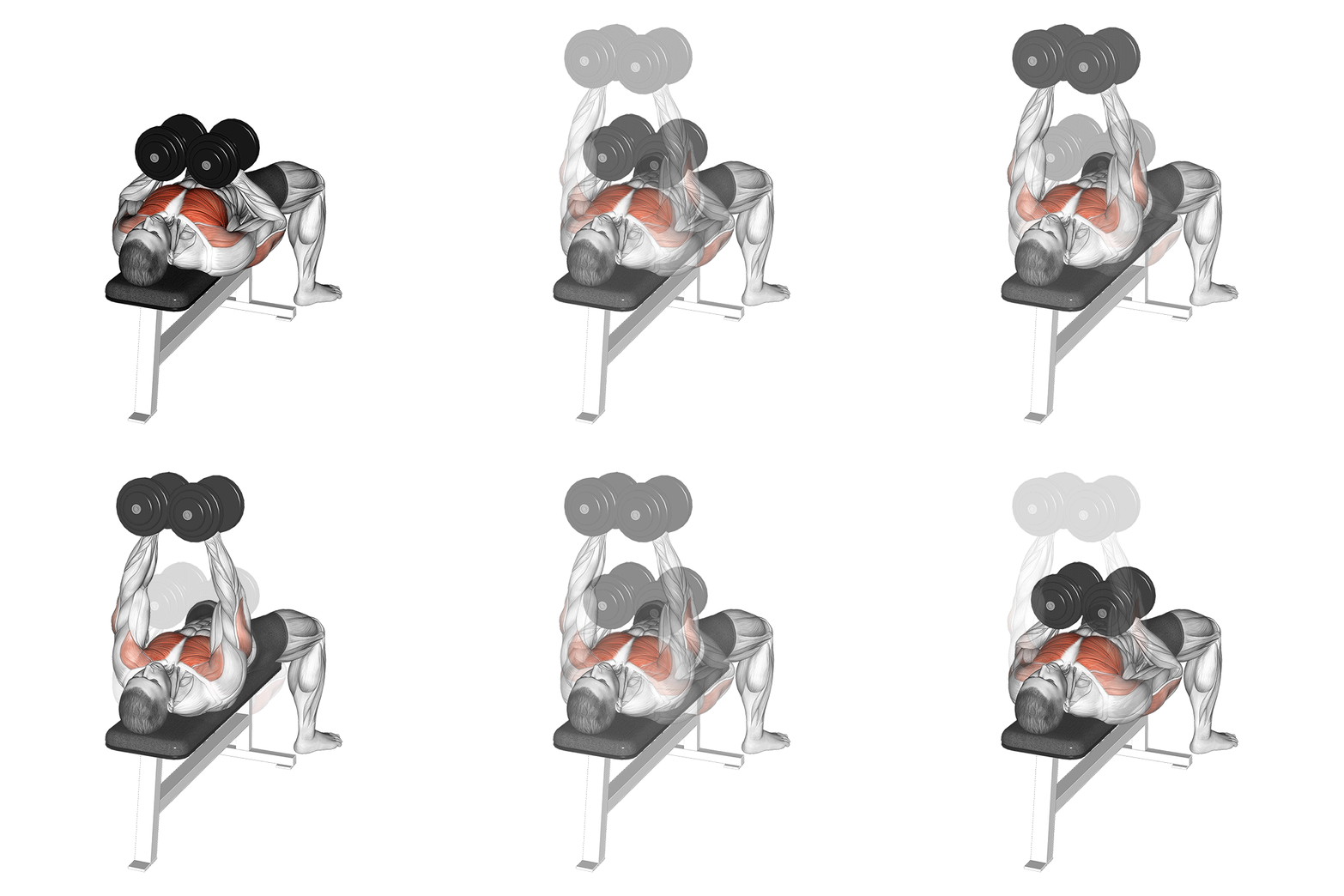
What is the close grip dumbbell press?
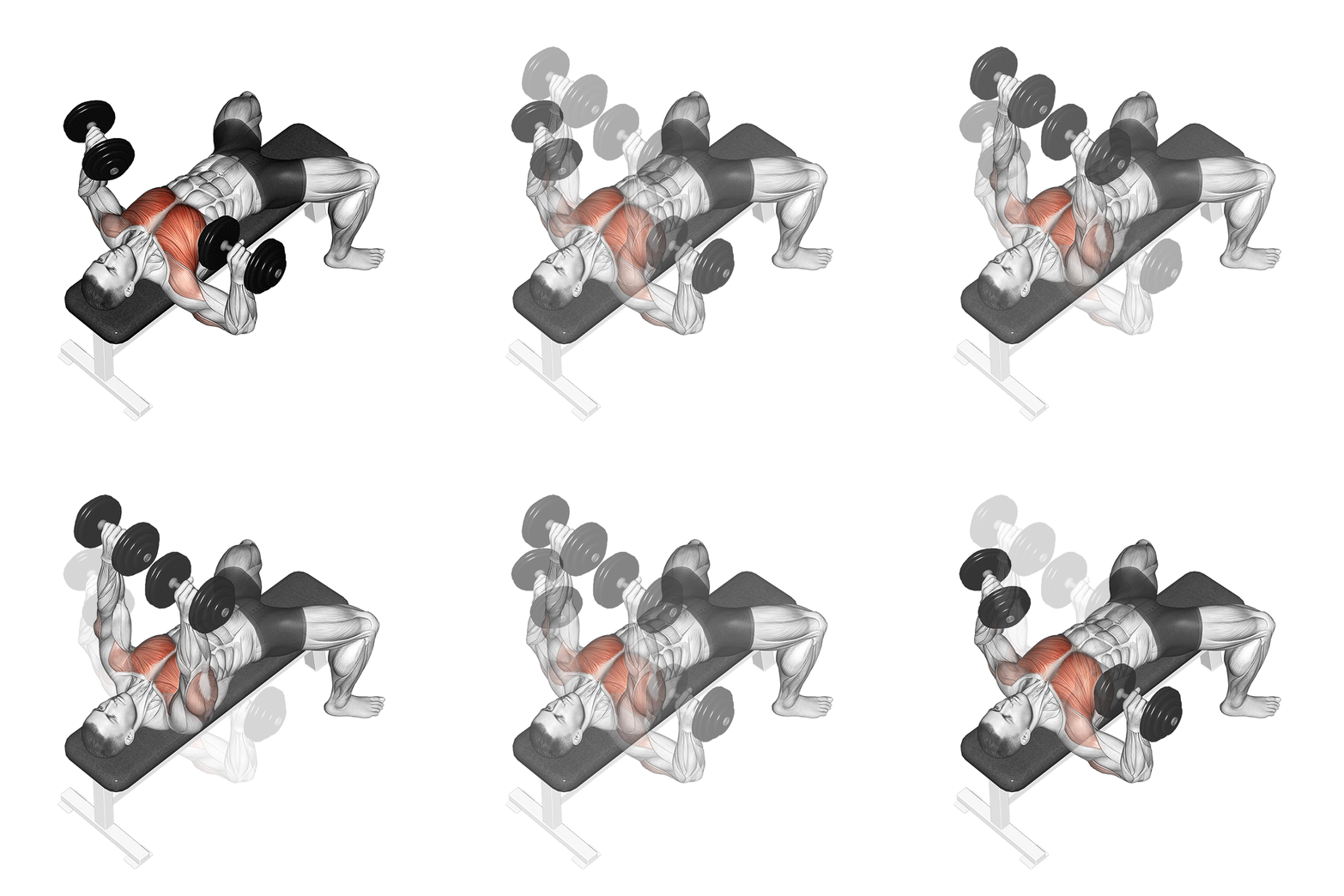
The close grip dumbbell press, often called the squeeze press, is a flat dumbbell press performed with two dumbbells held together over the chest, palms facing each other, while you actively crush them inward for the whole set. That inward drive adds a constant adduction demand on top of the press, so the pecs never get a rest at lockout the way they do in a normal bench. The elbows stay tucked, which also makes it one of the most shoulder- and elbow-friendly presses available. Use it as a chest-focused accessory, a mind-muscle teacher, or a pressing option when your joints are cranky.
How to do the close grip dumbbell press
- 1
Set up with the dumbbells touching
Lie on a flat bench with two dumbbells pressed together over your chest, palms facing each other. Hex dumbbells sit flush and make the squeeze far easier to hold.
- 2
Crush before you press
Squeeze the dumbbells into each other as hard as you can and keep that pressure constant. This inward drive is the exercise; the press is just what you do while holding it.
- 3
Lower to mid-chest, elbows tucked
Bring the pair down the midline toward your lower chest, elbows sliding close past the ribs. The dumbbells stay glued together all the way down.
- 4
Press and keep squeezing
Drive back up to arms extended over the chest without letting the inward pressure fade. If the dumbbells drift apart at any point, the rep didn't count.
Pro tip
Choose the load with your squeeze, not your press. The right weight is one you could press for five more reps but can barely keep crushed together by the end of the set. Once the inward pressure fades, it's just a neutral-grip press.
Common mistakes
Letting the dumbbells drift apart.
The moment a gap appears, the adduction work vanishes and you're doing an ordinary press with a mediocre load. Reset the crush at the top of every rep.
Going too heavy.
This is the rare press where ego load ruins the exercise itself, not just the form. Expect to use roughly 60-70% of your usual dumbbell bench weight, sometimes less.
Flaring the elbows.
Elbows drifting wide break the tuck that makes this press joint-friendly and pull the dumbbells apart. Keep them brushing past your ribs on every descent.
Racing through the reps.
Constant tension is the whole product here. A 2-3 second descent with a smooth press keeps the pecs loaded; fast, bouncy reps let them switch off between squeezes.
Variations and progressions
Easier
Close grip dumbbell floor press
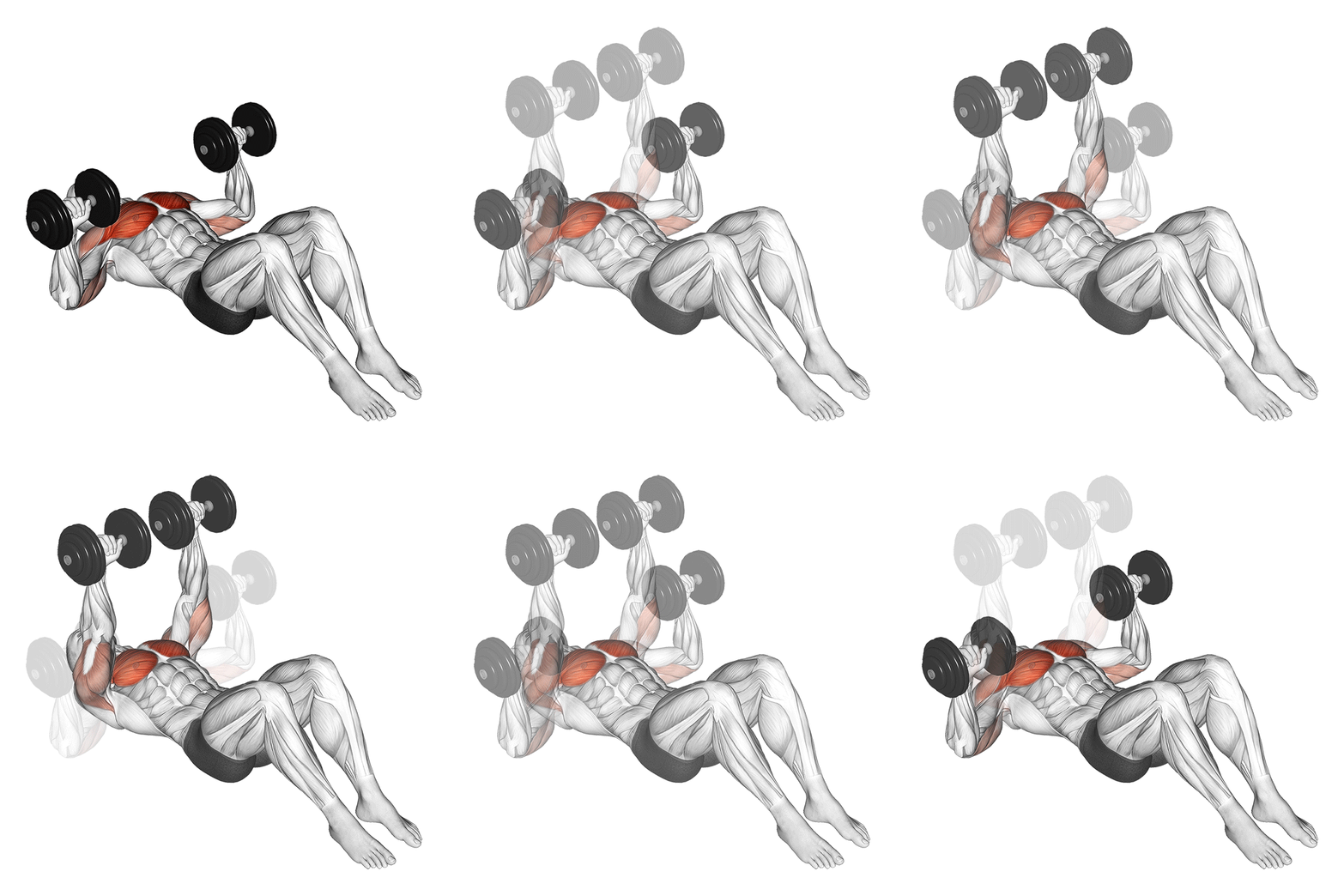
The same squeeze lying on the floor. The shortened range and the dead stop when the elbows touch down make it gentler on the shoulders and simpler to control.
Harder
Incline squeeze press
On a 30-degree incline the upper chest takes over and the leverage worsens. The same load feels noticeably harder, and the same rules apply.
Alternative
Svend press
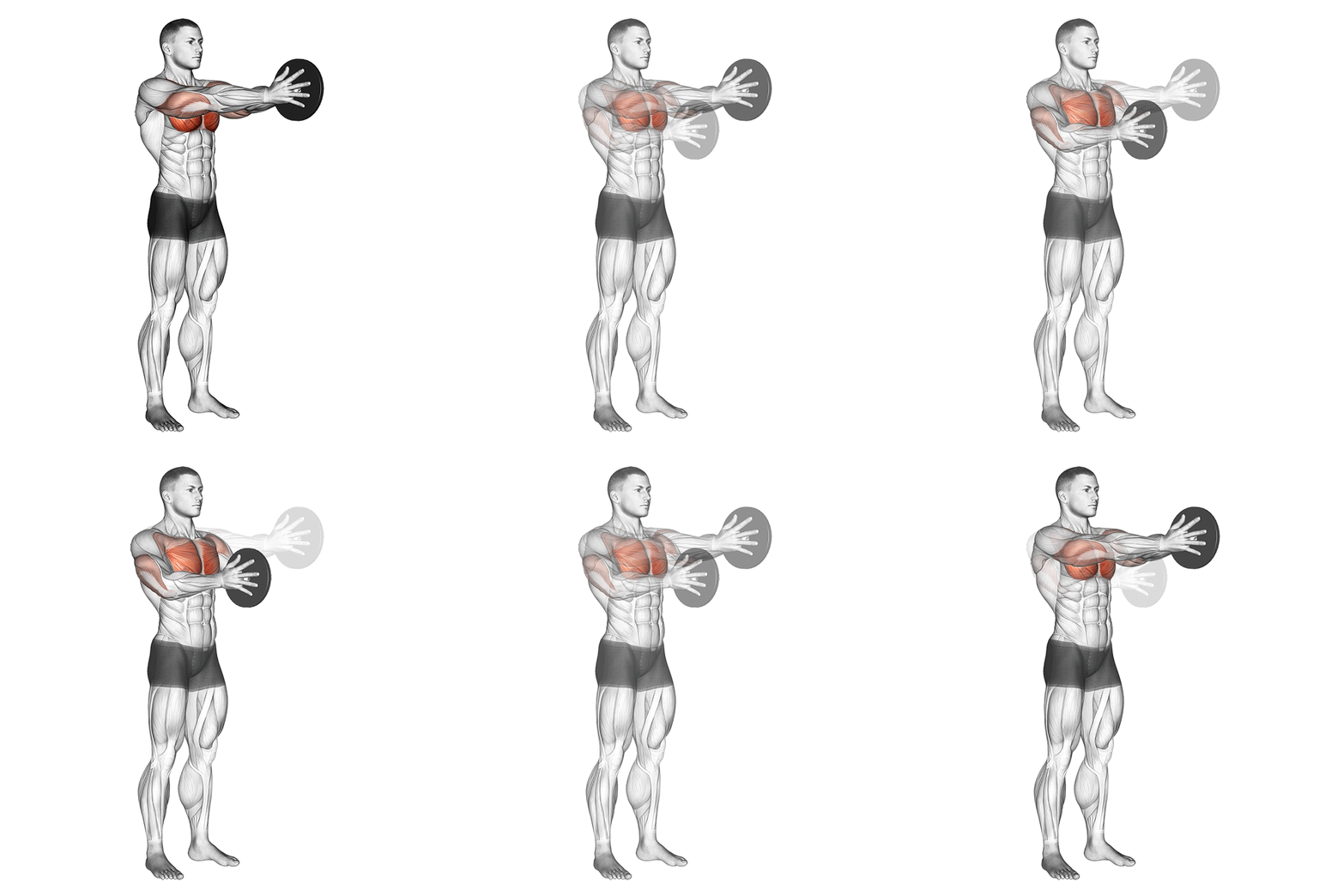
Standing, with two small plates crushed between flat palms and pressed away from the chest. The same adduction idea with nothing but a pair of plates.
How to program it
Three protocols by goal. Pick one per cycle and aim for progression on load or distance.
| Goal | Sets × distance | Load | Rest |
|---|---|---|---|
| Hypertrophy | 3-4 × 8-12 | Light to moderate | 90 s |
| Pump finisher | 3 × 12-15 | Light | 60 s |
| Shoulder-friendly volume | 4 × 10, 3 s descent | Moderate | 2 min |
Close Grip Dumbbell Press FAQ
Does the squeeze press really target the inner chest?
You can't isolate one region of a muscle whose fibres all run across the chest, so "inner chest" training is mostly a myth. What the squeeze does deliver is pecs kept maximally contracted at lockout, where a normal press lets them unload. You get more total pec tension per rep, which is a real benefit, just not a regional one.
Close grip dumbbell press or close grip bench press?
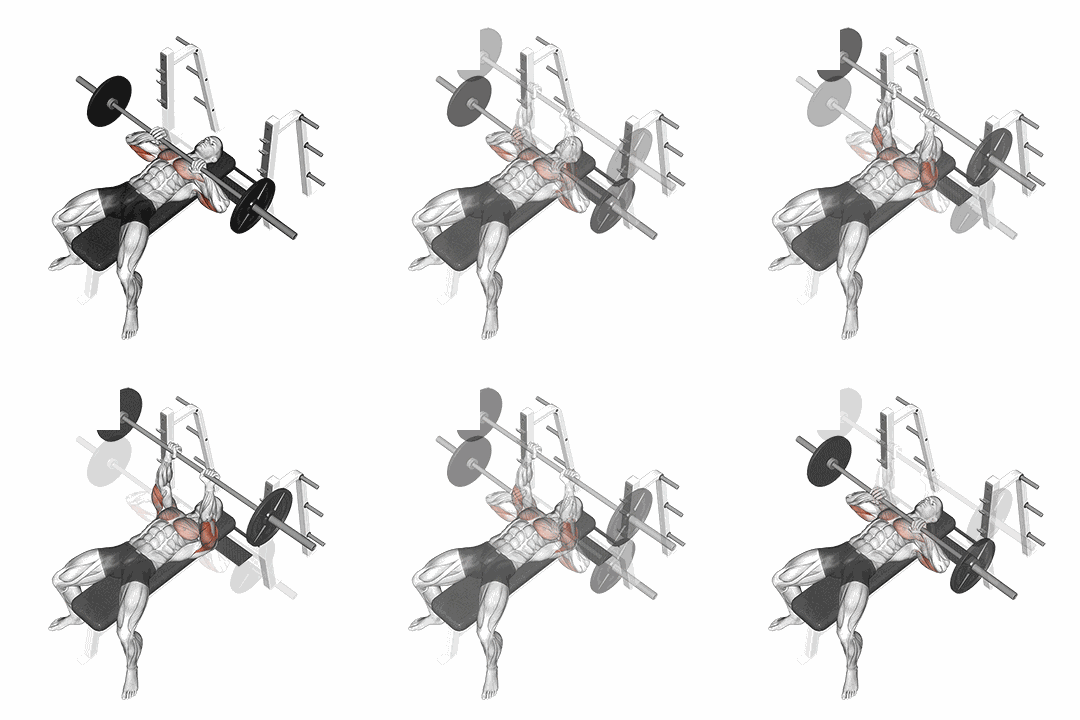
Different tools. The barbell close grip bench is a heavy, triceps-dominant strength lift. The dumbbell squeeze version is a moderate-load chest accessory built around constant adduction. If you want pressing strength, take the barbell; if you want pec tension with happy elbows, take the dumbbells.
What dumbbells work best?
Hex or flat-sided dumbbells are ideal because the flat faces sit flush and stay put. Round dumbbells still work but tend to roll against each other as you fatigue, so plan on going a touch lighter and gripping the squeeze harder.
Can I use it as my main chest exercise?
As your only press it undersells your strength, because the squeeze caps the load well below what your pecs can press. Run it as the second or third chest movement after a heavier press, or as the main movement during a deload or while working around shoulder or elbow pain.