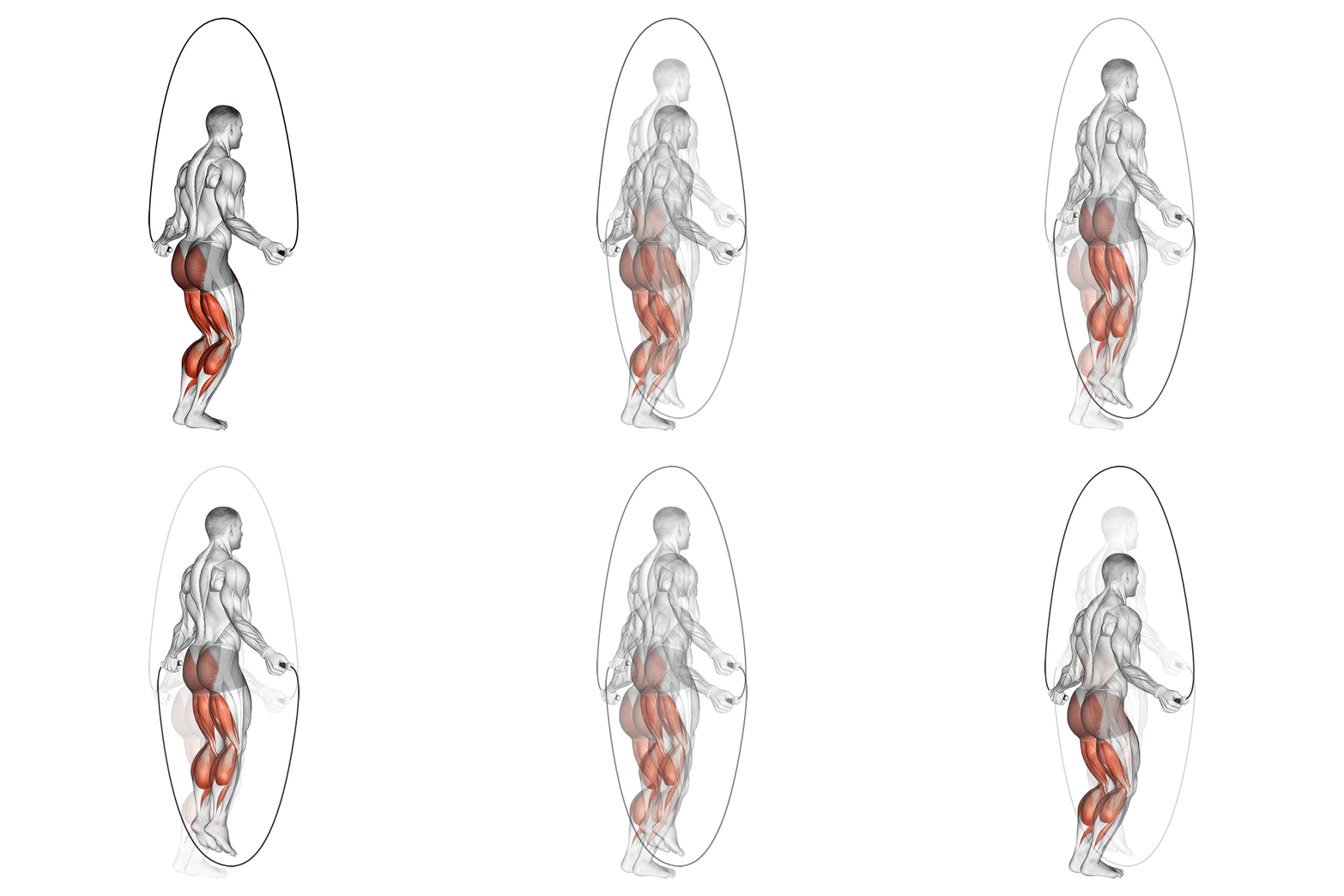
What is the jump rope?
Single-under jumping rope is a low-cost, high-yield foundation skill. One rope pass per jump, on the balls of the feet, small hops, wrists doing the work. It builds calf endurance, ankle stiffness, foot rebound, coordination, and a baseline of aerobic fitness. It's also the prerequisite to double-unders, which you'll never crack consistently without 5 to 10 minutes of unbroken singles in the bank.
How to do the jump rope
- 1
Size the rope
Stand on the middle. Handles should reach your armpits, no higher. Too long and you trip; too short and you whip your shins.
- 2
Spin from the wrists
Elbows tucked, forearms relaxed, the rope turns with small wrist circles. Spinning from the shoulders burns you out in 60 seconds.
- 3
Jump small
Two to five centimetres off the ground is enough. Stay on the balls of the feet, heels never touch.
- 4
Find the rhythm
Aim for 120 to 180 jumps per minute. Steady and quiet, the sound of the rope hitting the floor should be a soft tick, not a slap.
Pro tip
Practise barefoot or in flat shoes on a wood floor. Cushioned trainers steal the rebound feedback you need to develop ankle stiffness.
Common mistakes
Jumping too high.
Cooks the calves in two minutes. Stay close to the floor.
Arms wide and flapping.
Wastes energy and makes the rope unstable. Elbows in, hands at hip level.
Looking down.
Tilts your spine forward and shortens your jump. Eyes on the wall, not on your feet.
Heel striking.
Kills the elastic rebound and beats up the joints. Live on the balls of the feet.
Variations and progressions
Easier
Bounce without rope
Practise the small two-foot hop without a rope first. Build the cadence and ankle stiffness before adding the timing challenge.
Harder
Boxer skip and high knees
Alternate feet, drive knees high, or add side-to-side. Bigger calf demand and aerobic load.
No rope?
Pogo hops on the spot
100 small pogo hops, mimicking the rope rhythm. Trains the same ankle stiffness without the coordination piece.
How to program it
Three protocols by goal. Pick one per cycle and aim for progression on load or distance.
| Goal | Sets × distance | Load | Rest |
|---|---|---|---|
| Calf endurance | 5 × 2 min | Steady | 60s |
| Conditioning finisher | 10 min unbroken | Z2-Z3 | None |
| Speed work | 10 × 30s sprint / 30s rest | Max RPM | 30s |
Jump Rope FAQ
How long until I can jump 10 minutes unbroken?
Most beginners take three to six weeks of daily 5-minute sessions. The limiter is calf endurance and coordination, both of which adapt fast. Once you crack 5 minutes unbroken, doubling that takes about another two weeks.
What rope should I buy?
Start with a basic PVC speed rope, around 20 to 30 euros. Avoid weighted ropes until you have clean technique. Cable ropes are faster but unforgiving on misses, they'll cut your shins. Adjustable length is non-negotiable.
Will jump rope replace running for cardio?
For pure cardiovascular adaptation, mostly yes. For running-specific economy and mechanics, no. Use the rope as a supplement on rest days, in warm-ups, or when you can't run. Don't expect race-day pace gains without actually running.