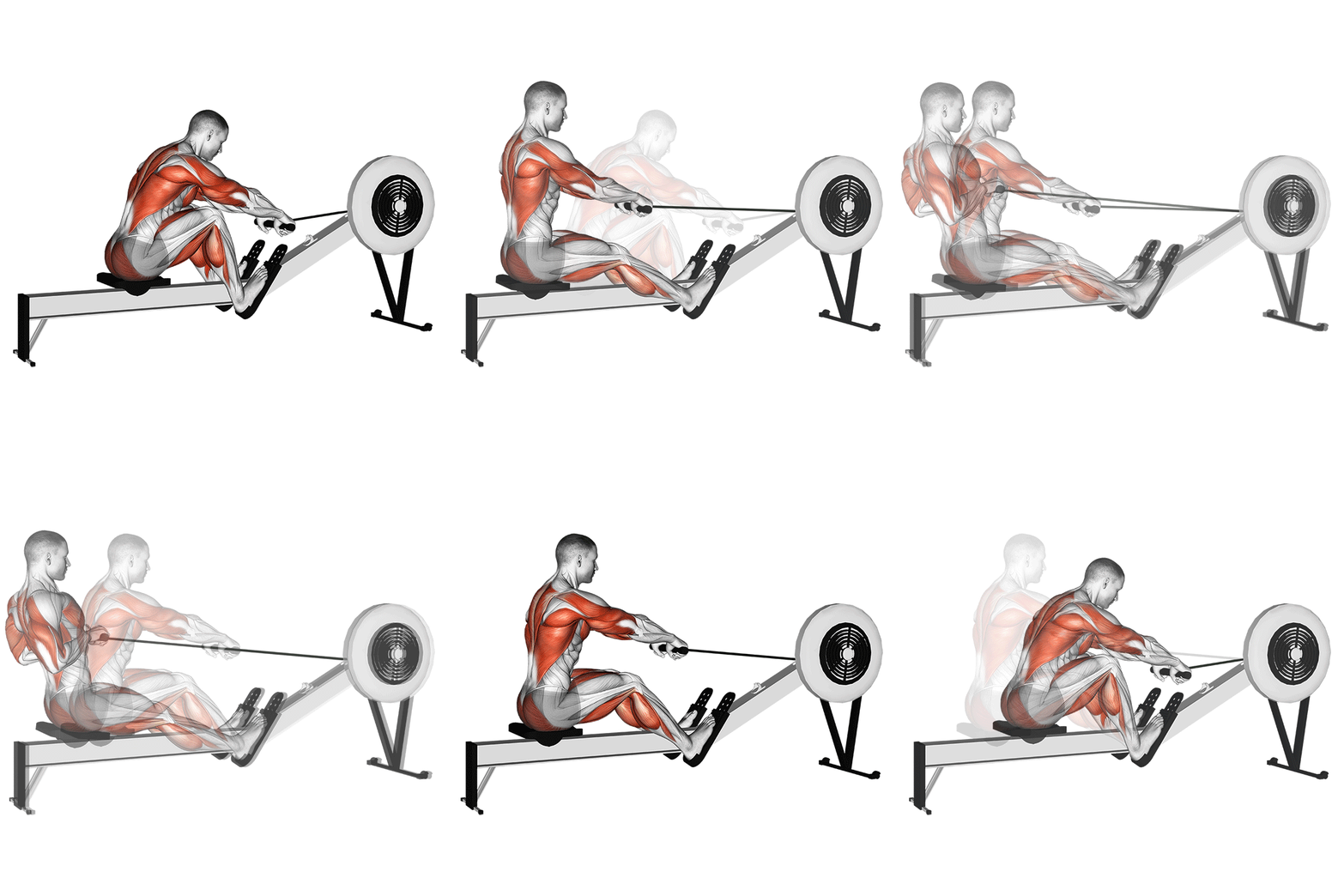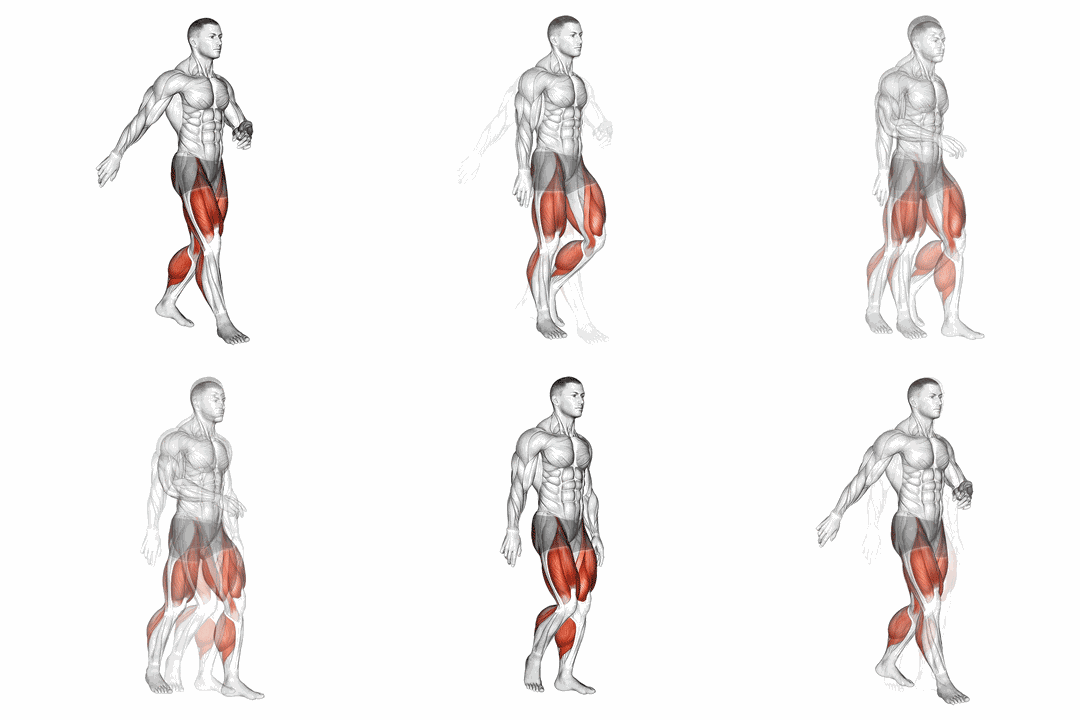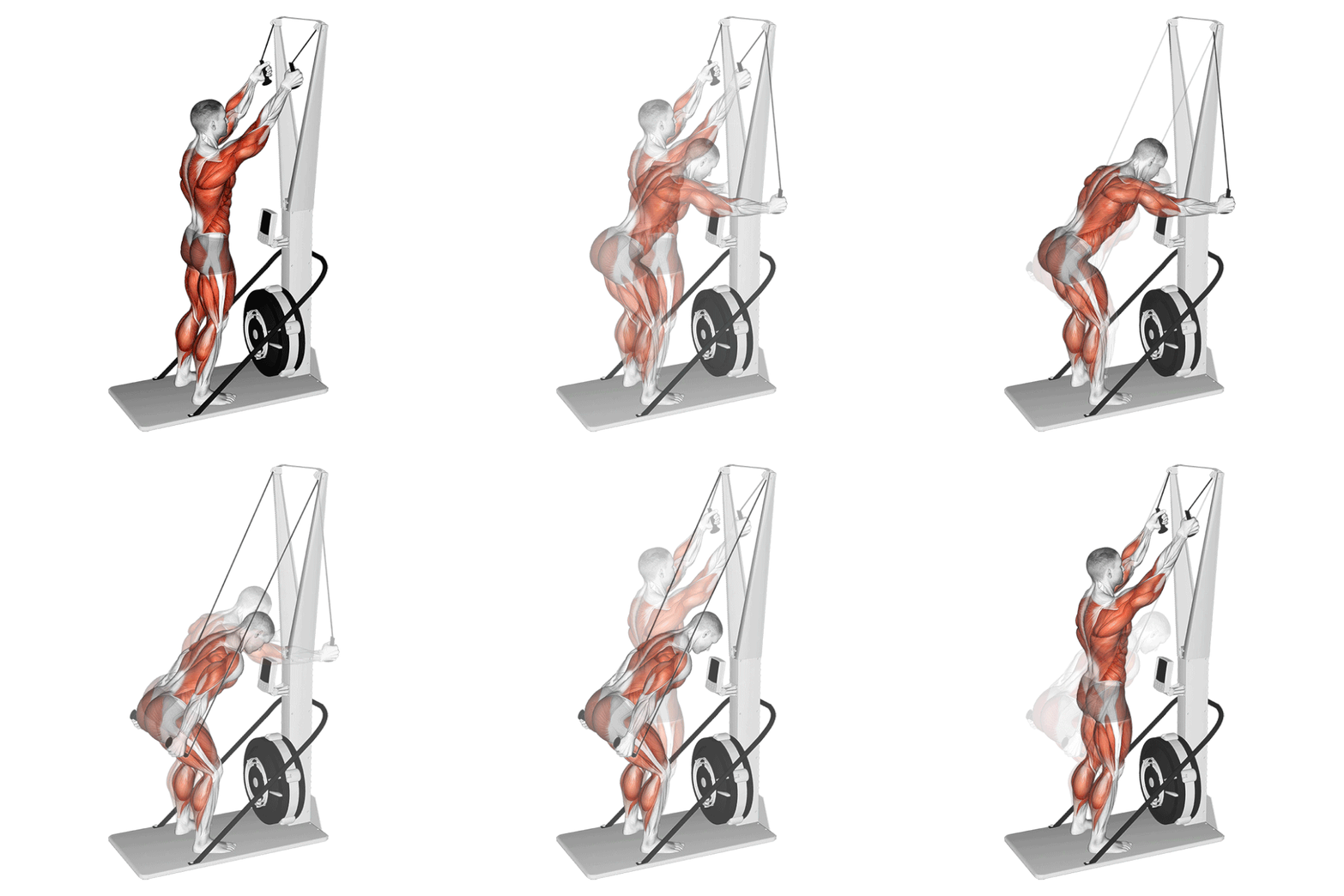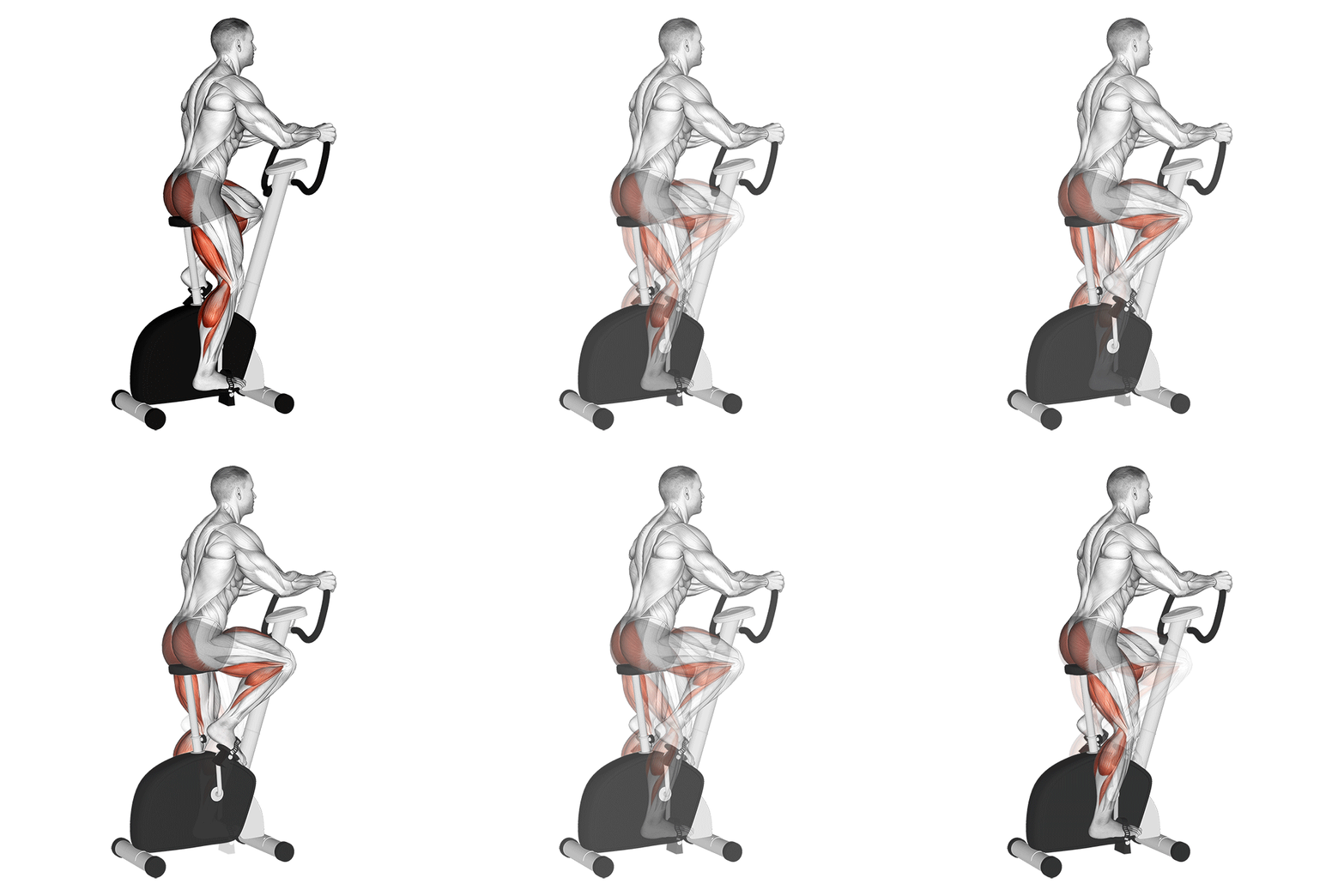
What is the stationary bike?
The stationary bike is an upright or recumbent cardio machine with a fixed seat and pedals. Resistance comes from a magnetic, air or friction system. It loads the quads, glutes and calves while sparing the joints, which makes it ideal for Zone 2 base work, easy spin recovery between hard sessions, and aerobic conditioning for athletes recovering from running injuries. Less skill-dependent than rowing or ski erg, which is a feature for beginners and a limitation for advanced engine work.
How to do the stationary bike
- 1
Set the seat height
Seated, leg almost fully extended at the bottom of the pedal stroke, slight bend at the knee. Hip should not rock side to side as you pedal.
- 2
Position handlebar
Hands on the bars without locking the elbows, shoulders relaxed. Spine long, ribs over hips.
- 3
Find your cadence
Aim for 80 to 95 rpm for most aerobic work. Lower cadence with higher resistance for strength-endurance, higher cadence with light resistance for recovery.
- 4
Breathe and pace
Nose breathing if Zone 2, conversational. Steady output: don't surge or coast. The bike rewards consistent pacing more than bursts.
Pro tip
The bike is your friend on hard-running weeks. Replace one easy run with 60 to 90 minutes of Zone 2 spinning and you keep the aerobic adaptation without the impact load on shins and knees.
Common mistakes
Seat too low.
Knees overflex and the quads burn before the engine. Raise the seat until the leg almost extends at the bottom.
Rocking the hips.
If the pelvis rocks side to side, the seat is too high or pedal stroke is uneven. Lower the seat slightly and even out the cadence.
Death-gripping the bars.
Tight grip and shrugged shoulders waste energy and tire the upper body. Light hands, low shoulders.
Coasting through the easy bits.
Easy doesn't mean zero. Zone 2 means steady, sustained output. Coasting drops you below the training stimulus.
Variations and progressions
Easier
Recumbent bike
Reclined seat with back support, easier on the lower back and ideal for older athletes or those returning from injury.
Harder
Spin bike intervals
30/30 or 40/20 intervals at high resistance. Lung-burner, brutal aerobic stimulus in 20 minutes.
Want more upper body?
Assault bike (air bike)
Air bike adds upper-body push-pull and scales infinitely with effort. Tougher and more total-body, less recovery-friendly.
How to program it
Three protocols by goal. Pick one per cycle and aim for progression on load or distance.
| Goal | Sets × distance | Load | Rest |
|---|---|---|---|
| Zone 2 base | 60-90 min | 60-70% HRmax | None |
| Recovery spin | 20-40 min | 50-60% HRmax | None |
| Intervals | 8 × 3 min hard | 85-90% HRmax | 90 s easy |
Stationary Bike FAQ
Stationary bike or treadmill for Zone 2?
Bike wins for most athletes. Zone 2 demands long sessions at low intensity, and running for 90 minutes on a treadmill adds impact load that drains recovery from your hard sessions. The bike gives the same aerobic adaptation with zero pounding. Use the treadmill for tempo and intervals, the bike for base.
Will biking transfer to running?
Aerobic adaptation transfers strongly: bigger heart, denser mitochondria, better fat oxidation. Running-specific mechanics, tendon stiffness and impact tolerance do not. So use the bike for engine work, but keep enough running in the program for the legs to stay race-ready. The bike is a multiplier, not a replacement.
How hard should a recovery ride feel?
Embarrassingly easy. Heart rate under 60 percent of max, breathing through the nose, full conversation possible. If your legs feel anything other than gently flushed after 30 minutes, you went too hard. The goal is blood flow and recovery, not training stress.