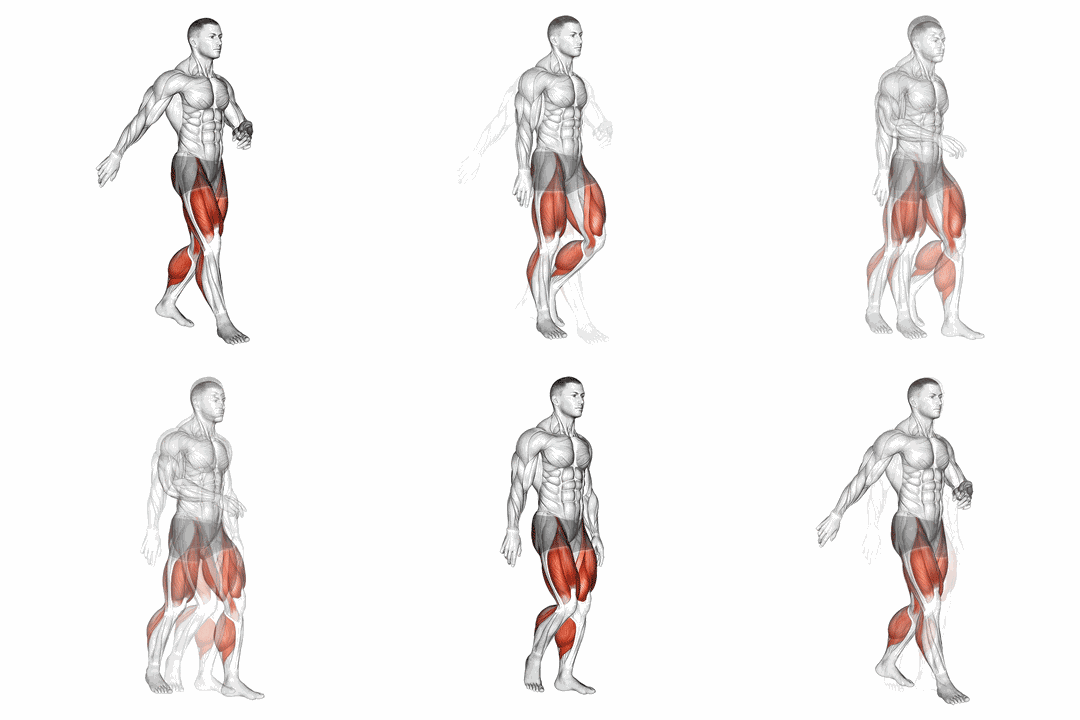
What is the walking?
Walking is sustained low-intensity locomotion at conversational pace, typically 4 to 6 km/h. It sits in Zone 1, below the threshold where breathing changes. For athletes it acts as active recovery the day after hard sessions, as supplementary aerobic volume that doesn't add joint or fatigue cost, and as a non-trivial driver of total daily energy expenditure. For general health, 7000 to 10000 steps a day cuts cardiovascular risk meaningfully. It's the cheapest, most repeatable training stimulus available.
How to do the walking
- 1
Pick a pace you can sustain
Brisk enough to feel intentional, slow enough to hold a full conversation. Roughly 5 to 6 km/h for most adults.
- 2
Walk tall
Spine long, eyes ahead, arms swinging naturally. Don't hunch, don't tense the shoulders.
- 3
Step from the hip
Drive the step from the glute and hamstring, not just the knee. Push off the back foot fully before lifting it.
- 4
Breathe through the nose
Nose breathing is the simplest check that you're truly in Zone 1. If you have to switch to mouth breathing, slow down.
Pro tip
Stack walks around your workday: 10 minutes after each meal, a longer walk in the morning. Three blocks of 20 minutes beat one block of 60 in real life because consistency wins.
Common mistakes
Treating walks as low-value time.
Walks aren't junk volume. The aerobic and recovery benefits are real, and they accumulate. Schedule them deliberately.
Turning recovery walks into workouts.
If your recovery walk turns into a hike with elevation and a fast pace, it's no longer recovery. Keep Zone 1 truly easy.
Phone-glued slouching.
Walking hunched over a screen makes the upper back ache and undoes posture work. Pocket the phone for at least half the walk.
Underestimating the volume.
Sedentary days can sneak in at 3000 steps without you noticing. Track for one week to see the baseline, then build from there.
Variations and progressions
Easier
Indoor flat walk
Treadmill at 0% incline, 4 to 5 km/h. Perfect for active recovery days when you don't want weather or terrain as a variable.
Harder
Rucking or incline walk
Add a weighted backpack (8 to 20 kg) or walk on a 10-15% incline. Major aerobic and posterior-chain stimulus without losing the low-impact benefit.
Indoor weather?
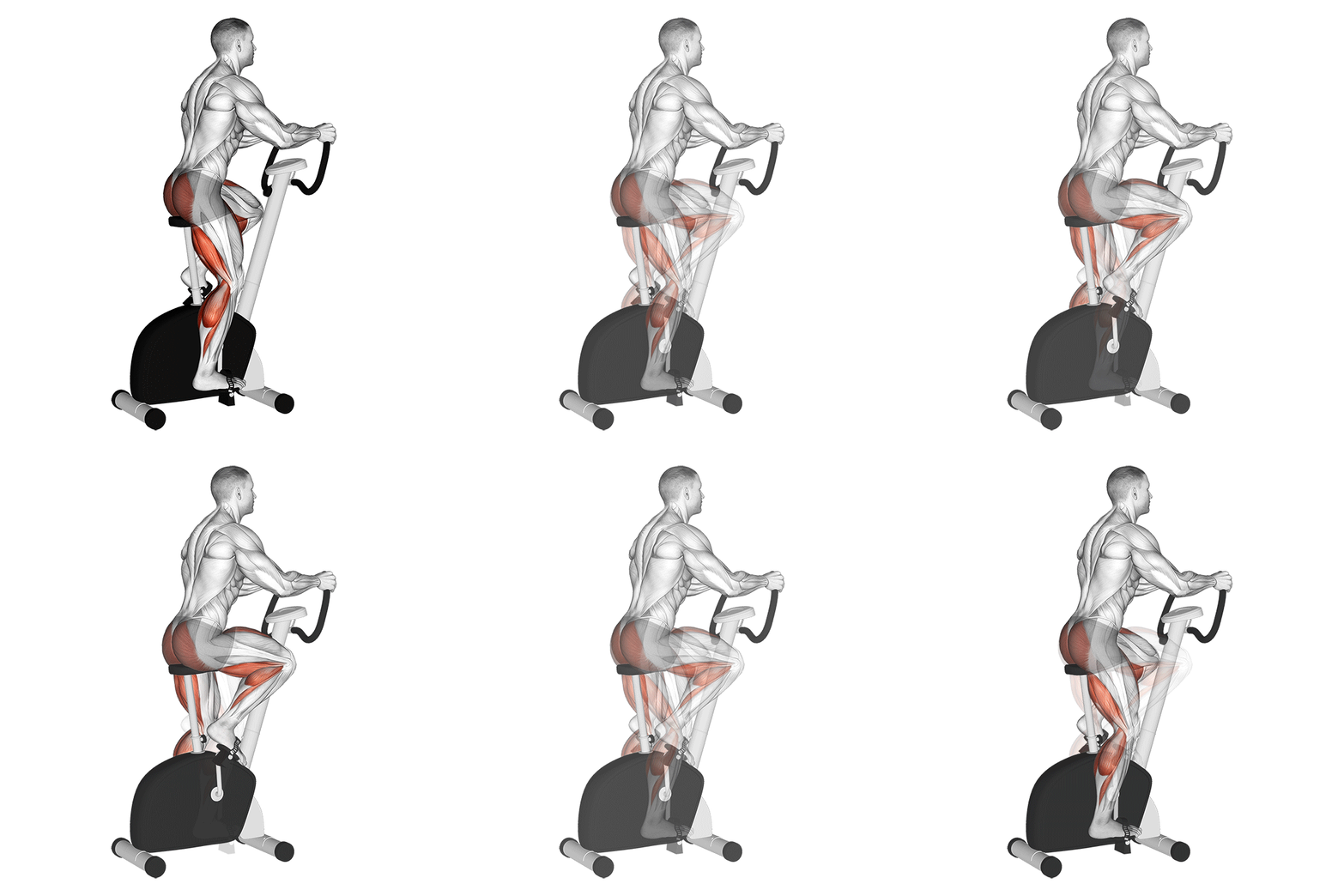
Stationary bike at low resistance
Same Zone 1 aerobic and recovery effect, indoors, on bad weather days. Pick whichever fits your schedule.
How to program it
Three protocols by goal. Pick one per cycle and aim for progression on load or distance.
| Goal | Sets × distance | Load | Rest |
|---|---|---|---|
| Daily baseline | 8000-10000 steps/day | Bodyweight | Spread across day |
| Active recovery | 30-45 min easy | Bodyweight, Z1 | Day after hard session |
| Aerobic top-up | 60-90 min long walk | Bodyweight or 8-12 kg ruck | Weekend, 1× per week |
Walking FAQ
Is walking actually training?
For untrained adults, yes, walking absolutely is training. For trained athletes, daily walking isn't a primary stimulus but it's a high-value recovery and aerobic top-up tool. It also stacks with everything else without adding fatigue. Don't ask if walking trains you, ask what role it plays. The answer is almost always: a useful one.
Do I really need 10000 steps a day?
The 10000-step target is marketing in origin, not science. Real data shows mortality benefits plateau between 7000 and 9000 steps for most adults, with diminishing returns past that. The exact number matters less than consistency: hitting 7000 every day beats 12000 twice a week. Track your week and lift the floor, don't chase the ceiling.
Can walking replace cardio sessions?
Partly. Walking builds the bottom of the aerobic pyramid (Zone 1, baseline), but it doesn't replace Zone 2 base work or higher-intensity intervals if you're chasing real cardio adaptations. For non-athletes aiming at general health, walking alone can be enough. For Hyrox or running performance, walking is the supporting cast, not the lead.