What is the easy run (recovery)?
An easy run is steady running at Zone 2 intensity, roughly 60-70% of your max heart rate, where you can hold a full conversation without gasping. It's the foundation of every serious endurance program. The point is mitochondrial density, capillarisation and fat oxidation, not breathlessness. In a polarized model, 60-75% of weekly mileage sits at this pace. Most amateurs run their easy days too hard and their hard days too soft, which flattens both adaptations. Stay disciplined: easy means easy.
How to do the easy run (recovery)
- 1
Set the intensity by feel
You should be able to speak full sentences without breaking breath. If you're answering in three-word bursts, you're already too fast.
- 2
Lock in cadence
Aim for 170-180 steps per minute even at slow pace. High turnover protects joints and trains the running pattern that holds up at race speed.
- 3
Stay relaxed from the neck down
Loose shoulders, soft hands, jaw unclenched. Tension burns calories you don't need to spend at this intensity.
- 4
Cap the duration, not the pace
Run by time, not distance. 45-75 minutes at Z2 builds aerobic depth without spilling into recovery cost. If pace creeps up, slow down.
Pro tip
If a heart-rate monitor says Z2 but it feels easy and you want to push, trust the monitor. Ego ruins more aerobic bases than injury does.
Common mistakes
Running too hard.
Most easy runs drift into Z3 grey zone. You get all the fatigue and almost none of the adaptation. Slow down on purpose.
Cutting the duration.
Twenty-minute easy runs barely register. The mitochondrial signal kicks in around 40-45 minutes of continuous Z2.
Skipping easy days entirely.
If every run is hard, you're training tolerance, not capacity. The base is what holds peak performance up.
Chasing the same loop.
Comparing today's pace to last week's leads to mini-races. Vary the route, vary the terrain, focus on effort.
Variations and progressions
Easier
Run-walk intervals
If continuous Z2 spikes your heart rate, alternate 4 minutes jog with 1 minute walk. Builds the base without the breakdown.
Harder
Long Z2 run
Extend to 90-120 minutes once a week. Still Z2, just longer. The duration is the stress, not the pace.
No legs today?
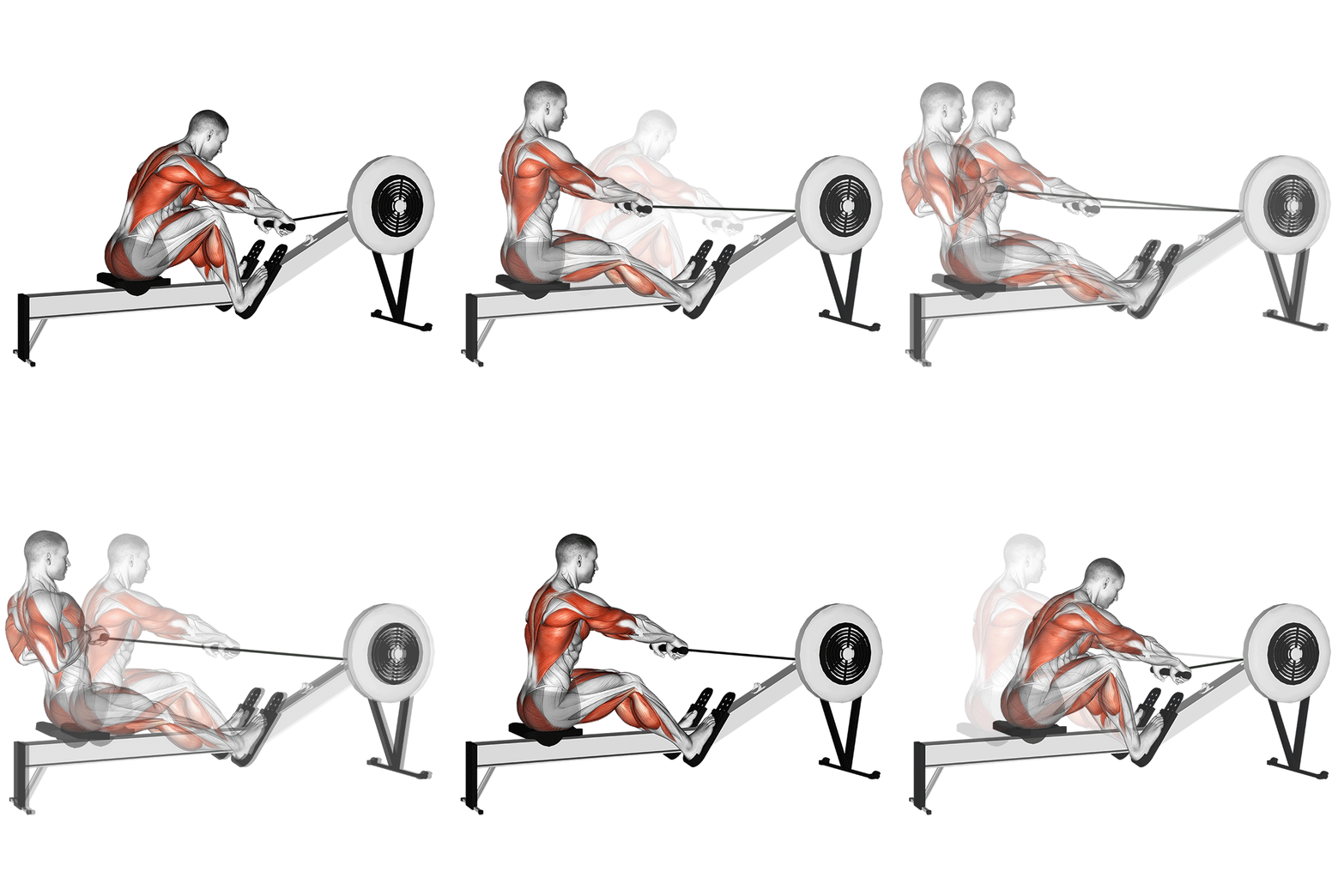
Z2 on the bike or rower
Same heart-rate target, zero impact. Useful on heavy lifting days or when shins are talking back.
How to program it
Three protocols by goal. Pick one per cycle and aim for progression on load or distance.
| Goal | Sets × distance | Load | Rest |
|---|---|---|---|
| Aerobic base build | 3-4 × 45-60 min / week | Z2 (60-70% HR max) | N/A |
| Recovery between hard sessions | 30-45 min day after intervals | Low Z2 / Z1 | N/A |
| Long endurance day | 1 × 75-120 min weekly | Z2 the whole way | N/A |
Easy Run (Recovery) FAQ
How slow is too slow for an easy run?
There's no floor as long as you stay running. If your Z2 pace is a brisk walk, that's your starting point and it will improve fast. Trying to force a faster pace just to feel like a real run is the exact mistake to avoid. Watch the heart rate, not the watch.
How do I find my Z2 without a lab test?
Use the talk test as the primary anchor: full sentences, no panting. Cross-check with 180 minus age as a rough HR ceiling, or the bottom of your watch's Z2 band. After two weeks of running by feel, your perceived Z2 will tighten up and match the data closely.
Why do my easy runs feel hard?
Three usual suspects: you're under-fuelled, you're under-slept, or your aerobic base is genuinely undeveloped. If diet and sleep are dialled, accept that the first 6-8 weeks of base building will feel awkward, then the same pace will drop your heart rate ten beats and feel automatic.