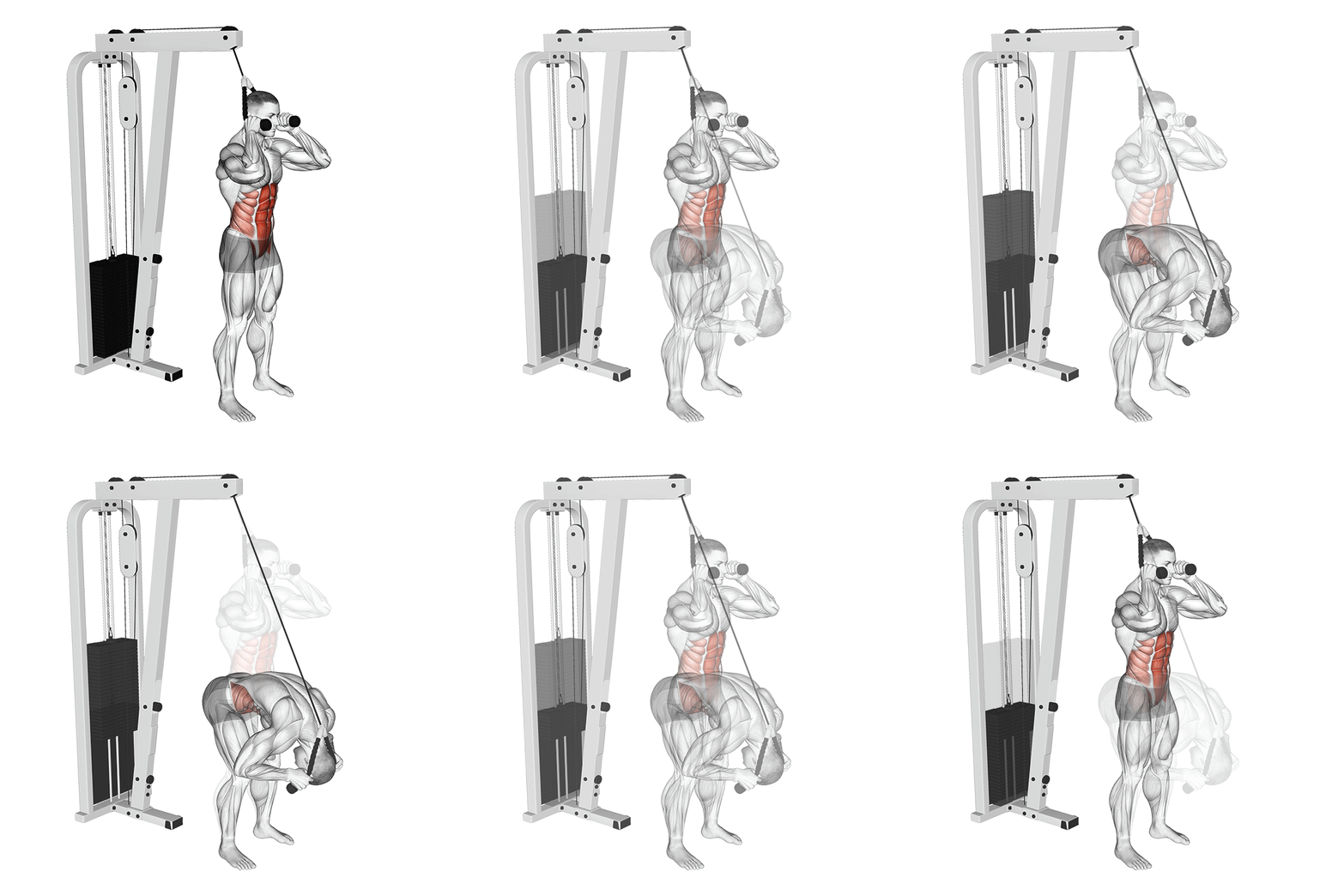
What is the standing cable ab crunch?
Standing cable ab crunch is a loaded spinal flexion movement performed at a high pulley. You face away from or kneel under the cable, hold a rope attachment behind the head, and crunch the torso down by pulling the ribs toward the pelvis. The cable provides constant tension across the full range, which lets you load the rectus abdominis like any other muscle. Unlike bodyweight crunches, this version scales easily: more plates equal more stimulus. For lifters chasing visible six-pack development or stronger trunk flexion power, it's one of the few abs exercises worth loading heavy.
How to do the standing cable ab crunch
- 1
Set the cable high and grab the rope
Attach a rope to a high pulley. Stand or kneel facing away from (or toward) the stack, rope behind the head, elbows pointing forward.
- 2
Set the start position
Lock the hips. The hips do not move during the rep. Keep a slight forward lean at the hips, ribs already pre-engaged.
- 3
Crunch by bringing ribs to pelvis
Curl the spine, not the hips. Pull the ribs down and forward toward the belt, exhaling hard at the bottom.
- 4
Return slowly
Unfold the spine over two to three seconds, keeping tension. Don't let the weight pull you upright.
Pro tip
The hardest cue and the one nobody respects: the hips don't move. If you're bending at the hips like a hinge, you're not crunching, you're rowing with your back. Lock the hips and curl only the spine.
Common mistakes
Hinging at the hips.
Bending at the hips turns the rep into a cable row. Lock the hips, curl the spine only.
Pulling with the arms.
Hands and arms only anchor the rope. If the biceps and lats do the work, the abs miss the stimulus.
Going too heavy too fast.
Most lifters can't load this exercise as heavy as their ego wants. Start light, prioritise full spinal flexion.
Short range, no spinal flexion.
If the back stays straight, the rectus barely contracts. The vertebrae must visibly curl segment by segment.
Variations and progressions
Easier
Kneeling cable crunch
Drop to the knees. Removes balance demand and helps lock the hips for true spinal flexion.
Harder
Cable crunch with pause
Add a two-second squeeze at the bottom of each rep. The eccentric and isometric load is brutal.
No cable?
Weighted decline crunch
On a decline bench, holding a plate to the chest. Same loaded spinal flexion pattern.
How to program it
Three protocols by goal. Pick one per cycle and aim for progression on load or distance.
| Goal | Sets × distance | Load | Rest |
|---|---|---|---|
| Hypertrophy | 4 × 12-15 | RPE 8 | 75 s |
| Strength | 5 × 6-8 | Heavy, full range | 90 s |
| Pump finisher | 3 × 20 | Light, slow tempo | 45 s |
Standing Cable Ab Crunch FAQ
Doesn't loaded crunching wreck the lower back?
Not if you keep the hips locked and curl only the upper spine. The danger comes from bending at the hips under load, which compresses the lumbar discs while loaded. A standing or kneeling cable crunch with locked hips loads the rectus abdominis directly with very little lumbar shear. Far safer than weighted sit-ups, far more effective than bodyweight crunches.
How heavy should I go?
Heavy enough that ten to fifteen reps end with two reps in reserve. Most trained lifters end up between 30 and 70 kg on the stack once form is dialled in. The goal is full spinal flexion under load, not maximum weight. If you can't curl the spine cleanly through the whole range, you're too heavy.
How often should I train it?
Two to three times a week is the sweet spot. The abs recover fast, so frequency drives more growth than killing them in one session. Pair it with anti-extension work like dead bugs or plank variations and rotation work like Pallof presses for balanced trunk training.