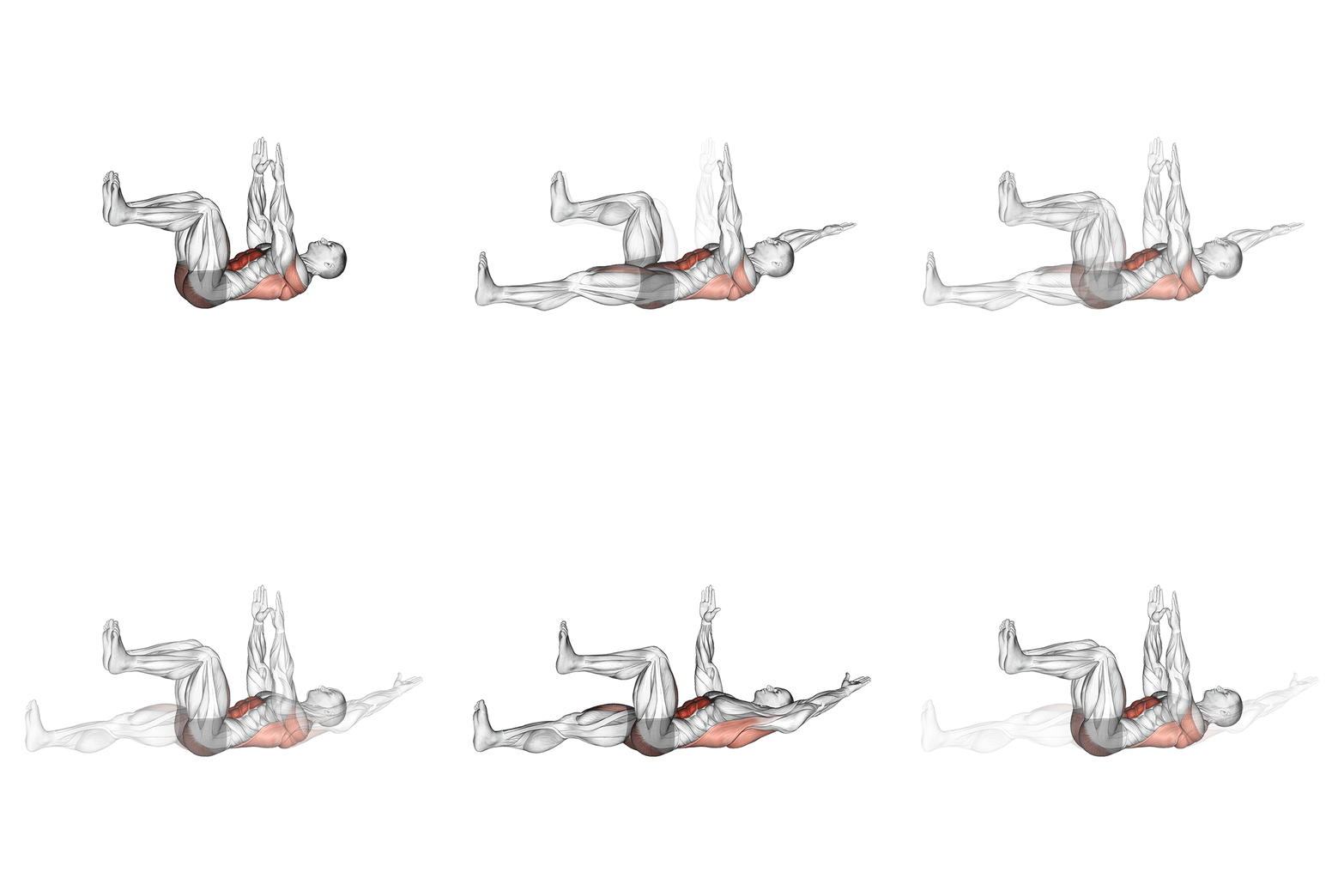
What is the dead bug?
The dead bug is an anti-extension core exercise. You lie on your back, knees and hips at 90 degrees, arms straight up, then slowly lower one arm overhead and the opposite leg toward the floor while the lower back stays pinned. The challenge is to resist the natural arching of the spine as the limbs extend. It builds the deep bracing pattern you need for squats, deadlifts and any overhead work, and it does it without loading the spine. Most people should master the dead bug before progressing to harder core work.
How to do the dead bug
- 1
Set the start position
Lie on your back, knees and hips bent to 90 degrees, arms straight up over the shoulders. Press the lower back into the floor.
- 2
Exhale and brace
Breathe out hard and pull the ribs down toward the hips. You should feel the abs lock the pelvis in place.
- 3
Lower opposite limbs slowly
Lower one arm overhead and the opposite leg toward the floor over three seconds. Stop just before the lower back lifts.
- 4
Return and switch
Bring the limbs back over two seconds, exhale, then mirror with the other side. Keep the brace from start to finish.
Pro tip
If you can hear yourself breathing, the dead bug is working. If your back keeps lifting off the floor, shorten the range; lower the leg only halfway until the brace holds, then progress.
Common mistakes
Lower back lifting.
If the lumbar arches off the floor, the abs lost the fight. Reduce range until the back stays glued down.
Holding the breath.
Holding air masks a weak brace. Breathe out actively as the limbs descend.
Moving too fast.
Speed lets momentum cheat the abs. Three seconds down, two seconds back, every rep.
Chin poking up.
Lifting the head breaks neutral spine. Keep the neck long and the back of the head on the floor or a small towel.
Variations and progressions
Easier
Heel tap dead bug
Keep the knee bent and only tap the heel to the floor. Removes most of the leverage while keeping the brace work.
Harder
Loaded dead bug
Hold a light dumbbell or plate overhead in each hand. The added load makes the anti-extension demand brutal.
Need variety?
Bird dog
On hands and knees, extend opposite arm and leg. Same anti-extension intent in an upright position.
How to program it
Three protocols by goal. Pick one per cycle and aim for progression on load or distance.
| Goal | Sets × distance | Load | Rest |
|---|---|---|---|
| Brace foundation | 3 × 8 per side | Bodyweight | 60 s |
| Warm-up before lifts | 2 × 6 per side | Bodyweight, slow tempo | 30 s |
| Loaded progression | 3 × 10 per side | 2-5 kg overhead | 60 s |
Dead Bug FAQ
How is it better than sit-ups?
Sit-ups train the abs to flex the spine repeatedly under load, which is a poor match for what your core actually has to do in heavy lifting or running, namely prevent unwanted movement. The dead bug trains the bracing pattern directly and skips the lumbar wear and tear. Most lifters get more carryover from dead bugs than from any number of crunches.
Should I do them every day?
You can. Dead bugs are low-impact and don't load the spine, so daily practice as a warm-up before lifting is a smart habit. Just keep the volume modest, two or three sets of six to ten reps per side is more than enough to keep the brace pattern dialled in.
My lower back arches no matter what.
Reduce range first. Lower only the arm, keep both knees bent. Then add only the leg, keeping the arm in place. Build to the full pattern over a few weeks rather than forcing it on day one. If the arch persists with bent-knee, leg-only variations, your brace cue needs work, not your willpower.