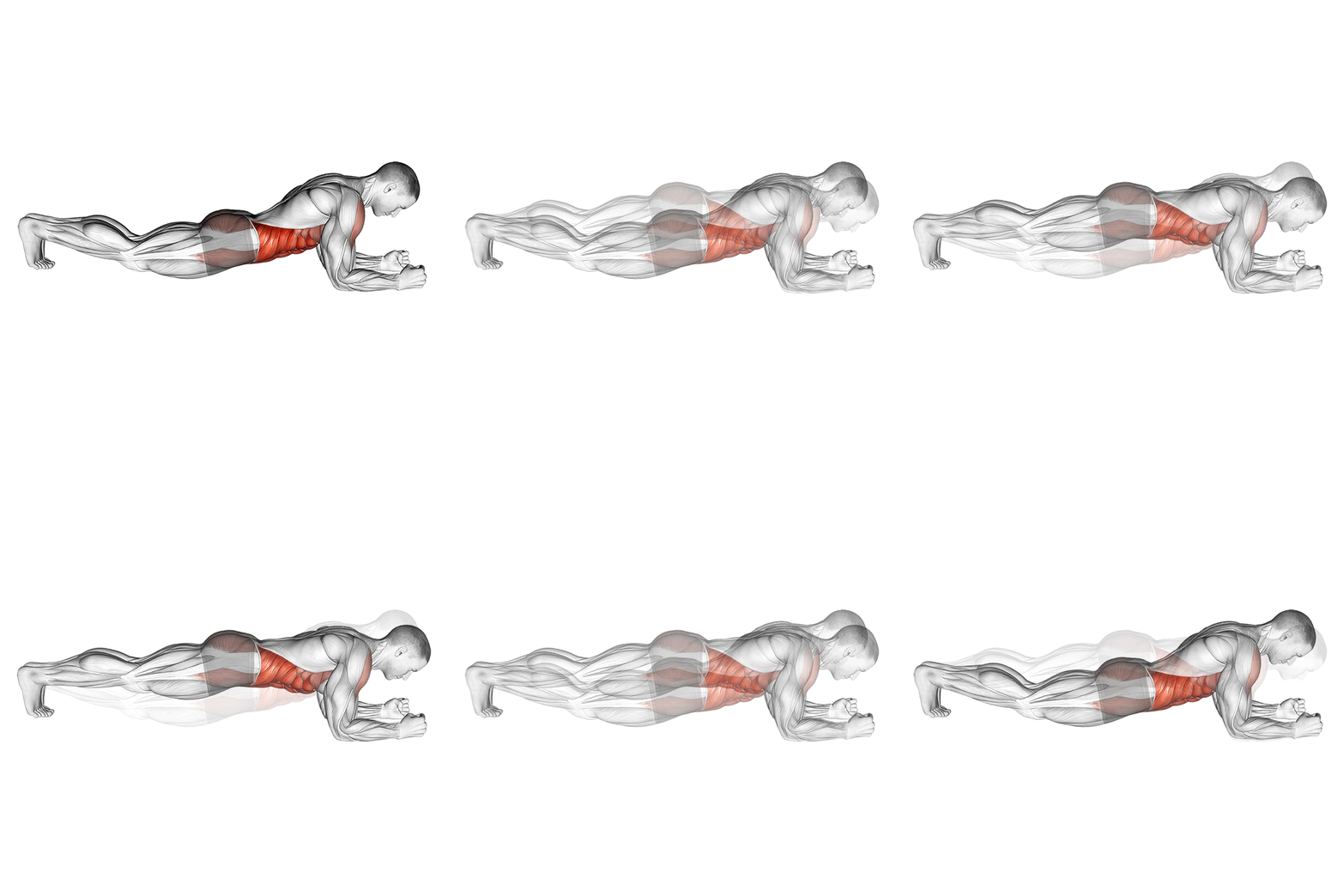
What is the plank?
A plank is an anti-extension isometric hold: forearms on the floor, body in a straight line from head to heels, abs and glutes contracted hard. The job is to resist the hips sagging or piking and to teach the deep core to brace under sustained tension. Working sets sit between 30 seconds and 2 minutes. Beyond 2 minutes the stimulus tails off and you're training endurance of a hold pattern, not core strength. Planks transfer directly to deadlifts, farmer's carries and running posture, and they're the safest entry point to serious core training.
How to do the plank
- 1
Set the forearms
Forearms parallel, elbows directly under shoulders, hands flat or in light fists. Pull the elbows toward the toes to engage the lats.
- 2
Stack head to heels
Body forms one straight line. Hips should be exactly between shoulders and heels, not lifted, not dropped.
- 3
Squeeze everything
Glutes hard, quads locked, abs braced as if expecting a punch. Active tension is the difference between a useful plank and a passive hang.
- 4
Breathe through the brace
Short controlled breaths in through the nose, out through the mouth, without letting the abs release. Holding the breath is bracing, not training.
Pro tip
Stop the set when form breaks, not when the timer goes off. A perfect 45-second plank teaches the body more than a sagging 2-minute one.
Common mistakes
Sagging hips.
Hips dropping toward the floor shifts load to the lower back. Squeeze the glutes hard to keep them stacked.
Hips piked up.
A high pike turns the plank into a rest position. The hips must stay in line, not higher than the shoulders.
Holding the breath.
Stopping the breath inflates the abs but doesn't build core control. Keep breathing through a tight brace.
Chasing time over quality.
Three-minute planks with mediocre form are a party trick. Stop at the first sign of form breakdown.
Variations and progressions
Easier
Knee plank
Same setup with the knees down. Reduces the lever and lets you focus on the squeeze without form breaking down at 20 seconds.
Harder
Weighted plank
Add a 10-25 kg plate on the upper back. Increases load while keeping the same anti-extension pattern. Best for sets of 30-60 seconds.
Anti-rotation upgrade
Side plank or Pallof press
Side planks load anti-lateral-flexion; the Pallof press loads anti-rotation. Both close gaps a front plank leaves open.
How to program it
Three protocols by goal. Pick one per cycle and aim for progression on load or distance.
| Goal | Sets × distance | Load | Rest |
|---|---|---|---|
| Core stability base | 3 × 30-45 s | Bodyweight | 60 s |
| Strength endurance | 3 × 60-90 s | Bodyweight or +10 kg | 60-90 s |
| Heavy isometric | 4 × 20-30 s | +20-30 kg plate | 90 s |
Plank FAQ
Is a long plank actually useful?
Past 60-90 seconds with bodyweight, returns drop. Stuart McGill's research suggests that holds beyond two minutes mostly train a holding pattern, not core strength or stability. If you can hold a clean plank for over a minute, switch to weighted shorter holds or to side planks. The aim is hard, not long.
Will planks give me a six-pack?
Planks build core thickness and bracing strength, but visible abs come from low body fat first. The plank is a movement-quality tool: it makes your deadlifts safer, your carries longer and your running posture cleaner. If aesthetics are the only goal, planks plus diet beats planks alone, every time.
How often should I plank?
Three to five sessions per week is the sweet spot, with 2-3 working sets each. Planks recover fast and respond well to high frequency, especially mixed with side planks and anti-rotation work. Daily planks are fine if total volume stays moderate. The mistake is doing 5-minute holds twice a week instead of 45-second sets every day.