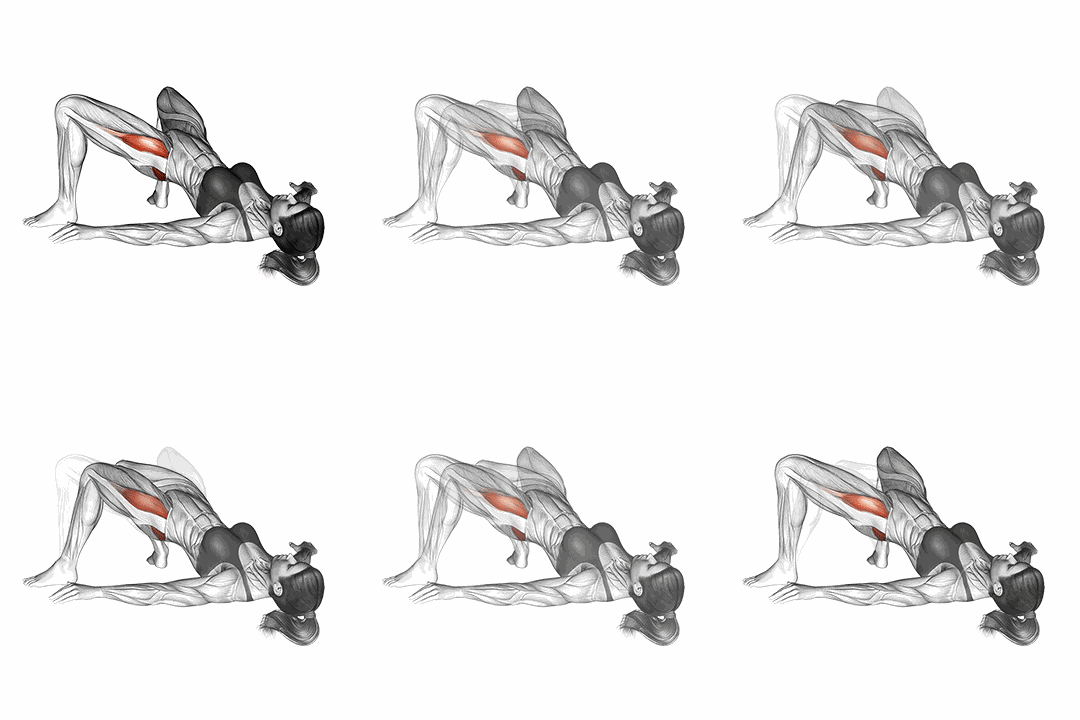
What is the hip abduction bridge?
The hip abduction bridge is a floor glute bridge performed with a mini-band looped around the knees. As you drive the hips up, you also press the knees outward against the band, pinning the glute medius into the work. The combination loads the glute max in hip extension and the glute medius in abduction at the same time, building stable hips that don't collapse on squats, single-leg work or running. It's a perfect warm-up activation drill and a serious accessory with a heavy enough band.
How to do the hip abduction bridge
- 1
Position the band
Lie on your back, knees bent, feet flat hip-width. Loop a mini-band around the legs just above the knees.
- 2
Push the knees out
Before lifting the hips, press the knees outward against the band until you feel the side of the glutes engage.
- 3
Drive the hips up
Press through the heels, squeeze the glutes, and lift the hips until your body forms a straight line from knees to shoulders.
- 4
Hold, then lower slow
Squeeze hard at the top for two seconds while still pressing the knees outward. Lower over two seconds, don't relax the band.
Pro tip
The whole exercise dies the second the knees fall inward. Keep constant outward pressure on the band, from the first rep to the last.
Common mistakes
Letting the knees cave in.
Inward knees turn off the glute medius. Press out continuously, even on the descent.
Overarching the lower back.
If the lumbar arches at the top, the glutes have stopped working. Tuck the pelvis under and use the glutes to drive height.
Pushing through the toes.
Driving through the toes biases quads. Push through the heels, even lift the toes slightly.
Skipping the squeeze.
Banging out fast reps misses the point. Pause two seconds at the top of every rep.
Variations and progressions
Easier
Bodyweight glute bridge
Same setup without the band. Learn the hip extension pattern and the squeeze before adding abduction work.
Harder
Single-leg banded bridge
Same band, one foot in the air. The supporting glute fires twice as hard while still resisting the band.
No band?
Clamshells + glute bridge
Do a set of clamshells right before each bridge set. Pre-fires the medius, mimics the abduction effect.
How to program it
Three protocols by goal. Pick one per cycle and aim for progression on load or distance.
| Goal | Sets × distance | Load | Rest |
|---|---|---|---|
| Activation warm-up | 2 × 15 | Light band | 30 s |
| Hypertrophy | 4 × 12-15 | Heavy band, 2-2-2 tempo | 60 s |
| Endurance / rehab | 3 × 20 | Moderate band | 45 s |
Hip Abduction Bridge FAQ
Will this fix my knees caving on squats?
Often yes, especially if the cause is a weak glute medius. Two warm-up sets of 15 banded bridges before every leg session, plus a few accessory sets later in the week, sorts most cases inside a month. If the cave is severe or ankle-driven, see a coach to spot the real bottleneck.
Heavy hip thrust or banded bridge?
Different jobs. Heavy hip thrusts build glute max strength and size, banded bridges build glute medius stability and hip control. Best results come from doing both: heavy thrusts as the main lift, banded bridges as the activator or accessory. They're complements, not substitutes.
How tight should the band be?
Tight enough that you have to actively press the knees out, loose enough that you can complete the full set with steady form. If your knees collapse on the last few reps, drop down a band level. Most people start with a light band and earn the heavy one over six to eight weeks.