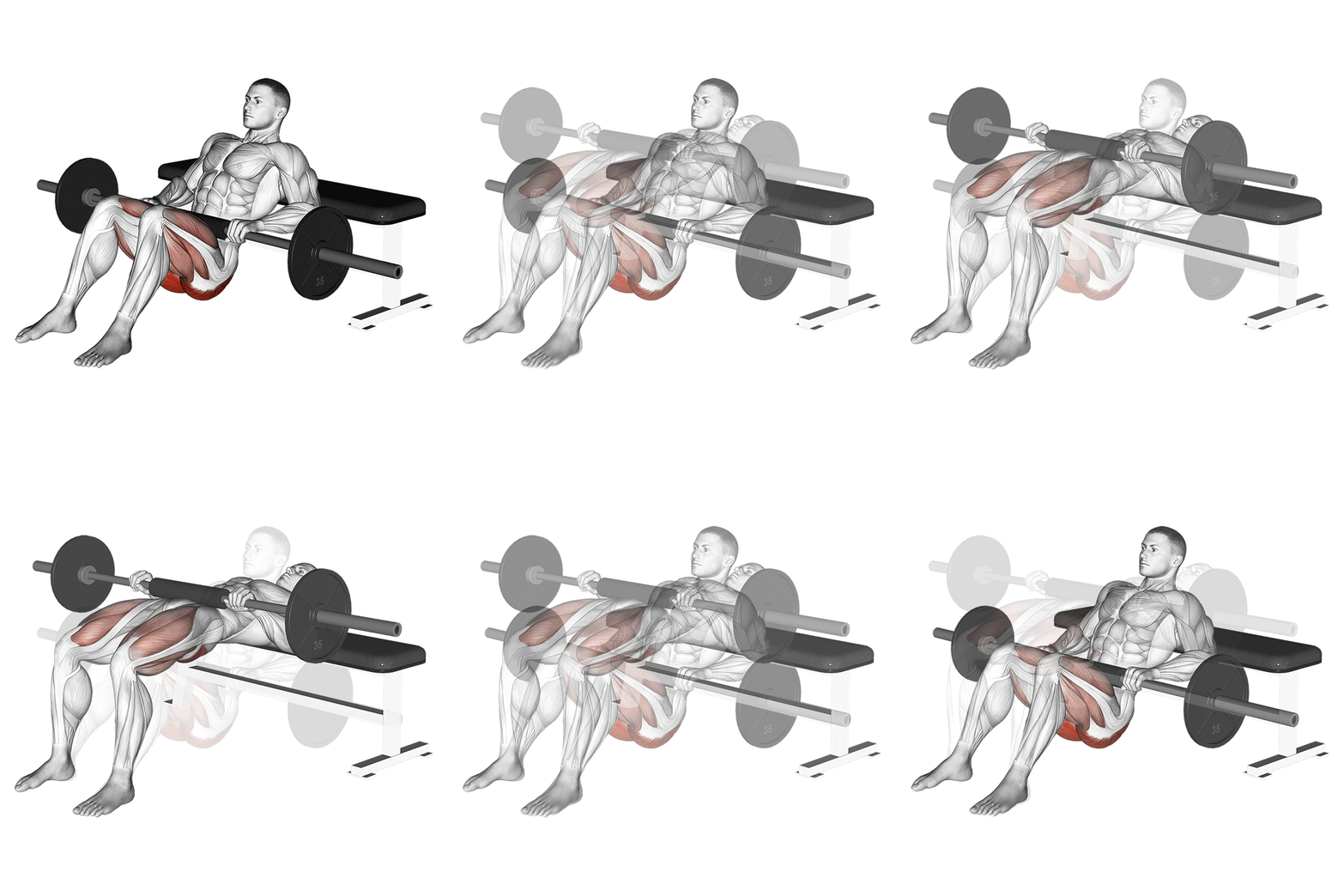
What is the hip thrust?
The hip thrust is a horizontal hip extension performed with the upper back resting on a bench, feet flat on the floor, and a loaded barbell across the hip crease (over a pad). You drive through the heels to extend the hips to full lockout, then lower under control. The horizontal vector and the support of the bench let you load the glute max far heavier than any squat or deadlift can, with almost zero lower-back demand. It's the closest thing to a bicep curl for the glutes: targeted, loadable, repeatable.
How to do the hip thrust
- 1
Set up against the bench
Sit on the floor with the bench behind you, the bench edge hitting just under the shoulder blades. Roll a loaded barbell over the hips on a pad.
- 2
Plant the feet
Feet flat, shoulder-width, heels positioned so the shins are vertical at the top of the rep. Toes slightly out is fine.
- 3
Drive hips to lockout
Push through the heels and drive the hips straight up. Finish with knees, hips and shoulders in a straight line, glutes maximally squeezed.
- 4
Lower with control, no slam
Take 2 s back down until the hips lightly touch the floor. Reset, breathe, drive up again. No bouncing off the ground.
Pro tip
Tuck the chin and look at your knees at lockout. Throwing the head back arches the lower back and steals the hip-extension work from the glutes.
Common mistakes
Hyper-extending the lower back.
Arching to reach lockout shifts the work from glutes to spine. Finish hip extension by squeezing the glutes, not by arching.
Feet too far forward.
If the shins angle backward at lockout, hamstrings take over. Reset foot position so shins are vertical at the top.
Partial reps.
Stopping short of full hip lockout cheats the glutes out of their job. Knees, hips, shoulders aligned, every rep.
No pad, no comfort.
A bare barbell on the hips is brutal and limits how heavy you'll go. Use a thick pad or a barbell sleeve every single set.
Variations and progressions
Easier
Glute bridge (no bench)
Same hip extension, lying flat on the floor with shoulders on the ground. Shorter range, much lower entry level.
Harder
B-stance / single-leg hip thrust
Shift most of the load to one leg (B-stance with the other foot lightly down) or fully single-leg. Brutal unilateral glute work.
No barbell?
Dumbbell or banded hip thrust
Place a heavy dumbbell on the hips, or loop a heavy band around the hips and pin both ends. Same pattern, lighter setup.
How to program it
Three protocols by goal. Pick one per cycle and aim for progression on load or distance.
| Goal | Sets × distance | Load | Rest |
|---|---|---|---|
| Strength | 4 × 6 | 85% 1RM | 2-3 min |
| Hypertrophy | 4 × 10 | 70-75% 1RM | 90 s |
| Glute pump finisher | 3 × 20 | Moderate | 60 s |
Hip Thrust FAQ
Is hip thrust better than squat for glutes?
For pure glute hypertrophy, yes. The horizontal vector keeps tension on the glutes at lockout, where the squat unloads. But the squat still wins for total lower-body strength and athletic transfer. Run both: squat as the main lift, hip thrust as the dedicated glute builder.
How heavy should I go on hip thrust?
Heavier than you think. Most intermediate lifters work up to 1.5-2× bodyweight for 6-8 reps. Advanced women regularly hit 2× bodyweight, and competitive lifters push to 2.5×. The hip thrust loads heavy precisely because the lower back is unloaded, that's its superpower.
How often should I program hip thrusts?
Two times per week is the sweet spot: one heavy day (4-6 reps) and one volume day (10-15 reps). The glute responds to both heavy load and high volume, so hit both stimuli. Spread them at least 48 h apart to recover the soft tissue across the hip crease.