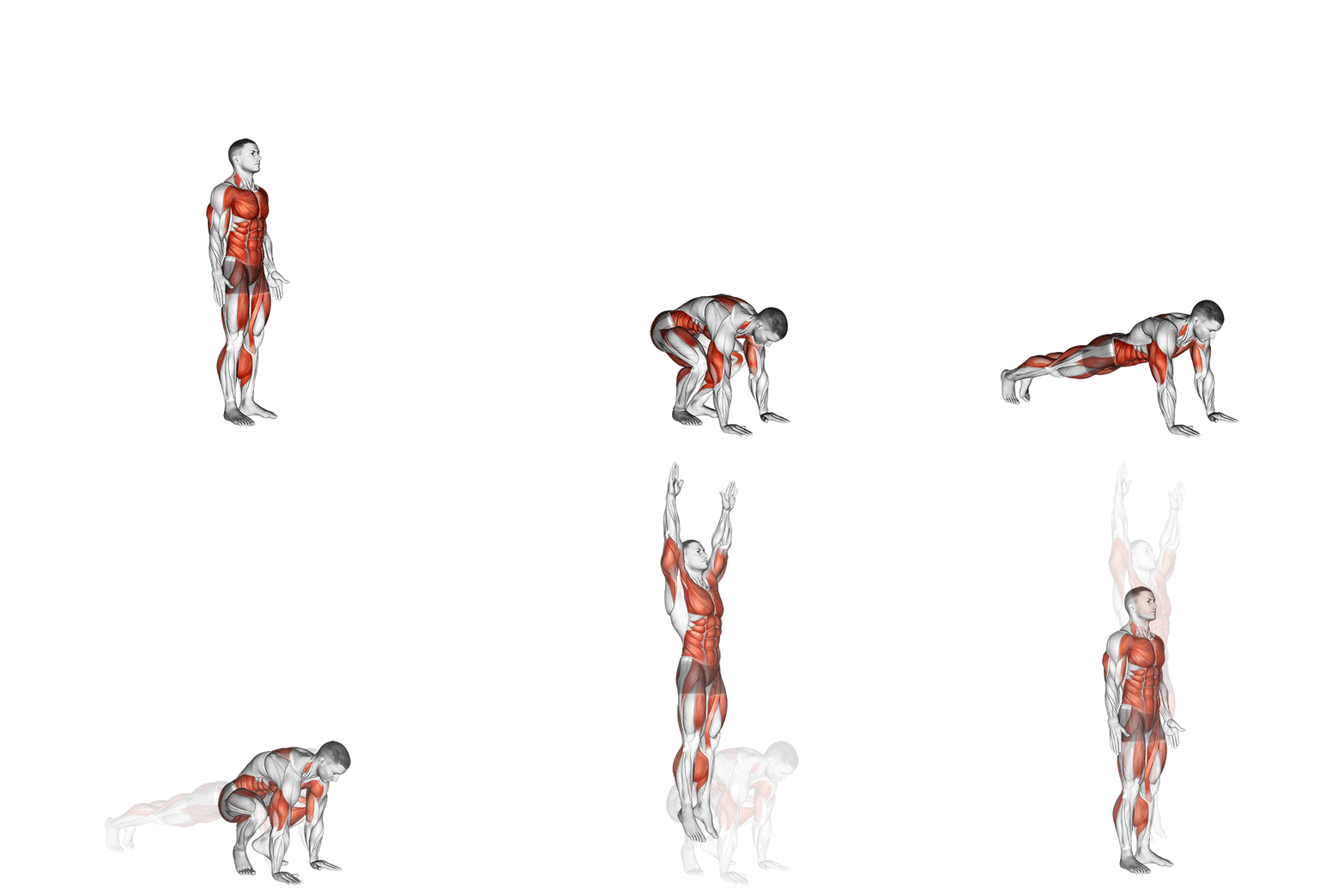
What is the burpee?
A burpee is a single movement that compresses a full sprawl, a push-up, a squat and a vertical jump into one continuous cycle. Done strictly, the chest and thighs touch the floor at the bottom and the hands clear the head at the top. It's the most equipment-free, time-efficient cardio-strength tool in fitness. Twenty unbroken burpees raise lactate and breathing more than almost any other bodyweight movement. Used as a finisher, an EMOM, or as the punishment movement in race formats, burpees are unique because they scale infinitely by pace.
How to do the burpee
- 1
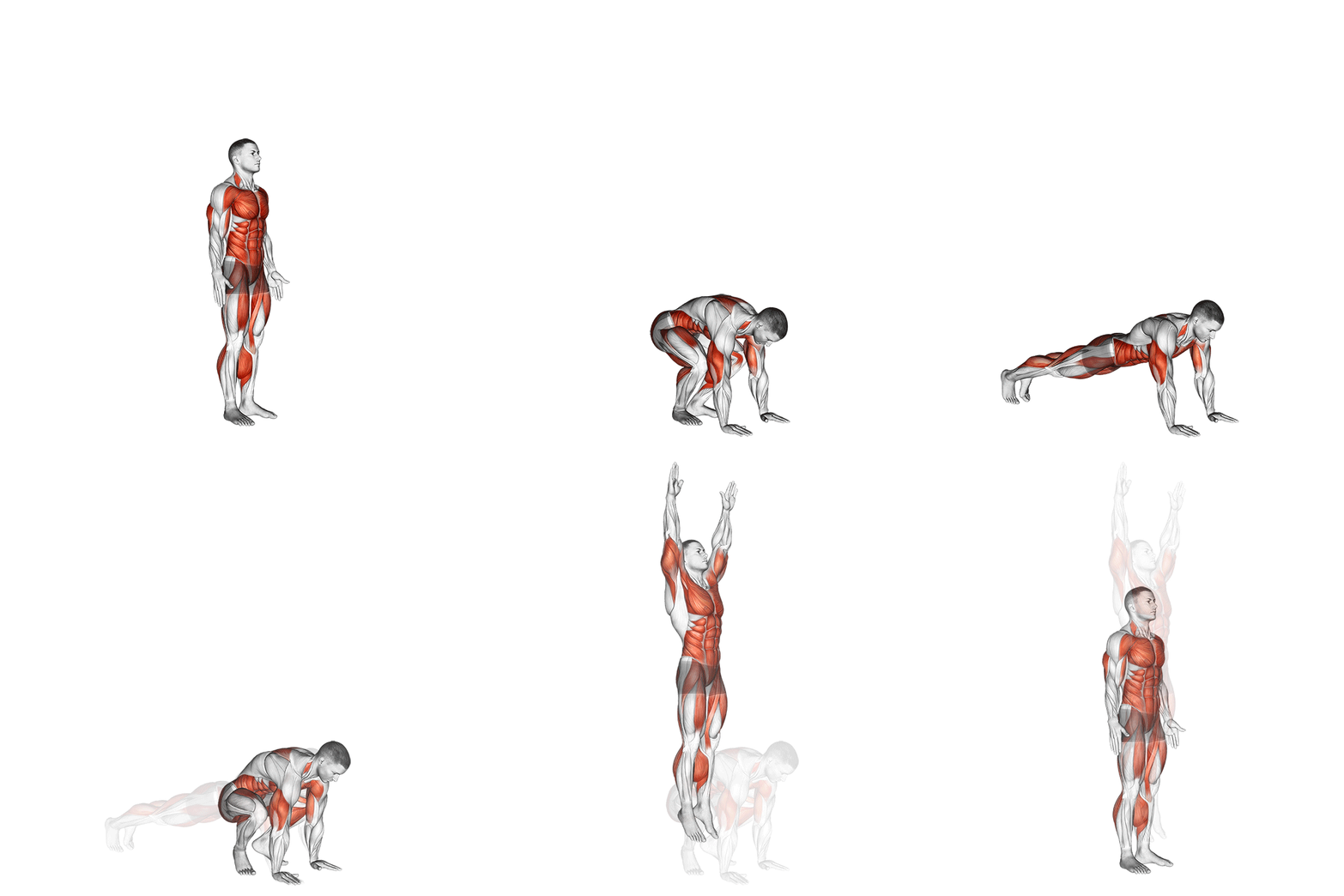
Drop fast, but controlled
Squat down, plant your hands shoulder-width on the floor, kick the feet back to a plank in one motion. No collapse, no piking.
- 2
Chest and thighs touch the floor
Lower the whole body to the floor as one piece. Strict standard means the chest, hips and thighs all make contact at the same time.
- 3
Snap back to the feet
Press up, jump the feet to outside the hands in one motion. Land in a low athletic stance ready to drive up.
- 4
Jump and clap overhead
Drive through the hips into a vertical jump, hands clear the head with a clap. Land softly, drop into the next rep.
Pro tip
Pick a sustainable pace from rep one. Twenty burpees at 7-second pace beats ten fast burpees followed by ten gasping. Burpees punish heroes in the first 30 seconds.
Common mistakes
Piking the hips down.
Letting the hips sag to the floor before chest contact bypasses the push-up. The rep is faster but useless for adaptation.
Sloppy landing.
Knees collapsing inward on every jump destroys joints over volume. Land soft, knees out, every single rep.
Going out too hot.
First 30 seconds at maximum kills the next two minutes. Pick a pace you can hold and add at the end if you have it.
Skipping the jump.
Standing up without leaving the floor is a half-rep. The vertical jump is where the cardio spike sits.
Variations and progressions
Easier
Step-back burpee
Step one foot back at a time instead of jumping. Same pattern, far lower impact, sustainable for beginners and long sessions.
Harder
Burpee broad jump
Replace the vertical jump with a horizontal broad jump and reset. The Hyrox station version: brutal cardio plus power.
Bar-facing burpee
Bar-facing burpee
Burpee with a small two-foot jump over a barbell on the floor. CrossFit standard, adds a coordination element and a target.
How to program it
Three protocols by goal. Pick one per cycle and aim for progression on load or distance.
| Goal | Sets × distance | Load | Rest |
|---|---|---|---|
| Conditioning finisher | 5 × 10 reps | Bodyweight, strict | 60 s |
| EMOM density | 10 min EMOM, 8-10 reps | Bodyweight | Remainder of minute |
| Race simulation | 100 reps for time | Bodyweight | As needed |
Burpee FAQ
Should I do burpees fast or strict?
Train both, in separate sessions. Strict burpees build the push-up and the jump quality, and they're what referees count in races. Fast burpees train the cardio engine and pacing discipline. Most athletes default to fast and sloppy, which limits both. Spend two weeks per quarter on strict-only work and your fast burpees improve too.
How many burpees per week is too many?
For a fit athlete, 150-250 reps per week spread over 2-3 sessions is productive. Above 400 weekly reps you risk wrist and shoulder wear without obvious return. The burpee is a tool, not a religion. If you're doing a Hyrox burpee broad jump block, scale back regular burpee volume on the off days.
Why do burpees feel harder than running at the same heart rate?
Burpees recruit far more muscle mass simultaneously, especially upper body, and they involve repeated postural transitions. That spikes ventilation and central fatigue much faster than running, even when heart rate matches. It's not a fitness gap, it's a movement specificity gap. The fix is doing more burpees, not less running.