What is the box jumps?
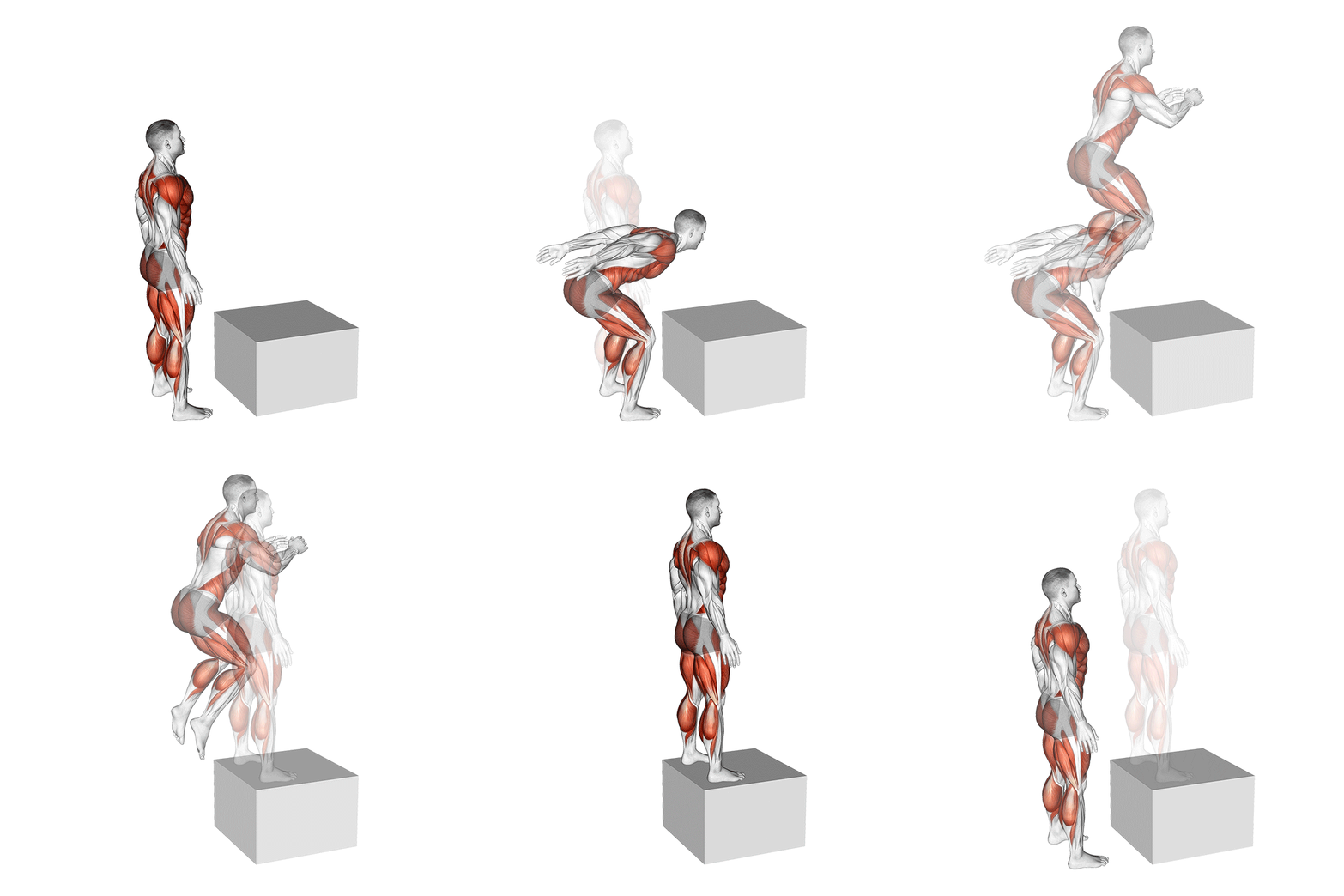
Box jumps are a lower-body plyometric: you drop into a quarter-squat, swing the arms, and jump onto a sturdy box, landing in a low athletic position. The genius of the movement is that the box absorbs your landing height, so you get the concentric power benefit of a max jump without the eccentric stress of landing on the floor. Done right, box jumps build vertical power, rate of force development and the elastic stiffness that transfers to sprinting, lifting and stair-climbing. Done wrong, with high boxes and step-downs that miss, they're an Achilles-tear waiting to happen.
How to do the box jumps
- 1
Set up close to the box
Stand 15-25 cm from the box, feet hip-width. Too far and you'll overshoot horizontally; too close and your shins hit the edge.
- 2
Load the jump
Drop fast into a quarter-squat, arms swing back. The stretch should be quick: think 'bounce', not 'sit'.
- 3
Drive through the floor
Extend hips, knees and ankles together, arms whip forward and up. Aim for full triple extension before the feet leave the floor.
- 4
Land soft, then step down
Land on the box in a quarter-squat, both feet flat, hips back. Stand fully, then step down one foot at a time. Never rebound off the floor.
Pro tip
Box height is for ego, jump quality is for results. A clean 50 cm jump where you fully extend and land soft trains power better than a sloppy 75 cm scrape with a tucked landing.
Common mistakes
Tucking the knees instead of jumping.
Reaching a high box by pulling the knees up doesn't train power. The hips must extend fully before the feet leave the floor.
Jumping off the box.
Rebounding to the floor multiplies eccentric load and is the main mechanism of Achilles injuries. Always step down.
Landing knees-in.
Valgus collapse on every landing wears the knees fast. Drive knees out over the toes, every single rep.
High reps for conditioning.
Box jumps are power work, not metabolic work. Past 5-8 reps per set, output drops and form breaks down.
Variations and progressions
Easier
Box step-up jump
Step one foot onto a low box and drive into a single-leg jump, switch sides. Lower impact, builds the same triple-extension pattern.
Harder
Depth jump to box
Step off a 30 cm box, land, and immediately rebound onto a taller box. Trains reactive strength and stretch-shortening cycle.
No box?
Broad jump for distance
Horizontal jumps for max distance with soft landings. Same power output, no equipment needed, requires good landing mechanics.
How to program it
Three protocols by goal. Pick one per cycle and aim for progression on load or distance.
| Goal | Sets × distance | Load | Rest |
|---|---|---|---|
| Power development | 5 × 3 max-effort jumps | Challenging height | 2-3 min full |
| Pre-lift potentiation | 3 × 3 before squats | Moderate height | 90 s |
| Plyometric volume block | 6 × 5 jumps | Sub-max height | 60-90 s |
Box Jumps FAQ
How high should my box be?
Start at 40-50 cm and only raise once you can land in a quarter-squat with no knee tuck. A useful ceiling is the height where your jump still uses full triple extension. For most trained athletes that's 60-75 cm; chasing 1-metre boxes is a party trick that rewards mobility, not power.
Why step down instead of jumping down?
Landing on the floor from a high box adds eccentric load equal to or greater than the concentric jump. Over volume that wrecks Achilles tendons. The famous Box-Jump-Achilles-Snap clips are almost always rebound landings. Stepping down preserves the training stimulus without the injury cost.
Are box jumps useful for runners?
Yes, as a low-volume power dose. 2 × 5 jumps before an easy run or twice a week as standalone work develops the elastic stiffness and triple extension that improves running economy. Keep volume modest. Runners don't need 50 jumps per session, they need 10-15 high-quality ones.