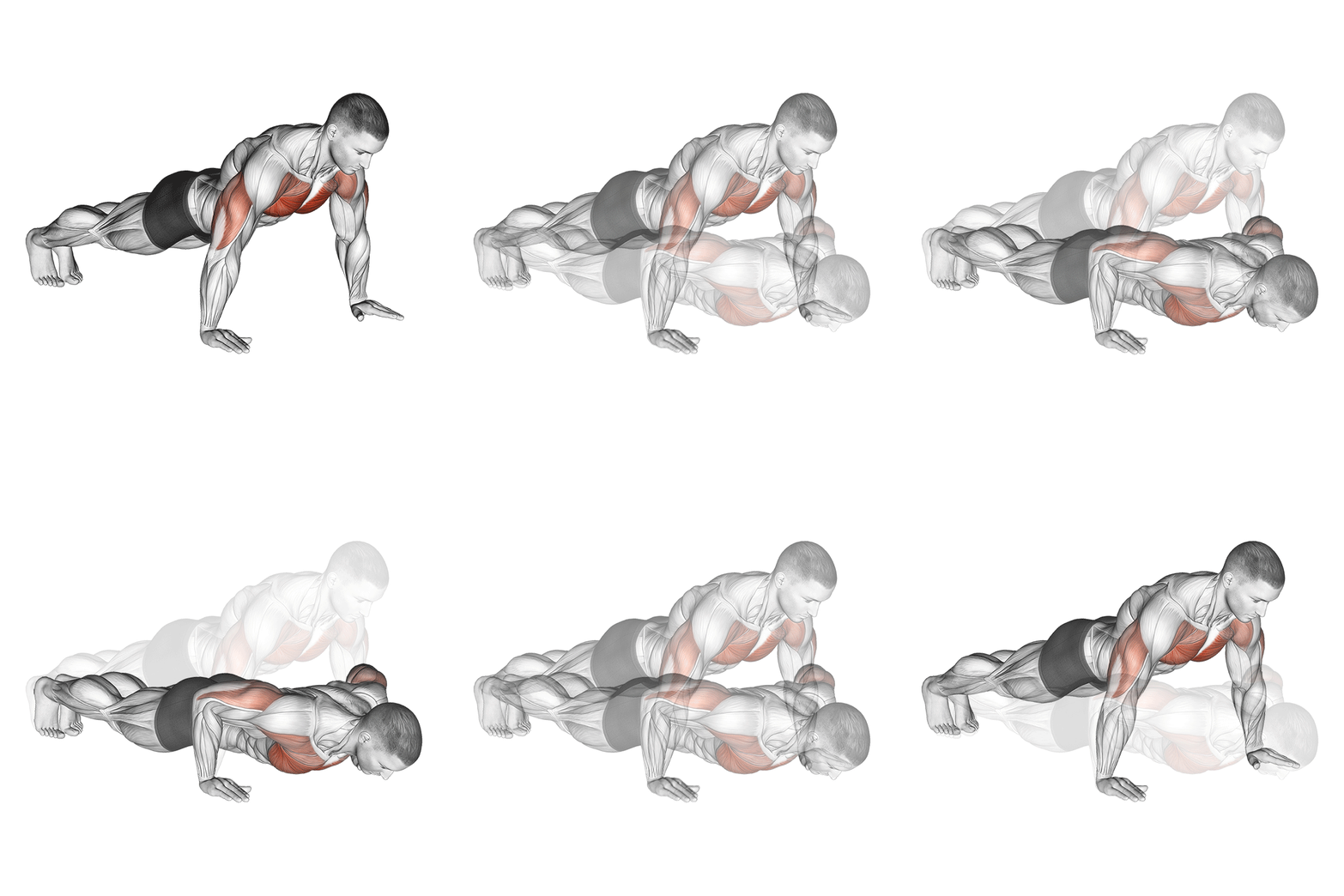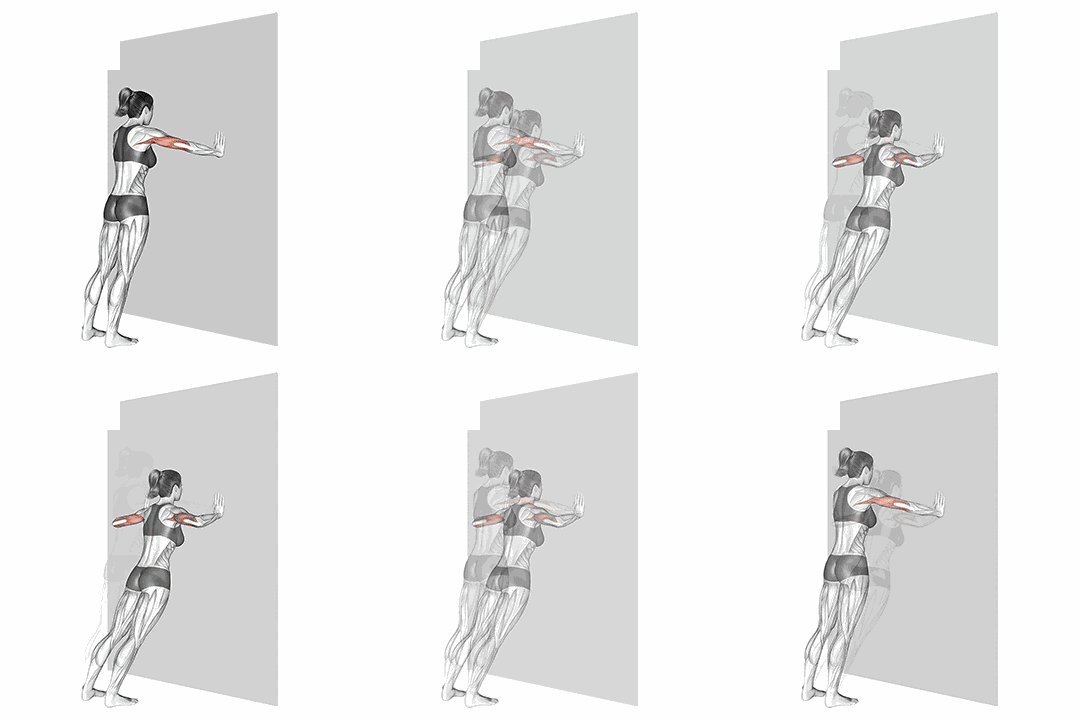
What is the wall push-up?
The wall push-up is the most upright, and therefore lightest, version of the push-up: you stand facing a wall, place your hands on it, and press your body away. Because the feet carry most of your weight, the arms handle only a small fraction of it, far less than in a knee or incline push-up. That makes it the right starting point for absolute beginners, older adults, people returning from injury or surgery, and anyone rebuilding a cranky shoulder. It also doubles as a warm-up drill. The progression is built in: the further your feet walk back from the wall, the heavier each rep becomes.
How to do the wall push-up
- 1
Stand at arm’s length
Face the wall and put your palms flat on it at shoulder height, hands shoulder-width apart, feet hip-width. Arms straight, fingers pointing up.
- 2
Make a standing plank
Squeeze the glutes and abs so the body forms one rigid line from heels to head. Heels stay on the ground; only the arms should move from here.
- 3
Lower the chest to the wall
Bend the elbows at about 45 degrees from the torso and bring the whole body toward the wall until the chest nearly touches it. The hips travel with the shoulders.
- 4
Push back to lockout
Press through the palms until the arms are fully straight again, without bending at the hips or letting the shoulders shrug toward the ears.
Pro tip
Progress by distance, not just reps: every time 3 sets of 15 feel easy, move your feet back half a shoe length. In a few weeks you’ll be pressing off a countertop without ever having ground through a hard set.
Common mistakes
Butt stuck out.
If the hips hinge back, only the head and shoulders approach the wall and the pressing muscles get nothing. Keep the body one straight line that tilts toward the wall as a unit.
Pecking with the head.
Jutting the chin forward fakes range while the torso barely moves. Keep the neck neutral and lead with the chest, not the nose.
Hands set too high.
Hands above shoulder height force a shrug and load the neck. Set the palms at shoulder or chest height and keep the shoulder blades pulled down.
Staying too close forever.
A near-vertical wall push-up stops being training once it’s easy. Walk the feet back, then graduate to a countertop or bench when sets of 15 feel light.
Variations and progressions
Easier
Close-stance wall push-up
Stand just a short step from the wall so the body is nearly vertical. The load becomes minimal, which suits rehab, deconditioning or very first sessions.
Harder
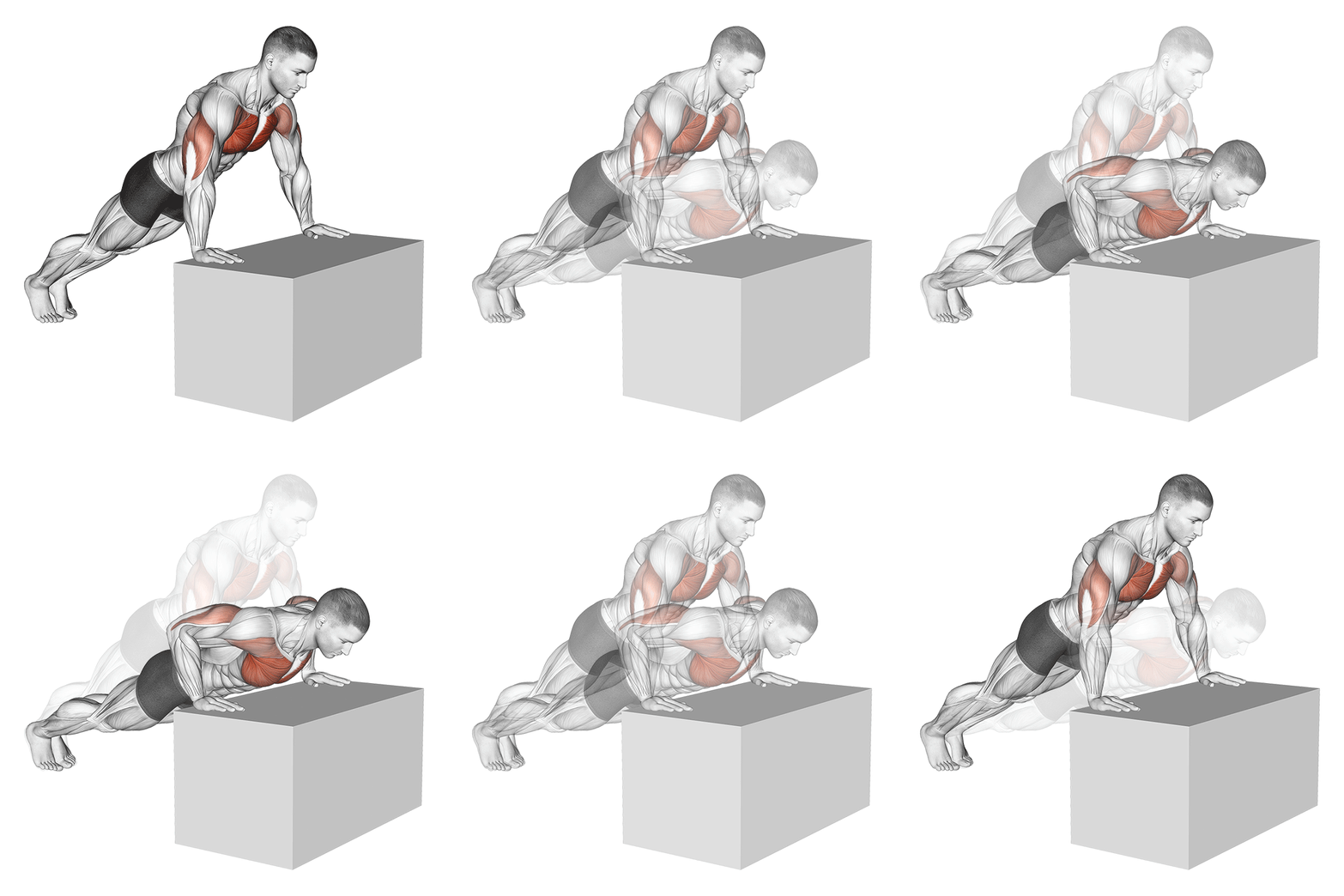
Countertop push-up
Hands on a kitchen counter, sturdy table or bench. The lower surface raises the share of bodyweight on the arms: it’s the natural next station on the way to the floor.
Alternative
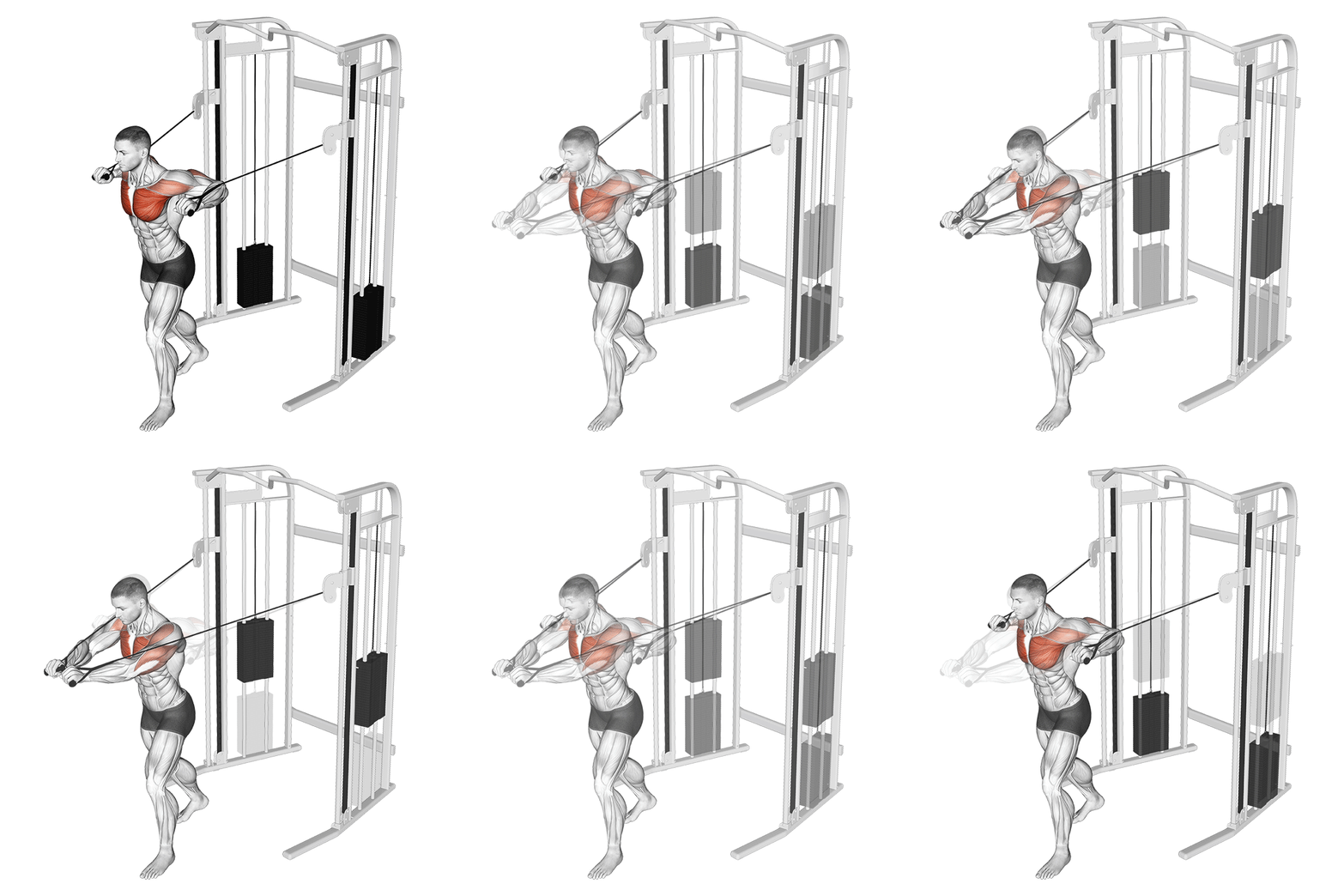
Band chest press
Anchor a band behind you at chest height and press forward while standing. Same pattern, but the resistance adjusts in tiny steps, handy when wall angles feel too coarse.
How to program it
Three protocols by goal. Pick one per cycle and aim for progression on load or distance.
| Goal | Sets × distance | Load | Rest |
|---|---|---|---|
| Getting started | 3 × 8-12 | Arm’s length from the wall | 60-90 s |
| Weekly progression | 3 × 10-15 | Feet half a step further back each week | 60 s |
| Daily practice | 3-5 × 10 through the day | Easy angle, never to failure | Spread across the day |
Wall Push-Up FAQ
Do wall push-ups actually build muscle?
For someone untrained, in rehab or returning after a long break, yes: any load close to your current limit builds strength, and the wall version provides exactly that. For a trained athlete they’re a warm-up, not a workout, so progress to steeper angles quickly once reps feel easy.
How long until I can do a real push-up on the floor?
The usual path is wall, then countertop, then bench, then knees or floor, moving on each time 3 sets of 15 feel easy. Depending on your starting point, that takes anywhere from a few weeks to a few months of 2-3 sessions per week.
Are wall push-ups good for seniors?
Very. They train pressing strength with no need to get down on the floor, low joint stress, and an easy way to fine-tune difficulty by foot position. Keep the body straight and the range full, and they’re one of the safest upper-body exercises available.
How many wall push-ups should I do a day?
Three sets of 8-15 on most days is plenty. Once that’s comfortable, resist the urge to pile on reps: making the angle steeper gives far better returns than doing 50 easy ones.