What is the push-up?
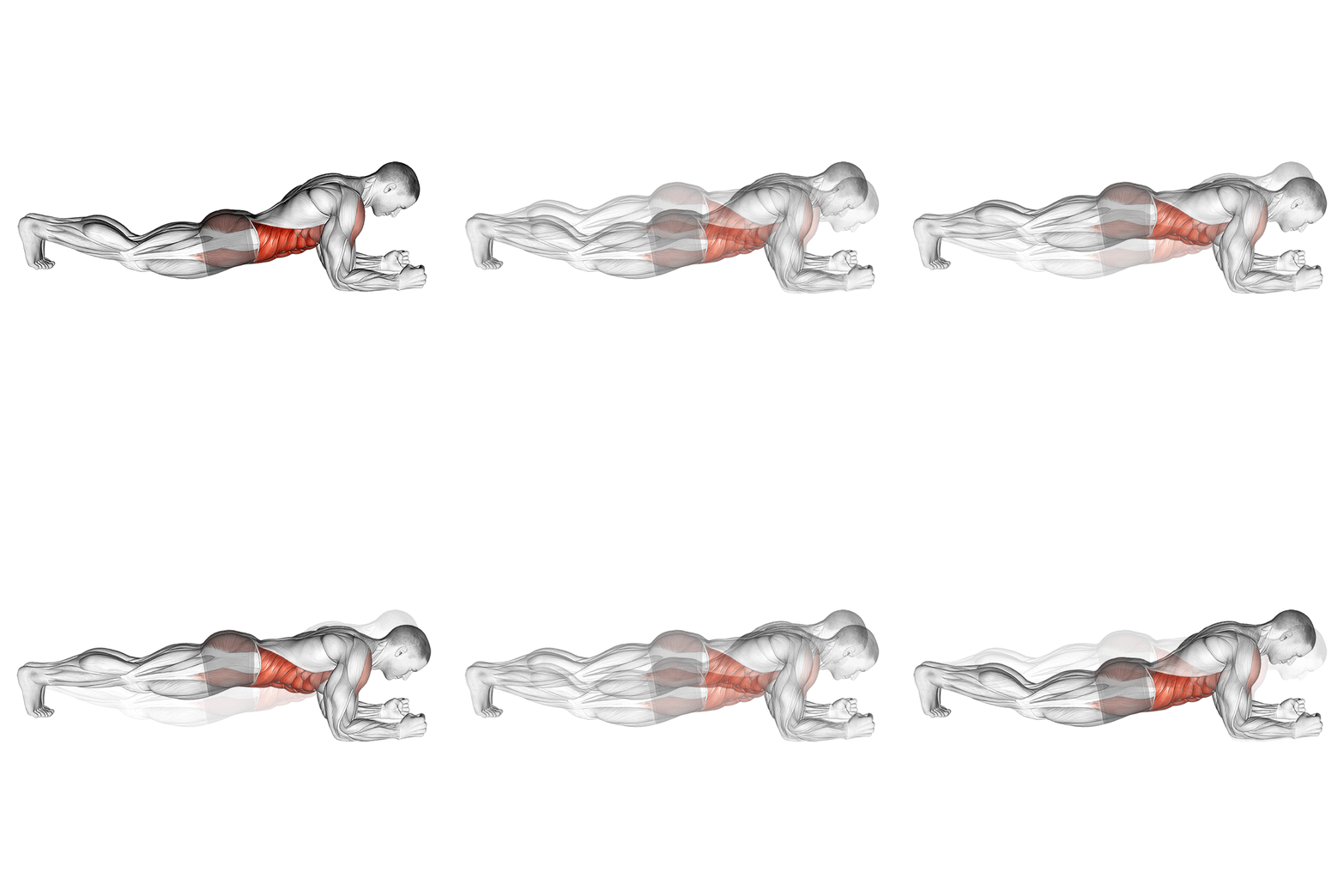
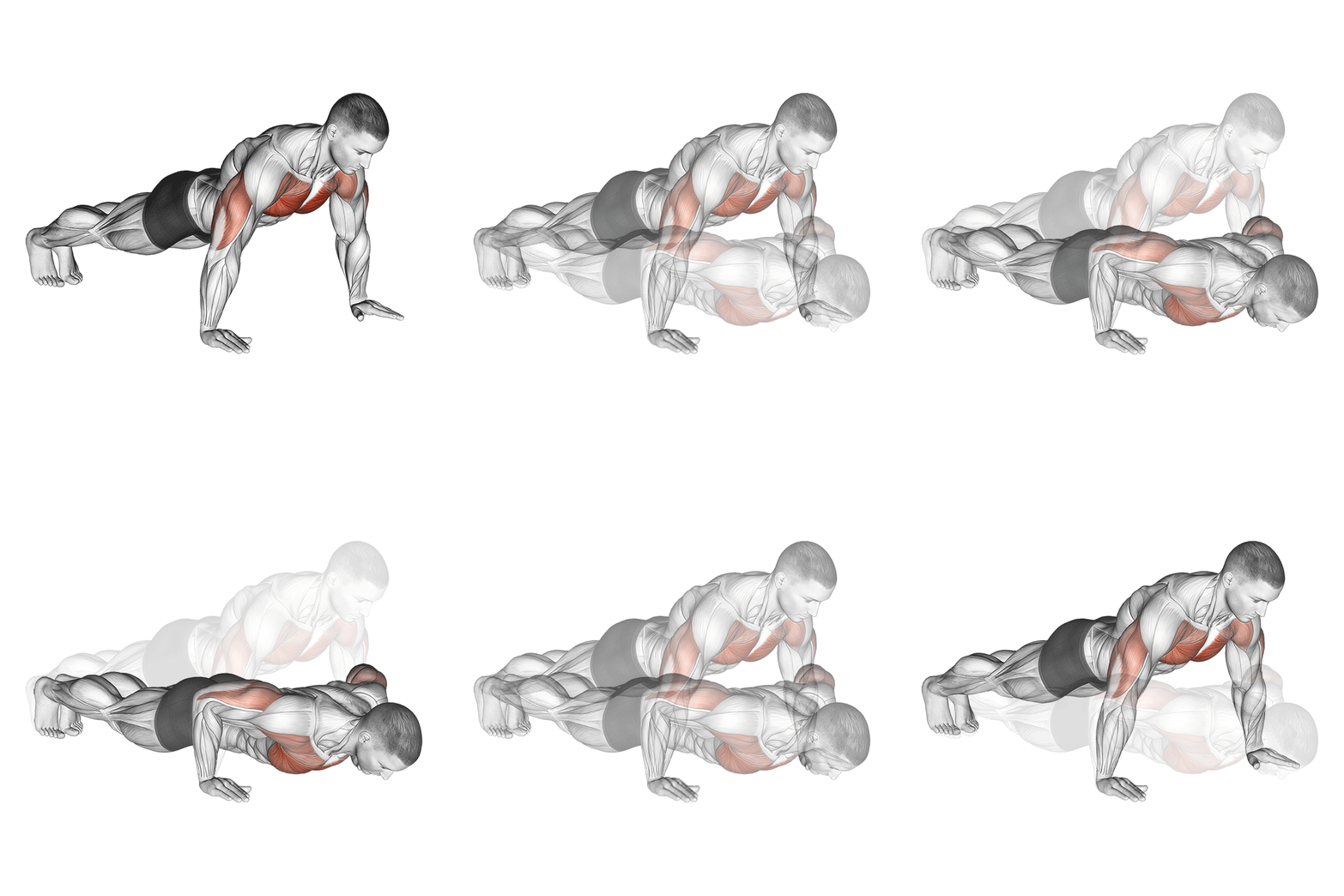
The push-up is a closed-chain horizontal press where you support your bodyweight on the hands and toes, then lower the chest to the floor and press back up. It loads the chest, anterior delts and triceps, while the core, glutes and quads work isometrically to hold a rigid plank. Properly done it builds upper-body strength, scapular control and trunk stability, and it scales from beginner kneeling reps all the way to advanced one-arm or weighted variations. It's the most portable strength test ever invented.
How to do the push-up
- 1
Plank, then position hands
Start in a top push-up: hands flat under the shoulders, fingers spread, body in one straight line from heels to head.
- 2
Brace and squeeze everything
Tighten abs, squeeze glutes, push the floor away with straight arms. There should be tension head-to-toe before you move.
- 3
Lower with elbows at 45°
Bend the elbows and lower until the chest is a fist's height off the floor. Elbows track at 45° from the torso, not flared to 90°.
- 4
Push to a hard lockout
Drive the floor away and finish with arms fully straight, shoulder blades wrapped slightly forward. Don't let the hips sag or pike.
Pro tip
If you can't do 10 strict push-ups, train them daily. Three sets of 5-8 reps every morning for a month and you'll double your max. It's that simple.
Common mistakes
Sagging hips.
If the hips drop, the lower back takes the load and the chest does nothing. Squeeze the glutes hard every rep.
Half-range reps.
Stopping six inches above the floor doesn't count. Chest to within a fist of the ground or it's not a push-up.
Elbows flared to 90°.
Wide elbows stress the shoulders. Keep them at 45° from the body for healthy reps.
Head leading the descent.
If the chin touches before the chest, the spine is bent. Keep the neck neutral, lower the whole torso as a unit.
Variations and progressions
Easier
Incline push-up
Hands on a bench, bar in a rack, or kitchen counter. The higher the hands, the lighter the load. Best regression for beginners.
Harder
Weighted or decline push-up
Place a plate or backpack on the upper back, or elevate the feet on a bench. Both add load and shift emphasis higher on the chest.
Wrist pain?
Push-ups on fists or handles
Knuckles down on a soft mat or grip parallel handles. Keeps the wrist neutral, easier on existing pain.
How to program it
Three protocols by goal. Pick one per cycle and aim for progression on load or distance.
| Goal | Sets × distance | Load | Rest |
|---|---|---|---|
| Strength base | 5 × 5-8 | Bodyweight, full range | 60-90 s |
| Hypertrophy / volume | 4 × 15-25 | Bodyweight or +5 kg | 60 s |
| Conditioning finisher | EMOM 10 × 12 | Bodyweight | Rest of the minute |
Push-Up FAQ
Are push-ups enough to build a chest?
Up to a point, yes. Bodyweight push-ups in the 15-30 rep range build a solid base. Past that, you need to add load: backpack, plate, decline, or move to bench press. Push-ups alone won't build a powerlifter chest, but they will absolutely build a strong, capable one.
Should I do push-ups every day?
If you're under 25 strict reps, yes. Daily sub-maximal sets (5-8 reps, never to failure) build strength faster than three weekly sessions for beginners. Once you can do 25+, switch to 2-3 dedicated sessions a week with added load or harder variations.
Why do my shoulders hurt during push-ups?
Almost always elbow flare. Wide elbows stress the front of the shoulder. Tuck them to 45° from the torso, keep the shoulder blades back and down, and the pain usually vanishes within a few sessions. If it persists, switch to incline push-ups while you build scapular control.