What is the incline push-up?
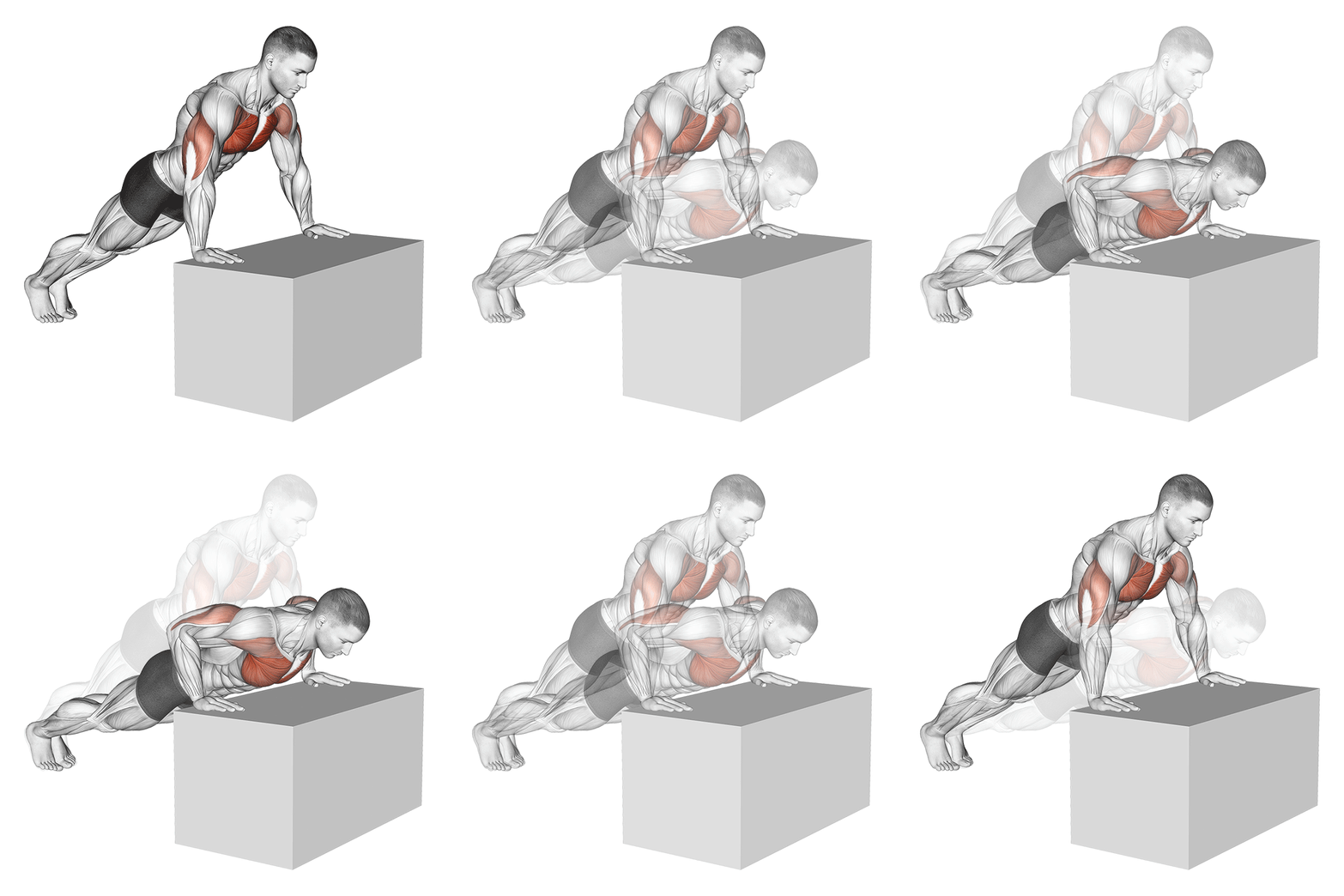
The incline push-up is a standard push-up with your hands raised on a bench, box or bar, which tilts your body upward and takes weight off your arms. On the floor you press roughly two thirds of your bodyweight; at bench height it drops to around half, at waist height less still, so surface height becomes your loading dial. Unlike knee push-ups, it keeps the full plank from head to heels: your core learns its job from day one, and every rep rehearses the exact technique of the floor version. It is the cleanest road to a first full push-up, and a high-volume pressing tool for everyone else.
How to do the incline push-up
- 1
Choose your height like a weight
Wall, waist-high bar, bench, low step: the higher your hands, the lighter the rep. Pick a surface where 8-12 clean reps is genuinely hard, and make sure it cannot slide.
- 2
Build the plank before the push
Hands just outside shoulder width on the edge, arms locked, then walk your feet back until your body forms one straight line from head to heels. Glutes squeezed, ribs tucked: this line is non-negotiable for the whole set.
- 3
Lower your chest to the edge
Bend the elbows at about 45 degrees from your torso and lower for a steady 2 seconds, until your chest, not your chin, almost touches the surface. Your whole body travels as one piece.
- 4
Press away and finish long
Drive through your palms until the elbows lock, then push a centimetre further to spread your shoulder blades apart. That final push-away keeps the serratus working and your shoulders healthy.
Pro tip
A bar in a power rack or a Smith machine is the best progression tool in the gym: drop it one notch every time you own 3 × 12. Those small jumps save you months of frustration compared to leaping straight from bench height to the floor.
Common mistakes
Hips breaking the line.
Sagging hips dump the work into your lower back; a piked butt makes the rep easier and teaches nothing. If the plank keeps failing, the surface is too low: go up a notch and own the line first.
Pecking with the head.
Reaching for the bench with your chin fakes range of motion while your chest stays a hand span away. Keep the neck long and lead with the sternum: the chest arrives first, or the rep does not count.
Camping at the same height.
The incline push-up is a ladder, not a residence. Once 12 reps feel smooth, lower the surface or slow the descent. Staying at kitchen-counter height for six months is exactly why so many people never reach the floor.
Bouncing off the edge.
Dropping fast and ricocheting off the surface robs the pecs of the hardest half of the rep. Two seconds down, a light touch, then press: the muscle grows on the way down too.
Variations and progressions
Easier
Wall push-up
Hands on a wall, body at a slight lean: the gentlest version of the pattern, perfect for absolute beginners or for rebuilding after an injury.
Harder
Standard push-up
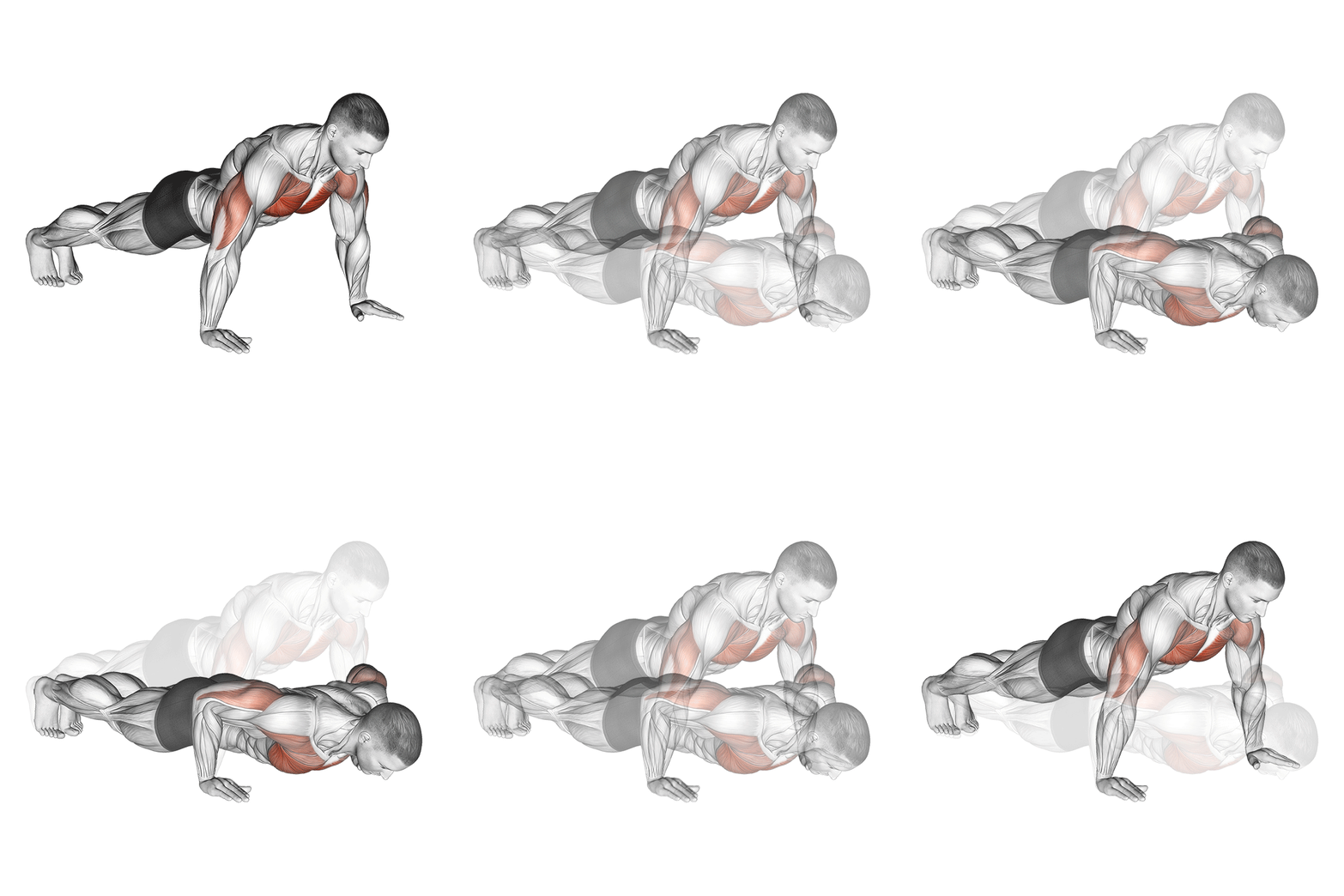
Hands on the floor is the graduation: around two thirds of your bodyweight in your hands. Earn it with 3 × 12 clean reps at knee height first.
Alternative
Knee push-up
The other classic regression. It lightens the load but shortens the lever, so your core never learns the full plank. Useful as a backup set once your incline reps run out.
How to program it
Three protocols by goal. Pick one per cycle and aim for progression on load or distance.
| Goal | Sets × distance | Load | Rest |
|---|---|---|---|
| First full push-up | 3-4 × 8-12 | Height where the last rep grinds | 90 s |
| Hypertrophy volume | 3 × 12-20 | Moderate height, RPE 8 | 60-90 s |
| Warm-up before pressing | 2 × 10-15 | Easy height, crisp reps | 30-45 s |
Incline Push-Up FAQ
Incline push-ups or knee push-ups for beginners?
Both lighten the load, but not the same way. The incline keeps the full plank and adjusts by the centimetre through surface height, so you progress like on a pin-loaded machine. The knee version shortens the lever, changes the core demand and offers exactly two settings: knees or toes. Make incline push-ups the main course, and keep knee reps as backup sets when the tank is empty.
How much of my bodyweight am I actually pushing?
On the floor, roughly two thirds of your bodyweight goes through your hands. Raise them to knee height and it drops to a little over half; at hip height it is closer to 40%, and against a wall only a small fraction remains. That spread is the whole point: few exercises let you fine-tune load this precisely without touching a single weight.
Do incline push-ups work the lower chest?
Yes, mildly. With the hands elevated, you press down and forward relative to your torso, which biases the sternal, lower portion of the pecs, the same logic as a decline bench press. But at bodyweight loads the effect stays modest: choose the incline push-up for scalable pressing volume, not as a lower-chest specialist.
How do I progress from incline push-ups to full push-ups?
Use the 3 × 12 rule: when you own three sets of 12 with a perfect plank, lower your hands one level, roughly 10-15 cm. From knee height, start doing floor sets of 3-5 while keeping your incline volume. Followed consistently, that ladder gets most people their first full push-up within weeks to a few months.