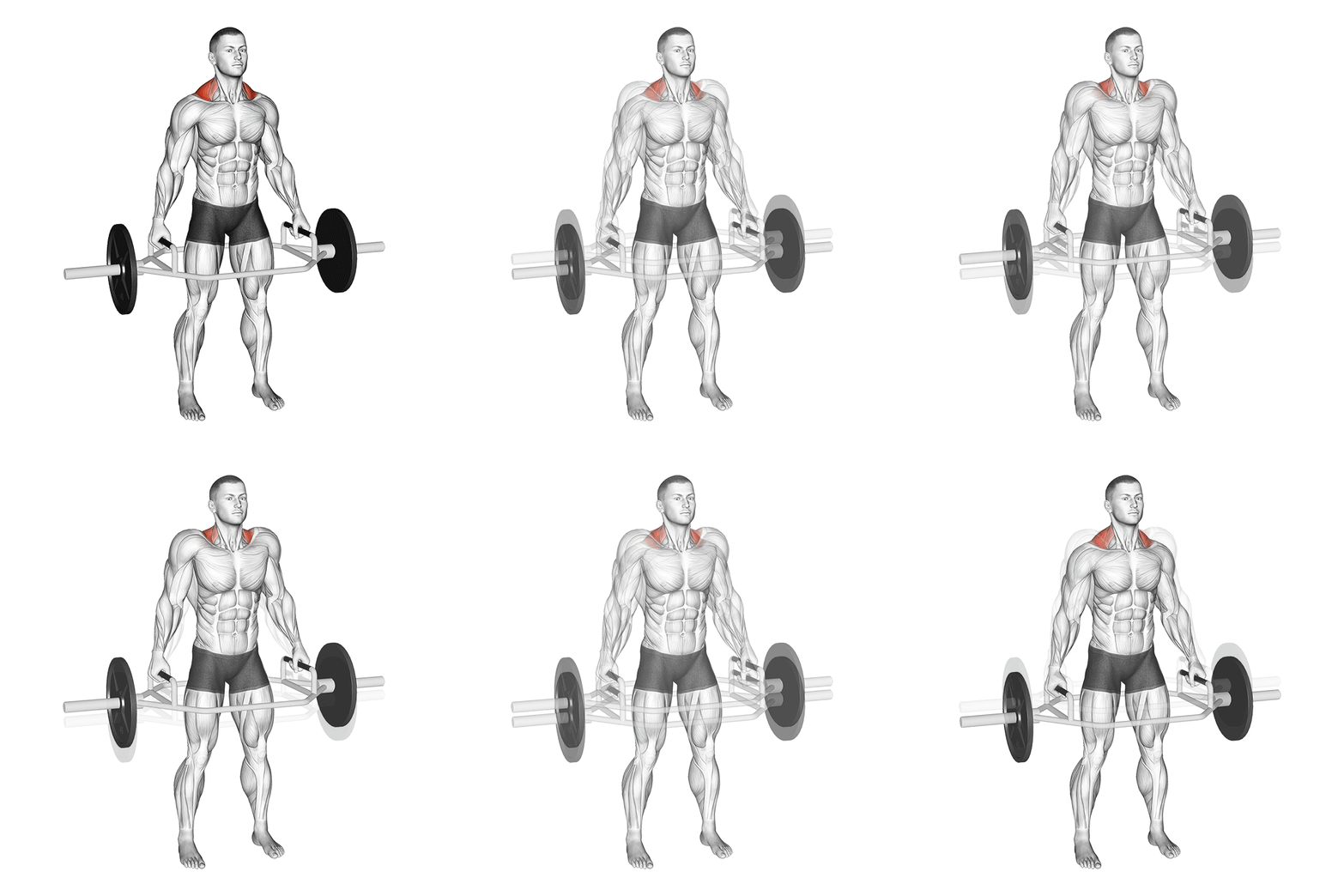
What is the trap bar shrug?
The trap bar shrug is the shrug built for heavy loading: you stand inside a hex bar, take the high handles with a neutral grip, and drive your shoulders straight up toward your ears. Because the load hangs in line with your body instead of in front of your thighs, there is no bar dragging up your legs and no forward pull folding you over. Combined with the neutral grip, the strongest position for your hands, that geometry lets you shrug more weight than any other variation. For the traps that hold farmer's carries and deadlift lockouts together, this is the biggest, simplest hammer in the rack.
How to do the trap bar shrug
- 1
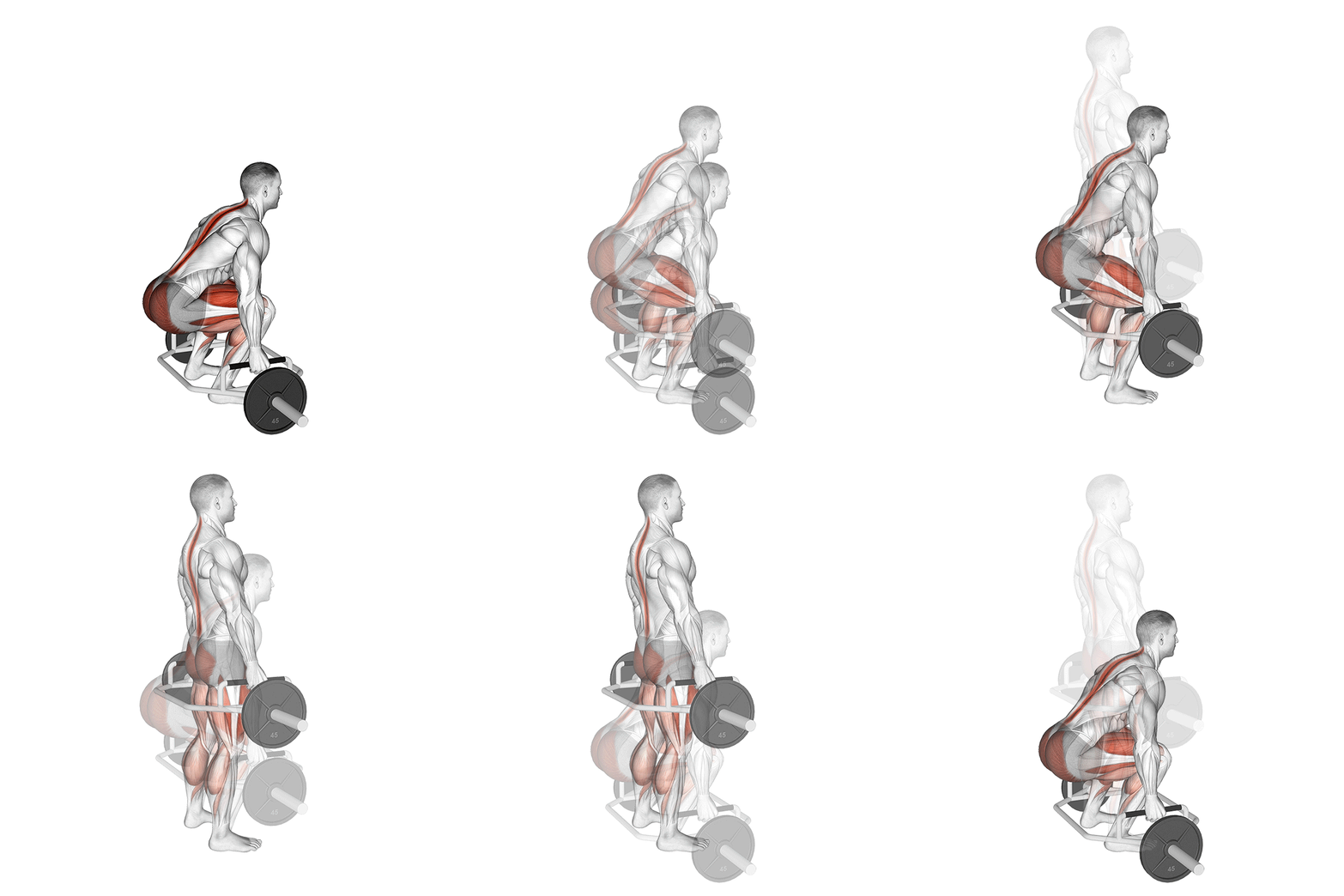
Step inside and deadlift it up
Stand centred inside the frame, take the high handles with a neutral grip, and stand up exactly as you would for a trap bar deadlift. The lift to standing is transport, not the exercise.
- 2
Get tall, arms long
Stack your shoulders over your hips, brace lightly and let the arms hang like two straps. Elbows stay straight from the first rep to the last: the traps lift, nothing else.
- 3
Shrug straight up to your ears
Drive the shoulders vertically as high as they go and squeeze for a full second at the top. No rolling, no chin poking forward: up is the only direction.
- 4
Lower to a full hang
Take 2 s down and let the weight pull your shoulders into a genuine stretch before the next rep. The bottom half of the range is where stolen reps hide.
Pro tip
Your forearms will wave the white flag long before your traps do, so use straps or chalk on heavy sets and save the grip battle for your carries. A shrug set should end because the shoulders fail, not the fingers.
Common mistakes
Rolling the shoulders.
Circles look fancy and add nothing: the fibres you are training pull the shoulder blade up, full stop. Rolling just walks the joint through loaded positions it never needed to visit.
Bending the elbows.
The moment the elbows break, the arms start sharing a load meant for the traps. If you catch yourself pulling, lighten the bar and think shoulders to ears only.
Pulsing the top quarter.
Loading the bar so heavy that reps shrink to a two-centimetre bounce trains nothing but your ego. Full stretch at the bottom, full squeeze at the top, or take plates off.
Jutting the head forward.
Poking the chin out mid-set tips the neck into the work and leaves it sore for days. Keep a double chin and let the shoulders rise past a motionless neck.
Variations and progressions
Easier
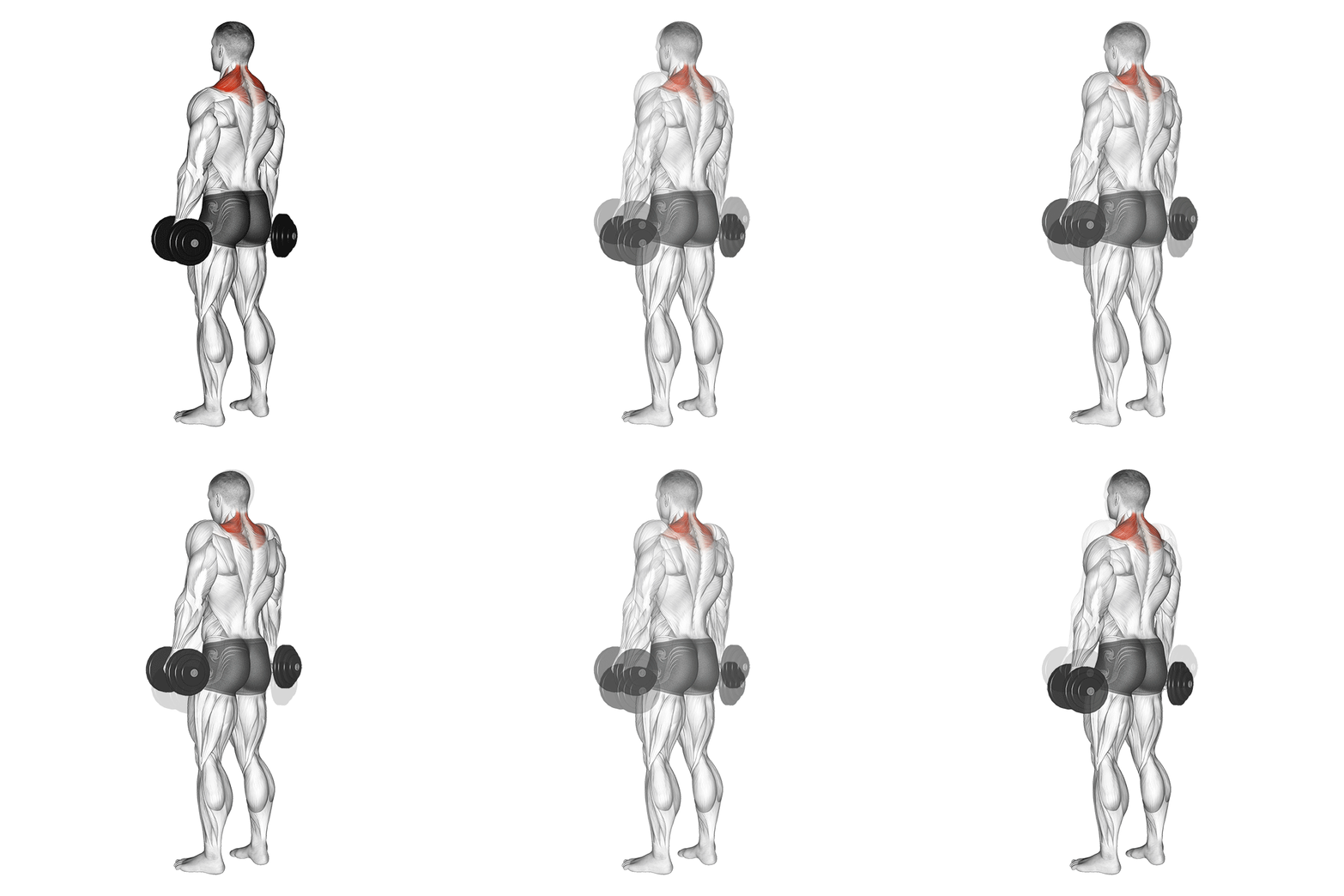
Dumbbell shrug
Two dumbbells at your sides copy the trap bar's in-line load with lighter entry weights and no setup. The right first stop before the hex bar's big plates.
Harder
Paused trap bar shrug
Same setup, but every rep earns a 3 s hold at the very top. The pause deletes momentum and exposes how much of your usual shrug was bounce.
No trap bar?
Barbell shrug
A straight bar held in front of your thighs does the job with one caveat: the load pulls you slightly forward, so brace harder and expect the bar to drag up your legs.
How to program it
Three protocols by goal. Pick one per cycle and aim for progression on load or distance.
| Goal | Sets × distance | Load | Rest |
|---|---|---|---|
| Heavy strength | 4 × 6-8 | Heavy, straps on, RPE 8 | 2 min |
| Hypertrophy | 3 × 10-12, 1 s top squeeze | RPE 8 | 90 s |
| Traps + grip | 2 × 15-20, no straps | Moderate, bare hands | 60-90 s |
Trap Bar Shrug FAQ
Trap bar or barbell shrug?
The trap bar wins on three counts: the load hangs at your sides in line with your spine instead of in front of it, the neutral grip is your strongest hand position so grip lasts longer, and nothing scrapes up your thighs. That means heavier sets with less lower-back and posture cost. Keep the barbell version for gyms without a hex bar; it offers no stimulus the trap bar does not.
Should I use lifting straps for shrugs?
On your heaviest sets, yes, without guilt. Traps are among the strongest muscles you own and will handle loads your fingers cannot hold for 10 slow reps with a pause. Letting grip cap the weight means the target muscle never reaches its hard sets. A clean compromise: warm-ups and one back-off set bare-handed for grip, straps on everything heavy. Your carries and deadlifts will keep training the grip anyway.
Aren't heavy deadlifts enough for my traps?
Deadlifts hammer the traps isometrically: the muscle fights to hold position but never moves through a range. That builds real strength, and for many lifters it is genuinely enough. Add shrugs when you want traps that grow faster than your deadlift does: the dynamic contraction, full stretch and top squeeze give the muscle work the deadlift never asks of it. Two short slots a week cover it.