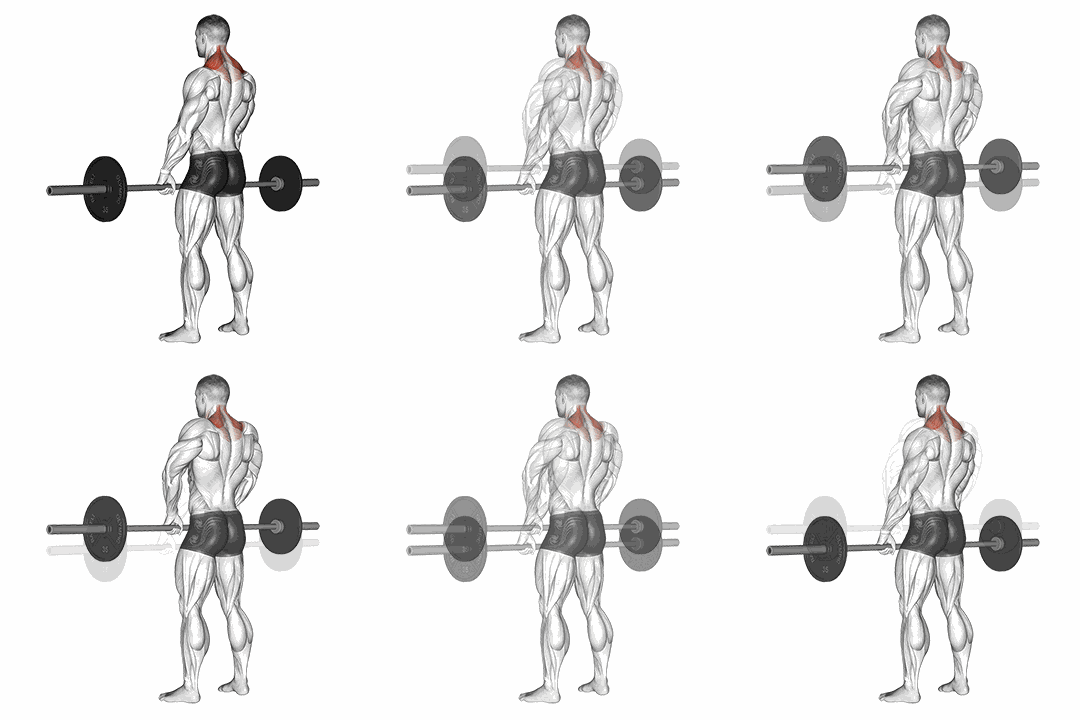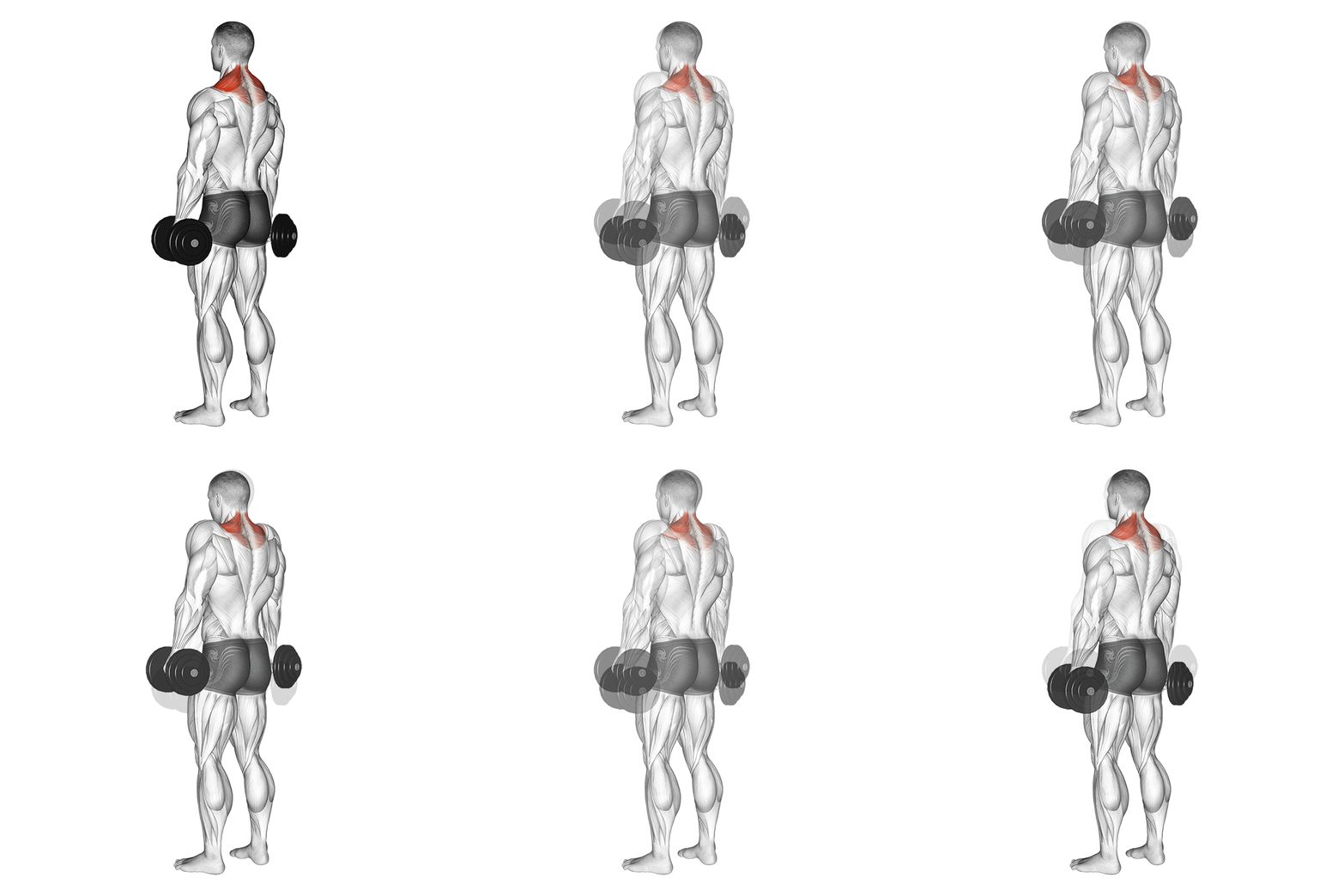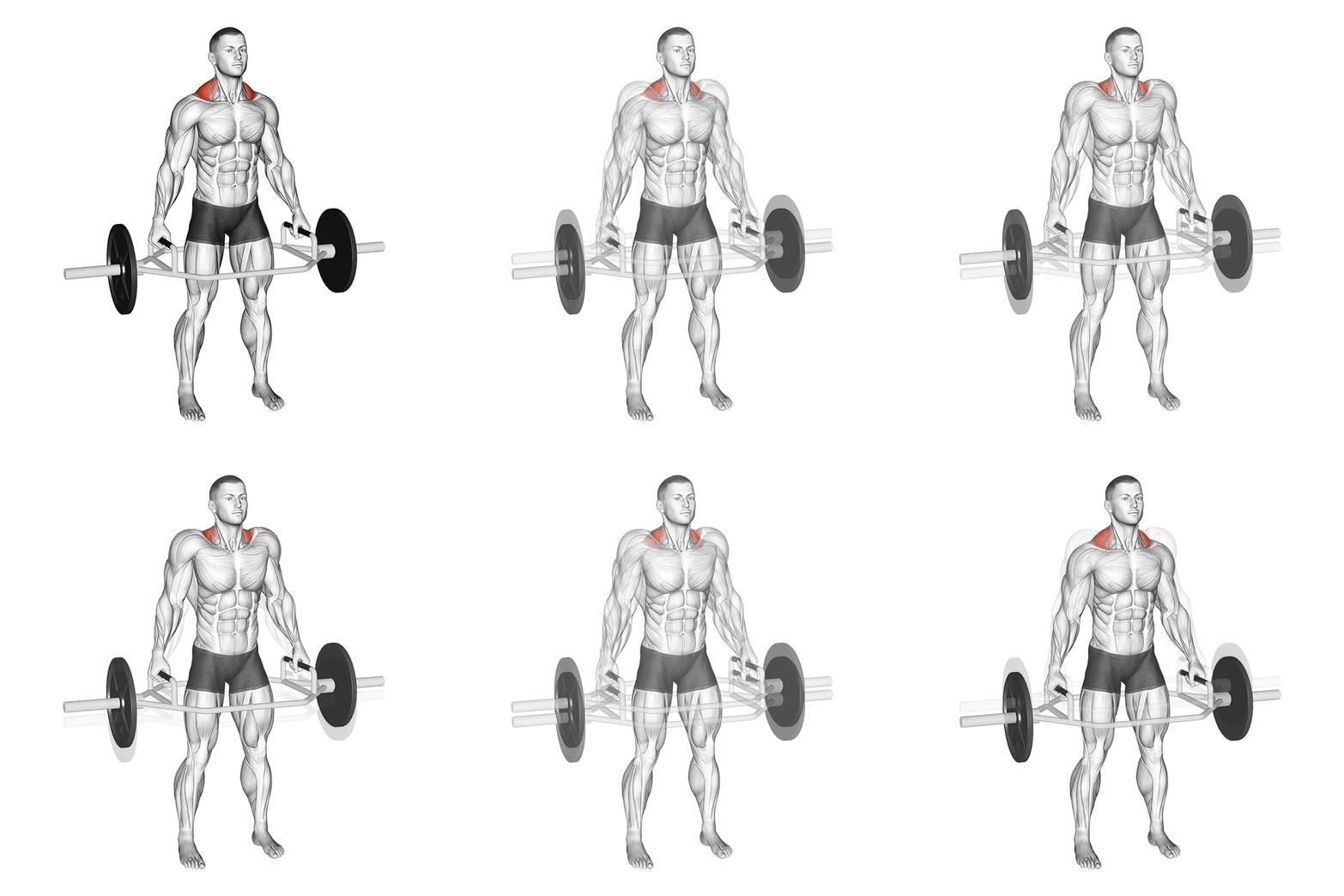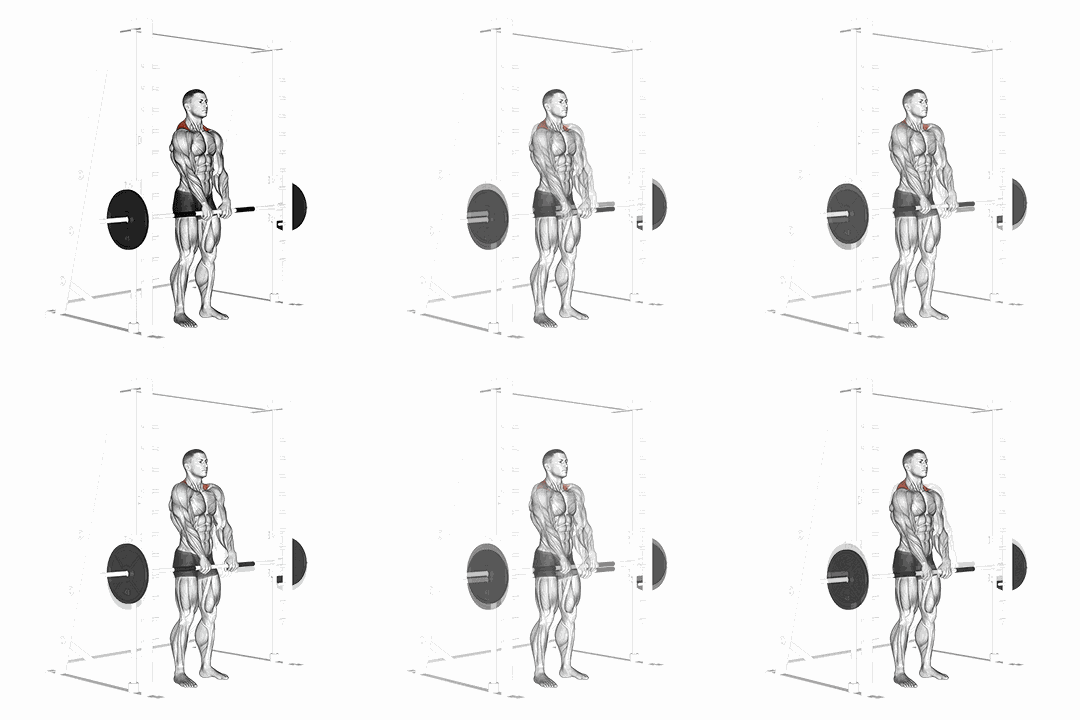
What is the smith machine shrug?
The Smith machine shrug is scapular elevation with the guesswork removed. The bar runs on fixed rails, so there is no path to balance, no thigh drag to steer around, and the hooks let you start and finish every set at exactly the height you choose. Compared with a barbell shrug you trade a little stabiliser work for a cleaner line of pull and simpler overload, which makes this version a strong pick when you want to hammer the traps late in a session, train around a tired lower back, or learn what a full-range shrug should feel like before earning it with free weight.
How to do the smith machine shrug
- 1
Line up with the rails
Rack the bar at mid-thigh, load it, and stand with your mid-foot directly under the bar so it just brushes your thighs. On a Smith machine your stance decides the line of pull, so center yourself before you grip anything.
- 2
Grip and unrack
Take a double overhand grip just outside your legs, rotate the bar off the hooks, and stand tall. Arms locked long, knees unlocked, eyes forward: from here, nothing below the shoulders moves.
- 3
Drive the shoulders to the ceiling
Exhale and pull both shoulders straight up as high as they will travel, then squeeze hard for a full second. The rails handle the path; your only jobs are height and tension.
- 4
Sink into the stretch
Lower on a two-second count and let the weight draw your shoulders into a deep stretch at the bottom, without re-hooking the bar between reps. Start the next rep from that stretched position, under control.
Pro tip
Your foot position is the technique. Line your mid-foot up under the rails before you unrack: stand two centimetres too far back and every rep becomes a small backward lean that robs the traps and sends the load into your lower back instead.
Common mistakes
Standing off the bar path.
The rails only move vertically, so if your feet sit behind the bar you have to lean toward it on every rep, which shifts load into the lower back. Put your mid-foot under the bar and stay stacked; a good Smith shrug feels like the machine isn't there.
Racking the bar too high.
If the hooks sit where your shoulders already hang, you have deleted the bottom stretch, the most productive part of the range. Set the bar at mid-thigh and travel through all of it.
Popping onto the toes.
Heels lifting adds centimetres to the bar, not to the shrug: your calves did them. Weld the heels down so every centimetre of bar travel comes from the traps.
Letting the rails sell you extra plates.
Because the machine balances the load for you, the Smith invites weights your traps can't move through a full range. The test is simple: if the top pause has disappeared, some plates need to come off.
Variations and progressions
Easier
Dumbbell shrug
Two moderate dumbbells let you learn shoulder elevation with zero setup: no rails to align with, no hooks to manage, and tiny weight jumps when you progress.
Harder
Behind-the-back Smith shrug
Unrack the bar behind your thighs instead of in front. The position forces a proud chest, blocks any forward slump, and keeps every rep strict in a way the standard version can't.
Alternative
Barbell shrug
The free bar brings back balance, grip work, and a path you set yourself. Graduate to it once full-range reps with a pause are automatic on the rails.
How to program it
Three protocols by goal. Pick one per cycle and aim for progression on load or distance.
| Goal | Sets × distance | Load | Rest |
|---|---|---|---|
| Hypertrophy | 4 × 10-12 | RPE 8, strict 1 s top hold | 90 s |
| Heavy overload | 5 × 6-8 | RPE 8-9, straps if grip fails | 2 min |
| Finisher | 2 × 15-20 | Moderate, 2 s stretch at the bottom | 60 s |
Smith Machine Shrug FAQ
Is the Smith machine actually good for shrugs?
Yes, and better than for most lifts. A shrug's bar path is naturally a straight vertical line, which is exactly what the rails provide, and stabiliser muscles contribute little to trap growth anyway. The only real cost is that a fixed path punishes a bad stance, so take the time to center your feet.
Smith machine shrug or barbell shrug: which builds bigger traps?
For the traps themselves, the stimulus is close to identical at equal effort. The Smith lets you overload with less setup and no balance demand; the barbell adds grip and stabiliser work and transfers better to deadlifts and carries. Many lifters run the Smith version for strict hypertrophy work and keep their free-weight pulling elsewhere in the week.
Why do I feel Smith machine shrugs in my lower back?
Your stance is off. If the bar path sits even a few centimetres in front of your mid-foot, you are holding a light but endless good morning for the whole set. Re-rack, move your feet under the bar, and keep your ribs stacked over your hips; the sensation should disappear immediately.
Should I shrug with the bar in front or behind my body?
In front is the default: a stronger, more comfortable position that is easy to load. Behind the back is a worthwhile change of stimulus that forces an upright posture and keeps you honest, at the price of less range and an awkward unrack. Build your base in front; rotate the back version in for variety.