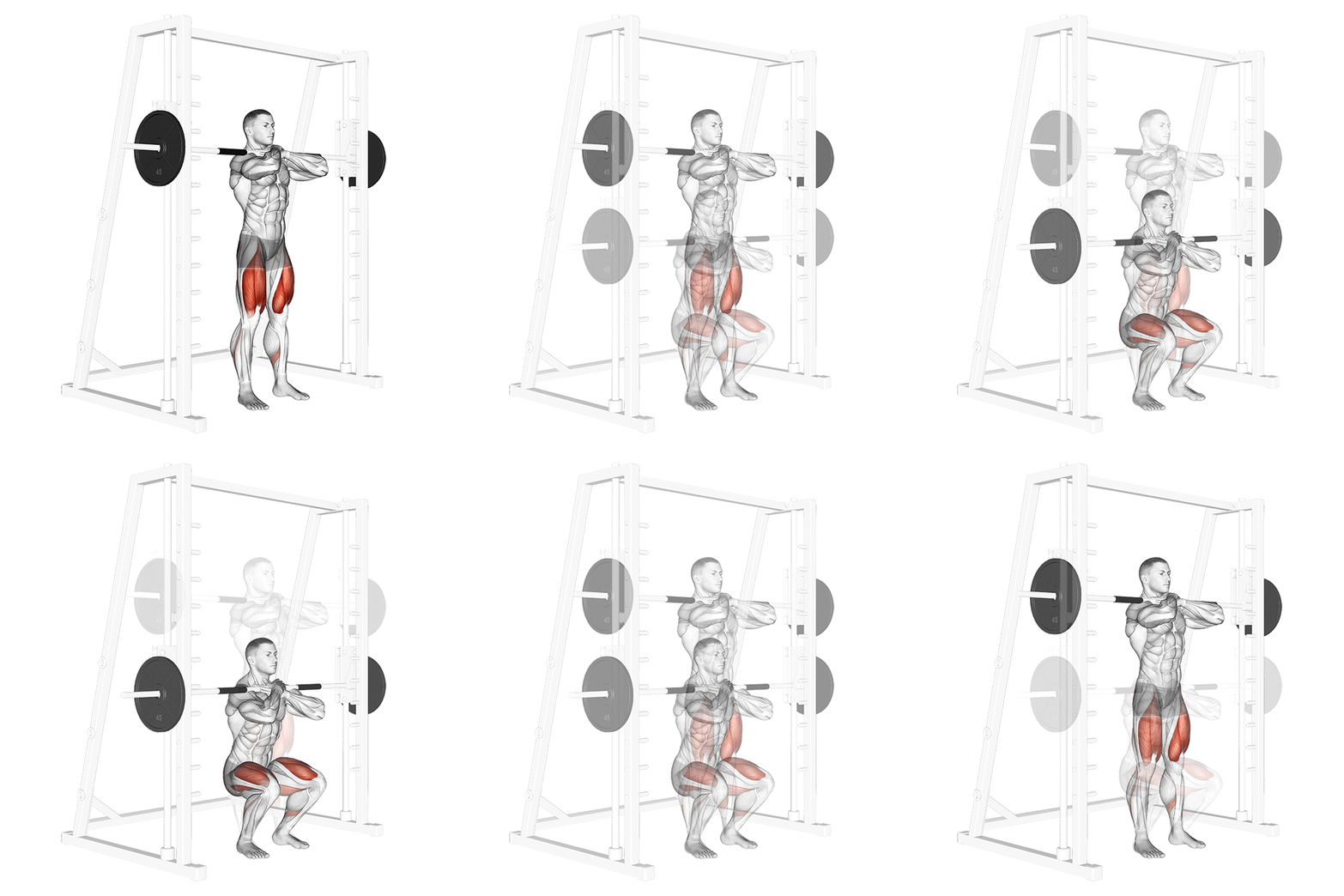
What is the smith machine front squat?
The Smith machine front squat puts the front-rack squat on a guided track: the bar sits on your front delts, elbows high, while the machine's rails lock the path dead vertical. Because the machine handles the balance, you can place your feet slightly ahead of the bar and sit straight down with a bolt-upright torso, something a free barbell would punish immediately. The result is a front squat with the mobility and stability tax removed: less core and upper-back demand, more pure quad work, and a safer place to chase hard sets. It suits lifters building quads, grooving the front-rack position, or working around a cranky lower back.
How to do the smith machine front squat
- 1
Set the bar and pick a grip
Set the bar just below shoulder height. Step in, park it on your front delts and choose: clean grip with fingertips under the bar, or arms crossed over it. On a Smith either works, because the rails, not your hands, keep the bar in place.
- 2
Walk your feet forward
Unrack by rotating the bar off the hooks, then slide both feet about a half foot-length in front of the bar line, shoulder width, toes slightly out. On a fixed path, foot position replaces balance as your main technique decision.
- 3
Sit straight down, elbows high
Lower for 2-3 s, knees tracking over the toes, torso vertical, elbows driving up toward the mirror the entire descent. Aim for thighs at parallel or just below, heels flat.
- 4
Drive up and re-rack with intent
Push the floor away through the whole foot and exhale past the sticking point; the rails keep the bar honest, so just stand up. At the end of the set, rotate the bar firmly back onto the hooks and check it is seated before stepping out.
Pro tip
Set the safety stops just below your bottom position before your first rep. The Smith's party trick is letting you train to true failure alone: with the stops in place, a missed rep is a shrug, not an emergency, so you can finally use the machine for what it does best.
Common mistakes
Feet directly under the bar.
With a free bar that is correct; on a locked vertical path it shoves your knees far forward and peels your heels off the floor. Step forward until you can sit straight down with flat feet.
Elbows sinking rep after rep.
When the elbows drop, the bar rolls off the delts onto the wrists and the upper back folds. Pick a point above eye level and drive the elbows at it every rep, especially out of the hole.
Feet so far forward it becomes a leg press.
A big forward walk lets you lean back into the bar and push through it like a hack squat, which is a different exercise. Half a foot-length is the sweet spot: enough to stay upright, not enough to turn the movement into a standing leg press.
Trusting the machine instead of your brace.
The rails fix the bar, not your spine. Ribs down, big breath, braced trunk before every rep, exactly as if the bar were free: a guided bar on a slack torso still compresses a rounded back.
Variations and progressions
Easier
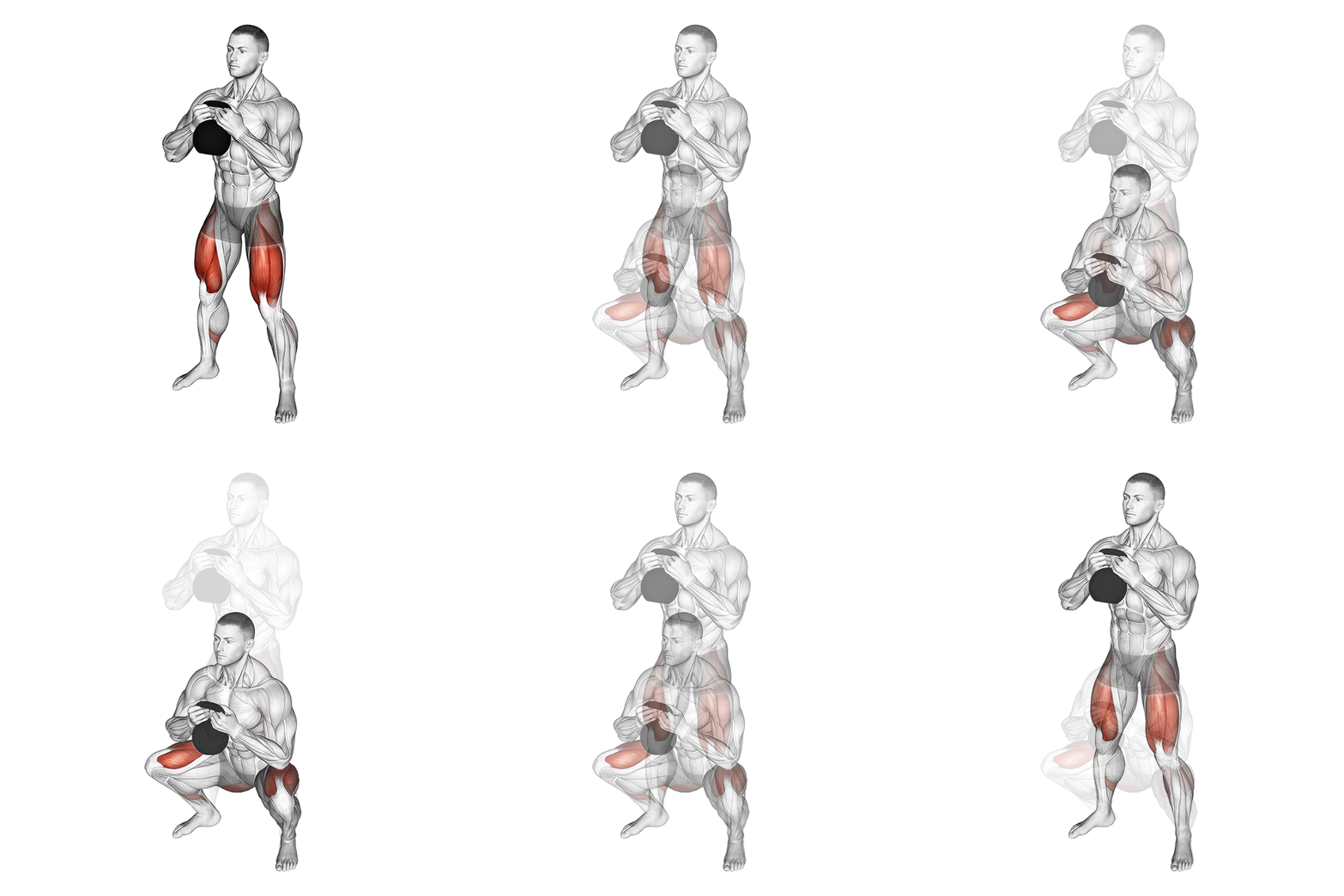
Goblet squat
One dumbbell held at the chest teaches the upright, front-loaded pattern with zero setup. Own 12 clean reps here before stepping under the Smith bar.
Harder
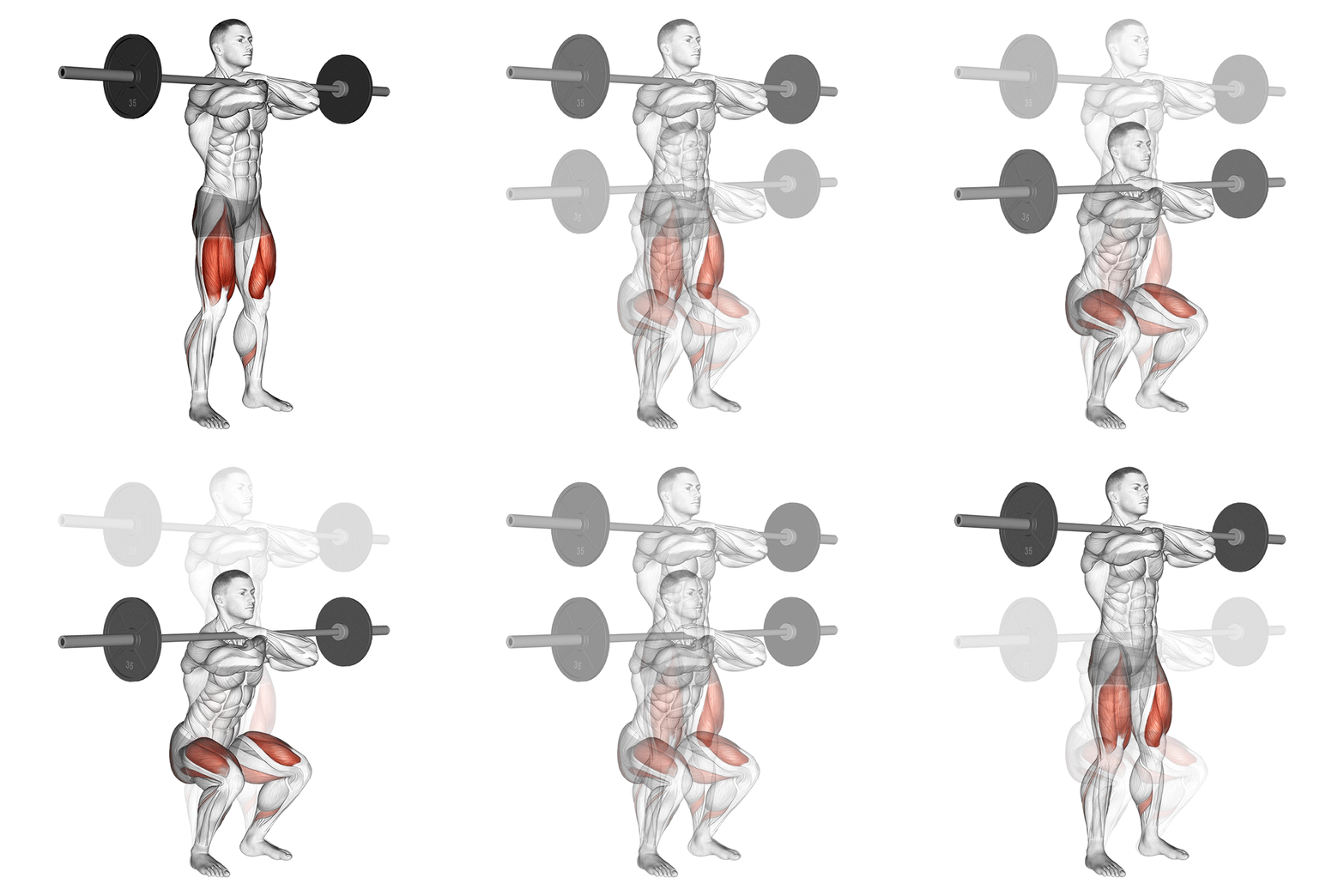
Barbell front squat
The free bar adds back the balance, mobility and brutal upper-back demand the Smith removed. Expect to drop the load and find out what the machine was doing for you.
No Smith?
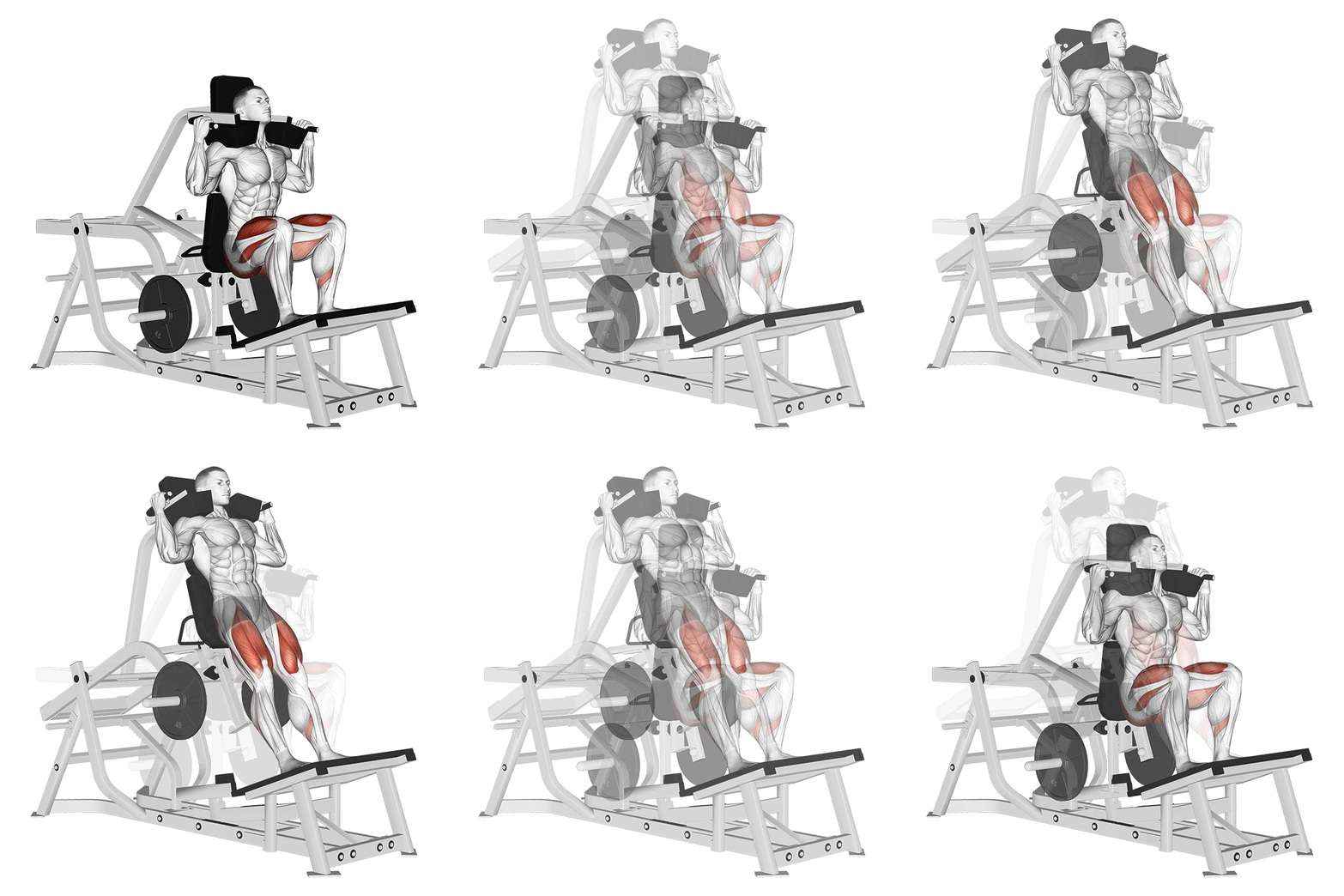
Machine hack squat
Another fixed path with a quad bias, minus the front-rack position. The pad on your shoulders spares the wrists entirely while keeping the deep, guided knee bend.
How to program it
Three protocols by goal. Pick one per cycle and aim for progression on load or distance.
| Goal | Sets × distance | Load | Rest |
|---|---|---|---|
| Strength | 4 × 5-6 | Heavy, RPE 8 | 2-3 min |
| Hypertrophy | 3-4 × 8-12 | RPE 8-9, safeties set | 90 s |
| Quad finisher | 2 × 15-20 | Light, 3 s descents | 60-75 s |
Smith Machine Front Squat FAQ
Smith machine front squat vs barbell front squat?
The barbell version is the bigger exercise: it trains balance, thoracic position and a rock-solid rack along with the legs, and it transfers to cleans and free squatting. The Smith version is the better quad tool: with stability outsourced to the rails you can push sets closer to failure, isolate the legs on tired days, and keep squatting around wrist or upper-back limitations. Most lifters are best served using both for different jobs.
Where should my feet be on a Smith machine squat?
Slightly ahead of the bar: about half a foot-length for a front squat. Under the bar, the fixed vertical path forces your knees miles forward and lifts your heels. Far in front, you lean back into the bar and turn the lift into a standing leg press. Test with an empty bar: the right spot lets you hit depth with flat heels and a vertical torso, no fighting the rails.
Cross-arm or clean grip on the Smith?
Whichever keeps your elbows highest. On a free bar the clean grip earns its keep by securing the bar; on a Smith the rails do that job, so the cross-arm position loses its usual downside. If your wrists or lats are too tight for a full clean grip, cross your arms, keep the bar on the delts and move on. Keep the clean grip if you also front squat free or do cleans, to keep practicing the position.