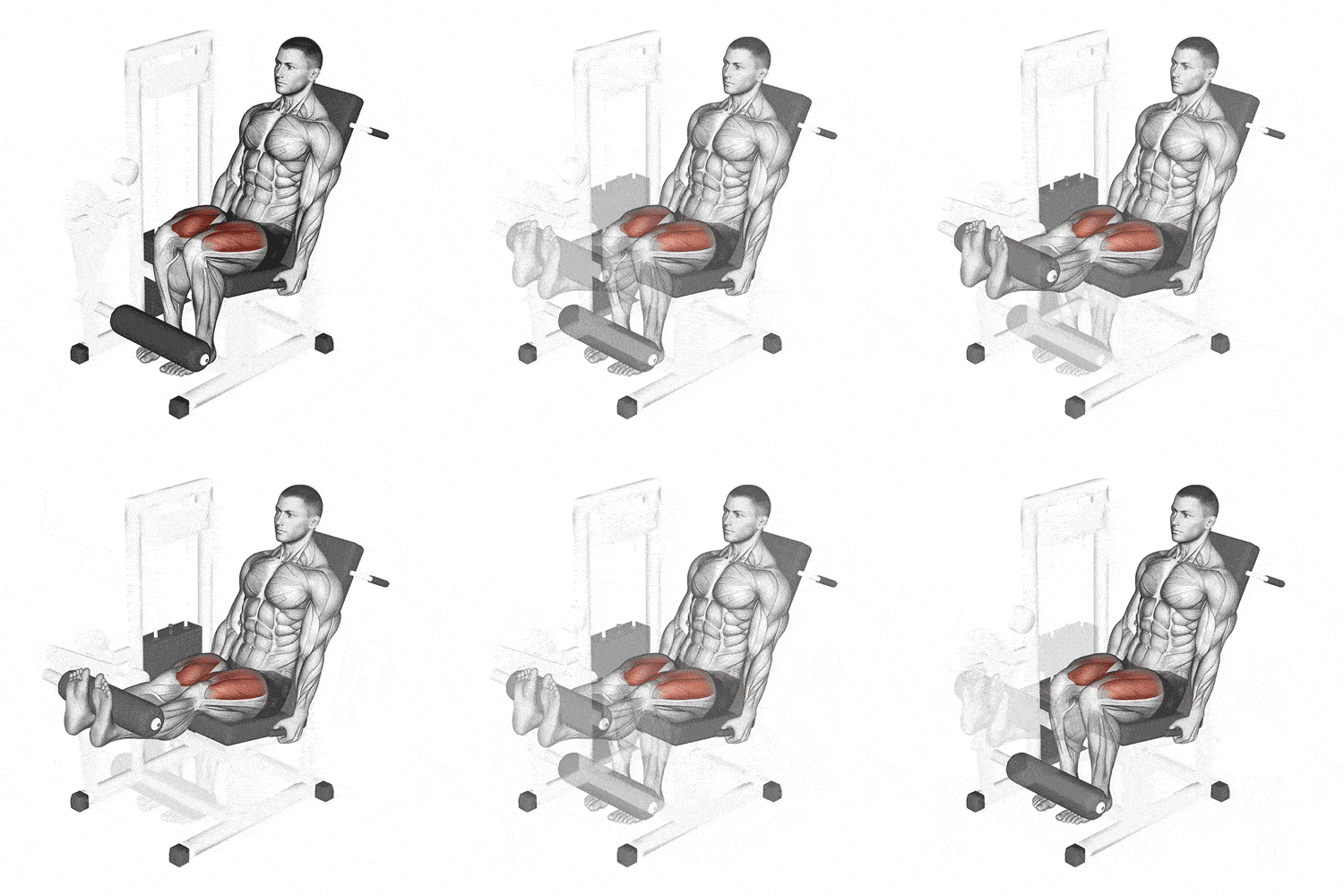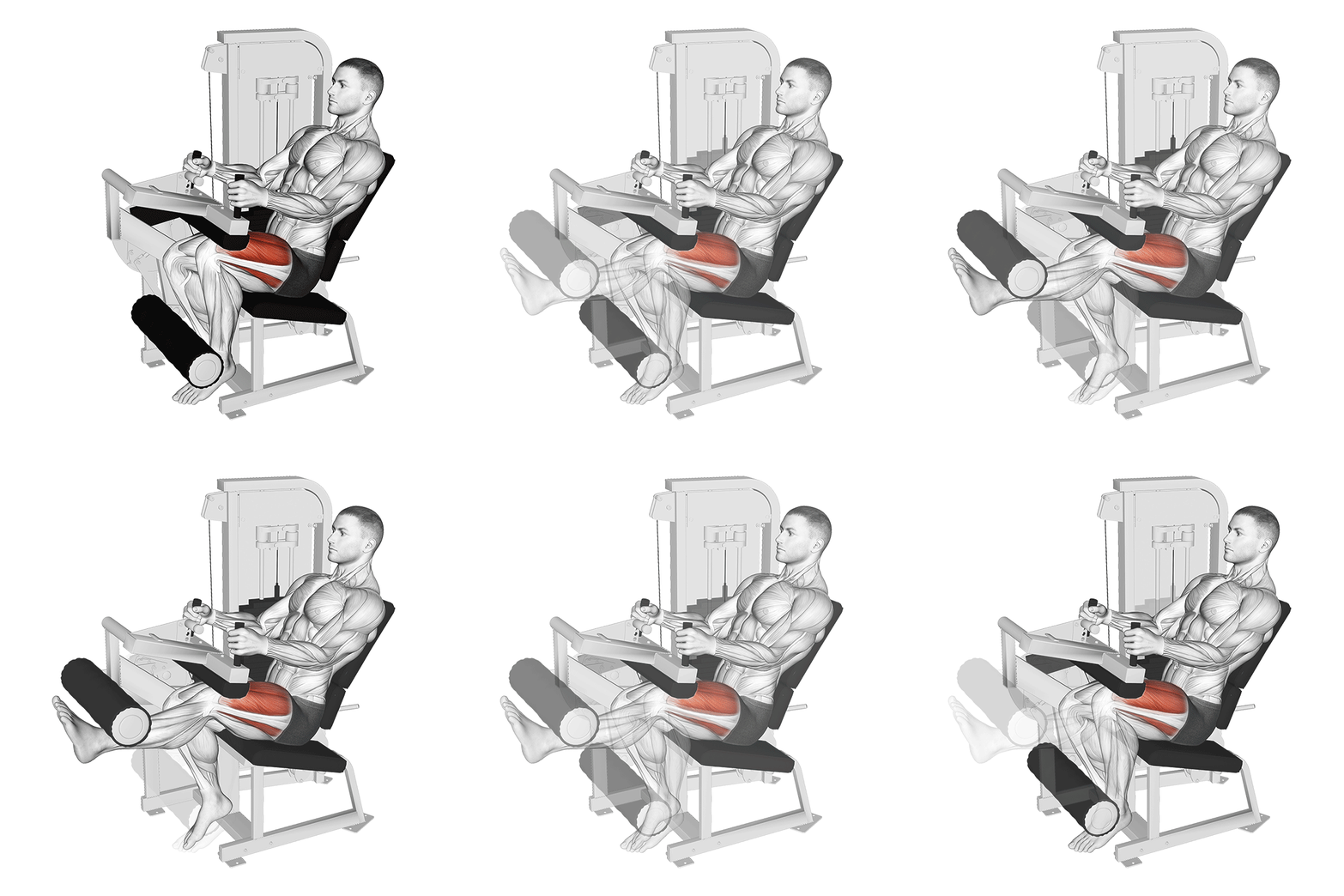
What is the single-leg extension?
The single-leg extension is the leg extension machine worked one leg at a time: same seat, same pad on the shin, but each quad lifts its own stack with no help from the other side. Bilateral machines let a dominant leg quietly take over; this version makes every rep an honest audit. That is why it shows up everywhere from bodybuilding programs chasing a lagging quad to knee rehab plans rebuilding strength after ACL or patellar injuries, where loading one knee precisely, without stressing the hips or spine, is exactly what you want. If a strength gap exists between your legs, this machine will find it in one set.
How to do the single-leg extension
- 1
Set the machine for your knee
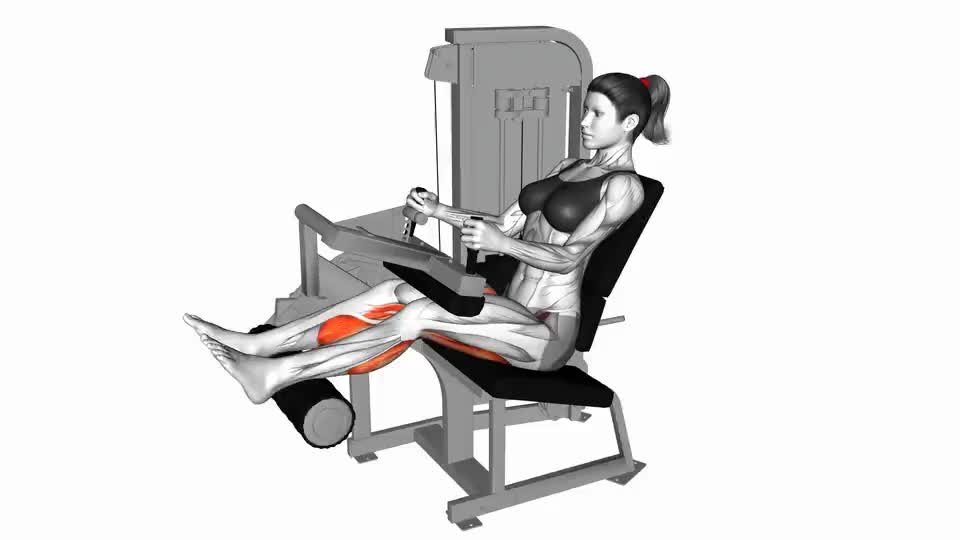
Adjust the seat so the back of your knee touches the edge of the pad and the knee joint lines up with the machine's pivot. Set the roller on the lower shin, just above the ankle, and start with roughly half of your two-leg weight.
- 2
Start with the weaker leg
Grip the handles, press your back into the pad and keep both hips glued to the seat. The weaker leg always goes first: it sets the weight and the rep count the strong leg will have to copy.
- 3
Extend to a full lockout
Straighten the knee over 1-2 s until the leg is fully extended, then squeeze the quad hard for a full second. The top few degrees are the part that disappears after knee injuries, so do not skip them.
- 4
Lower slower than you lifted
Take 2-3 s to lower the pad and stop just before the stack touches down, keeping tension on the quad. Finish all reps on one side, then match them exactly on the other.
Pro tip
Your weak leg writes the program: it trains first, and the strong leg only gets the weight and reps the weak one just earned. Do it the other way around and the gap you came here to fix will follow you for years.
Common mistakes
Knee out of line with the pivot.
If your knee sits in front of or behind the machine's axis, the pad drags along your shin and the joint takes shear it does not need. Slide the seat until knee and pivot match before you load anything.
Kicking the weight up.
A fast kick uses momentum through the easy range and dumps the hard part. Hips lifting off the seat are the giveaway: lighten the stack and own the full 1-2 s lift.
Letting the strong leg choose the weight.
If the stack is set by what your dominant leg can handle, the weak leg trains with sloppy, grinding reps. Set the load off the weak side and keep both legs on identical numbers.
Stopping short of lockout.
Reps that stop 20 degrees early skip terminal extension, the range that locks the knee out and the first one to vanish after injury. Shorten nothing: full extension, one second squeeze, every rep.
Variations and progressions
Easier
Two-leg leg extension
Both legs share the pad, the load is balanced and you can learn the machine settings in peace. Groove the tempo here before you put each leg through the audit on its own.
Harder
Two up, one down
Lift the stack with both legs, then lower it for 4-5 s with one. The eccentric overload builds single-leg strength fast and is a staple of knee tendon work.
No machine?
Banded leg extension
Sit on a bench, loop a band around a rear upright and your ankle, and extend against it. The band is hardest at lockout, exactly where this exercise earns its keep.
How to program it
Three protocols by goal. Pick one per cycle and aim for progression on load or distance.
| Goal | Sets × distance | Load | Rest |
|---|---|---|---|
| Fixing imbalances | 3 × 12-15 per leg | Weak leg sets the stack, RPE 8 | 60 s |
| Hypertrophy | 4 × 10-12 per leg | RPE 8-9, slow eccentric | 90 s |
| Knee rehab volume | 3 × 15-20 per leg | Light, pain-free range only | 60-90 s |
Single-Leg Extension FAQ
Single-leg or both legs on the leg extension?
Use both legs for pure quad size: you move more total weight and the sets are efficient. Switch to one leg when something needs checking or fixing: a strength gap, a knee coming back from injury, or a quad that visibly lags. Most lifters do well with the bilateral version as the main course and single-leg blocks a few weeks at a time when the audit reveals a difference worth closing.
Is the single-leg extension safe for your knees?
For a healthy knee, no: the quads and the patellar tendon adapt to the load like any other tissue, and modern rehab actually uses this machine to rebuild knees. Problems come from bad setup and ego loading: knee out of line with the pivot, heavy jerky kicks, slammed negatives. Align the joint with the machine's axis, control both directions, progress gradually, and stay in a pain-free range if the knee has history.
How big a difference between legs is normal?
Small gaps are universal: almost nobody is perfectly symmetrical. As a rough benchmark, rehab teams often want an injured leg to reach at least 90% of the other side before a return to sport. If your weak leg fails three or more reps earlier at the same weight, that is a gap worth a dedicated block: weak leg first, strong leg matches, for six to eight weeks.