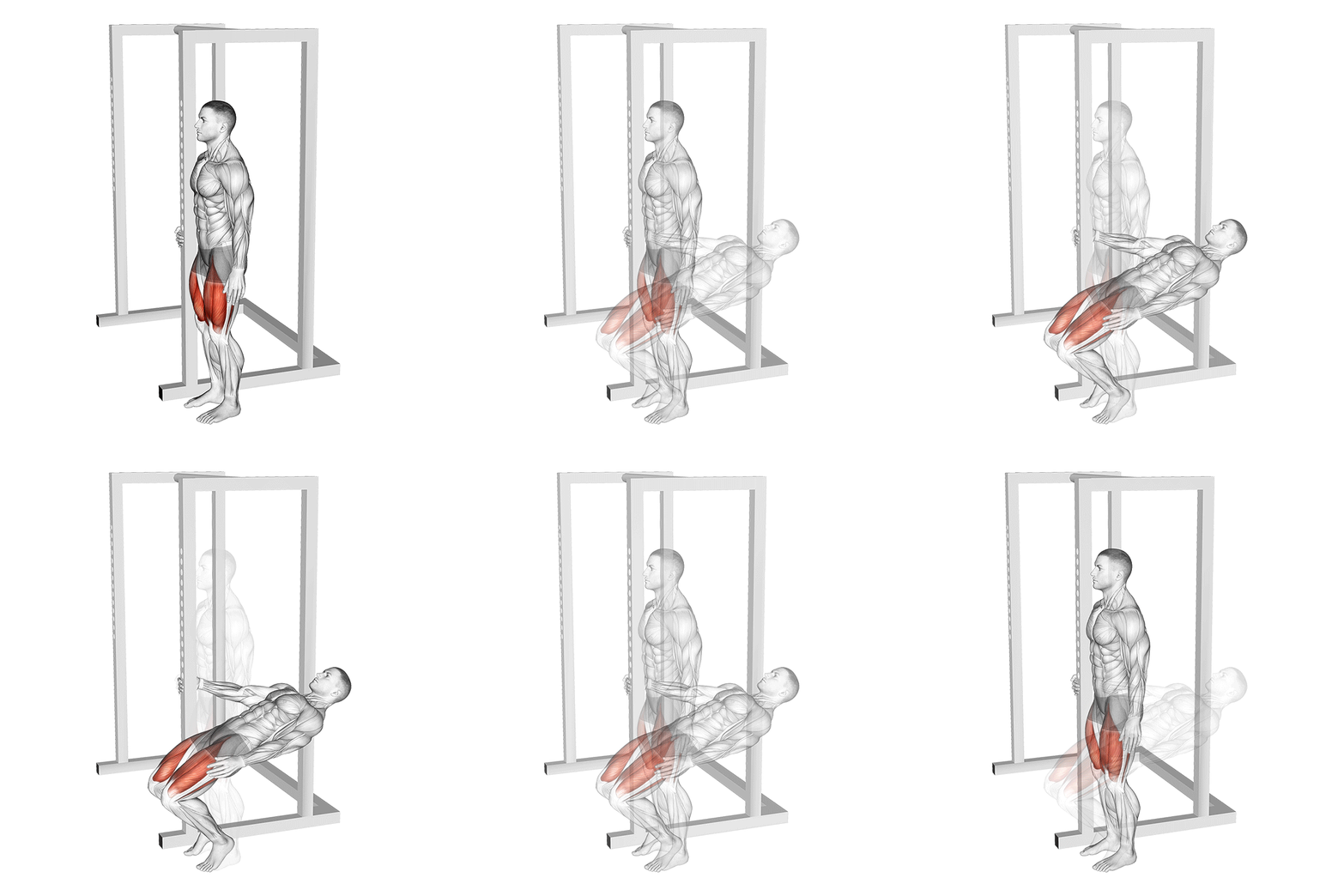
What is the sissy squat?
The sissy squat is a bodyweight quad exercise where the knees do all the moving. You rise onto the balls of your feet, lock your hips straight, then lean back and let your knees travel far forward, lowering your body in one rigid line from knees to shoulders. Because the hips never flex, the rectus femoris gets loaded in a deep stretch that no regular squat can match. Old-school bodybuilders used it for quad separation; today it doubles as knee-tendon strengthening in knees-over-toes style training. All you need is a post to hold on to and patient, progressive dosing.
How to do the sissy squat
- 1
Find a support
Stand next to a rack upright or a pole and hold it with one or both hands. Feet hip width, then rise onto the balls of your feet or set your heels on a wedge.
- 2
Lock your hips
Squeeze your glutes hard and tuck your ribs down. From knees to head, your body is one rigid plank and stays that way for the entire set.
- 3
Knees forward, body back
Bend only at the knees and drive them forward past your toes while your torso leans back to counterbalance. Lower over 2-3 seconds until your quads hit a deep stretch.
- 4
Press back to standing
Drive through the balls of your feet and pull your knees back to return upright. No hip hinge, no pulling with the hands: they're for balance only.
Pro tip
Earn your range. Week one, stop at a quarter of the depth you think you can control, two hands on the rack. Tendons adapt on a slower calendar than muscles, and the deep knee tension is the point of the exercise, not a bug to push through.
Common mistakes
Breaking at the hips.
The second your butt moves back, the quad stretch disappears and you're doing a bad air squat. Glutes stay squeezed, hips stay in line.
Full depth on day one.
Patellar tendons need weeks of gradual ramping. Chasing a full sissy squat in session one is how you end up icing your knees and nursing your ego.
Arching the lower back.
The backward lean comes from the knees travelling forward, not from lumbar extension. Ribs down, core braced, one straight line.
Dropping fast.
Speed robs the eccentric stimulus and spikes tendon strain. Own every centimeter of the descent, 2-3 seconds minimum.
Variations and progressions
Easier
Assisted partial sissy squat
Two hands on the rack, quarter to half range. Add depth weekly as your knees adapt, then progress to one hand, then fingertips.
Harder
Weighted freestanding sissy squat
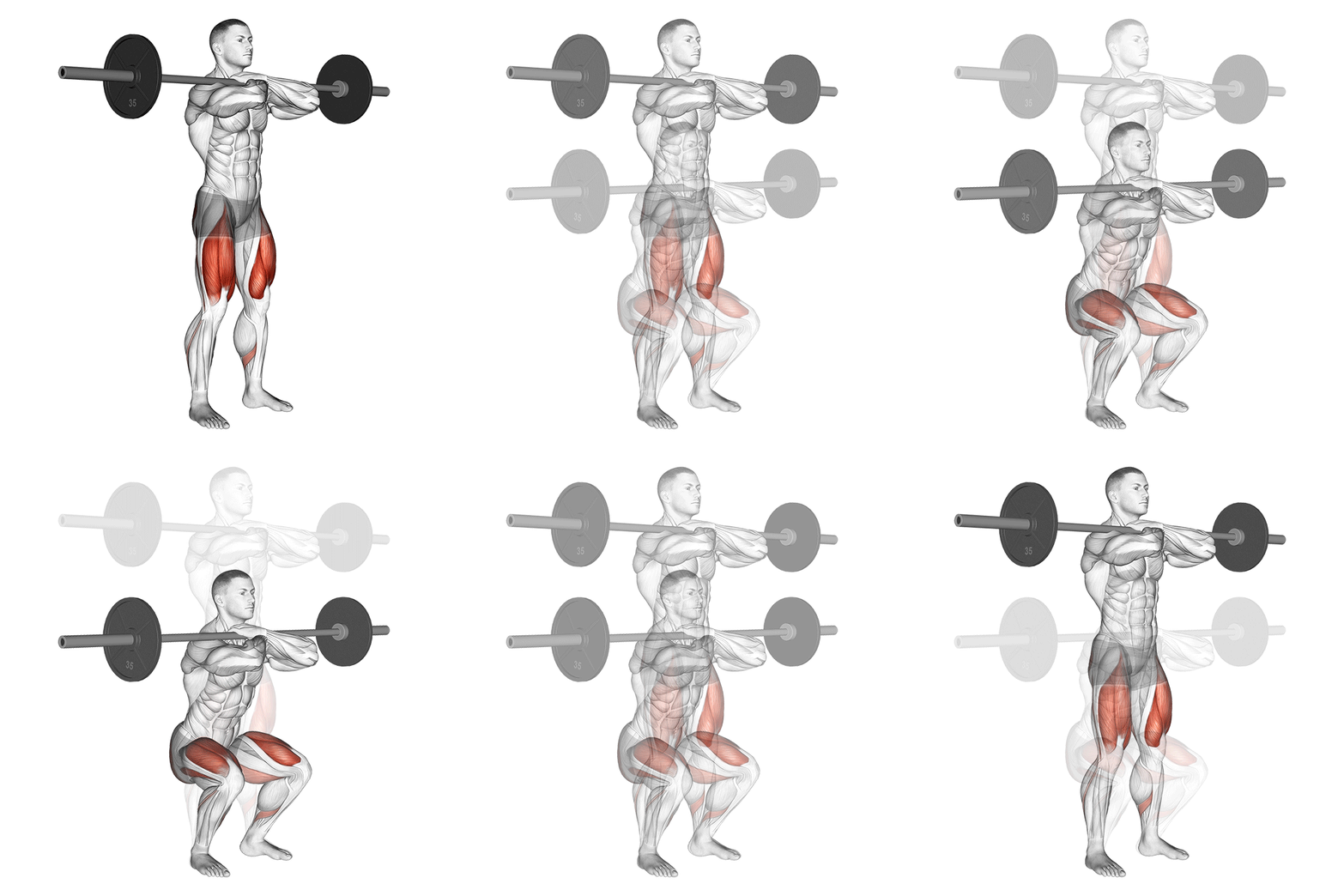
No support, a plate hugged to your chest. The counterweight actually helps your balance, but the quad demand goes through the roof.
Knees not ready?
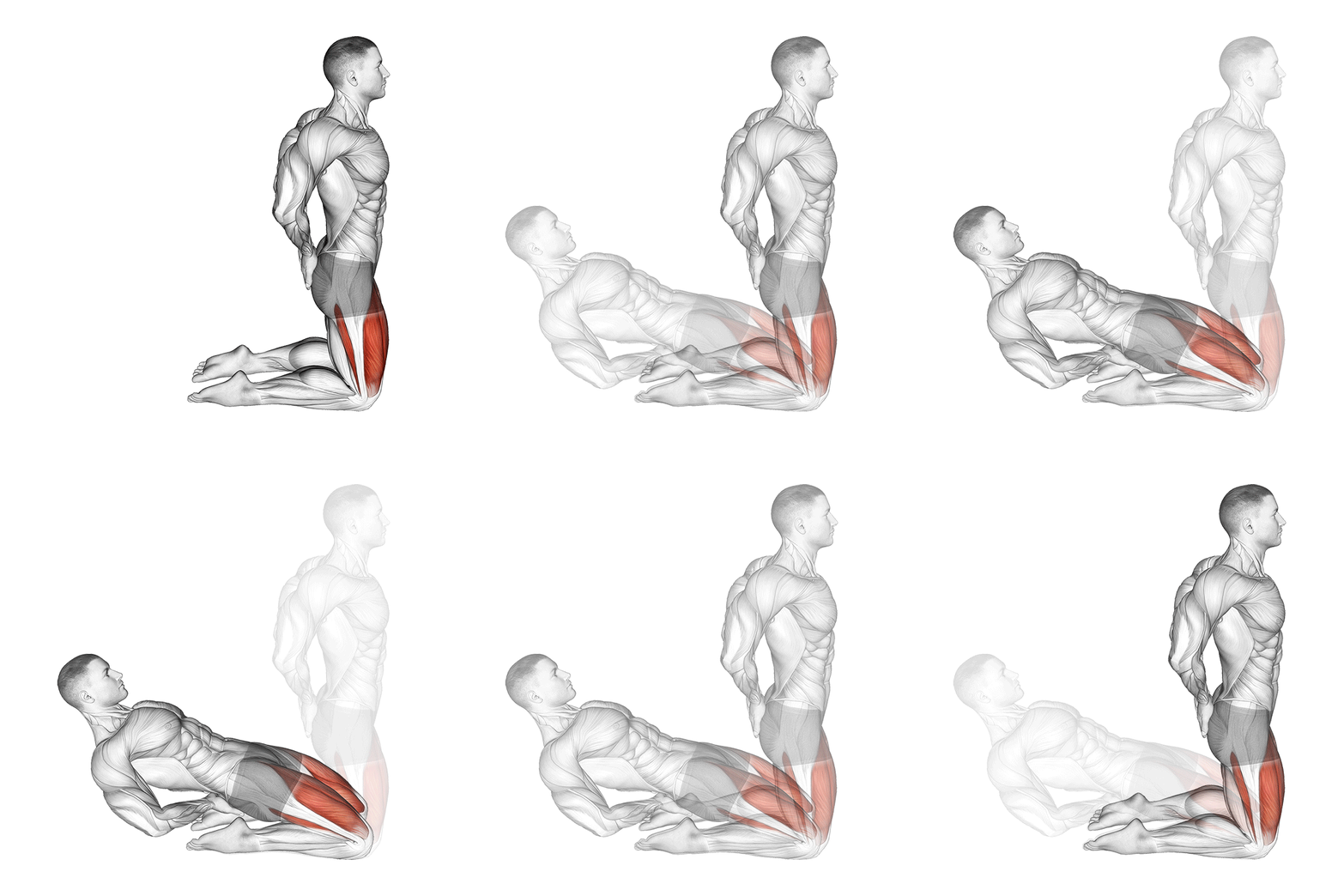
Reverse Nordic curl
Kneel and lean back in one line: the same front-line stretch with your knees resting on the floor, and much easier to dose rep by rep.
How to program it
Three protocols by goal. Pick one per cycle and aim for progression on load or distance.
| Goal | Sets × distance | Load | Rest |
|---|---|---|---|
| Tendon prep | 3 × 12-15 | Partial range, 3 s descent | 60-90 s |
| Hypertrophy | 3 × 8-12 | Bodyweight, full control | 90 s |
| Advanced strength | 4 × 6-8 | +5-10 kg plate at chest | 2 min |
Sissy Squat FAQ
Are sissy squats bad for your knees?
No, they're demanding for your knees, which is different. Loading the knee in deep flexion is exactly how you build patellar tendons that tolerate sport, the same logic behind knees-over-toes training. The risk isn't the movement, it's the dose: jumping to full range with no ramp-up. Progress from partials over 4-6 weeks and back off during any acute tendon pain.
Why is it called a sissy squat?
The story goes back to King Sisyphus of Greek myth, condemned to push a boulder uphill forever: the burn in his legs supposedly inspired the name "Sisyphus squat", shortened over time. Whatever the true origin, the name is a trap. There's nothing easy about it, and plenty of lifters who squat heavy still fail their first full-range attempt.
Sissy squat or leg extension?
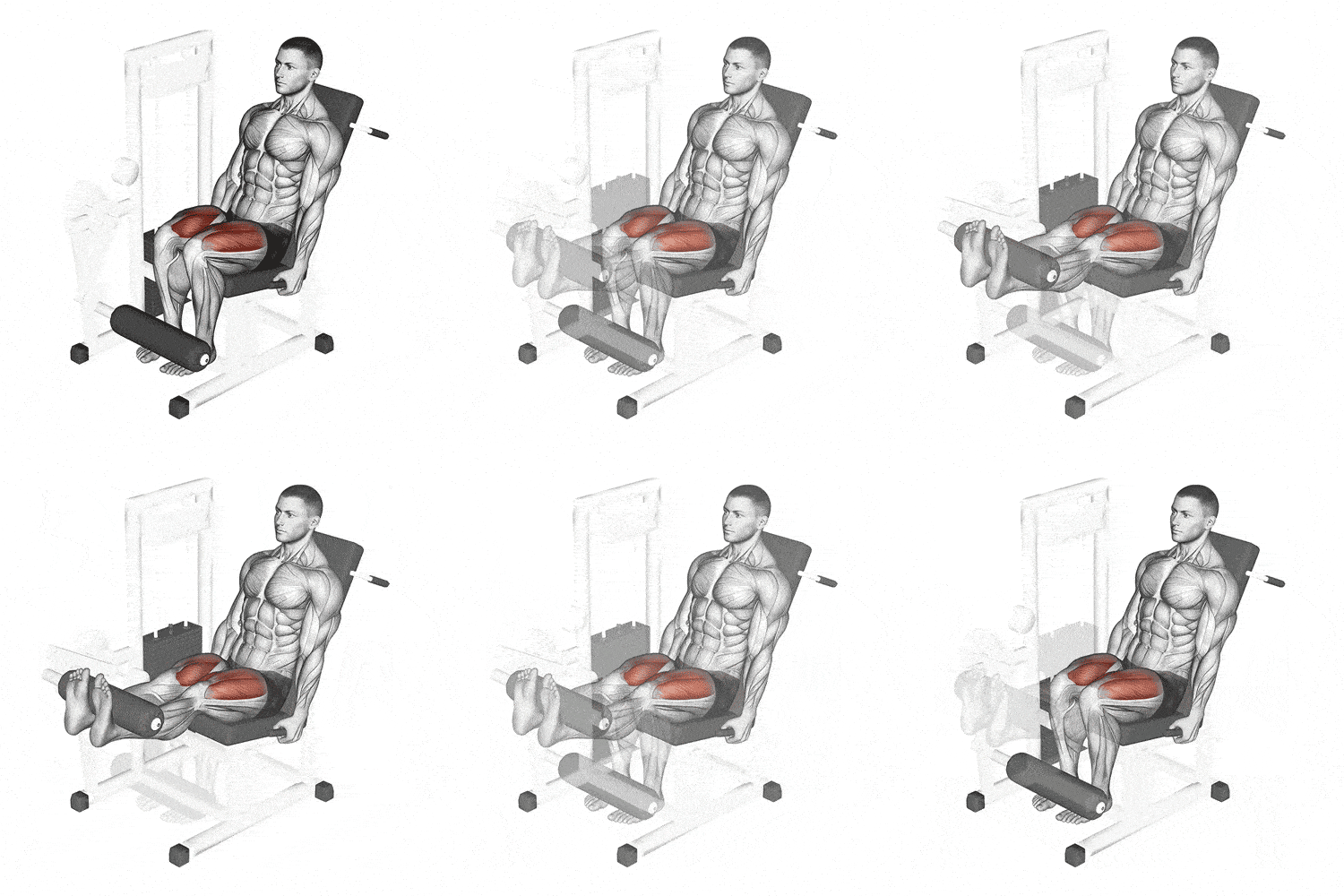
Same target muscle, different strengths. The leg extension is easier to dose precisely and safer to push to failure; the sissy squat loads the rectus femoris at longer length (hips extended, knees fully bent) and costs nothing. Training at home, the sissy squat wins by default. In a gym, use both: extensions for volume, sissy squats for the stretch-loaded reps the machine can't reach.